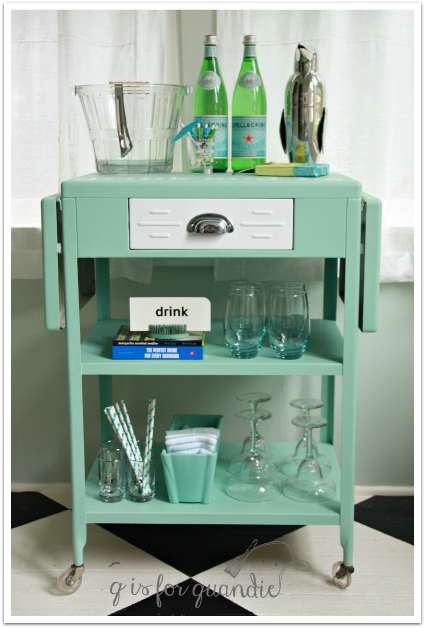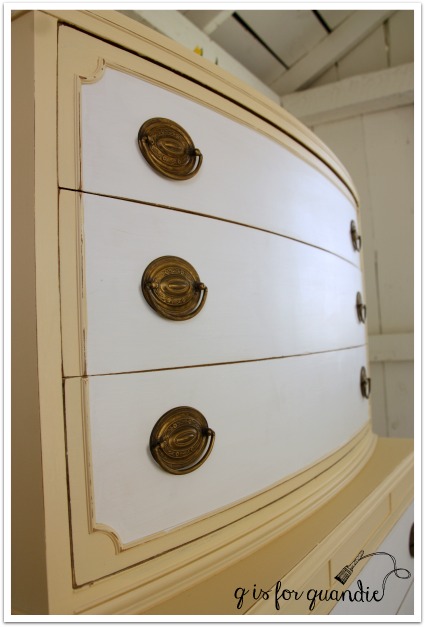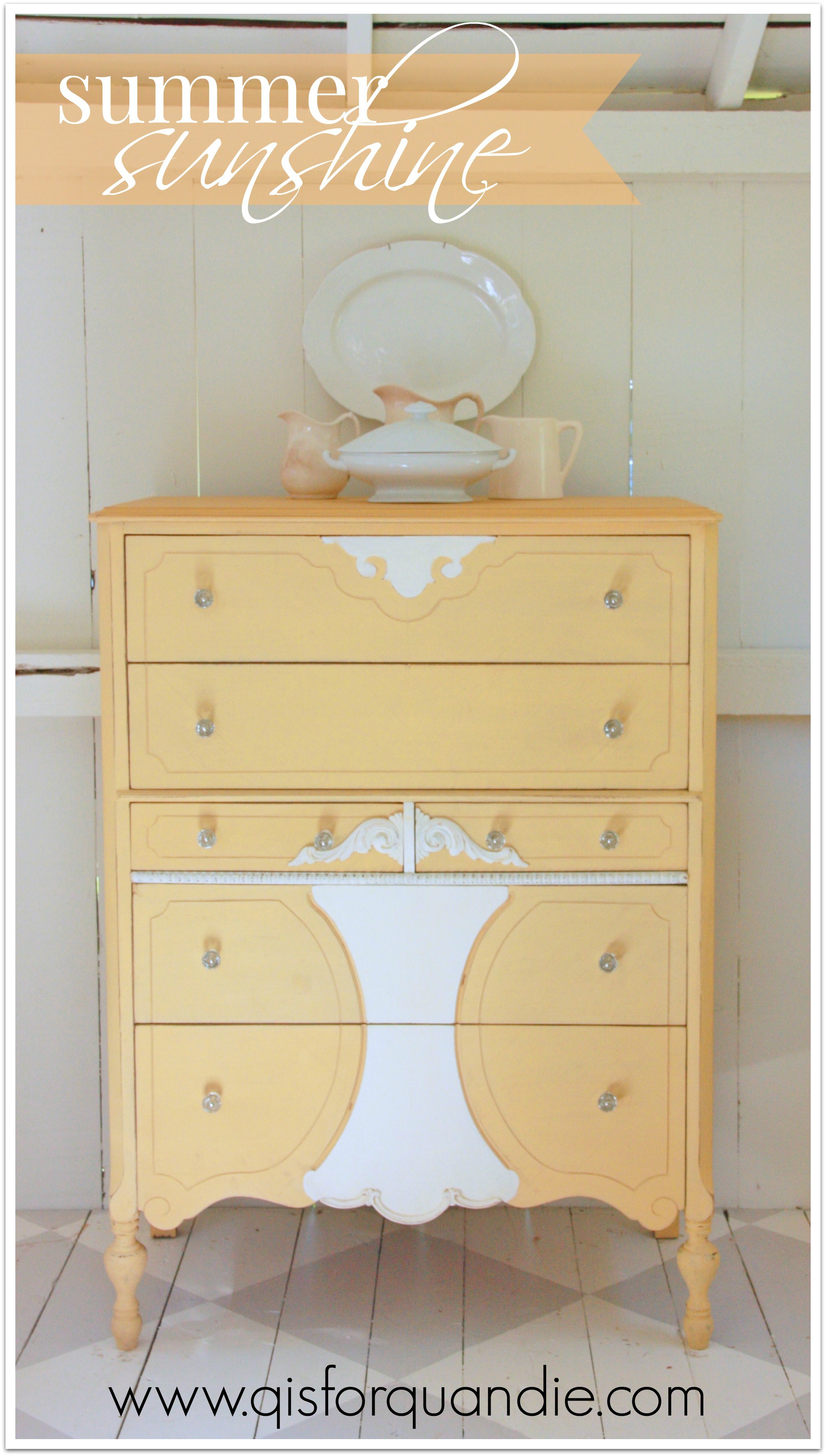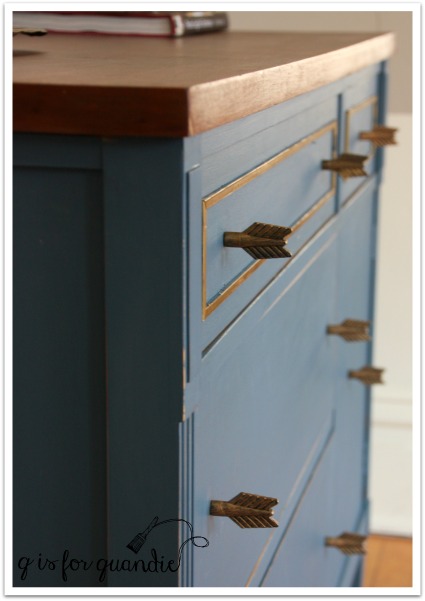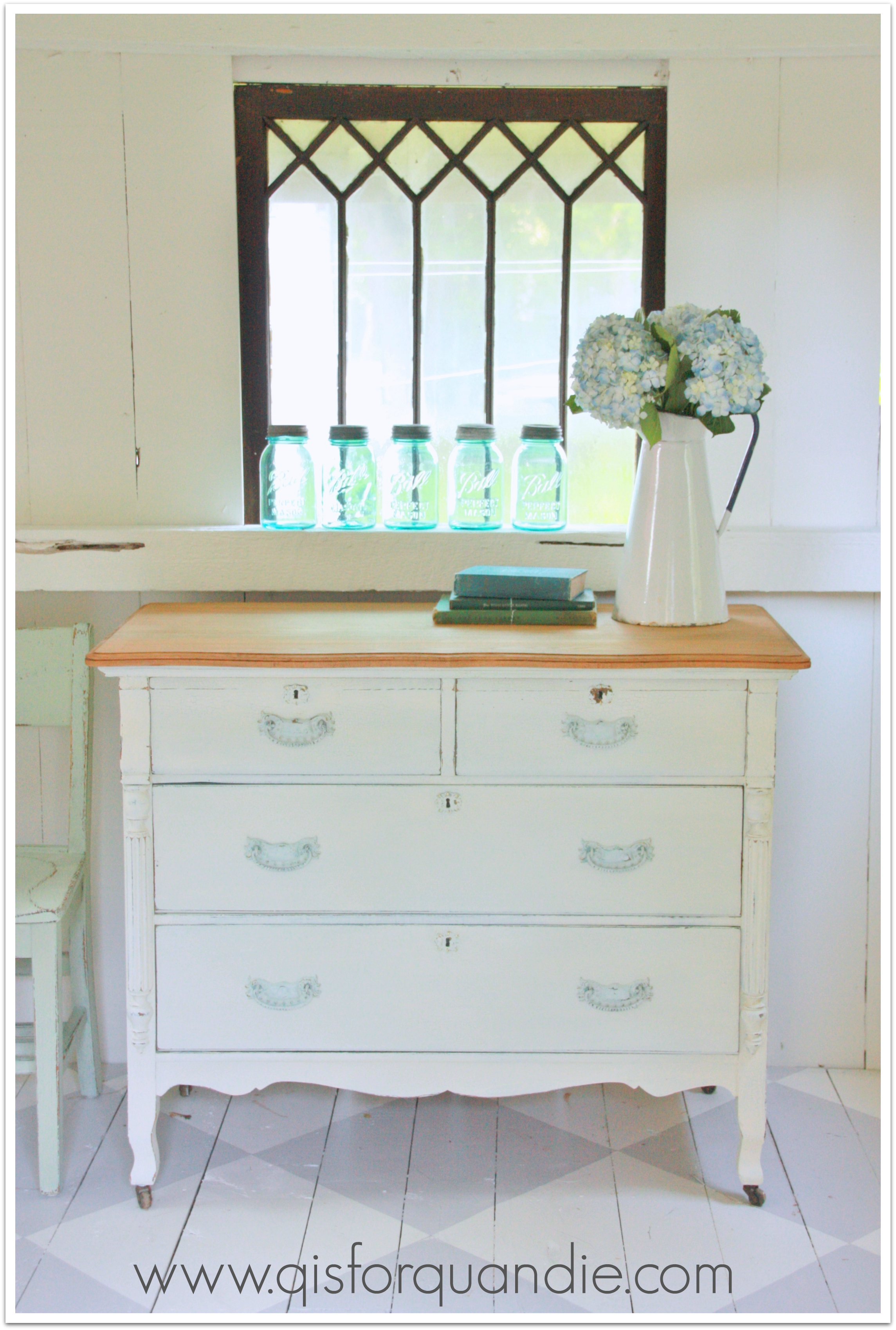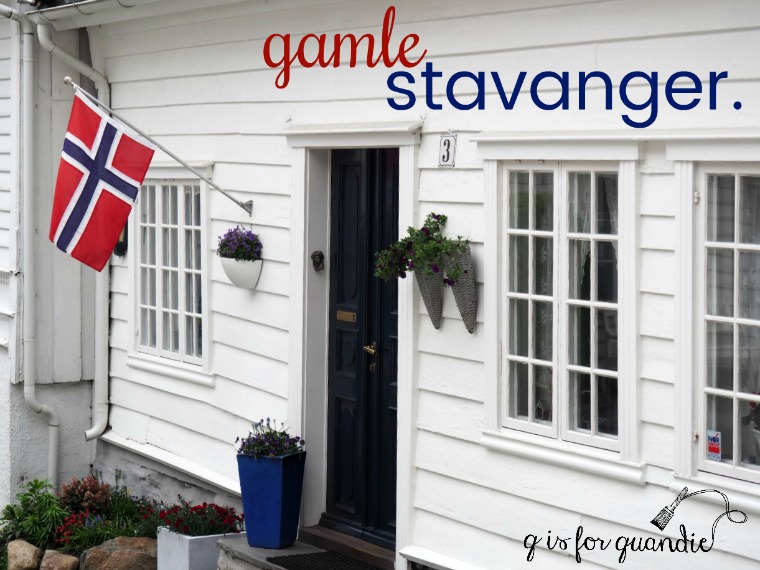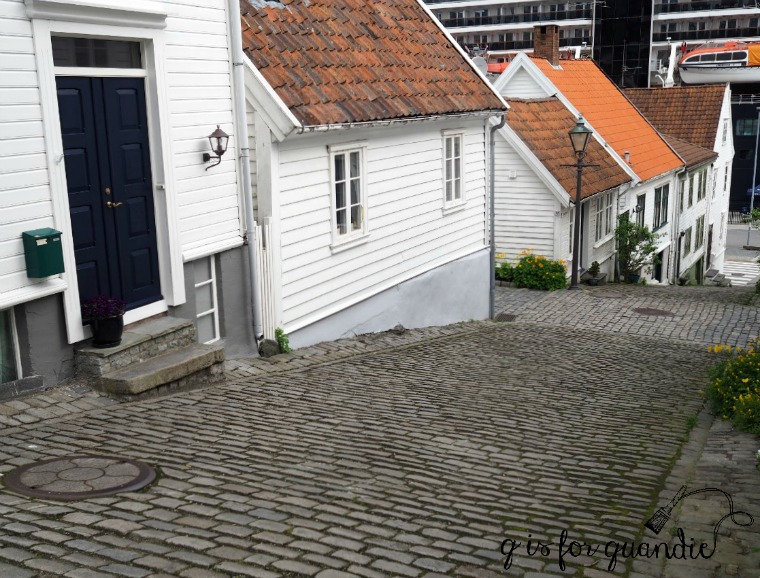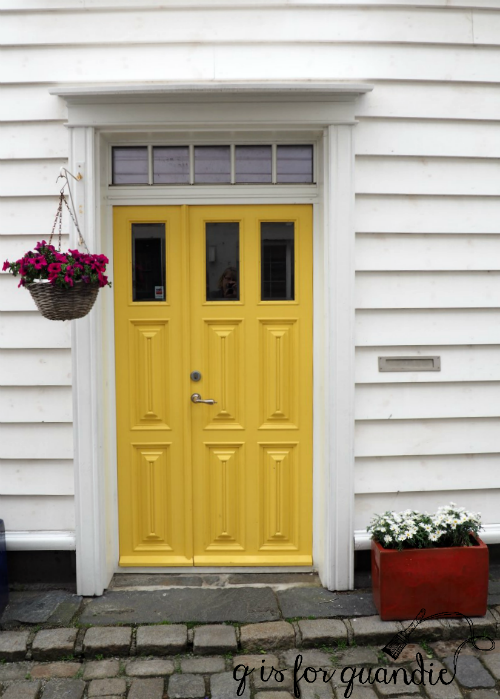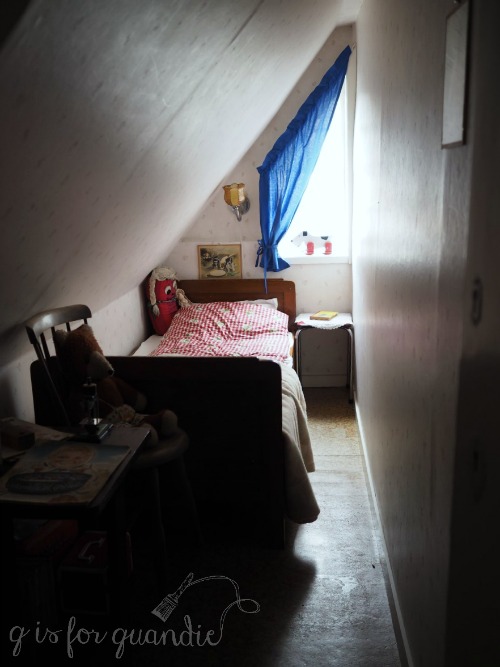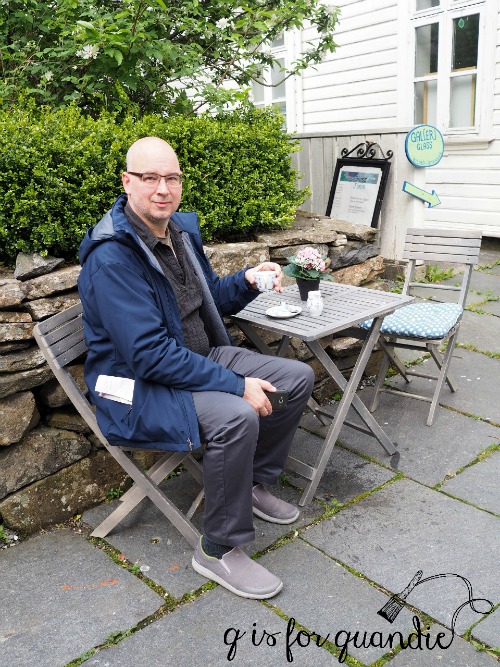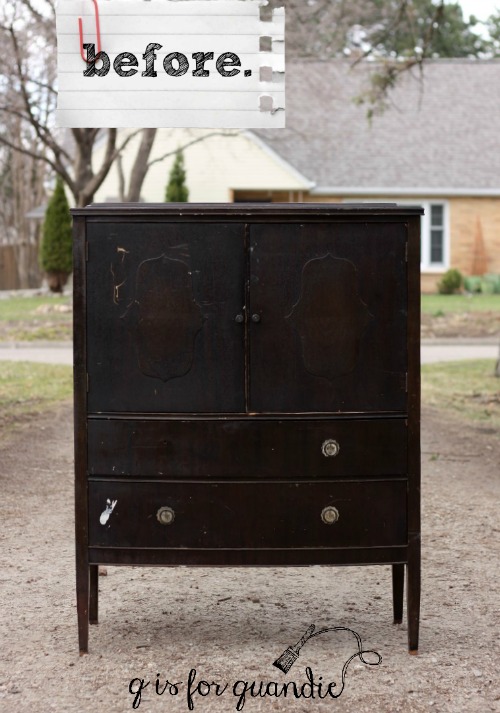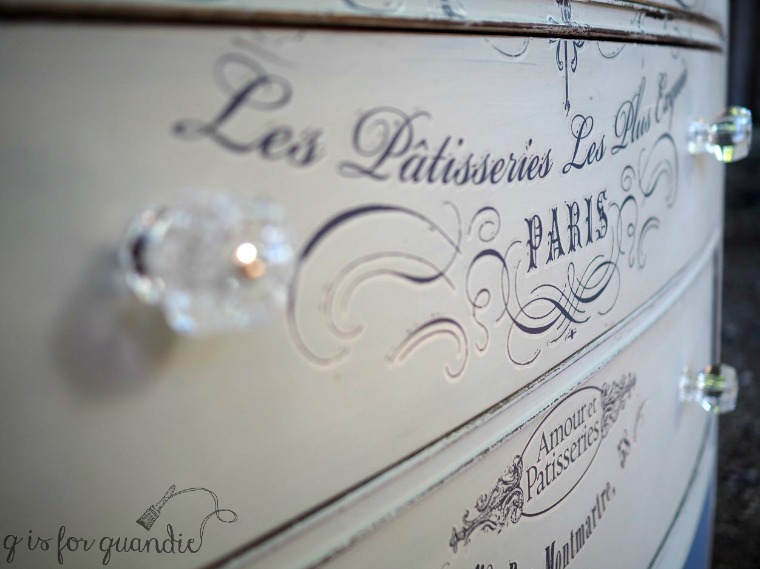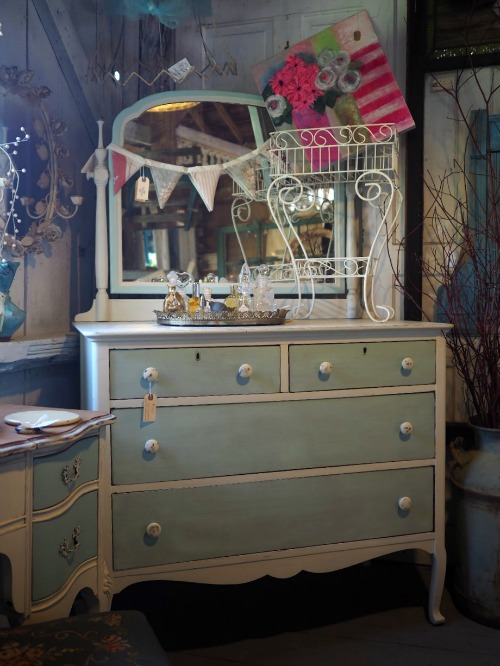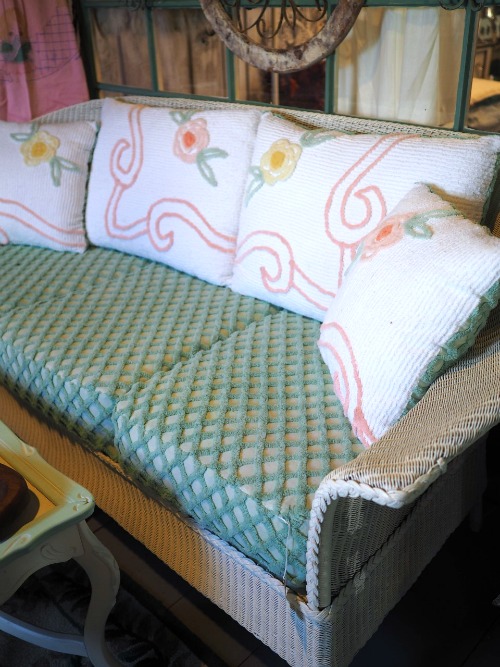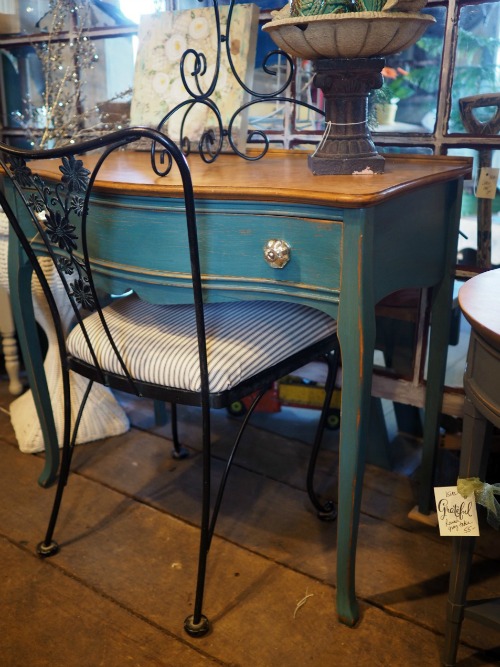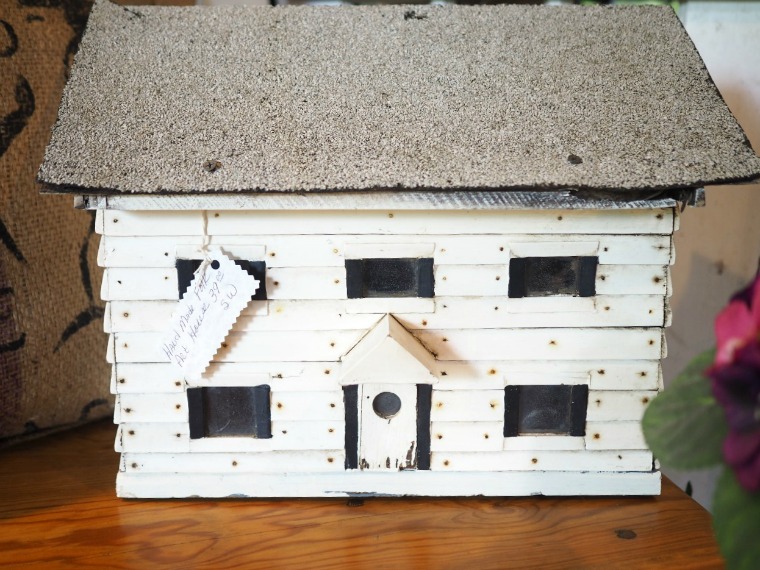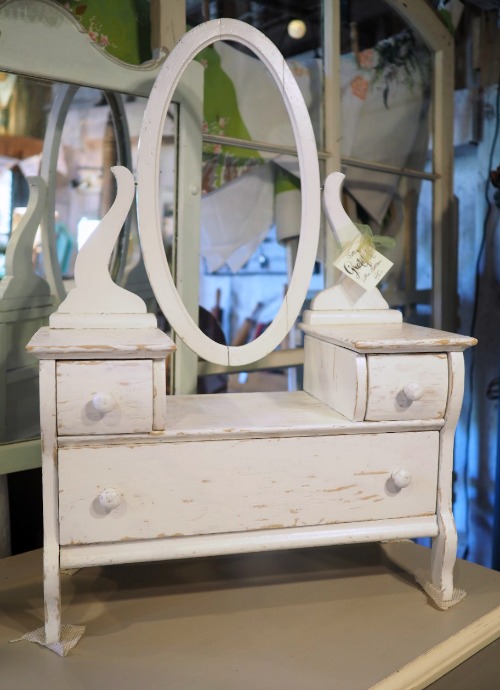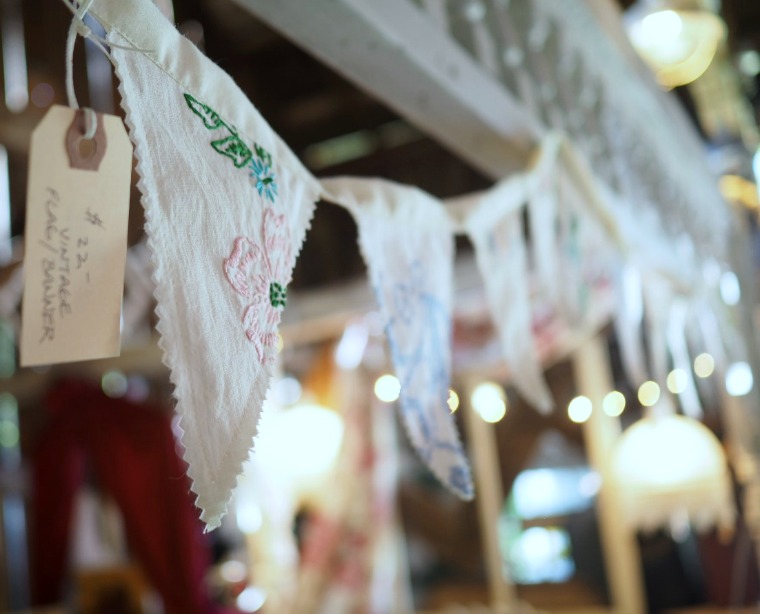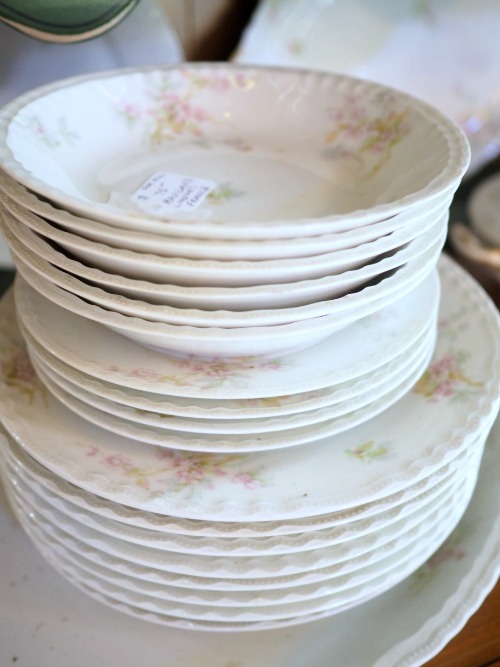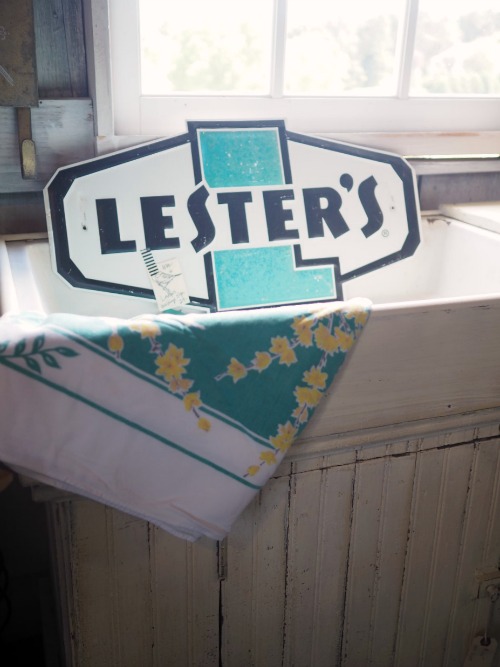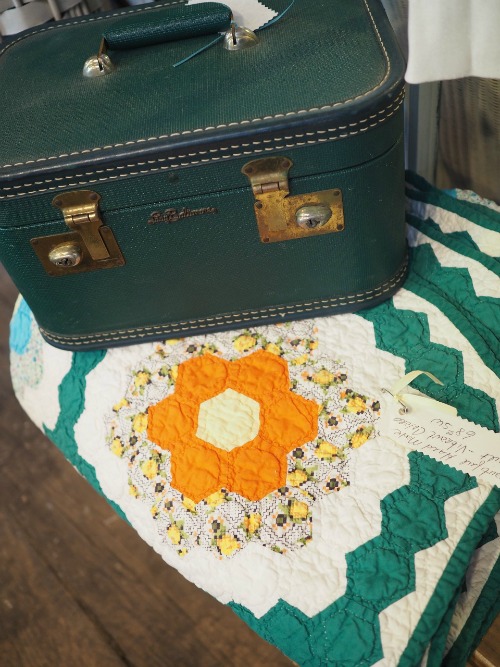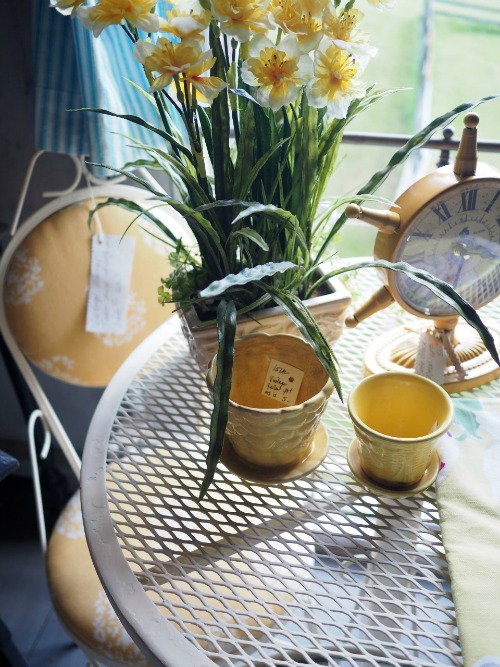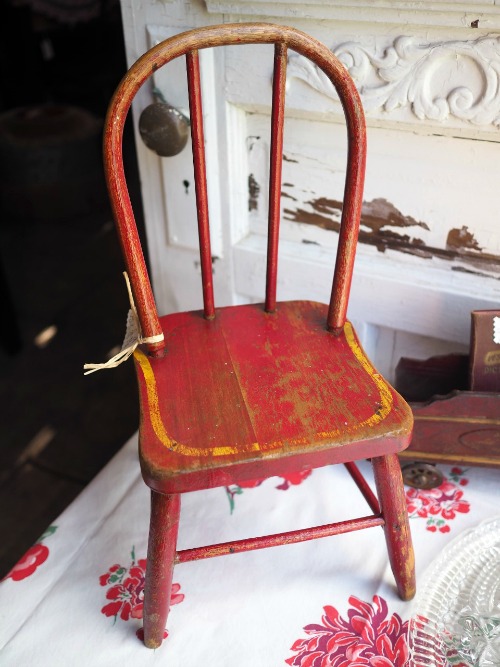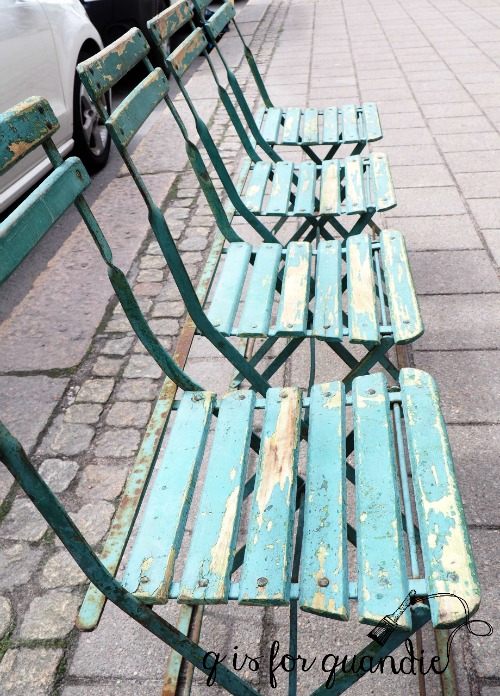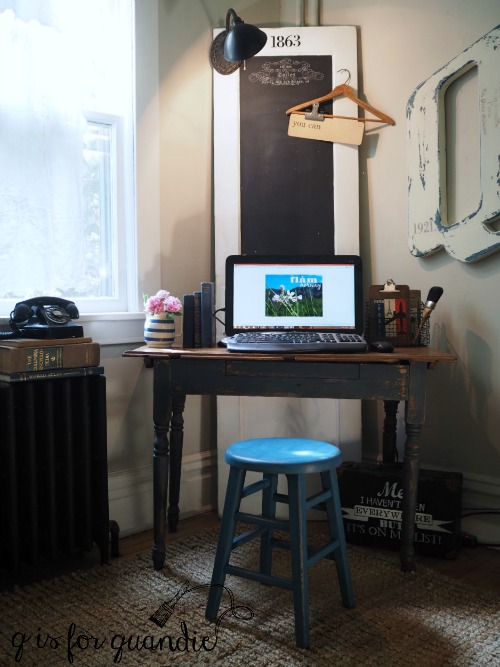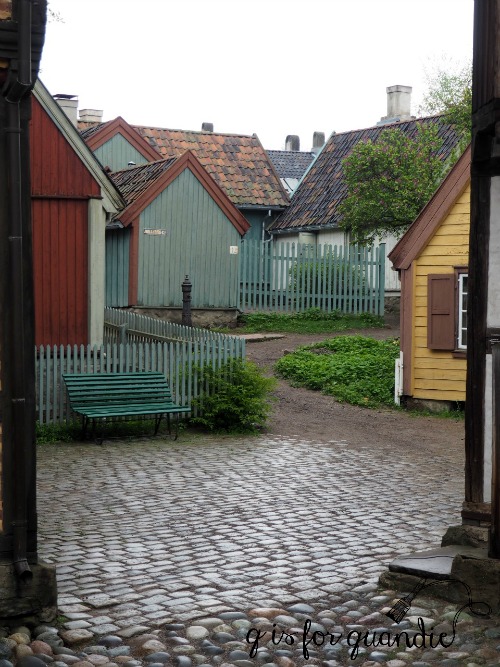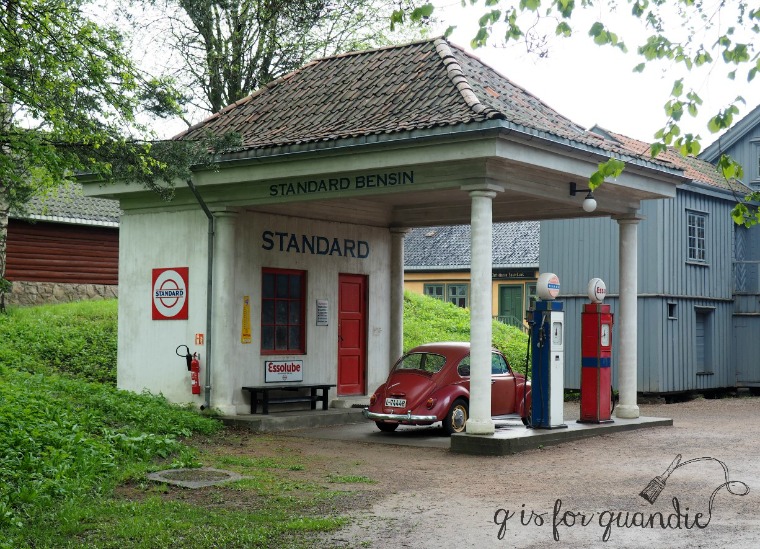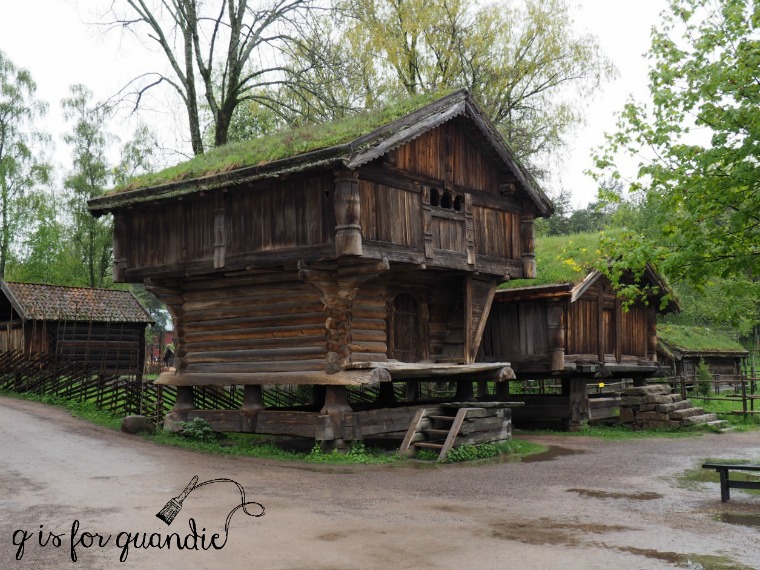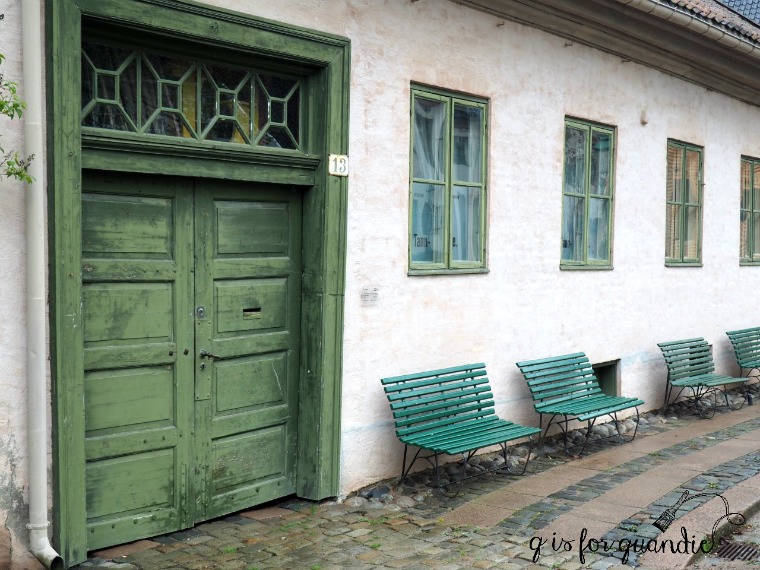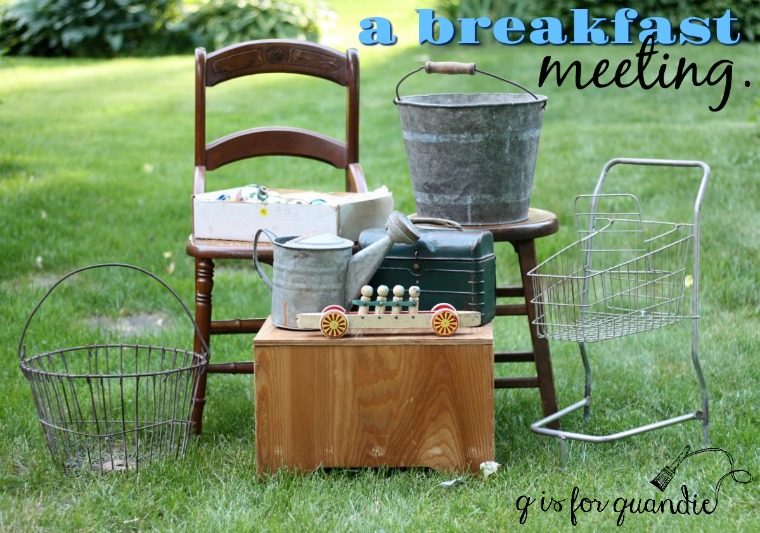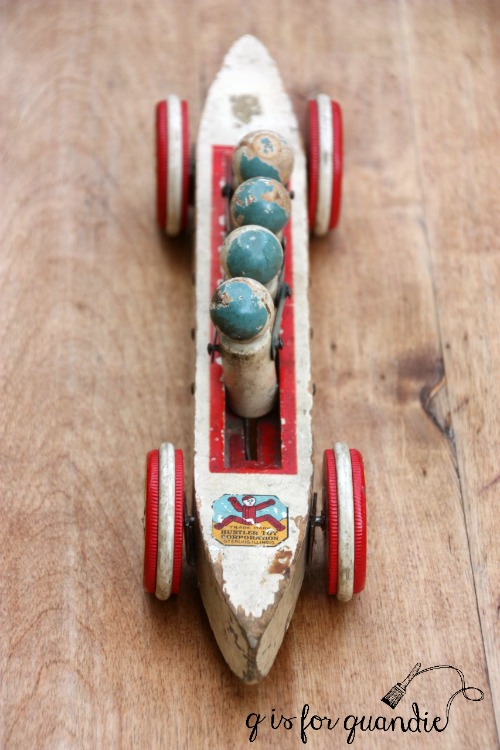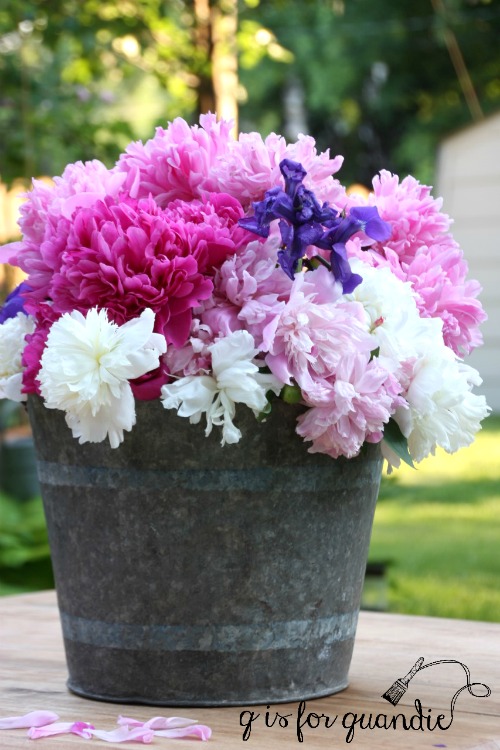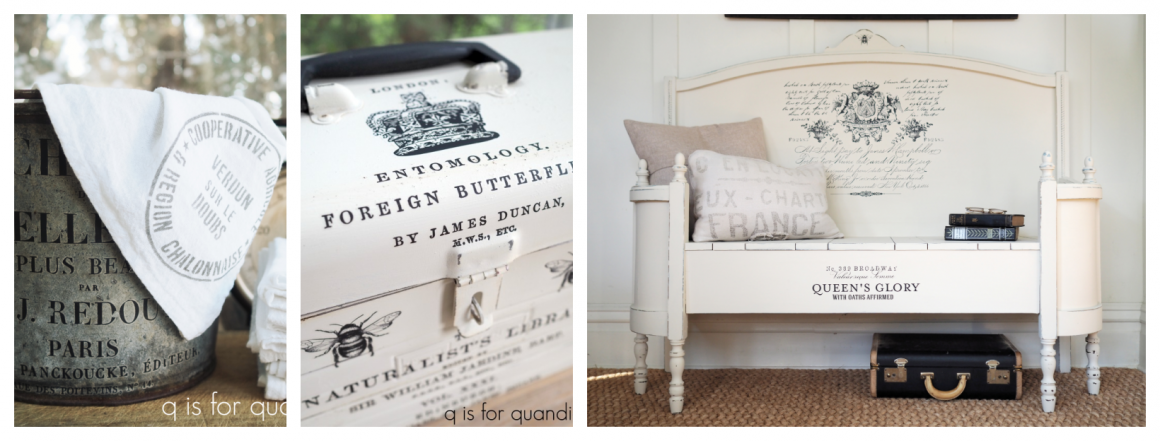
a few of my favorite neighborhood sales.

Before I get on with today’s post I’m wondering if any of you can help me out.  Last Saturday there were a whole bunch of new visitors here on the blog, and I got quite a few new followers.  So, first of all, welcome to all of my new followers, I’m glad you are joining us!  Second of all, how did you find me?  I’d like to thank whomever it was that shared my blog, but since it seems to have been a Facebook thing, my stats don’t tell me where you all came from.  So if you’re willing, please share how you found out about me in a comment.

Earlier this year when Mr. Q and I were trying to decide when and where to go on vacation this year we ran into some scheduling problems.  Between both of our day jobs, both of our side jobs (mine is furniture artist/blogger, his is wedding officiant), scheduling my occasional sale and numerous other things on the calendar it was hard to find a time that we could both be away for any significant length of time.

So when we found the cruise to Norway & Scotland that we’re taking next week it seemed like kismet.  It worked perfectly with our work schedules.  It wasn’t until after we had booked it that we realized we’d be missing Mr. Q’s grandpa’s 100th birthday!  Argh!  Luckily the party is scheduled for the day before we leave, so we weren’t aren’t going to miss the party, just the actual day.

We’re also going to be gone the day my sister closes on her new house.  Dang, I would have liked to share a champagne toast with her the first time she opened the door to her new home with her very own key.  But, we’ll be home just a few days later and in plenty of time to actually help her move (she’ll be doing some painting and cleaning before she moves in).

I also think I’m going to miss the lilacs!  They generally bloom during the last half of May, while I’ll be gone.

But what I didn’t even think to factor in was which of my favorite neighborhood garage sales I would be missing!  What was I thinking planning a trip right at the height of garage sale season?!

In a recent comment, Carol asked me to share some of my favorite sales so I thought I’d do that in a post.  Even though I’m missing out on some of them this year, maybe some of you local readers can check them out.

It’s tradition to kick off the start of garage sale season with the Bryn Mawr neighborhood sale.

Bryn Mawr is always the first weekend in May.  You can check out some of my previous posts about Bryn Mawr here, here and here.

Bryn Mawr is an extremely popular neighborhood sale.  There is traffic congestion, limited parking, and tons of people.  Many of the residents have a sale every year, and in some cases that means they pull out the same ol’ stuff each year, then pack it up when it doesn’t sell and pull it out again next year.  It also means you probably won’t find any really amazing bargain prices.  Usually I manage to come home with at least a few fun things, but this year I didn’t have much luck.  The few things I found didn’t even merit a photo or a blog post.

Although you’ve already missed them, there are several other great neighborhood sales to pick from the first weekend in May including Tangletown and Summit Hill and I may try one of those next year instead of Bryn Mawr.

Another big favorite of mine is Linden Hills, and that’s one I will be missing this year.

Much like Bryn Mawr, Linden Hills is very popular (ie. crowded) and it has a great festival-like atmosphere.  Last year they even had live music.  I’m not positive, but I think Linden Hills is always the first weekend after Mother’s Day.  This year it’s on May 20.

Yep, I’m bummed to be missing it, but since I’ll be spending that day in Stavanger, Norway I guess I can’t complain, right?

The Hale-Page-Diamond Lake neighborhood sale is also on May 20 this year.  If you’re looking for something a little less crowded than Linden Hills, Hale-Page might be a good choice for you.  You can read about my last trip to Hale-Page here.

I’ll also be missing the Roseville city-wide sale this year on June 1 – 3.  This is one that I discovered last year after a tip from a blog reader.  I was on vacation from the day job so was able to get there on the first day of the sale, which is a Thursday.  My friend Meggan joined me and we had a great time.

Since I do work full time, sales that start during the week usually don’t make it onto my list.  I prefer to stick with Saturday only sales whenever possible.  Otherwise all of the good stuff is long gone before I can get there.

Although you don’t usually find many garage sales on holiday weekends, believe it or not the Armitage-Kenny sale is usually held on Memorial Day weekend and so I was assuming I’d miss this one too.  But this year they have moved it to a week later on June 3.

I always enjoyed the fact that Armitage-Kenny was so quiet compared to the other neighborhood sales.  I’m sure that was because of the holiday weekend.  In 2015 we came home with fake tattoos and plastic spoons and not much else.  Although Debbie found a great table with benches.

The East Calhoun neighborhood’s ECCO Super Sale is the sale I usually pick for the first weekend in June (also being held on June 3 this year).

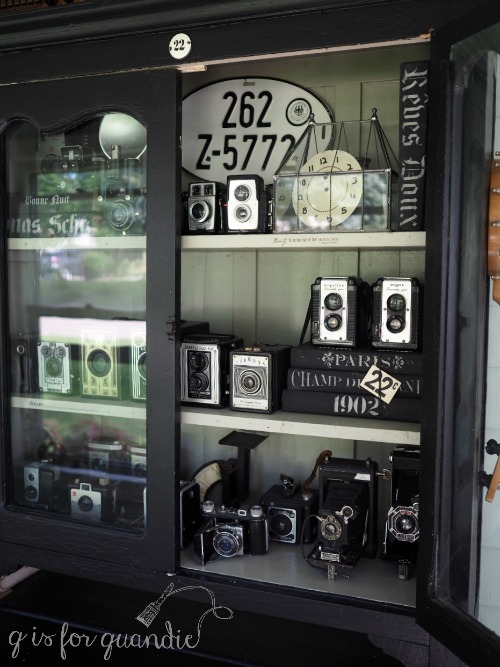
Last year I found a stash of vintage cameras at reasonable prices at ECCO and I even gave one of them away here on the blog since it was a duplicate of one I already had.

Speaking of vintage camera hauls, I hit the mother lode at the Nokomis neighborhood sale in June 2015.

Eureka, right?!

But both my sister Debbie and I love Nokomis for another reason as well.  Our parents both grew up in this neighborhood.  We always make a pilgrimage to our grandparent’s former houses that day in addition to hitting the sales.

The ‘find of the day’ from last year’s Nokomis sale was a croquet set that my sister bought.  I just loved the black and white graphic on it.

This year the Nokomis sales will be held on Saturday, June 17.

Organized neighborhood sales tend to take a hiatus after Nokomis.  There isn’t much going on in July or early August.  It’s too hot for garage sales!

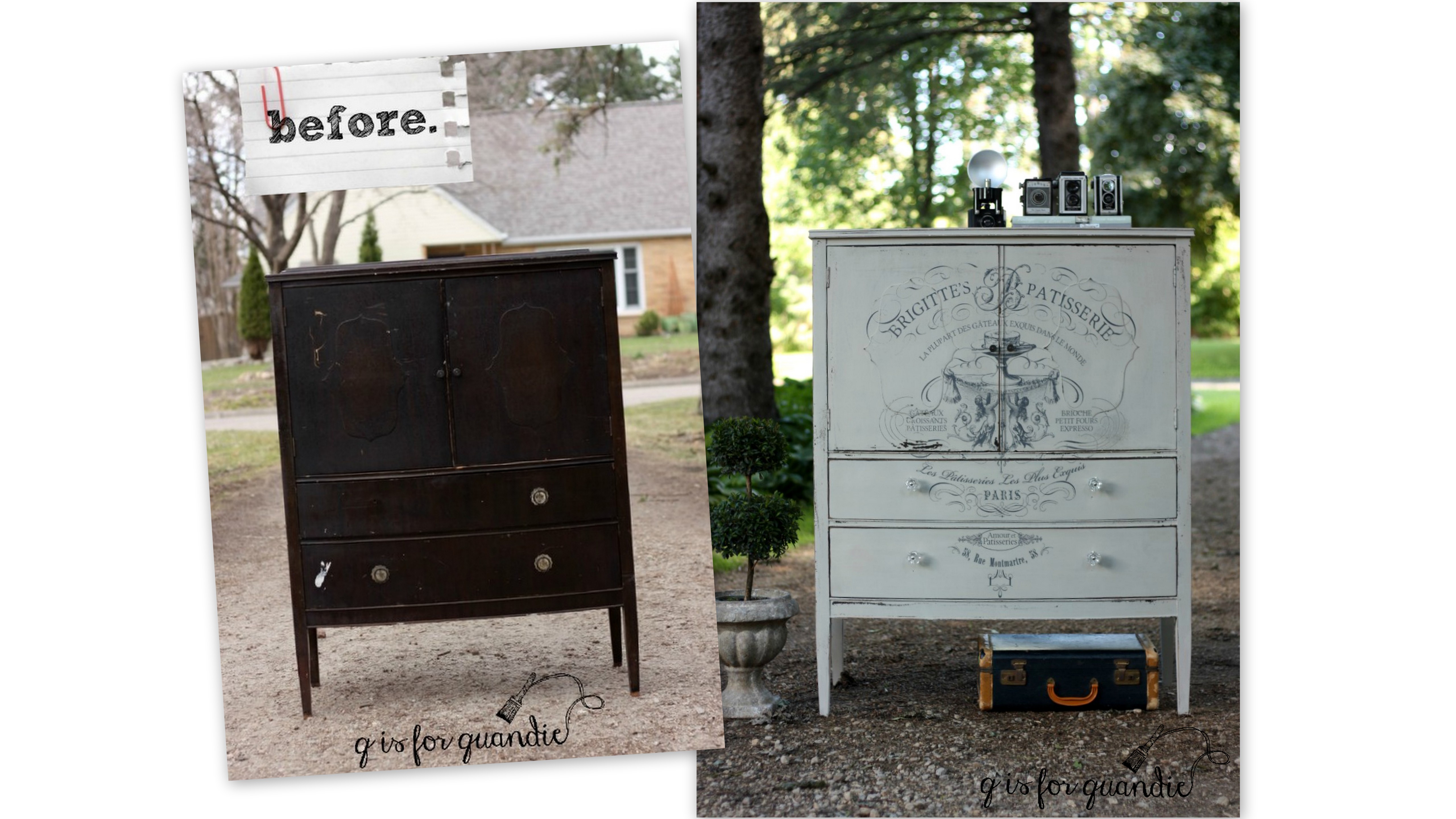
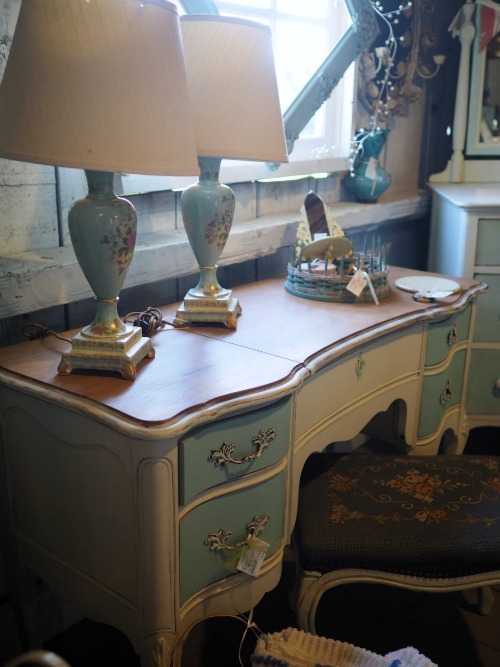
But they start back up again in late August with the MacGrove sale which will be on August 26 this year.  MacGrove is another of my favorites.  Last year I got a gorgeous french desk at MacGrove …

Here is how it looked when I was done with it …

Vintage luggage was the find of the day two years ago at MacGrove.

The St. Anthony Park sales and the Lake of the Isles sales take place in the fall.  I couldn’t find dates yet for this year, so you’ll just have to keep them in mind and watch for dates later this summer.

If any of you locals make it to Linden Hills while I’m gone, be sure to let me know if you find some great stuff.  Or, on second thought, just tell me it was a bust this year so I don’t feel so bad about missing it, OK?

my color comfort zone.

I mentioned last week that Homestead House recently sent me some more of their milk paint.  I had requested some neutral shades, and I got plenty of those (and will be sharing a piece in one later this week), but they also sent me quite a few colors that I probably wouldn’t have chosen on my own.  One of those colors is called Gatineau.

Here’s how it looks on their website.

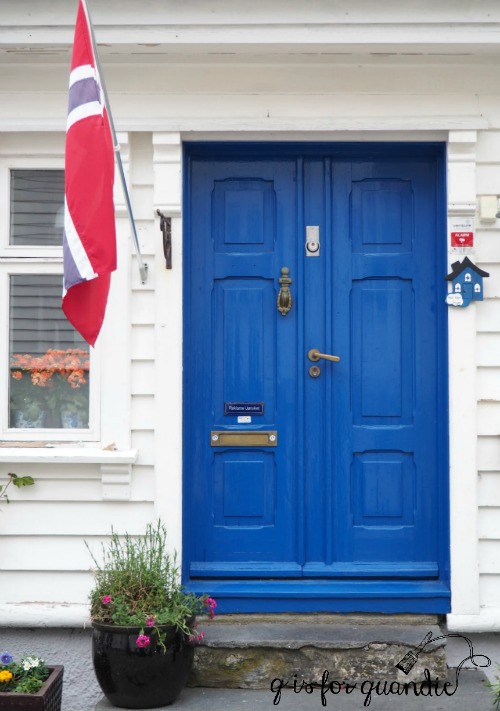
Hmmmm.  Yep, I definitely would not have put this one at the top of my wish list.  I’m not gonna lie, when I pulled it out of the box of paint I received I really didn’t think I would ever use it.  It was way outside my color comfort zone.

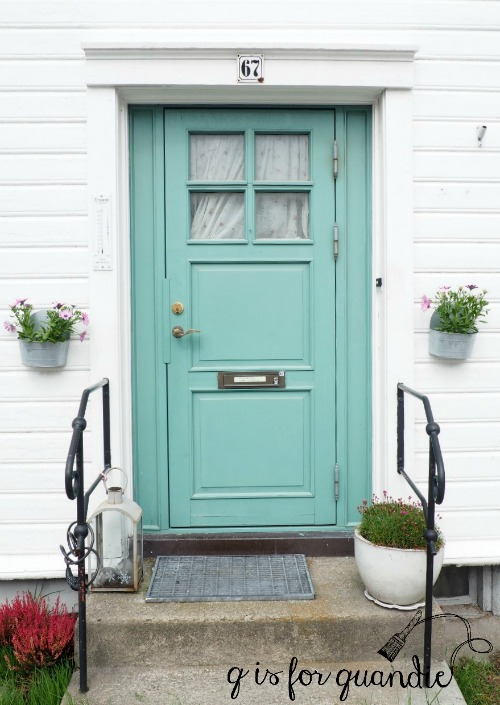
We all have a color comfort zone, right?  I actually have two.  One for items I’m keeping for myself and one for items I’m planning to sell.  My own personal color comfort zone is pretty wide open.  In fact, the front door of my house is quite similar to the Gatineau

But I tend to be a bit more cautious about color with items I want to sell.  Almost anyone can work a neutral color into their existing décor, but there just aren’t as many buyers who will be able to use a color with a lot of personality.

Regardless, while testing out a few of the more neutral shades last weekend I decided to mix up a little Gatineau to see what it looked like IRL (that’s ‘in real life’ in case you didn’t know).  I painted it on a Popsicle stick and then pushed it aside for a bit, but I kept glancing at it and finding that the color was really growing on me.  It wasn’t until the paint on the Popsicle stick was fully dry that I realized it wasn’t nearly as yellow as I thought it might be.

If you’ve mixed up green milk paint before, you’ll know that the dry powder looks yellow.  Your first reaction when seeing it will likely be ‘uh oh, I’ve got the wrong color’.  When you add the water and start to mix, the paint will still look much more yellow than the final color.  You have to be sure to give the green shades of milk paint plenty of time (15 to 20 minutes at least) for the blue pigments to dissolve before starting to paint with it, always mix frequently while working with it, and always paint your entire piece at one time (cautionary tale here).

After admiring the color on that Popsicle stick for a while I decided to be daring and step outside of my color comfort zone and paint something in Gatineau.  Specifically, this incredibly adorable little table that I picked up recently.

After re-gluing some veneer that was lifting up on the top, I sanded it lightly and then wiped it down with some TSP substitute.  Next I painted it with two coats of Gatineau.  I followed that up with some Homestead House Limestone milk paint on the details including that really cool ribbed section.

It’s interesting to note that I got a lot more chipping in the areas that were painted with the Limestone than I did with the Gatineau.  Normally I would say that is because I didn’t sand those detailed areas as much as the flat areas before I started painting, but in this case even the legs didn’t chip much and I hardly sanded those at all (the distressing you are seeing on the legs is more the result of post-paint sanding rather than chipping).  So, I wish I had an answer for you on this, but it’s a mystery to me.

With milk paint, sometimes you just have to go with the flow.  Personally, I was happy to do that with this table.

Had I lined up all of the paint colors from Homestead House in order from most favorite to least favorite, I think Gatineau would have been somewhere near the end of line.  So imagine my surprise when it ended up being one of the first colors I chose to use, and then my total astonishment when it turned out to be so perfect on this little table!

Sometimes you just have to step outside of your color comfort zone!  But the real test will be whether or not this table sells.  If any of my local readers are interested, be sure to check my ‘available for local sale’ tab for more info.

But hey, how about you, do you like to experiment with color?  Any favorites that you’ve used lately?  Please share.

why I love my olympus.

First things first, the winner of the milk paint giveaway is Vicki Bougie.  Congrats Vicki!  And thanks so much to everyone who left a comment.  You all have so many great projects lined up, I just wish I could send milk paint to all of you!

OK, so I’m not a techie person, let’s just get that straight right up front.  I rarely have the patience to sit down and learn the ins and outs of a new device.  I’ve never loaded a single app on my phone.  And I should probably spend a little more time tweaking the design of my blog.  But all in all, I’d much rather be painting furniture.

That being said, I do occasionally force myself to try and learn more about my photography equipment so I can take good photos of the aforementioned painted furniture.

Today I thought I’d share an update regarding the camera I purchased back in September since I promised to report back on how I like it.  For those of you with absolutely no interest in camera equipment, this is the point where you should go do something more interesting with your time.

For the rest of you, the camera I purchased is an Olympus OM-D E-M10 mirrorless camera and I paid $399 for it.  If you want to refresh your memory regarding why I made this choice or what a mirrorless camera is, go back and read the post.  It’s OK.  I’ll wait.

This is a great little camera in a decent price range.  If you want a little more than just the camera on your phone or a simple point and shoot, this camera is a great step up.

 Here’s why I love it.

the size.

Whoever said ‘size doesn’t matter’ would be just plain wrong when it comes to having a camera that you want to carry around with you.  The Olympus OM-D is just so much smaller and lighter than my Canon Rebel (which is a DSLR camera).  This is one of the major pros to a mirrorless camera.

 I can throw it in my regular purse without having to switch to a larger bag.  If you don’t want to carry a big bag of gear around, this is a great feature.  Just to give you an idea of the size I took a photo of it on my Salvage Style book because I thought that would put it into perspective for many of you.

In comparison, here is my Canon with the Tamron lens that I normally use.

I’ve found that I’m much more likely to throw the Olympus in my bag when taking a day trip somewhere, like when we went looking for bald eagles back in March.  Even though I don’t have much of a zoom lens on the Olympus, I find that it takes such good quality photos that I can crop my photos with photo editing software later to ‘zoom in’ on my subject.  That’s how I got so ‘close’ to this eagle.

the touch screen shooting.

I totally underestimated how much I would love using the touch screen, especially when I want to redirect the camera’s focus.  Here’s how that works, the LCD screen displays the image you’re about to take and to choose the spot where you want the camera to focus you just touch the screen there.  The camera focuses and takes the shot with just one touch, no need to depress the shutter release button.

Here’s an example of what I’m talking about.  In this first photo I touched the screen over the vintage tablecloth in the foreground.

And here is that same shot, only this time I touched the screen over the bread box.

 Is that slick or what?  It’s something that I use really frequently.  When taking photos for the blog I often want to focus on a specific spot that isn’t centered in the shot, such as the drawer pull on this dresser …

With my Canon I have to reset the focal point, and then change it back every time, requiring multiple button pushes.  With the Olympus I can take unlimited photos one after the other with different focal points by just touching the screen in a different spot for each.

the LCD display.

I really like the LCD display more than I thought I would as well.  I’m a little embarrassed to admit the reason, but here it is.  I can take photos without having to remove my reading glasses!  I can see how my photo is composed, I can see all kinds of settings around the perimeter of the screen including a histogram, and then I can take the shot without have to take off my readers first.  I still have the viewfinder as a backup for outdoor shooting on bright, sunny days, but I rarely find myself using it otherwise.  With my Canon DSLR I am constantly putting readers on, then taking them off, putting them on, then taking them off.  You younger punks may not appreciate this feature, but those of you closer to my age know exactly what I’m talking about here.

Another handy feature of the screen is that it tilts, even as far as perpendicular to the camera.

This can be super handy when you want to hold the camera at about waist level and shoot straight on at your subject (usually a piece of furniture for me).  You can still easily see the screen.

how easy it is to adjust the exposure.

It’s also far easier to make quick changes to adjust the exposure on this camera.  You just turn the ring that is around the shutter button.  It couldn’t be easier to go just a hair lighter or darker and you can immediately see the results either through the viewfinder or on the screen.  With the Canon I have to hold down the AV button with one finger, move the ring with another and you can’t see the results until after you take the photo and then check it on the view screen (take the readers off, put the readers back on).

photo quality.

 After reading all of these glowing reasons why I love my Olympus camera you must be assuming that I don’t even use my Canon any more, but no, that’s not true.

The biggest reason that I continue to use the Canon is that I have several expensive lenses for it, and I don’t want to fork out the money for similar lenses for the Olympus.  At least not all at once.  And personally I find that the lens I’m using makes the biggest difference to the quality of my photos.  Lately I’ve been experimenting with prime lenses and have found that the sharpness of my photos (especially in lower light situations) is much better with a prime lens.  I have a 50 mm prime lens for my Canon, and it takes really sharp photos.  The 50 mm is not quite wide enough for taking photos of furniture indoors though.  At least not in my house.  I can’t get far enough away to get the whole piece of furniture in the frame.  That’s why I’ve been doing a lot of outside shots lately.

However, I did just splurge on a wide-angle 17 mm prime lens for the Olympus both in anticipation of my upcoming trip and so that I can work on my indoor shots (the 17 mm for a mirrorless camera is approximately equal to a 35 mm prime for a DSLR, so a bit wider than the 50 mm that I’ve been using, I know, this all gets so confusing, doesn’t it?).  I have two weeks to decide if I love it enough to justify the expense (it cost more than the camera itself at $599 including a good quality UV filter), so I plan to do a lot of practicing with it between now and then.  I used it to take the photos of the watering can in Monday’s post, and so far so good.

The other reason I don’t always reach for the Olympus is that little thing I mentioned at the beginning of this post.  I’m not patient about learning new technologies.  The Olympus has so many bells and whistles that it’s a serious challenge to learn about all of them.  I’ve been using it for over six months now and I still struggle with making adjustments on the fly.  But the more I learn about this camera and the more I practice, the more I use it.  I suspect that I will be using it a lot in Norway and Scotland, so I’ll be sure to report back on how it worked out for me after my trip, which is coming up soon!

In the meantime, I’ll be back next week with some more furniture makeovers so be sure to stay tuned.

the vintage crawl.

Hey all of you local readers, don’t forget that the Vintage Crawl presented by the Two Rivers Vintage Collective starts tomorrow!

If you’d like to read a little bit more about each of the shops that is participating, be sure to head over to my more detailed post on the Reclaiming Beautiful blog (click here).

I’ll be dropping off a truck load of goodies at Reclaiming Beautiful later this evening including the black and white dresser …

and the headboard sign …

and this chalkboard shelf …

and who knows what else I might come up with!

The forecast for the next four days calls for beautiful spring weather, perfect for checking out some vintage shops!

blue hydrangea.

Recently I asked the lovely people at Homestead House if they would consider sending me some more of their milk paint.  Although I have a good supply of blues and greens, I was completely out of pale neutrals like greys, creams and greiges.  In exchange for the paint I offered to help spread the word about Homestead House milk paint colors.

You see, I find it very hard to judge their milk paint colors by looking at their website.  I think it takes seeing a photo of something actually painted in the color to get a good feel for it.  Of course, photos and computer screens can still be misleading but it’s better than those squares of color that look nothing like the paint itself.

As it turns out, Homestead House is currently in the process of setting up a new website for their milk paint.  If you want to read more about that, check out Mary’s post over at Orphans with Makeup.  Mary’s photography is gorgeous, and I’m super excited to see how their new site turns out.  I can tell just from looking at Mary’s post that it’s going to be a vast improvement and you’ll be much better able to judge how the milk paint colors will look on whatever it is you plan to paint.

But in the meantime, not only did Homestead House send me some lovely neutral milk paints to play around with, they also sent me quite a few more colorful options and one of those is a shade called Maritime Blue.

Since I was dying to dive right in and get painting, I went out in the carriage house to look for something I could paint up quickly and I remembered this galvanized watering can that nnK gave me recently.  Her mom was going to toss it, and I think you can see why …

Who remembers the days of cows and sunflowers, and when people used to slap them on just about everything?

The first thing I did was wash the can with dish soap and water, and next I pounded out the dents by hitting them with a hammer from the inside which actually worked remarkably well.

Then I pulled out the Maritime Blue and mixed some up.  I gotta be honest here folks, that little dot of color on the paint bag didn’t really look like the paint color that I was mixing.

Here’s how the watering can looked with two quick coats of milk paint, but before any distressing or waxing.  I did not use any bonding agent.  My only prep was the washing.

As you can see, I did not get any chipping at all.  That definitely is not always the case when painting metal with milk paint, but this time I think the very flat black paint that was already on the can helped the milk paint to adhere.

The Maritime Blue looks very much like a powder blue without a top coat, but don’t forget, adding a top coat is always going to change up the color of your milk paint.  Sometimes by just a little, and sometimes by quite a lot.

I next sanded the edges and raised areas of the can for a distressed look, and then added a coat of Homestead House furniture wax which did indeed deepen the color a bit.

When my sister and I were out running around last Saturday we stopped into our local Bachman’s so that I could pick up some fresh flowers to fill the watering can.  The blue hydrangeas immediately jumped out at me, along with some white peonies and pink snapdragons.

 As it turns out Maritime Blue is the perfect color to go with blue hydrangeas, don’t you agree?

Since Homestead House was so very generous in supplying me with milk paint, I decided to pay it forward with a giveaway.

I’m giving away three bags of Homestead House milk paint to one lucky winner, a Laurentien (my favorite color, here’s how it looks), a Cartier (which is the color I used as a base coat on the spoon carved cupboard) and a Coal Black (you can see that here).

If you’d like a chance to win simply leave a comment on this post telling me what you would do with these three colors.  Be sure that you have used a valid email address when leaving your comment so that I can contact you if you win (no need to include your email address in the comment itself, just in the spot for it on the comment form, you’ll be sharing it with just me and not everyone else).  A winner will be chosen at random by Thursday at 5 pm and announced here on Friday (May 5, 2017).  Best of luck to you!

a Swedish spoon carved cupboard.

Nnk (my number one Craigslist spotter) spotted the ad for this spoon carved cupboard and sent it to me recently.

I can never pass up a good spoon carved piece.

For those of you who aren’t familiar with it, spoon carving is a style of wood carving that looks scooped out like the bowl of a spoon.  It is not carved with a really sharp spoon (which is what I always thought when I was a kid).  I’ve always considered this a Swedish style, probably because my own spoon carved washstand was passed down from the Swedish side of my family.

I haven’t been able to find any references to spoon carving being associated with Sweden online.  If you google Swedish spoon carving you get information on carving actual wooden spoons.

Well, regardless, I’m calling this a Swedish spoon carved cupboard.

It has some really interesting drawers.  Let me see if I can properly explain how they work.  There is an isosceles trapezoid shaped piece of wood that is attached to the underside of the top of the cupboard.

There is a matching notch cut out of the back ‘side’ of the drawer.

As the drawer slides into the cupboard, it basically hangs from this trapezoid piece of wood.  This is the only thing holding the drawer up in the back.  There are no glides or runners that the drawer rests on underneath it.  In the case of this cupboard, the bottom edges of that piece of wood that the drawer hangs from were totally worn down from use over time, which meant the drawer would fall off of it in the back once pushed in.

Luckily I have the ever resourceful Ken the handyman neighbor on my team.  He cut a new piece of wood for the drawer to hang from and attached it to the underside of the top.

Problem solved.

Then I started with stripping the top, sanding and cleaning the bottom, and then painting a base coat of color.  I wanted to cover up all of that orange toned wood, so I painted two coats of Homestead House milk paint in a color called Cartier.  It’s a very subtle grey-green color.

Once I had two coats of Cartier on, I decided I’d like to see several layers of color to really make this piece feel like it has been painted several times over the years.  So I added just a few swabs of a little bit of the Blue Alligator that I had left over from the headboard shelf from last week.

When you are adding layers of base colors that you will eventually cover up with your final color, it’s OK to not paint the whole thing.  However if one of your colors is really dark and the other is really light, that contrast may be hard to cover with your final color thus requiring more coats.
After my undercoats of paint dried I discovered that I had quite a lot of spots where the paint was lifting (chipping).  I really didn’t want to see so much of that orange stain.  So I decided to try something.  I added a coat of Miss Mustard Seed Tough Coat Sealer next.  That sort of sealed the chippy-ness in place rather than allowing the paint to all flake off.

Next I added some Homestead House Beeswax Finish in spots where I wanted my final color to chip to reveal the layers of color underneath, and then I painted on two coats of Homestead House milk paint in Raw Silk.

Raw Silk is a white with a grey undertone, or a very, very pale grey, depending on how you want to look at it.  It changes depending on the lighting and what is around it.

By the way, the Tough Coat Sealer trick worked perfectly.  I have very few spots where I can see chipping right down to the original wood color.  And in fact the only chipping I have in my final coat of Raw Silk is where I put the beeswax.

Usually when I paint a spoon carved piece I like to highlight the spoon carving by painting it with a lighter color, but this time I didn’t do that.  I felt like the carving on this piece was pretty busy and maybe didn’t need to be highlighted.

I left the top of the cupboard natural with just a coat of custom mixed grey wax (a mix of Homestead House black & white waxes).

This is a very rustic piece of furniture.  In fact, it’s the perfect piece to feature after our discussion on Monday regarding the problem with perfection!  For those of you who love a piece that shows its age, this one is right up your alley.  It has obviously been around for a long time and previous owners have taken turns patching it up.  There are several charming repair spots that I left as is, like these pieces of wood that are nailed, and in one case even bolted into place to shore up the door.

Ken did do a little work on the hinges of the doors so that they open and close properly, but otherwise he left them as is.

And I left the inside of the cupboard alone as well even though the shelves are rather crooked.  I find those details charming, and based on the comments on Monday’s post I’d say many of you do as well!
I suspect this piece may have originally had a hutch that sat on top, don’t you?  I don’t normally see cupboards like this on their own.  Perhaps at some point the top wasn’t salvageable anymore and someone discarded it and just kept the bottom.

I can picture this piece providing great storage in a laundry room or a bathroom.  Or fill it with board games in the family room.  It would fit right in on a three season porch too.

Where would you use it?

P.S.  This piece is for sale, be sure to check my ‘available for local sale’ tab if interested.

the problem with perfection.

I’m pretty sure we all suffer from self-doubt, right?

Well, I often feel like an impostor.  Like I’m just faking this furniture re-styling/blogging thing.  I’m not doing it for real, I’m just doing it for fun.

I frequently compare my work to others and find it lacking.  I feel like my work isn’t good enough to put me in the same league as what I call the ‘professional’ bloggers (those are the ones who make money from their blogs, but who also spend money on their blogs in the form of professional web design, expensive camera equipment, trips to blogging conferences, and they are also the ones for whom blogging is their job).

Recently I was reading a blog post by another furniture refinisher who takes the time to use spackling compound to fill any scratches or gouges in the furniture she is about to paint.  Her completed piece was beautiful, for sure.  It had a totally smooth, blemish-free finish.  And I found myself immediately thinking “oh my gosh, I should be doing that, why am I not doing that?” which really translates to “my work is inferior.”

I was just about to add “buy spackling compound” to my to-do list when I realized, hey, wait a minute, I actually prefer furniture with some flaws.

You see, the problem with perfection is that you can’t maintain it for very long. And let’s face it, that little bit of wisdom applies to pretty much everything, not just painted furniture.  It’s true about relationships, hair styles, gardening, new cars … that first ding on your new car is always such a disappointing moment.

Eventually every piece of furniture (or relationship, or car) is going to end up with some dings and scratches though.  Someone is going to set a cup of hot coffee on it, or bash the lower corner with the vacuum cleaner.  That’s life.

So here’s the thing.  If your furniture already has a distressed, chippy, not quite perfect yet still totally beautiful finish then one more scratch or ding isn’t going to make any difference what-so-ever.  In fact it’s not even going to be noticeable.

And that is precisely what I love about working with milk paint.  It’s not supposed to look perfect.  It’s supposed to look as though the finish has evolved over time.

And if it chips a little more down the road or if Mr. Q forgets to use a coaster for his hot cup of coffee, that’s perfectly fine.

As I get older, I am realizing that life is all about embracing the flaws and not wasting time trying to achieve perfection.

Who’s with me on this one?

putting this bed to rest.

In Monday’s post about the ‘catalogue dresser’ I mentioned that it came with a bed.

Although they aren’t pictured, it did include side rails and slats as well as the headboard and foot board.  But have you noticed anything odd?

Here’s a closer look …

Wow, right?  The seller told me that the bed was too tall for her elderly grandmother, so her dad’s solution to that problem was to cut off the original feet and replace them with a block of wood and tacky white plastic wheels.

And I am guessing that this bed probably originally had ball and claw feet on the foot board to match the dresser …

Sigh.  Let’s all observe a moment of silence over the loss of those feet, shall we?

OK, moving on.  Once I had this bed home, I asked Ken to come over and consult about the feet … or lack thereof.  After discussing some options, both Ken and I agreed that it was going to be difficult to add new feet and to attain the kind of stability that you really want in a bed.  More difficult than it was worth anyway.

Obviously it was time for this bed to be put to rest!

So I decided to turn it into two separate pieces.  I started with the foot board and simply removed the blocks of wood and the tacky wheels.  Then I painted it with a coat of Rachel Ashwell Clear Primer to prevent stain bleed-thru later.  I had some of my custom Blue Alligator milk paint left over from the dresser I painted a couple of weeks ago, so I started with a base layer of that.  To clarify:  once mixed, milk paint can only be saved for 2 to 3 days.  I painted this base coat at the same time as that dresser not two weeks later.  Once the paint was dry I added beeswax in areas that I wanted to chip.  You can see those smears of beeswax in this photo …

Next I added three coats of Miss Mustard Seed milk paint in Farmhouse White.

Sure enough, I got amazing chipping wherever I had smeared on the beeswax.

I really love how this one crackled and chipped!

For the the pièce de résistance, I added another fabulous transfer from Iron Orchid Designs (FYI this design is not available at Sweet Pickins, I found it at Red Posie) …

I sealed the whole thing with General Finishes Flat Out Flat, and added a couple of hangers on the back.

And voilà, the foot board has been reinvented as a sign.

Although I currently have hung this on the wall in my dining room, I have other plans for this spot at some point so I’m going to go ahead and list it on my ‘available for local sale’ page.

I did something similar with the headboard, except I got a little help from Ken to add a shelf at the bottom.  The shelf was made from the support board that went between the two legs of the headboard.  Basically Ken cut off the legs just below the headboard, and then turned the support board perpendicular to the headboard and screwed it on from below.

Ken made an executive decision to leave just a 1/4″ below the curve on the two sides of the headboard.  He thought it would look more intentional that way, and he was absolutely right.

I mixed up some more Blue Alligator for the headboard shelf, and this time I left it that color.

I used the bottom section of the Iron Orchid Designs ‘Specimens’ transfer on this one.

I think this piece would be perfect hanging over a desk, or on the wall above a sofa.  And it’s the perfect spot to display your collection of ironstone pitchers or maybe vintage alarm clocks.

Unfortunately I definitely don’t have a spot for this piece myself, so check my ‘available for local sale’ on this one too!

the catalogue dresser.

It probably goes without saying that I have gotten just a little addicted to the Iron Orchid Designs furniture transfers.  I can’t seem to stop putting them on things.

Today’s victim is a gorgeous dresser that I picked up a few weeks ago.

This dresser also came with a matching bed (you’ll see what I did with that later this week), and this was definitely a case where the seller was not a craigslist pro and thus didn’t understand some of the tips for improving the chances of selling your item.  Why?  Because first of all, she had one ad for both the dresser and the bed, and her lead photo was a dark and blurry photo of the bed.  So right off the bat she wasn’t going to entice anyone to click on the ad to see more.

Second, the photo of the dresser was also dark and blurry.  You really couldn’t see any of the gorgeous details it has.  Furthermore, she had very little text with her ad.  I think it said something like ‘bedroom set for sale’, which meant anyone searching for ‘dresser’ or ‘antique’ or ‘vintage’ wasn’t going to see this ad.

All of this worked in my favor because no one snatched this set up before I could get there.

I wanted to use another furniture transfer on this dresser and I wanted a white background for that.  Painting one of these mahogany pieces white is always a challenge, plus this one required a little extra repair work as well.  In order to spare you from too many boring details, here’s what that included:  Ken repaired one of the back feet using a peg and some glue, I filled the drawer pull holes on the top drawer to make up for just one missing handle, I sealed the whole thing with Rachel Ashwell Clear Primer to prevent bleed through, I painted a base coat of Fusion’s Putty so I would have something to show underneath any chipping that wasn’t just red mahogany, I added three coats (yes, it still took 3 to get good coverage, even over the Putty) of Miss Mustard Seed milk paint in Linen, I applied the transfer, I sealed the whole piece with General Finishes Flat Out Flat.

Phew!

 But I think it was worth it, don’t you?

If you’re wondering about the transfer, I cut it apart and did each drawer separately which allowed me to center the design from top to bottom on each one.

In hindsight, if I had to start over on this one, I think I would have switched over to all glass knobs.  But maybe that’s just me.

I think the drawer pulls take your attention away from the transfer a bit too much.  But by the time I put them back on it was too late to change my mind on that without having to re-paint the whole thing.  I also debated painting the handles white to help them fade away.  But in the end I decided that I should leave them alone.

And if you’re wondering why I bothered with the undercoat of Putty, it was for exactly this result …

It adds a subtle depth to the dresser where the milk paint chipped without being too obvious of a contrast.

There are so many beautiful details on this dresser including the gorgeous ball and claw feet.

I love a good ball & claw, don’t you?

This was the first time I’ve used the Flat Out Flat.  I love how flat this finish is and that it doesn’t alter the color of the milk paint at all, which is a quality that I especially like when using white milk paint.  I did find that it crackled the milk paint just a tad.  You can see that in this next photo …

It’s possible that I added it too soon, maybe I should have let the milk paint cure for a couple of days first.  I’ll continue to experiment with the Flat Out Flat and keep you posted.

But in the meantime, this lovely dresser is going to be for sale.

Be sure to check out my ‘available for local sale’ if you are interested.

when is rusty just a little too rusty?

My friend Sue snagged this rusty old Cosco stool for me last summer.  I posted it on my Facebook page at the time with this caption.

I struggle with this question.  More so when I’m going to sell something rather than keep it.  Personally I like distressed, beat up items that show their age (no wise cracks about Mr. Q here please).  I sometimes cringe when people cover up a beautiful distressed patina with fresh new paint.  If I had been keeping this for myself, and if I liked the yellow and white, I would have cleaned it up and kept it as is.

But alas, I don’t need another stool, and I really feel like this item will sell better with a paint job.  This led to the next question, how should I prep it?  I have found that if you don’t seal a rusty metal piece, the rust will seep through your new paint.  Again, I don’t necessarily mind that.  It’s a fun way to change up the color of a metal item, but to instantly re-gain some of that rusty patina.

But again, how rusty is too rusty?  This stool had a lot of rust.  So I decided to go ahead and seal it.  I started by vigorously sanding the seat and back fairly smooth and lightly sanding the rest.  Then I painted on a coat of the Rachel Ashwell Clear Primer.  Once dry, I painted a coat of Fusion’s Laurentien on the base and Fusion’s Raw Silk on the seat back.

I know I’ve said it before, but it bears repeating.  I absolutely love Laurentien.  It’s a gorgeous pop of turquoise!

When the paint was dry, I felt like the stool looked far too crisp and freshly painted though.  So I sanded down the edges of the seat back.  And the tops of the steps.

But when I started sanding the edges of the seat itself I quickly realized that I didn’t like seeing the yellow peek through, so I decided against any further sanding.

As I studied the ‘finished’ stool, I really felt like it needed just a little something more.  So I pulled out my Iron Orchid Designs transfers.  The bottom section of the small “Richardson Seeds” transfer was a perfect fit for the seat back (I used the full transfer on the green window recently).  This is another of the cool things about these transfers, you can use just a portion of one and save the other part for another project.

To give the transfer a little extra protection, I waxed over it with clear furniture wax.  But I assume the future owner of this stool won’t actually be sitting in it leaning against the back too terribly often.  If I was expecting that kind of use I would add a matte finish poly over the transfer.

Although this would be adorable in a potting shed, I think the comments on my post for the Blue Alligator dresser on Monday pretty much established the fact that most of us aren’t lucky enough to have one.

 So, how about just using it in your kitchen as intended?

After all, when a step stool is handy, everything else is too!