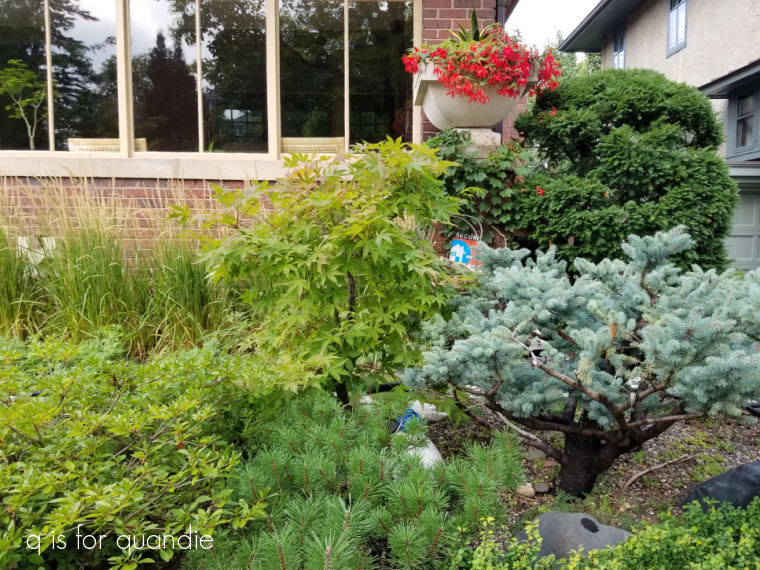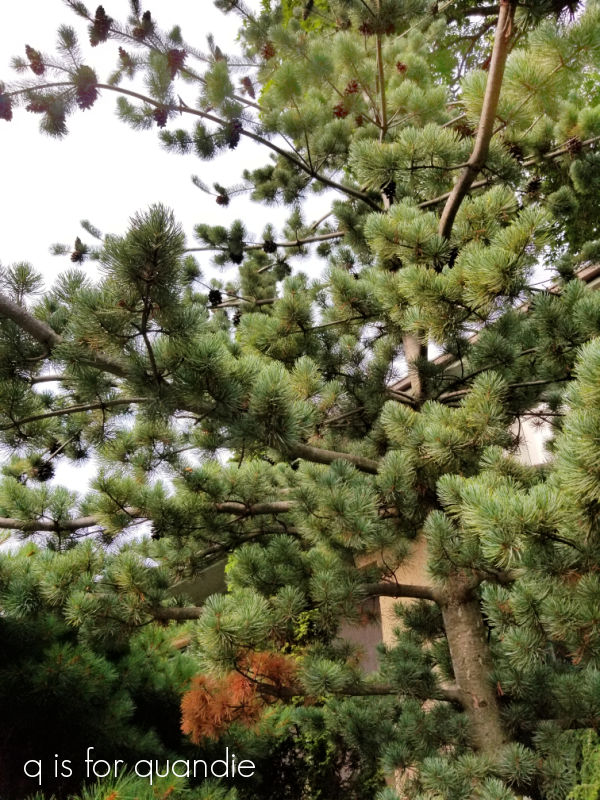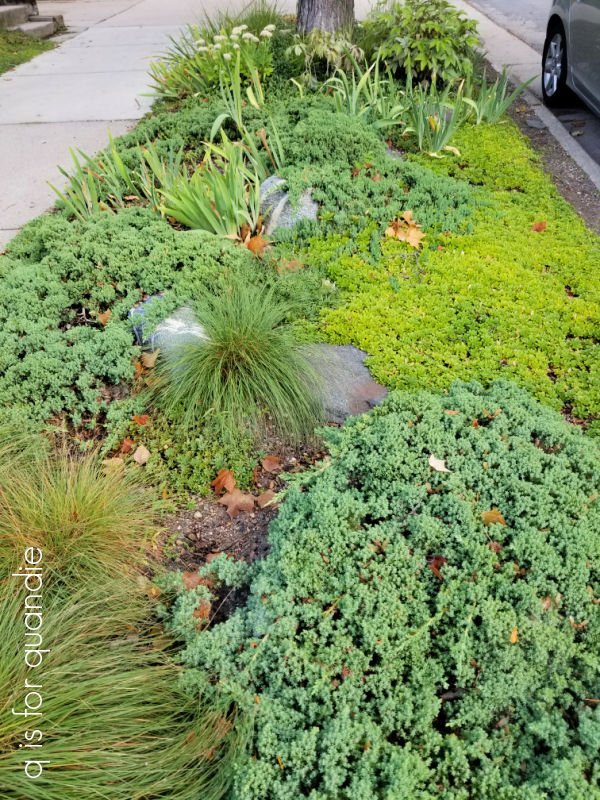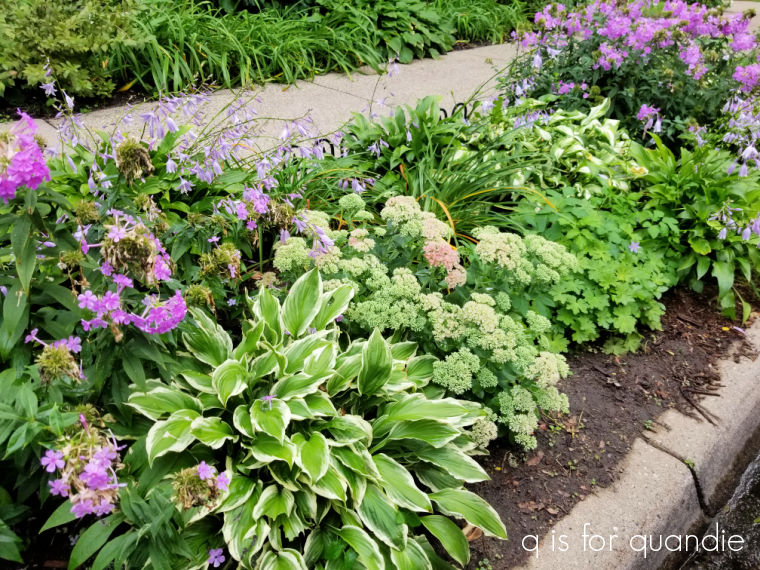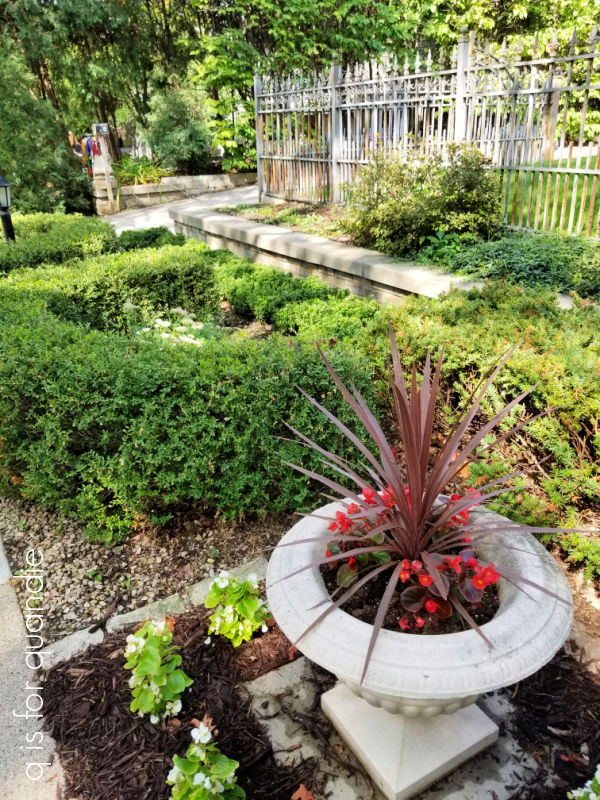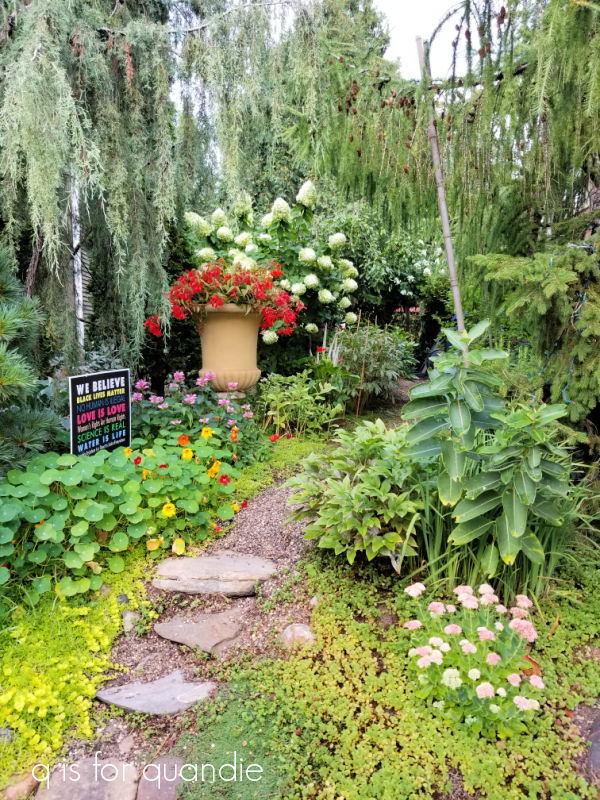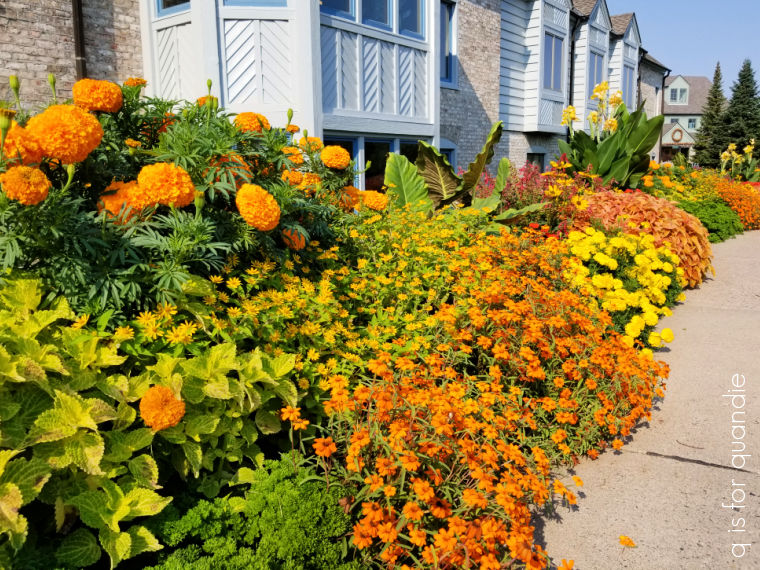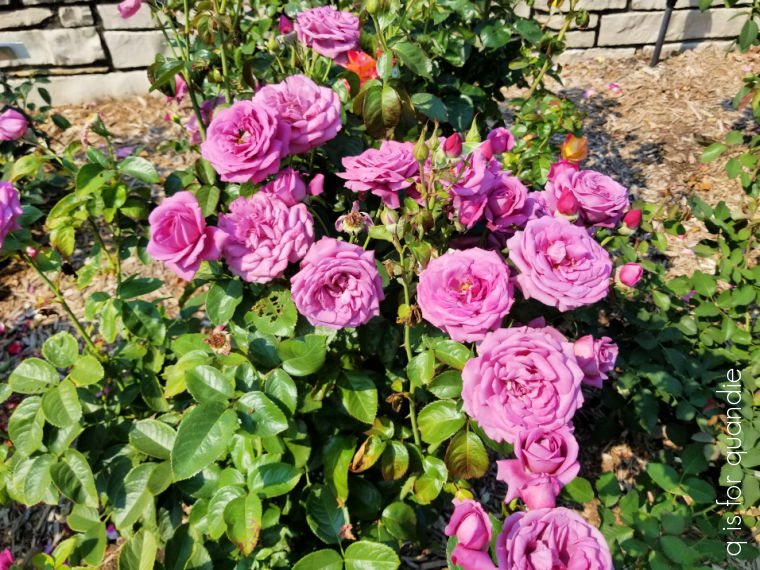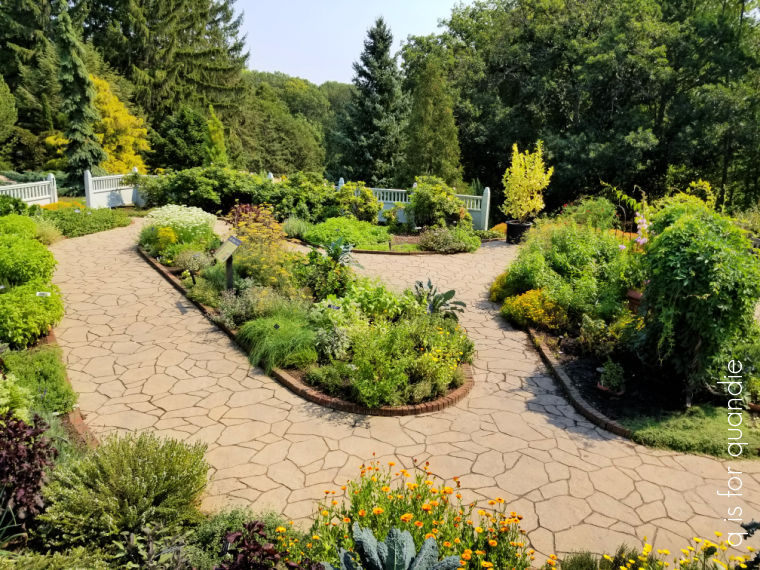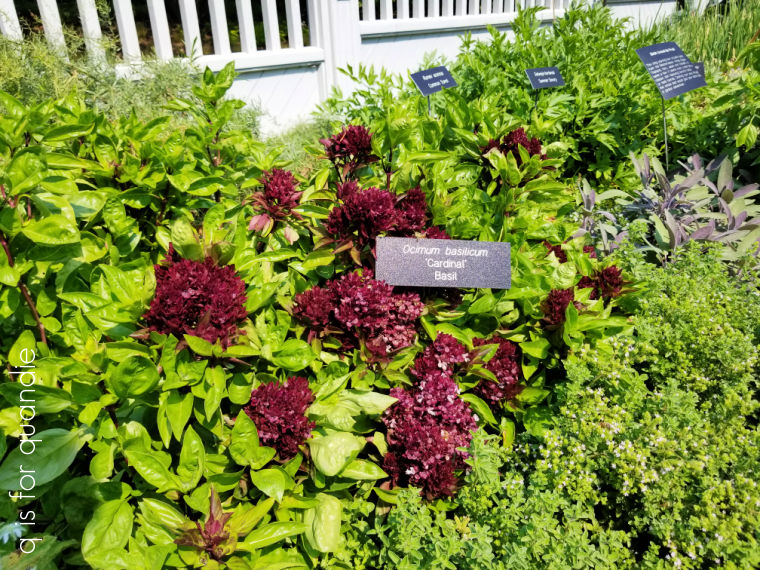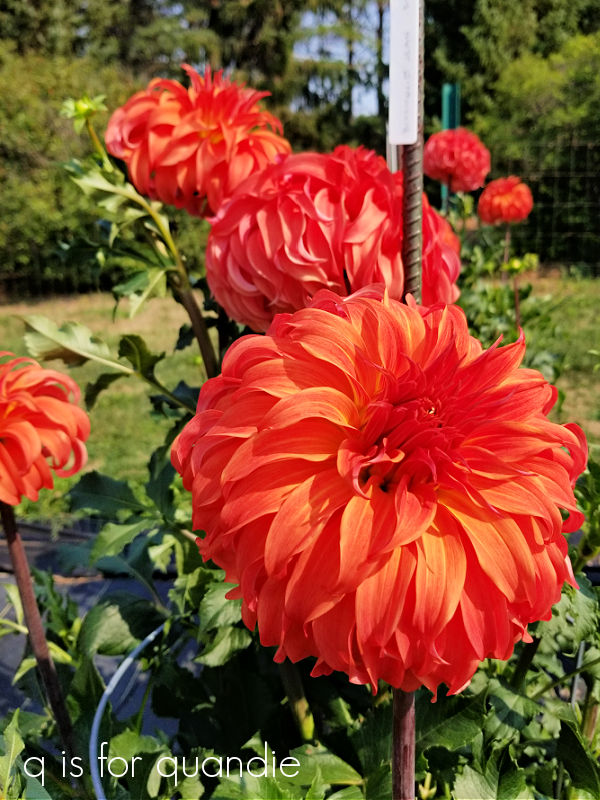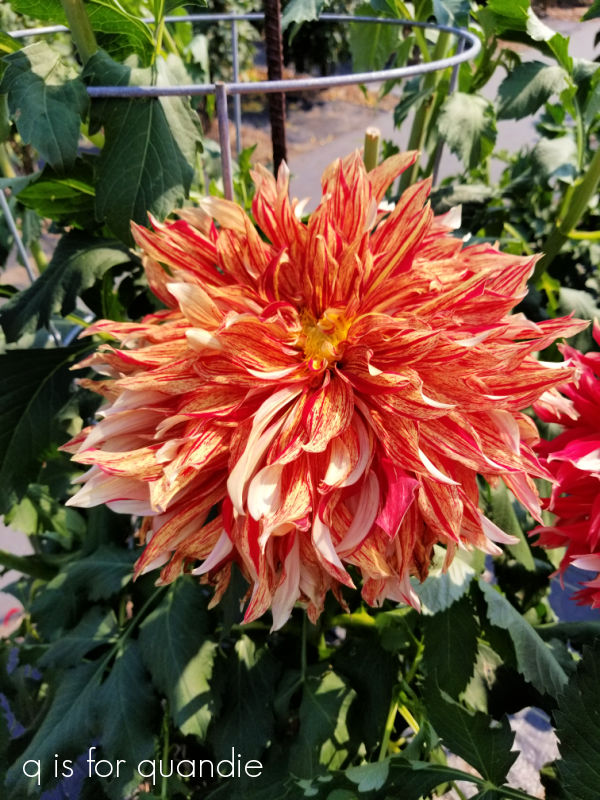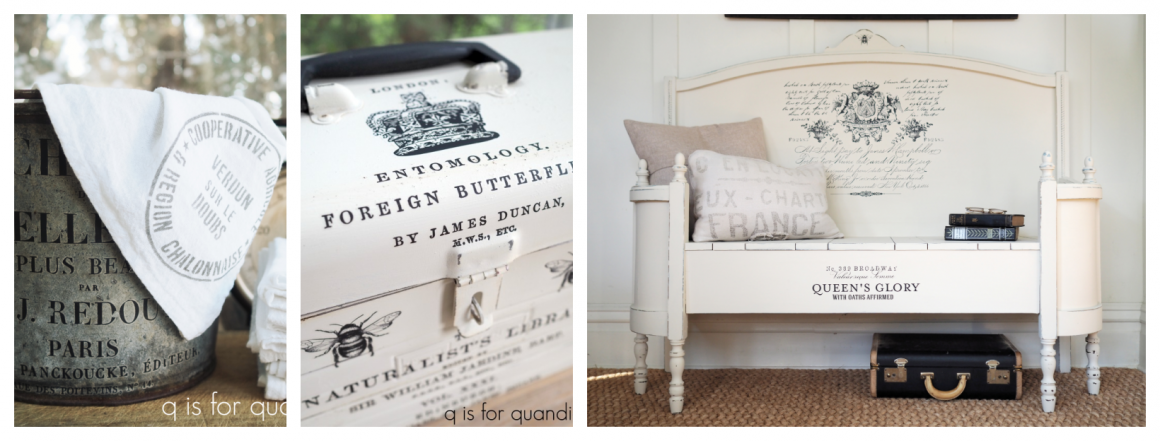
perennials that bloom all summer.

Good morning gardeners!  Today’s ‘Sunday mornings in the garden’ post is going to be a short one because I’m sharing a rather short list of plants today; perennials with long bloom times.

While the upside to perennials is that they come back year after year (so you only have to buy them once to enjoy them for years), the downside is that most of them have a rather short bloom period.

As you know, my absolute favorite perennial flower in the garden is the peony.

And the bloom time for peonies is notoriously short, and made even shorter when we inevitably suffer a spell of hot, humid weather as soon as they open.

As you may remember, last year, in an attempt to extend peony season, I experimented with saving peony buds in the fridge and I had good success with that.  So much so that I did it again this year with even more peony buds.  And … um … well …

I didn’t follow my own instructions!  I wrapped these in a damp paper towel, and then put them in the Ziploc bag.  As you can see, they got moldy.  Last year I just put them directly in the Ziploc, no damp paper towel.  I’ll have to try again next year, with no damp towel!

Another of my favorites, lilacs, also have a pretty short bloom period.

And unfortunately, I don’t know any tricks for saving them for later.  In fact, I haven’t even found any tricks that work for making them last more than 1 or 2 days as cut flowers.  If you know of anything that works, leave a comment and let us know.

Roses are another of my favorites with a short bloom time.

However, I grow very few due to Japanese beetles. Those beetles just love roses!  I never had time for fussing with insect control in the past, so I took a few things out of my garden that the beetles loved including roses, a grape vine and some Virginia creeper.  I do have this one last pink shrub rose that was given to me at least 20 years ago or more.

But wait!  I went off on a tangent, this post is supposed to be about perennials with a long bloom time, not without one.

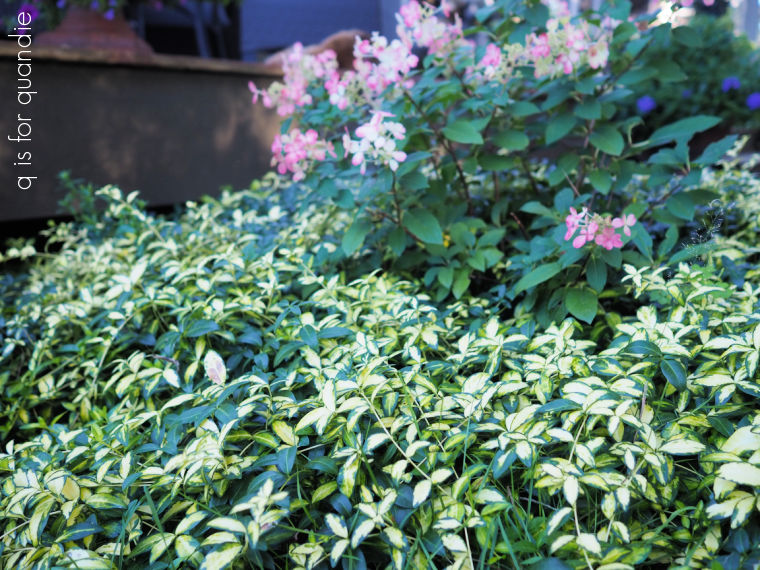
I’m tempted to start the list with panicle hydrangeas.

They definitely have a longer bloom time than peonies, lilacs and roses.  However, they only just started blooming in mid-August, so while they will continue to look amazing for the rest of the season, they missed most of the summer.

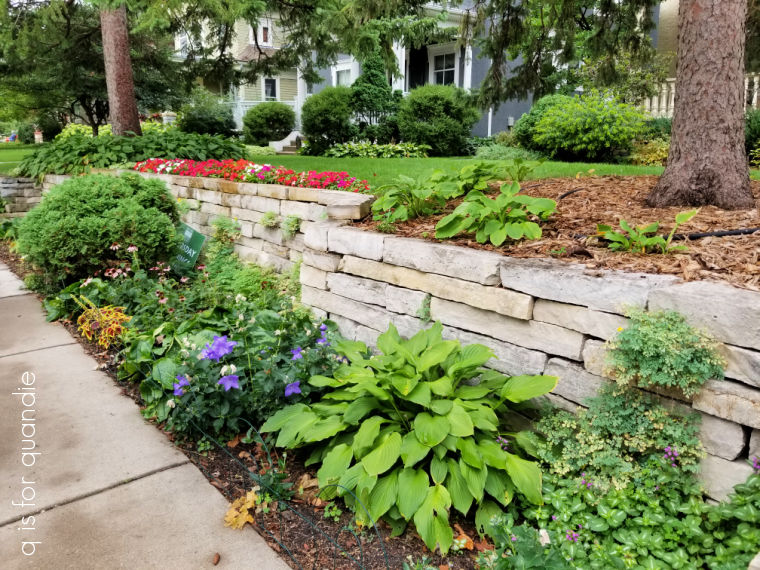
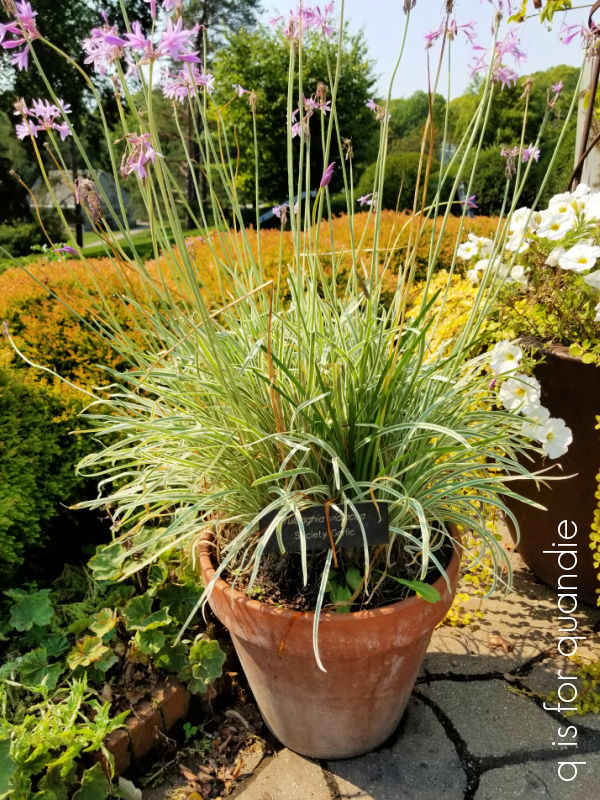
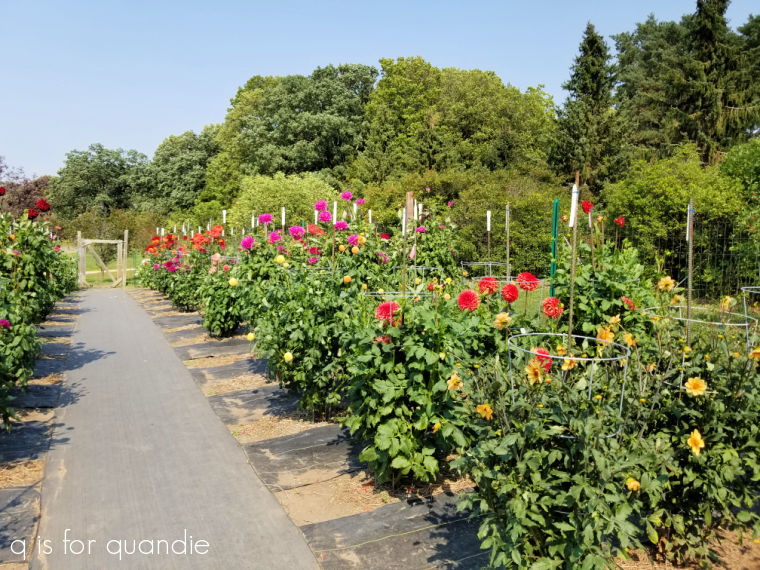
I do have a handful of perennials in my garden that bloom for a good portion of the growing season though, starting as early as May and continuing through the first frost.

Corydalis lutea is one of them.

This is a plant that I purchased at a garage sale not really knowing what it was.  Frankly, I don’t love yellow flowers.  But I let this one do its thing because it’s such a constant bloomer.  Mine starts blooming in late spring and it’s still blooming now.

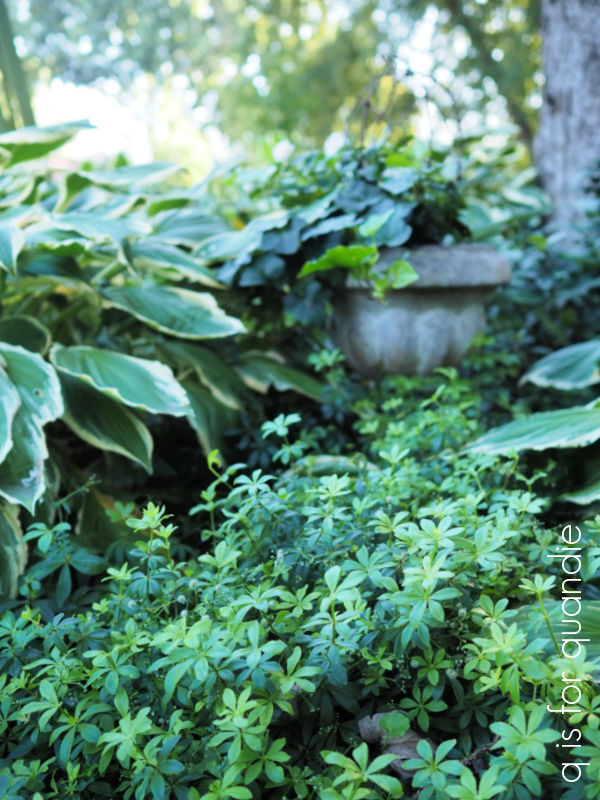
You do have to be slightly cautious with this one as it self-seeds quite easily and will take over if you let it.  I pull out good sized chunks of it every year, and it is very easy to control that way.  It’s a great companion plant for hostas, and I have it growing in dappled sunlight.

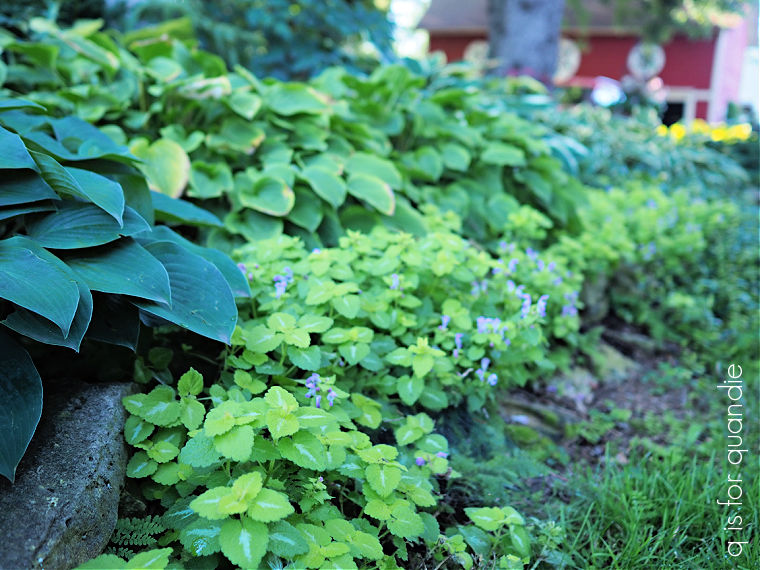
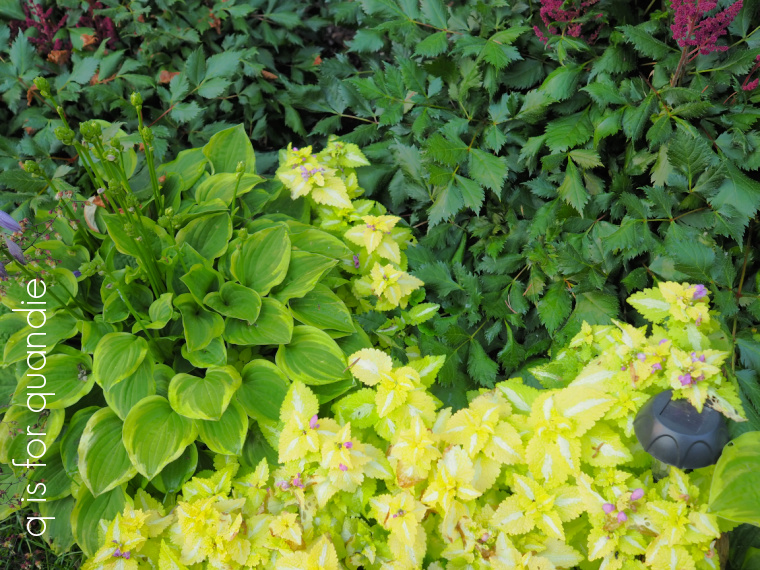
Lamium Aureum is another perennial that blooms from May through frost.

I’ve even seen this one pop up through the snow with some flowers on it!

But I have to admit, I grow this ground cover for its foliage not for its flowers.  I don’t actually like the flowers, but I love the bright lime green leaves.

It’s another great companion for hostas as it will grow in full shade to part sun.

Another long blooming perennial that I purchased at a garage sale is Dicentra ‘Luxuriant’, sometimes called fern-leaf or fringed bleeding heart.

Unlike the more common varieties of bleeding heart that bloom in the spring and have pretty much died back to the ground by now, this variety blooms all summer.  As you can see, the flowers look slightly different (and aren’t as pretty, in my opinion) and so does the foliage.  The foliage is rather fern-like, hence the name.

The plant is much more compact that your typical bleeding heart, and it doesn’t get straggly and unkempt looking in late summer like the others.

This plant will also self-seed, although not quite as readily as the Corydalis, at least not in my garden.  I do have one volunteer plant that popped up in a spot where it doesn’t belong and I haven’t had the heart (pardon the pun) to pull it out yet.

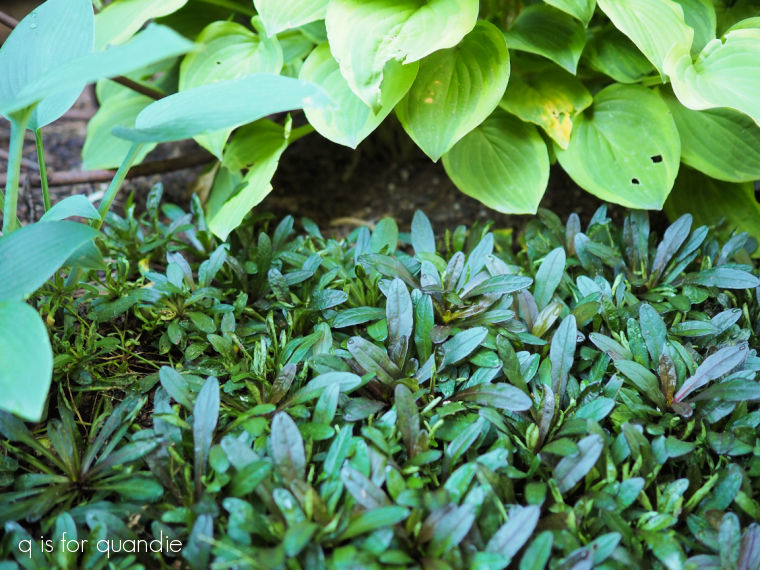
Last on my long-blooming perennial list is Myosotis sylvatica, or Forget-me-not.

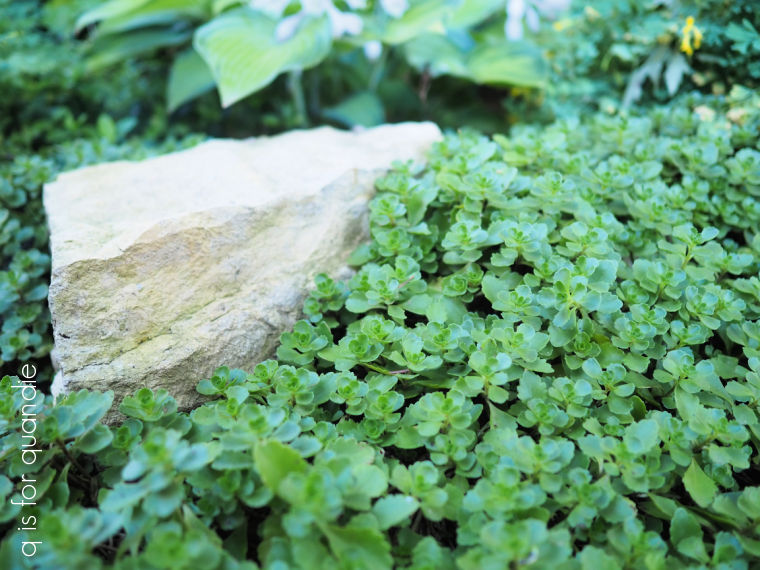
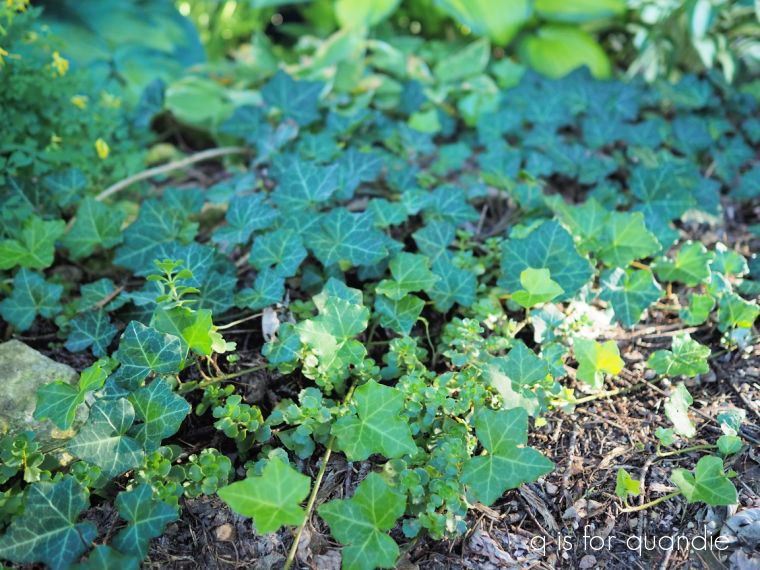
This is another ground cover that can lean towards invasive.  However, I have mine interplanted with a number of other ground covers, the Lamium, a varigated vinca vine and a very small sedum.  All of them tend to battle for dominance and so far no single plant has won out.

I do love those pretty little blue flowers.  But ‘little’ is the key word here.

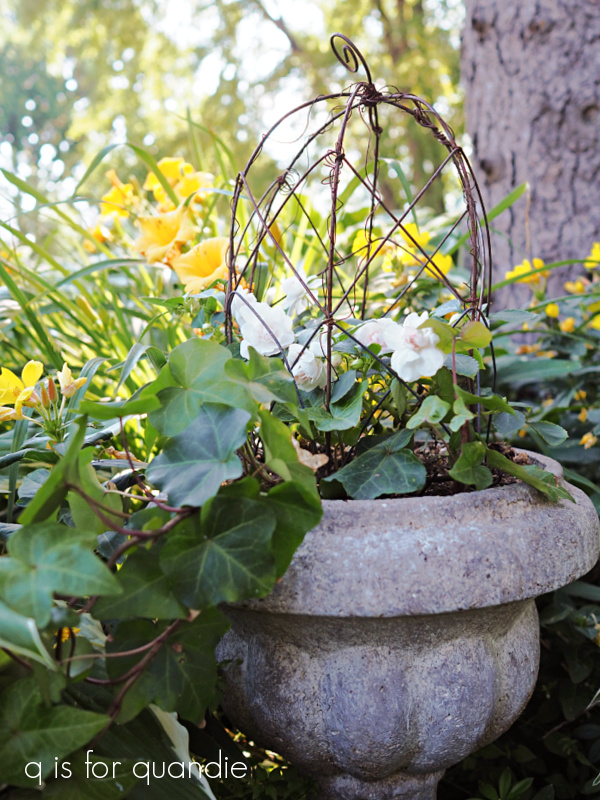
An honorable mention goes to my new Roguchi clematis.

I just planted it back in May of this year, but it hasn’t quit flowering all summer and is still going strong.  I just have this one growing season to go by, but so far it seems to be a winner.  Once again, it’s not the most flamboyant of the clematis varieties, but I love that it has bloomed all summer.  I think the little purple and white bell shaped flowers are super sweet too.

One thing to note about the Roguchi is that it’s a non-vining clematis.  It won’t climb its way up a trellis on its own, but you can train it (which is what I have done).  Or you can let it spill over the sides of a retaining wall, or scramble through your perennial beds.

One thing all four of these plants have in common is that they aren’t terribly showy.  Perhaps that’s the trade off here, more subdued flowers in exchange for a much longer bloom time.

How about you?  Do you have any recommendations for perennials that will bloom all summer?  If so, be sure to leave a comment and let us know.

a cherubic thrift haul.

For those of you who also frequent garage sales or thrift stores, let me ask you this; do you often find that sometimes a theme seems to emerge on any given day?

For example, there was the time I came home from a neighborhood garage sale with a jumble of chairs.

I once decided that a grouping of chairs should be called a ‘jumble’, sort of like a school of fish or a murder of crows.

And then earlier this summer I found tons of toolboxes one day.

I wasn’t particularly looking for chairs or toolboxes on those occasions, but there they were.

Well, a couple of weeks ago when my friend Sue and I went thrifting another theme seemed to emerge.

Cherubs!

They were everywhere.

First it was the tall urn that I found at Goodwill.

Well, OK, probably best not to look too closely at what’s happening on that urn, I don’t think those are cherubs after all.

However, I also found a plaque at Goodwill that definitely has cherubs.

The shorter urn was from Turnstyle, and also definitely cherubic.

And finally we have the golden cherubs, and they were also from Turnstyle.

I have an embarrassing confession to make regarding these.  I paid $14 each for them at Turnstyle, and when I got them home and was cleaning them up, I turned them over to find the original Marshall’s tag for $12.99 each.

I’m fairly sure I’m going to lose my status as an expert thrifter for that one … not that I have ever claimed to be an expert.  Clearly I’m not.

You’d think I learned my lesson from the last time I purchased an item at Goodwill that still had a Marshall’s tag on it.  That time the clerk at Goodwill charged me the Marshall’s price, which was quite a bit higher than the Goodwill price.  And I didn’t notice that one until I’d gotten home either.

But I don’t really feel too bad about it, they have turned out pretty cool as you’ll see in a minute and were worth every penny of that $28.

I had one thing in mind when purchasing all of these cherubic pieces, rust!

(if only I’d gotten the shirt!)

So I cleaned them all and then gave them a coat of flat red primer spray paint.

I could have used the Dixie Belle Prime Start, but that has to be brushed on and with all of the nooks and crannies in these piece, spray was just easier.

Next I pulled out the Dixie Belle Iron patina paint and gave them all two coats.  Yes, the Iron paint does get brushed on, but I recommend stippling it on with dabbing motions to avoid getting any brushstrokes which will become more obvious as the green spray will settle in those.  In addition, I find that you don’t have to be too particular regarding coverage with this technique.  Any spots missed with the Iron paint will barely be noticeable with that primer red base color, or they can be easily touched up.  While the 2nd coat was still wet, I sprayed everything with the green spray to create rust.

After waiting a day or so for the rust to fully materialize, I realized that I’d missed a few spots on the undersides of several of the pieces.  So I flipped them all over and dabbed more Iron paint on those areas and sprayed again.

After another day I still felt like there wasn’t enough rust for my taste, so I tried a little experiment with the two urns.  I’d noticed that the rusty pieces I’ve placed in my garden tend to get more rusty after they get a little rain.  So I decided to use my Dixie Belle Continuous Mister Bottle to spray them with a fine mist of water.

That totally did the trick.

When I’m leaving my rusty pieces outside, I typically don’t seal them.  I have several planters, and some iron garden furniture, that I’ve used the patina paint on and then left outside … even in the winter … and they hold up just fine, although of course they do continue to get rustier over time.

However, in this case I was bringing these into the shop and I didn’t want them to damage other items they might come into contact with so I gave them a couple of coats of Rust-oleum Matte Clear coat.

I find that the matte finish of this spray clear coat doesn’t alter the texture of the rusty patina quite as much as a glossier finish, although it does still change it a little.

So here is how those urns turned out.

And here is the plaque …

As for the golden cherubs, I think they would be perfect for Christmas décor, but the gold was a little too precious for me.  Now that I’ve made them rusty, they have an earthier feel.

I can see these added to a Christmas planter outside, but they could be used inside as well.  Maybe as part of a table-scape.

So tell me, which do you prefer?  Rusty or golden?

I’ll probably hang onto these cherubs until the Christmas season, unless one of you locals want to snatch them up now.  If so, check out my ‘available for local sale‘ page for more details.

You’ve probably noticed that I only had small projects to share with you this week.  Well, that’s because I’ve been hard at work behind the scenes painting the potting shed.  Phew!  I forgot how much work such things can be, and this one required A LOT of prep.  Luckily my friend Annie came over to help me, which motivated me to get ‘er done.  I’m hoping to share the completed shed next week, so be sure to stay tuned!

you had me at rusty.

My local readers are probably familiar with the Downtown Oronoco Gold Rush, but for those of you who aren’t, it’s an antique show & flea market that has been taking place for 50 years!

I hadn’t been to the Gold Rush for several years (you know, the whole Covid thing), but this past Sunday my sister and I decided to head to Oronoco to check it out.  The forecast called for a sunny day in the upper 70’s, so it was the perfect day to wander around amongst the various booths to see what people had.

I really didn’t snap a lot of photos, and this certainly isn’t going to be a comprehensive review of the event, but I thought I’d share a few of my favorite things.

Of course I was drawn to the vintage ornaments, and there were a few to be had.

The prices were reasonable, but I really don’t need to add to my already sizeable collection.  Plus I thought it would be a little challenging to carry them around without breaking them.

I saw quite a few vintage sleds …

I would never paint those two, they have a fabulous vintage patina ‘as is’, and they were priced in the $80+ range, so clearly out of my price range.  I did see another vendor selling painted sleds, but they were hand-painted with snowmen and things like that (not quite the same as the sleds that I paint), but I neglected to get a photo of her stuff.

There was no shortage of chippy spindles …

and all kinds of vintage everything …

And in another case of the Baader-Meinhof phenomenon, look what I saw …

roller skates along with their black metal carrying case.  I’m sure I wouldn’t have even noticed them had I not just worked on one myself.

I opened up the case and it was very similar to mine inside, so this certainly proves that mine was originally meant to be a roller skate case just as the seller claimed.

There are always plenty of quirky items at Gold Rush too.

and certainly lots of seasonal stuff.

To be honest, I snapped the photo of that ‘pumpkins’ sign so that I could try and make my own version of it.  Seems like it would be simple enough, right?  We’ll see if I get around to that.

I thought the fall colors in this little vignette were nice too.

I hate to say it, but this year the event did not have many booths that spoke to me.  There were really only a handful of vendors that had things styled in a fashion that appealed to me.  The last time I went to Gold Rush there were so many fabulous vignettes to admire.  I thought maybe it was my imagination, but then I went back and looked at my pictures from 2017 and that confirmed it.

This year there was really only one booth that impressed me with their styling, this one from Old Soul Vintage.

She had a fun vintage camp theme going on.

Complete with fishing gear.

But my favorite item in that booth was this one …

How perfect would that be for me?  Unfortunately, she did not have my size.

Now, you are probably wondering what I did purchase at Gold Rush, and if so you’re going to be really disappointed.  I’m kind of embarrassed to admit to my purchase, but it was a Norwex mop.  Seriously, they’re going to vote me off the vintage lovers island.  But I find my Norwex window cleaning cloth really functional, and I like the idea of being able to mop my wood floors with plain water too.  So after going through the booths of around 200 vintage dealers and finding nothing that I absolutely had to have, I went back to the Norwex booth and bought a mop!  What can I say?  I guess I was feeling practical.

So how about you?  Do you have any fabulous antique shows where you are?  And if so, do you usually window shop, or do you always find something fabulously vintage to bring home (or would you bring home a mop)?  Or maybe you have a favorite find from the past that you’d like to share.  Leave a comment and let us know!

thrift find makeovers.

Whenever I’m out thrifting I’m always on the lookout for simple wood items that I can give new life to with paint.

I’ll readily admit that none of these are spectacular finds, certainly nothing to write home about.  But all three were fun makeovers.

Let’s start with the basic cutting board.  After sanding it down and cleaning it with a grease cutting cleaner, I painted it with Dixie Belle’s Sawmill Gravy, and then added some grain sack style stripes using their French Linen.  Once dry, I sanded to distress and then added the farm animal transfer from Dixie Belle’s On the Farm transfer set.

The “Precious Stone Farm” wording is from re.design with prima’s Everyday Farmhouse transfer set.

I just love how it turned out, so cute.  It’s no longer food safe, but would make great decor.

Next up is the rooster shaped cutting board.  Once again, I prepped as usual and then painted it with two coats of the Sawmill Gravy.  Then I pulled out some scraps from the I.O.D. Floral Anthology transfer and pieced them in around the edges of the rooster.

Finally, I added some wording from their Label Ephemera transfer and now he’s a funky french floral rooster.  Again, no longer food safe, but perfect for decorating the kitchen counter top.

By the way, I top-coated both of these pieces with clear wax.

Last up is … well … I really don’t know what to call this thing.  I’m thinking it was originally a napkin, or paper guest towel holder, maybe?  Do you have any idea what this might have been used for?

Well, regardless, I painted it in Sawmill Gravy and then I decided to do a little experimenting with stamping once again.  Take note that I did not use any kind of sealer over the paint before stamping, and this is a chalk style paint.

The last time I tried stamping on paint I wasn’t terribly happy with the results.  But a couple of my readers gave me some tips including Teri B. who specifically recommended VersaFine Clair ink for stamping over paint.

So I went out and purchased some from my local craft store (I can’t remember, it was either Hobby Lobby or Michaels).

First up, I have to say that no matter how good the ink, nothing can help if you’re a clumsy stamper … which apparently I am.  On my first go around, after applying the stamp semi-perfectly, I then dropped it right back down on my surface.  Ugh.  So I wiped it back as much as I could, re-painted with the Sawmill Gravy and then gave it another go.

The 2nd time around I ended up not liking the stamp I chose (and by the way, all of these stamps are from the I.O.D. Crockery set), so once again I wiped it off using a damp cloth.

At that point it occurred to me that I rather liked the washed out look I achieved when wiping off the ink right away so I took a quick photo to share with you.  At some point I may want to use this technique on another project.  But for this piece I once again painted back over it with the Sawmill Gravy.

I will say that this is one of the benefits of stamping over paint, you can re-do it multiple times at no extra cost.

The third time is sort of the charm with this one.

I say ‘sort of’ for a few reasons.  I didn’t apply even pressure to the stamp, and I also managed to smear the ink just a little bit by accidentally brushing over it with my hand.

But those are pretty fine details, and unless you are an uber-perfectionist (which may, or may not, apply to me) this is good enough.  And really, if you’re an uber-perfectionist, stamping probably just isn’t for you.

I also achieved decent results with the stamp at the bottom too.

Teri was definitely right, the VersaFine Clair ink is the way to go if you’re stamping over chalk paint.

After 24 hours, the ink appeared to be dry enough to add a top coat over it without fear of smearing, but I chose to hold off on adding a coat of clear wax.

Why?  Well, I may keep this piece to corral some flashcards and maybe a pair of readers or two and I’m not sure I love this look.  I may decide to give it an entirely different look next, so I’m holding off on waxing in case I decide to paint over it one more time.

After working on all three of these thrift find makeovers, I have to say that I still think transfers deliver a lot more punch than stamps.  But of course, you can only use a transfer one time, while stamps can be used over and over.  So tell me, what do you think?  Do you prefer transfers or stamps?  Leave a comment and let me know.

show stopping hydrangeas.

Good morning from the garden!  Today I’m going to share my favorite flowering shrub, hydrangeas.

There are five main types of hydrangeas, so let me first mention the two that I don’t grow.

First up is hydrangea quercifolia or oakleaf hydrangeas.  Although some gardeners do attempt to grow this one in our zone 4b, it’s a tricky one.  They require hot, sunny summers in order to produce blooms and Minnesota doesn’t always provide that.  They also bloom on old wood, so getting them to bloom in our climate is challenging.  I’m not into tricky gardening, I prefer to grow plants that aren’t so finicky.

Next up is hydrangea petiolaris or climbing hydrangeas.  These will grow in zones 4 to 8, but also bloom on old wood.  I don’t really have a good spot for a climbing hydrangea, so I’ve never even attempted one.

Next up is a variety that I do actually grow, but not successfully.  Hydrangea macrophylla or mophead hydrangeas are absolutely gorgeous … when grown in the right climate.  These are those beautiful hydrangeas whose bloom color changes depending on the pH of the soil they are grown in.  When I visited the Jersey shore a few years back I saw lots of these and they were stunning.  Every bush was absolutely loaded with blooms.

Typically these hydrangeas do well in zones 6 – 9.  They bloom on old wood, so in other words if they die back to the ground every winter you’ll never get any flowers.  Ventnor City, New Jersey, where I took that photo, is a zone 7b.

So imagine my excitement when Minnesota’s Bailey Nurseries developed a macrophylla that bloomed on both old and new wood, the Endless Summer hydrangea.  Gardeners all across the north rushed out to buy these hydrangeas, including me and pretty much all of my gardening friends.  I initially planted two of them.  But their performance for me has been pretty sad.  I think 2016 was the best year for them and I got six or seven flowers that year.

And as you can see, the colors on my Endless Summer flowers weren’t nearly as spectacular as those Jersey hydrangeas.

  I pulled one of my Endless Summer plants out a couple of years ago, but I still have one in my back garden.  Last year I didn’t get any blooms at all on it, and so far I don’t see any this year either.  But hope springs eternal and I haven’t dug up that last one quite yet.  I have read that you can grow these in containers, bringing it into a sheltered area for the winter to prevent it from dying down to the ground.  Maybe I’ll dig mine up and try that.

Do any of you grow a macrophylla in zones 4 or 5?  And if so, have you had luck getting it to flower.  Leave a comment and let us know.

Next we have hydrangea aborescens or smooth (or wild) hydrangeas.  The most common, and more old fashioned, of these is the Annabelle hydrangea and I have two of them.  Mine started blooming back in early July (or maybe it was late June).  Here is one of them behind the fresh flowers cart …

The flowers on the aborescens are more rounded in shape than the paniculata (which we’ll talk about next), and they start off white and by this time (mid-August) they have aged to a green color.

They produce tons of flowers each year (they bloom on new wood), and they make great cut flowers.

However, they are less than ideal in the garden.  The stems tend to be weak and thus they flop when loaded down with big blooms.  I have an old brass bed frame supporting the Annabelle by our deck …

but I just allow the ones out back in the cut flower garden to flop away.  They can look quite bedraggled after a rain.

There is a new and improved version of the Annabelle called Incrediball that supposedly has stronger stems.  I have not grown that variety myself, but in a recent video Laura from Garden Answer mentioned that although the Incrediball is an improvement over the Annabelle, it still tends to flop a little.

In my opinion, why bother with that when you can grow my favorite variety, hydrangea paniculata or panicle hydrangeas?

Paniculatas are the most cold hardy of the hydrangeas and can be grown as far north as a zone 3.  They have more of a cone shaped flower (compared to the more rounded flowers of the Annabelle), and they bloom on new wood.  That means that in my zone 4b garden they are absolutely loaded with flowers every year no matter how harsh the winter may have been.

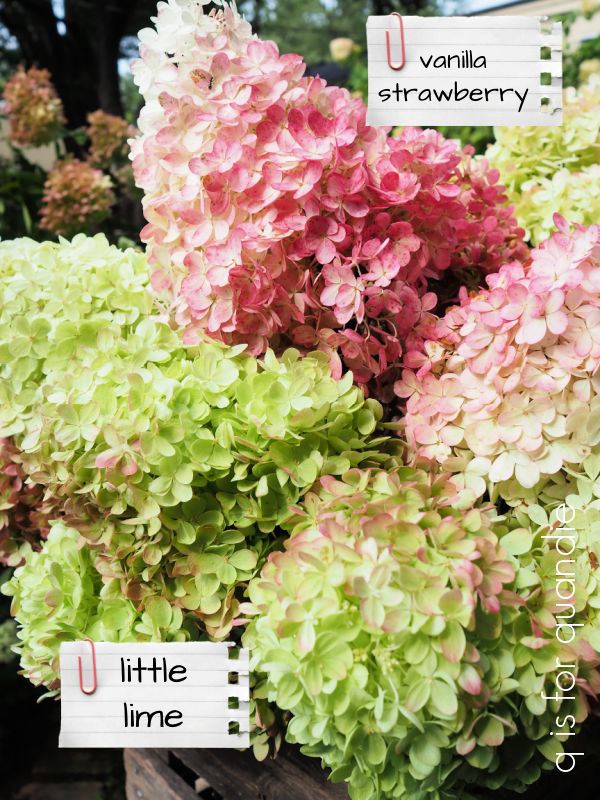
I grow four different varieties of paniculatas; the Limelight, the Little Lime, the Vanilla Strawberry and the Little Quick Fire.

As the names imply, the Little Lime and the Little Quick Fire are dwarf versions of Limelight and Quick Fire.  I put in one Little Quick Fire last summer, and another one this year, and so far, obviously, they are still pretty small at around 2′ tall.

The Little Quick Fire starts blooming a few weeks earlier than the Limelights, which may be a selling point for those who don’t want to wait until mid-August for some flowers.  But I have to admit that so far I’m not super impressed with this one.  The flowers on mine are rather small and dull compared to the Little Lime.  But maybe I just need to give them some time.  They also are mostly white so far with just a little tinge of pink.  I’m guessing that they don’t turn that ‘fire’ color until fall.
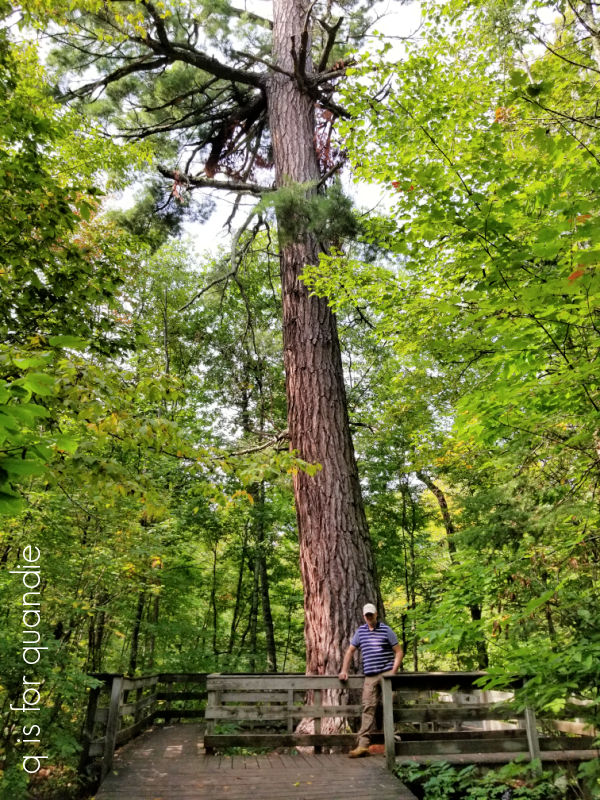
My Little Lime is at least 10 years old (or more) and although they are only supposed to get 4′ tall and wide, mine is easily as tall as I am (that’s 5’10”).

If you love the look of a Limelight, but don’t have space for a shrub that can get to be 8′ tall or more (my Limelights are about 9.5′ tall), a Little Lime is a great option.

We have a Vanilla Strawberry hydrangea out back next to the carriage house.  The flowers on this one start out white, and gradually turn pink.
I do like this one, and it is just as prolific a bloomer as the Limelight, but I haven’t kept up with the pruning and it’s looking a bit leggy.

Just a quick note on that, you should prune your paniculatas in late winter/early spring (it tends to be the very first garden task I tackle each year) by about 1/3 to promote strong new growth and larger flowers.  This is basically the only maintenance required for these plants.

But back to the Vanilla Strawberry, I was hoping for a gorgeous show of pink color on this hydrangea but it doesn’t start out with a bang, but rather slowly turn pink.  There is a new variety out this year called Berry White that I want to get my hands on.  It supposedly has stronger stems and deeper, richer color.
That being said, by early October the Vanilla Strawberry does look pretty spectacular …

I may have to do another Sunday morning post about how the colors of the paniculatas change into fall.  Because truly, if you think they look good now, just wait until October!

Finally we get to the star of the show, and my personal favorite, the Limelight.

There is definitely a reason this plant has become so popular.  It’s easy to grow, requires very little maintenance, is covered with blooms (if you’re giving it enough sun), and is basically a show-stopper.

We planted a pair of them in this spot next to our deck to provide additional privacy around our outdoor dining space and they’ve worked perfectly for that.

I love being able to enjoy my morning coffee with a backdrop of gorgeous flowers this time of year.

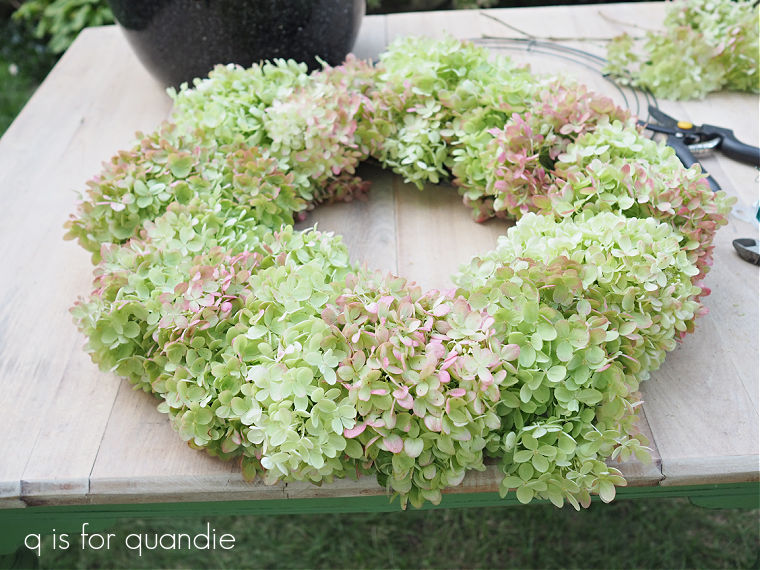
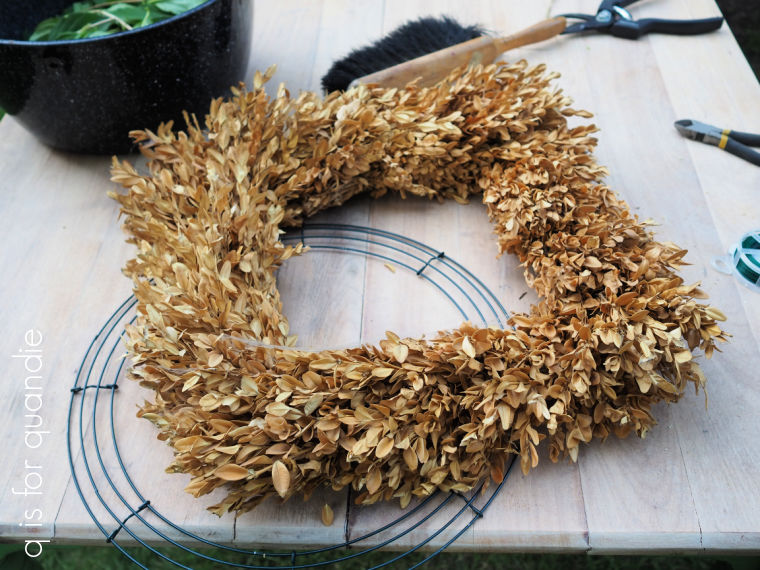
Another thing that I love about growing hydrangeas is that I can dry them for use in my winter window boxes.  I’m doing a little experimenting this year to figure out the best way to dry them and I’ll be sharing that soon so be sure to stay tuned!

I went to a garden party.

Earlier this week I had the pleasure of being invited to a really lovely garden party along with the other vendors at Reclaiming Beautiful, the shop where I sell on consignment in Stillwater, MN.

Everything was just so beautiful that I had to snap a few photos to share with you guys!

The party was held at David and Nancy’s house, and some of you may remember when I shared a tour of their home back in June 2020.  Back then, their gardens looked like this …

And now, a mere two years later, that area looks like this.

They’ve added a gravel patio and a lovely little cottage to that space.

Let’s start with the patio which you enter through this fabulous arch created from old doors.

It’s a really nice sized patio, and much of it is sheltered by a gorgeous tree.

And while some of the furnishings are more traditional patio pieces, like this seating area …

What really makes the space magical is the use of indoor furniture in an outdoor setting.

The frames hanging from the tree are such a whimsical touch.

And how about that organ?

Don’t you just love that?!

You may be wondering how these pieces hold up outside, and so was I.  Nancy said she painted them with outdoor paint, and they get a fair amount of protection from that tree.  However, they do cover them if it’s going to really rain hard.  I didn’t ask, but I’m also guessing they will store them for the winter.  Although maybe not.  As Nancy explained, she paid very little for each piece so if something gets ruined, oh well.  I can just picture that organ draped with evergreen garland and lights sitting in a snowbank, can’t you?

The fact that all of this is in such an idyllic setting surrounded by fields of wildflowers is part of what makes it so magical as well.

When I first arrived there was even a doe and her fawn grazing nearby in a most picturesque fashion, although I imagine those deer are precisely why Nancy’s zinnia garden is completely enclosed in fencing.

OK, you’re all probably dying to get inside that little cottage, I know I was.

I’m afraid I was too busy snapping photos to get all of the details on how this little building came about, so I’m sorry about that.  But isn’t it gorgeous?

The details of the cupola and those star shaped vents are fantastic.  I love that it opens all the way up on one side.

Naturally Nancy has gone all out decorating the inside.

Here’s fellow vendor Amy testing out the furniture.

Looks comfy!

We did get a tour inside the house as well, but the light was going at that point and I only had my phone for photos rather than my camera, so I didn’t take any.  But I can refer you back to my original tour of Nancy’s home if you want to see that.

No garden party is complete without party favors!

Nancy sent each of us home with some of those pretty zinnias from her garden.

Isn’t her little card just so sweet?

That is a drawing of her house, and this is the card for her business, The Festooned Farmhouse.  She offers home and/or event styling.  You can also find Nancy on Instagram.  Be sure to check her out!

a sweet little box.

I feel a little bit like I should apologize for today’s makeover.

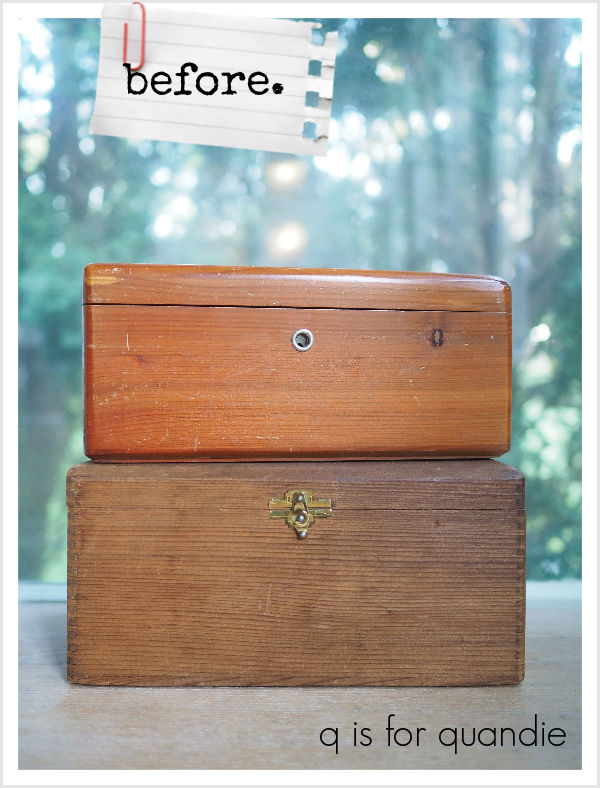
I’m sure that someone put their heart into hand-painting this little wooden recipe box.

It was certainly sweet, and very well done, but maybe just a tad outdated.  I’ve re-done a few of these recipe boxes over the years and I always enjoy the process.

So when I saw it in the thrift shop, I couldn’t resist buying it so I could give it a little makeover.

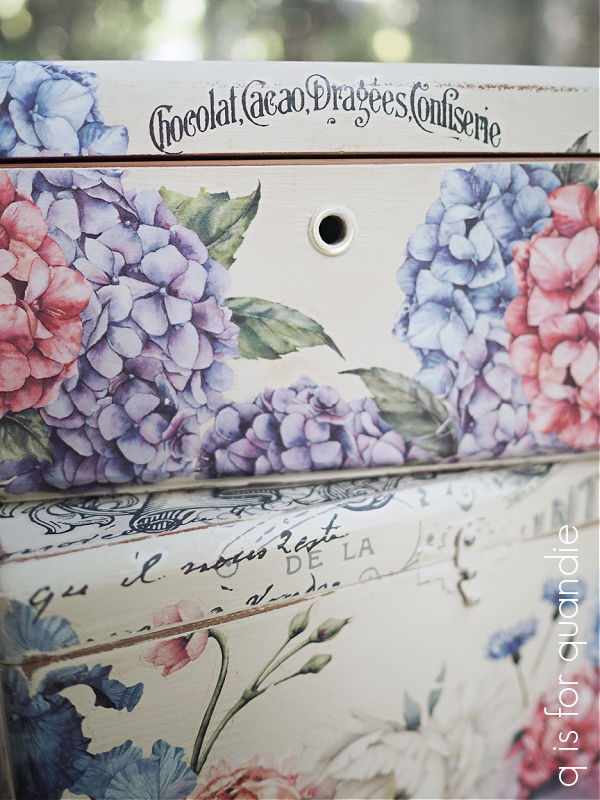
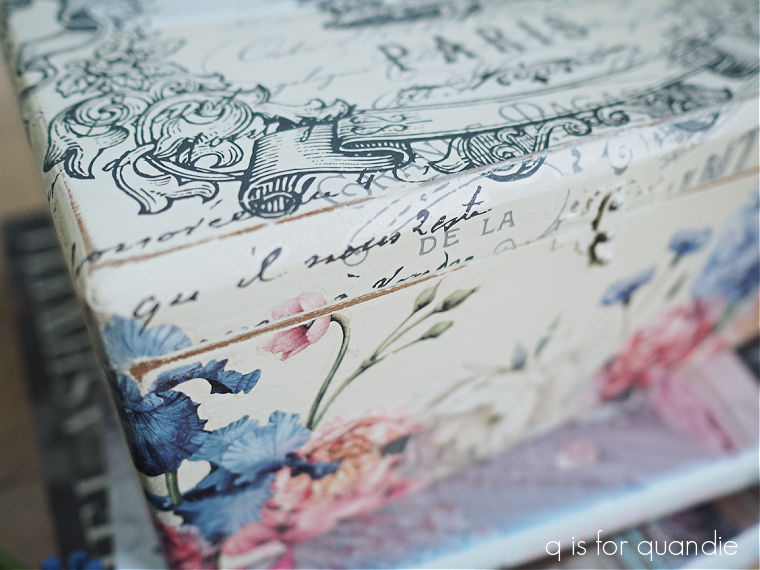
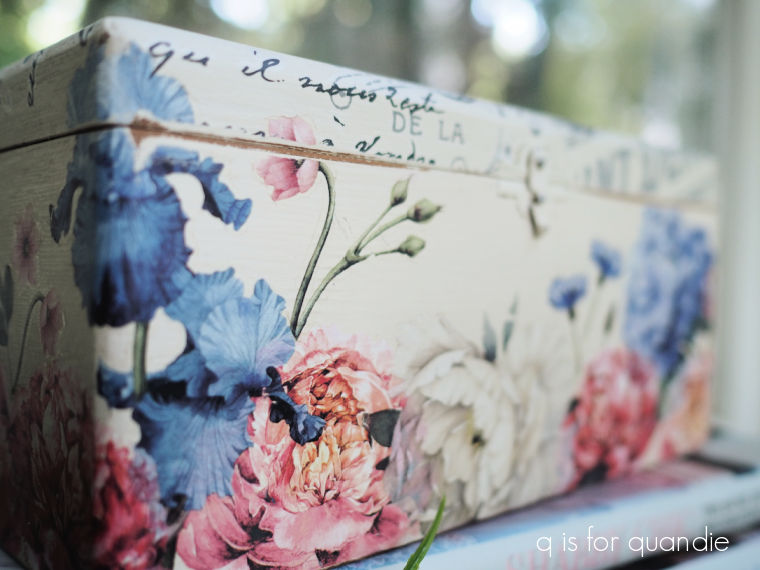
I started by sanding down the hand-painted flowers and then giving the box a fresh coat of Dixie Belle’s Drop Cloth.  After giving that a quick sanding to smooth out the surface and distress the edges, I pulled out all of my transfer scraps and just had fun decorating the box.

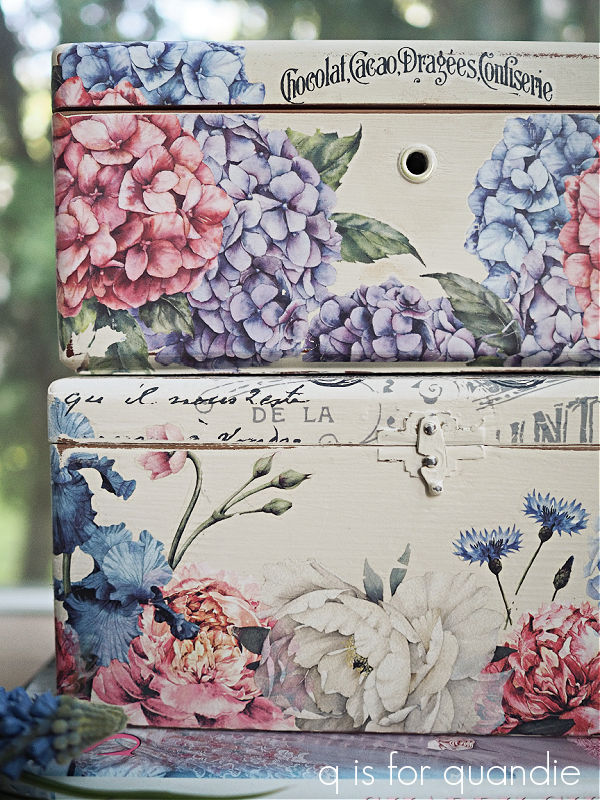
I started with some florals from I.O.D.’s Floral Anthology.  I wrapped them around each side of the box.

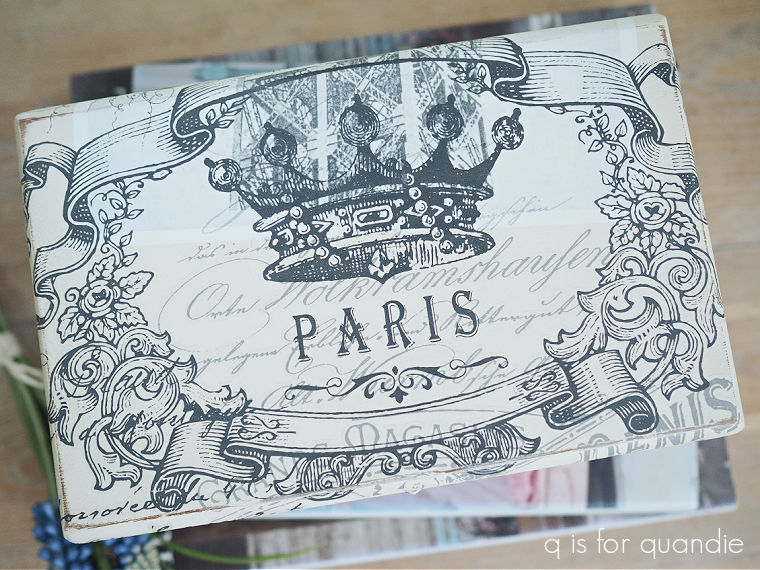
As well as up and over the top.

I used a mish mash of transfers for the wording on the top, some are from re.design with prima’s Classic Vintage Labels, and some are from I.O.D.’s Label Ephemera.

The little ‘No. 4899’ on the front of the box is from a Tim Holtz transfer.

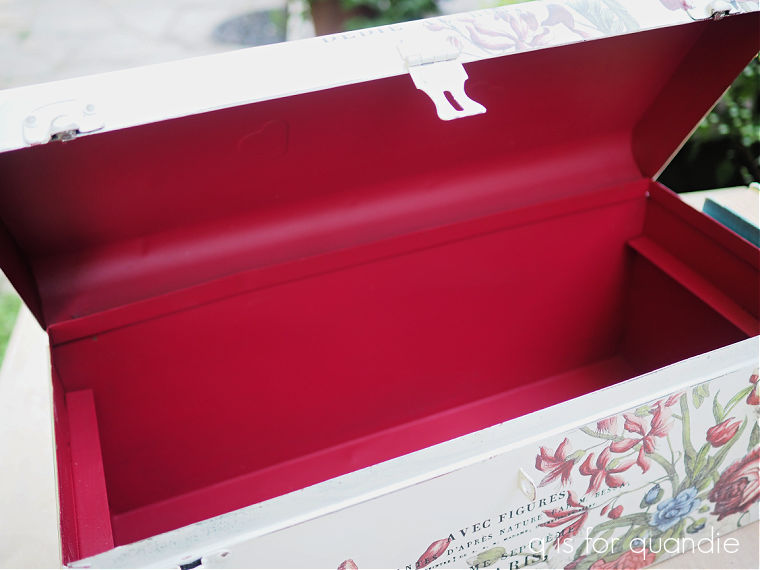
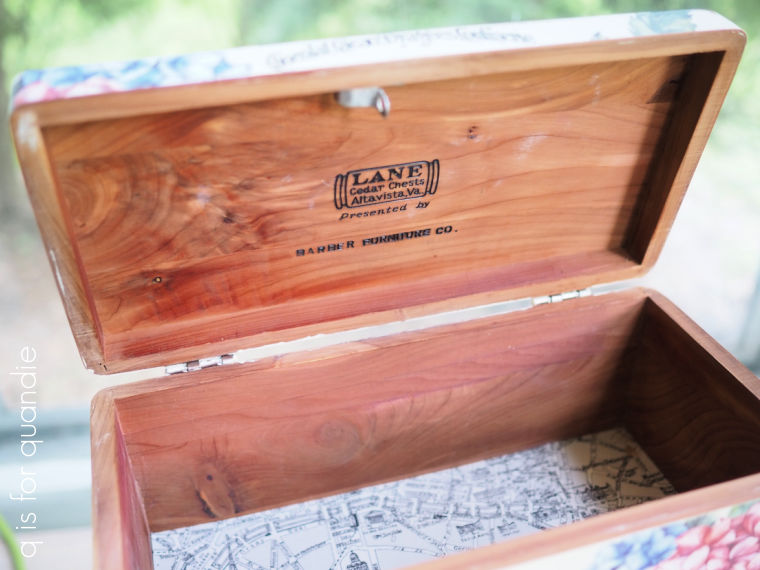
I painted the inside of the box using Dixie Belle’s Silk paint in Cactus.

I tried to stage my photos in such a way as to show that the lid is not hinged, it comes off.  But just in case that wasn’t obvious so far …

You could use this as a keepsake box, or maybe a gift box filled with candies.

Or of course, you could just use this as a recipe box.  I’m curious, does anyone keeps recipe cards any more?  I know that I don’t, at least not at the moment.  But one day (when mom’s done using them) I will hang onto my mom’s handwritten recipe cards … unless my sister takes them all!  Do any of you keep family recipes that have been handed down on index cards?

You know what would be an amazing keepsake?  Mom’s recipes mixed with photos of her, especially those of her cooking.

Hmmmm … I’m giving myself an idea here.

I turned a recipe box into a ‘scrapbook’ a while back,

but that time it was with travel photos …

This time around I could intermix scrapbooked index cards with actual recipe cards.  I think I just came up with a great winter project idea for myself!

But I’ll keep an eye out for another box to use for that project, and then decorate it specifically for that.

So this particular box is for sale locally.

I’ll bring it into the shop, unless one of you locals want to snatch it up first in which case be sure to check my ‘available for local sale‘ page for more details.

Thank you to Dixie Belle Paint Co for supplying the paint used on this project.

the roller skate case.

My friend/picker Sue found this metal case for me.

She was told it was a roller skate case.  Or at least someone kept their roller skates in it, even if that wasn’t its original intention.

Either way, Sue knew I could breathe new life into it and maybe also give it a new purpose.

I started with my usual prep; cleaning, sanding, etc, followed by a coat of Dixie Belle’s B.O.S.S.  Then I made the decision to stick with the original black color, so I gave it a quick coat of Dixie Belle’s Midnight Sky.  I avoided painting over the brass fittings because they have an amazing patina to them.

Just a side note here about the B.O.S.S.  This is definitely one of those occasions when I really appreciate the clear B.O.S.S.  I wouldn’t have wanted to use a colored or white primer (other than black I suppose) on this piece because you would have seen that when I distressed the edges.

Once the Midnight Sky was dry, I followed up with one of the stencils from the set of 4 German Grain Sack stencils from ellen j goods.

Isn’t that a fun one?  I used Dixie Belle’s Drop Cloth for the stenciling.

I finished off the outside of the case with some clear wax.

I briefly considered doing something to the inside of the case, but ultimately I thought the original vintage paper lining was pretty fab.

Obviously it’s not in pristine condition, but I cleaned it up a bit and I rather like its shabby appeal.

Not many of us need a case for our roller skates these days.

So how about using this case to store your old photos?

OK, maybe you don’t have photos quite as old as these (I have a stash of the most amazing photos from my mom’s side of the family in South Dakota), but you must have some sort of photos or other mementos that need a cool case to live in.

Now, if only I could think of a way to repurpose those old skates.

Any ideas?

The roller skate case is for sale so be sure to check my ‘available for local sale‘ page for more details if interested.

Thank you to Dixie Belle Paint Co for providing the B.O.S.S. and paint used on this project.  Thank you to ellen j goods for providing the stencil.

planter successes, and failures.

Good morning from the garden!

This morning I thought I would share my successes, and my failures, in this year’s planters.

In my garden I pretty much plant annuals in pots, and perennials in the ground.  There are a few exceptions to this rule here and there, but for the most part this is how I roll.  I’m working on changing that up a bit and maybe I’ll do more of that in the future, we’ll see.  But really, here in my zone 4b garden, asking perennials to survive the winter in a pot can be dicey.  The rule of thumb is that a plant must be hardy to 2 zones lower than your actual zone to survive the winter in a pot.  So as much as I loved all of those window boxes in Charleston with heuchera growing in them …

as a zone 4 – 9 plant, heuchera won’t survive the winter in a planter here.

And for those of you non-gardeners out there, I don’t mean that zone 2 plants will stay green and growing in a pot throughout the winter here.  They will still die back to the ‘ground’, but they have a better chance of coming back in the spring.

As for annuals in the ground, of course they will grow just as well in the ground here as in a pot.  Annuals only live for one growing season either way.  I just don’t have a lot of space in my garden beds to add in annuals, although this year I did make a couple of exceptions.

But back to the planters, let’s start out with the failures beginning with the planters on either side of the steps to our deck with the Eugenia topiary balls in the center.

It’s time for me to wake up and smell the coffee on this one.  We just don’t have enough sun in this spot for full sun annuals.  I had decided to give them one more try, this time making sure to feed them with a bloom boosting water soluble fertilizer (I used Miracle Grow Bloom Booster) on a regular basis.  However, I still got very few blooms on both the Snowstorm Giant Snowflake bacopa and the Superbena Violet Ice (both from Proven Winners).  They were lush and green and grew like weeds, but got very few flowers.  I did shear them both back a couple of weeks ago, but they still haven’t flushed back with flowers.

The Supertunia Mini Vista Indigo on the other hand gave me lots of blooms in these pots, but didn’t actually fill in at all.  I wasn’t expecting that.  Now granted, this petunia is meant to stay on the smaller side (hence the ‘mini’ part of its name).

I also planted the Mini Vista Indigo in my chicken feeder planter (on left in photo below), and it was the perfect plant for that planter because of its compact size.

There is only room for about 3″ of soil in that thing, so it’s impressive that these did as well as they did.

Now that I understand how the Mini Vista grows, I will plant it more strategically next year in spots where it won’t get crowded out by more vigorous growers.

Another failure for me this year was the lobelia that I planted at the end of May.  I purchased four of the Laguna Sky Blue lobelia (also Proven Winners) because it’s just so pretty.  I had given up on planting lobelia in the past because it has always died on me around mid-summer.  But theoretically this newer variety of lobelia is supposed to be “much more heat tolerant than past plants” (taken straight from the Proven Winners website).  But mine was all dead or nearly dead by the end of June.  Definitely no more lobelia for me.

As it died off I replaced it with other things, one of which I ended up really loving, and that was the gomphrena (the bright pink balls).

I’ve never grown this one before because I always thought it was kind of small and boring.  But now I’m realizing that it looks great mixed with other things.

I also think it could look kind of fab mixed in a garden bed around perennials to provide summer long color.

Another plant that replaced some of the lobelia was the Supertunia Vista Jazzberry.

It’s a gorgeous, bright, cool pink.  You’ll notice that it doesn’t have the name ‘mini’ in it, this plant grew much faster and larger than the mini vista.
I also used the Jazzberry to replace some failures in our mailbox planter.  We share a mailbox post with our neighbor, nnK, and she added planters to either side of the mailboxes a while back.  I replaced the one on my side with … what else? … a rusty old toolbox, although you can barely see it right now.
We started out the season with the lemon coral sedum (left), a bright pink new guinea impatien, a small dahlia, and the purple scaevola on the end.  As you can see, the impatien and the dahlia didn’t make it.  Well, actually, I pulled out the dahlia to put in the Jazzberry.  The impatien is still in there but it has been totally overtaken by the Jazzberry.

Aside from the mailbox, in general all of my pots with flowering annuals in them look kind of scraggly at this point.  I probably should have been shearing them all back on a more regular basis.

I’m not going to feel at all bad about pulling all of these out and replacing them with some fall flowers in September.

But this brings me to the real successes of 2022, the non-flowering annuals that I grow for their colorful foliage like coleus, caladium, oxalis, and sweet potato vine.

I shared my guest bed planter with you guys recently, and that was only planted up back at the end of July so maybe it’s not a great example of how these plants look great all season.

And in fact, I did have a bit of a fail with the caladium at first.  It doesn’t like the cold, and we had some cold nights in late spring.  They weren’t below freezing, but they were in the 40’s and the caladium I had already put out in pots died back to the ground.  It came back eventually, but it took a 4 to 6 weeks before it looked good.

But it looks fantastic now …

That’s one of my favorite combinations; it’s Molten Lava oxalis with a red caladium (sorry, didn’t retain a name on that one).

I also had planted this pretty pink and white caladium surrounded by pale pink impatiens.

Although that caladium initially died back, it came back strong and now this is one of my favorite combos.

I have one more caladium planter that I planted later in the season after the pansies that were in this urn started looking really pathetic.

Hopefully I have learned my lesson about waiting until warmer weather to plant caladium.  By the way, for those of you who suffer from deer problems, caladium is deer resistant.

Coleus can also be susceptible to cold weather, but not quite as bad as the caladium, and it’s also deer resistant.  I filled my front window box with several varieties of coleus this year including Colorblaze Velveteen, Colorblaze Strawberry Drop and Wasabi.

The Wasabi totally tried to take over.  I’ve pinched it back hard several times this summer.

I’ve combined the coleus with some black sweet potato vine, some more of that lemon coral sedum, some Shadow Dancers ‘Marcia’ fuchsia, and some Charmed Wine oxalis.

That oxalis is really fighting for some space (the dark one on the right end).

You know, when you can get constant, consistent color like this out of a plant that requires almost no work (except for pinching it back a few times), it’s hard to argue with it.

I also had superb results with sweet potato vines this year.

When the Japanese beetles became abundant in our area about a decade ago, they were devouring these.  I had quit planting them for a few years.  But I’ve gradually added them back and now the beetles seem to leave them alone.  I’m not sure if that’s the result of improvements made in the plant varieties, or because I seem to have fewer of the beetles lately (although they did a number on my ferns again this year).

One other planter success worth mentioning is my herb garden.

It was definitely as success as far as growing the herbs, but a little bit of a fail in that I rarely remember to actually cook with them!

I’m planning to take a stab at attempting to save some of my annuals over the winter this year including the caladium, the oxalis and the Eugenia topiary balls … and maybe even some of those herb plants.  Now that I’m retired, I should be able to find the time to care for them.  I’ll try to remember to share some ‘Sunday mornings in the garden’ posts about that process.

So, how about you?  Did you have any failures or success stories from your planters this year?  Or do you have any tips on overwintering some of these annuals?  If so, be sure to share them in a comment!

the chateau dresser.

I have another do-over for you guys today.

Remember the fine print dresser?

I painted this one back in March, and it did not sell.  Now granted, as I’ve gone on and on about, sales have slowed way down for me overall.  As a quick update on that, the pair of modern end tables I painted in July did sell within a few weeks.  In addition, I took the bench with the Gregory’s Catalogue paint inlay on it into the shop where I sell on consignment and it sold pretty quickly there.  So things are starting to move a bit.

But back to this one.  I have to admit, I didn’t absolutely love the color combination of the Drop Cloth background with the Sawmill Gravy stencil.  So I decided to re-work just the front of this piece.

Plus, I really wanted to use the Chateau paint inlay from I.O.D.

I learned a really great tip by watching a YouTube video from Lynne at ellen j goods, and that is, you can cut up those pieces on the packaging that show the layout of the design and then move them around like puzzle pieces to create different looks.

So I cut up my packaging and started playing around.  First, here is how the design is shown on the packaging.

You could also turn the one design into two separate designs.

And both of them could be flip flopped, the deer could face outward and the floral urn could be split up on either side.

Here’s another option for using the entire design.

You can continue to create even more options if you’re comfortable with cutting up the individual sheets a bit.

If you have a tall, more narrow piece rather than a wide piece you could use that look above and just remove the side pieces with the deer on them.

Hats off to whoever designed this paint inlay, I’m impressed by the ability to move it around in so many ways and still have the different elements line up with each other.

Here is what I came up with for my piece.

I debated removing the deer (if you look closely you can see they are cut out), but in the end I decided to leave them in.

The full design was just a bit too tall for my piece, so I removed a section that I didn’t use at all and I moved those swags to either side at the bottom where they will actually be on the legs of the dresser.  Had I left them where they were in the original design they would have fallen off the bottom of the dresser.  Here’s how one looks on a leg.

Once I had my layout figured out, I trimmed the blank edges of the paint inlay (for more on the complete process of using a paint inlay, see my how-to post) and then cut up the sheets to match my final design and laid it out on a table so it was ready to go.

To prepare the dresser I first took the drawer pulls back off (I left the keyhole escutcheons in place) and sanded down the stenciled front of the dresser.

Today’s q-tip:  if you’re painting over a stenciled design you will see the ridges of the stenciled paint if you don’t sand them down.

You may also be wondering about painting over a previously waxed finish.  This dresser was finished with clear wax back in March, so about 5 months ago.  You can paint over cured Dixie Belle wax, and the cure time is about 30 days.  In addition, the fact that I sanded the piece pretty thoroughly to knock down that stencil was enough to prep this piece for another coat of paint.

Next I gave the dresser front a coat of Dixie Belle’s Drop Cloth.  No need to repaint the sides, of course they still looked good and I wasn’t going to bring the paint inlay around to the sides.   I let my first coat dry, and then applied the paint inlay to a 2nd wet coat of paint.

After pulling the backing paper back off and letting the paint dry, I sealed it with some Rust-oleum matte clear spray sealer.  Then I sanded to distress, cleaned away any dust, and followed up with a quick coat of clear wax.

Next I decided to add more paint to the drawer pulls.  If you’ll remember back to the original treatment of this dresser, the pulls and escutcheons looked like this …

When I put one back on the dresser with its new inlay, I thought they looked way too busy.  So I toned them down by adding two coats of Drop Cloth and then wet distressing them only slightly this time.

Now they blend in quite a bit more.

And as for the keyhole escutcheons, as I mentioned earlier, I left them in place while applying the paint inlay and it worked well to just go right over them.

In hindsight, another option would have been to remove them completely and save them for another piece of furniture.  But as they say, hindsight is always 20/20.  I didn’t think of that originally.

I left the top of the dresser as it was, stripped and finished with white wax.

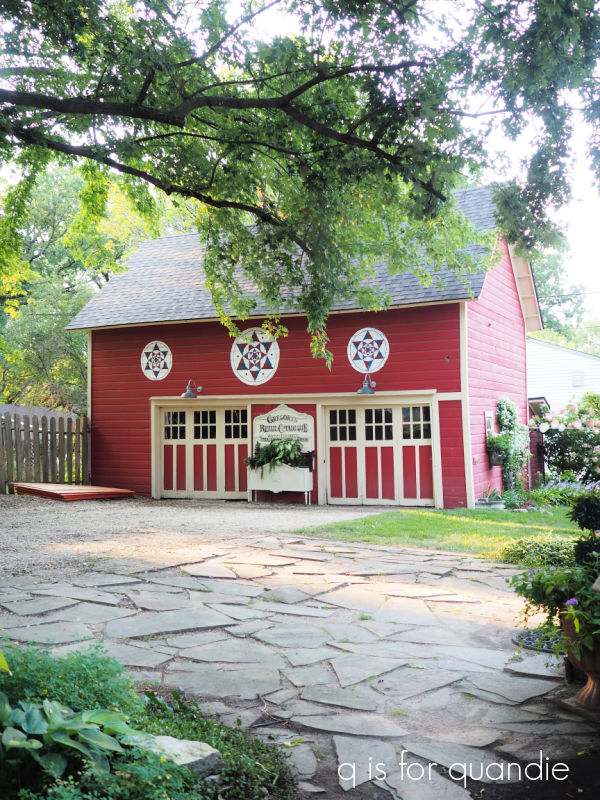
I staged my photos in the garden with the carriage house in the background.  Lately this has become my favorite spot for photo taking.

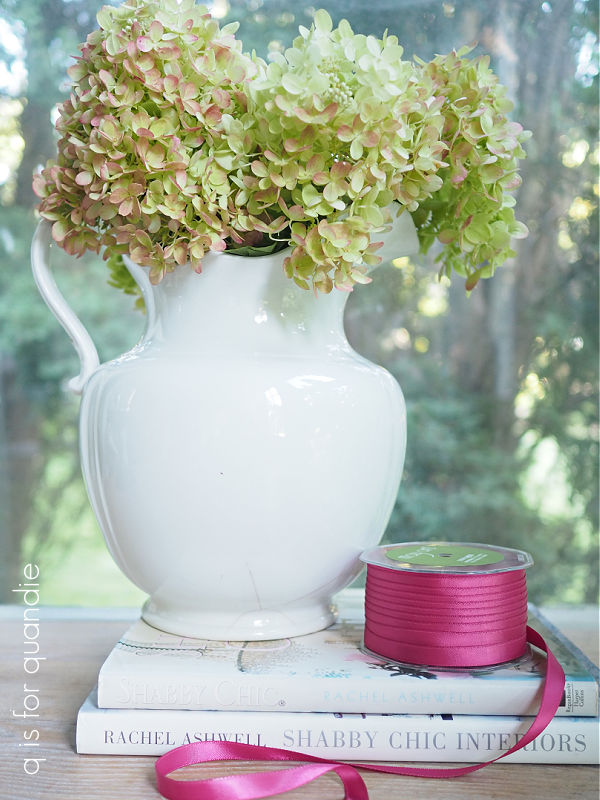
I included an old Bakelite clock,  some vintage books in a color found in the inlay and a basket full of hydrangeas.

These blossoms are from my Vanilla Strawberry paniculata hydrangea.  As you may have noticed, there is a lot of vanilla and not really any strawberry.  The pink does develop over time, and these blooms have only just started to open.  I’m sure I’ll be doing a Sunday mornings in the garden post about my hydrangea in the next few weeks as the paniculata’s come into their full glory.  So stay tuned for that.

I’m a fan of the muted colors in the paint inlay, they have a bit of a fall feel to me.

There is a fabulous olive green, some terra cotta colors, and a smoky teal blue.

I really enjoy working with these I.O.D. paint inlays.  They certainly give pieces a unique, hand-painted look.  Personally, I feel like once you have an understanding of how they work, they are easier to use, and somewhat more forgiving, than transfers.  However, I wish they weren’t so expensive!  If you can manage to get more than one use out of them (they say you can use them up to three times), the cost per use goes down considerably though.  I’ll be experimenting more with that in the future.
In the meantime, what do you think of this do-over?  Did you prefer the more subtle look of the fine print dresser?  Or maybe you even preferred the original orange oak look of this one.

The chateau dresser is for sale so be sure to check my ‘available for local sale‘ page for more details if interested.

Thank you to Dixie Belle Paint Co for providing the paint used on this project.