
It was definitely time for me to get my paint brushes back out and start painting some furniture.

Taking a break over the holidays left me refreshed and feeling excited about getting back into it.
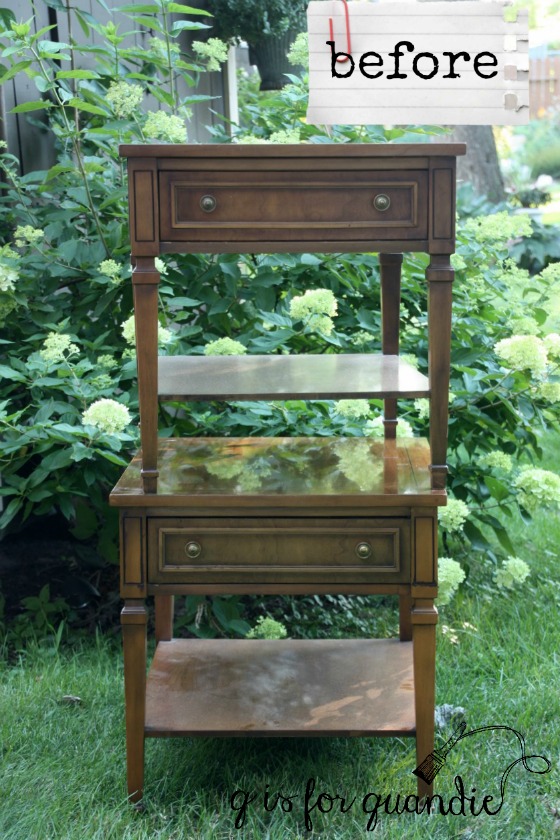
I’m starting small with this antique spool table.

It was pretty wonky, but I sent it over to Ken’s workshop and he shored it up. When Ken shores up a piece of furniture, he likes to take it apart first and then put it back together using fresh glue. When he was disassembling this one, he found this old nail holding the top on.

I always get a kick out of it when Ken saves these sorts of finds and leaves them for me with little notes (sometimes he even types them up on an old portable typewriter). He knows I am fascinated by these sorts of details.
I think the age of this square nail gives some indication of how old this little table is. I’m calling it a ‘square nail’, but if you look closely it’s actually rectangular. Truly square nails were used prior to 1800. Rectangular nails were used from 1800 – 1880 (Chervenka).
I found a very similar table online that is dated 1840 – 1860 (and the price tag is $1,295, bwa, ha, ha, ha). The expensive antique has some finer details than my table including some hand cut dovetails, but the style is very much the same.
Given all of that, I wanted to give this table a paint job that would feel original and of the right period for its age. For me that means milk paint.
Milk paint has been around for thousands of years, even some early cave drawings were done with a form of milk paint; a mixture of milk, lime and natural pigments. Oil paint was developed in the early 1400’s and became the more popular choice of paint in medieval times (Rodgers). However, during the French Revolution (late 1700’s) some of the ingredients of oil paint became hard to find which led to a resurgence in the use of milk paint. The various French recipes for milk paint then made their way to Colonial America and became very popular (Candee). Had this table originally been painted, it likely would have been painted in milk paint.
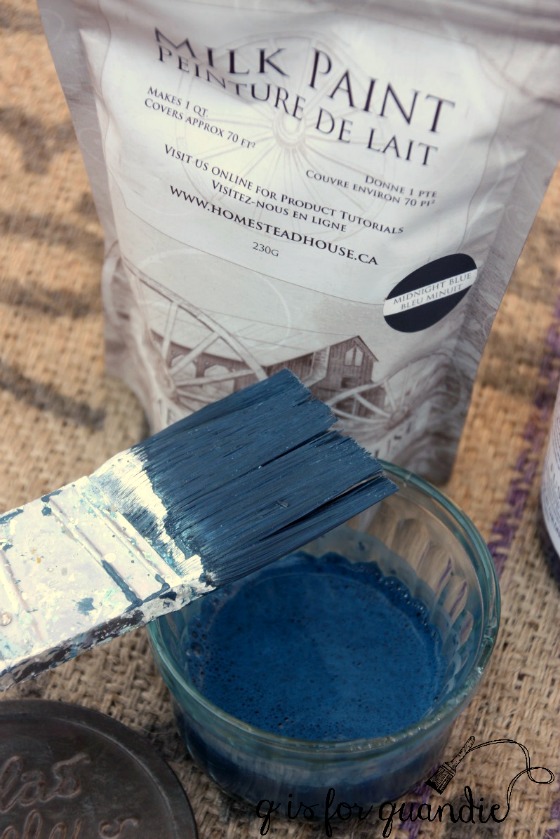
Fortunately, we don’t have to make our own milk paint with a recipe these days, we can just buy the powder, mix it with water and get painting.
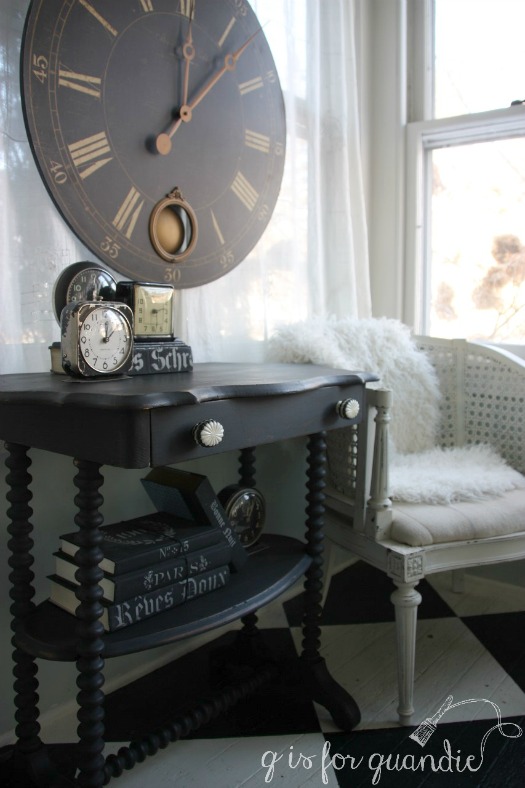
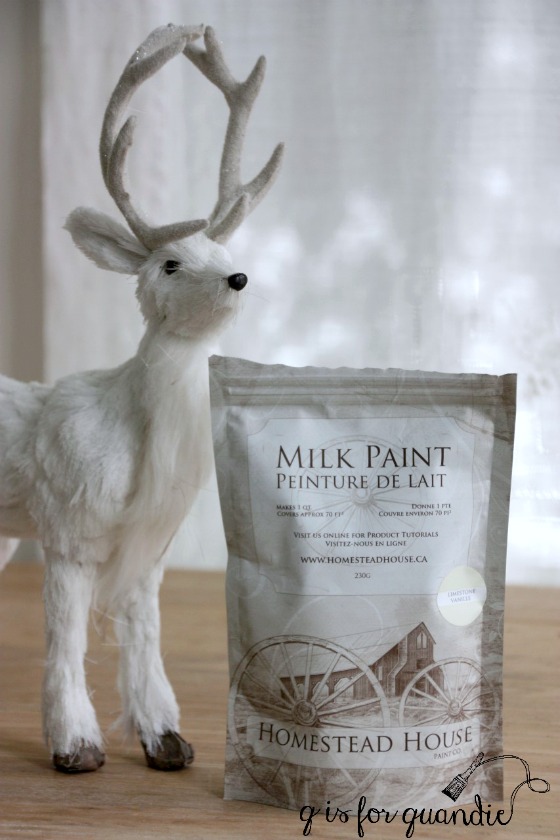
Just before Christmas the lovely people at Homestead House offered to have Santa put some of their new black wax in my Christmas stocking. I asked them if Santa could throw in some of their Coal Black milk paint too because I had this project in mind.
Since this table was so dark to begin with, I knew I could get away with just one coat of black milk paint. It could not have been easier to paint this table! Once the paint was dry, I sanded lightly. Then I used the painters tape trick to force some chippy spots. Next I added a coat of black wax.
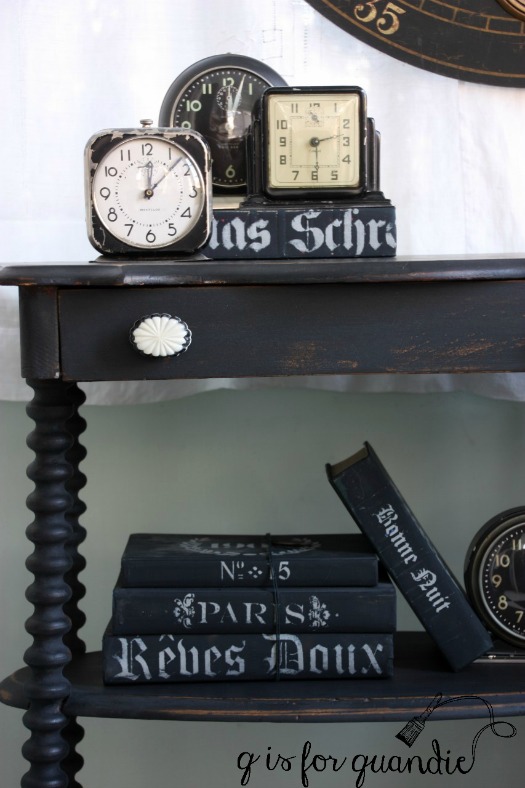
The Homestead House black wax is so creamy, it goes on quite easily. And it has very little smell. This is so important to me when I’m working inside my house during a Minnesota winter. You can’t be opening up a window to air the place out when it’s below zero outside!

I like to use a brush to apply wax when I’m working with spindly pieces (like the legs on this table). It’s so much easier to get the wax into all of the crevices with a brush. I have a brush devoted to black wax, another for clear wax and a third for white wax. You can clean your wax brushes with soap and warm water, but I’m a bit lazy for that. I’d rather just have three brushes! I’ll admit I don’t wash them after each use, but I do clean them once or twice a year.
I apply the wax with the brush and then remove any excess using an old black t-shirt to avoid leaving any light colored fibers behind. The black wax deepens the color of the black milk paint a bit.
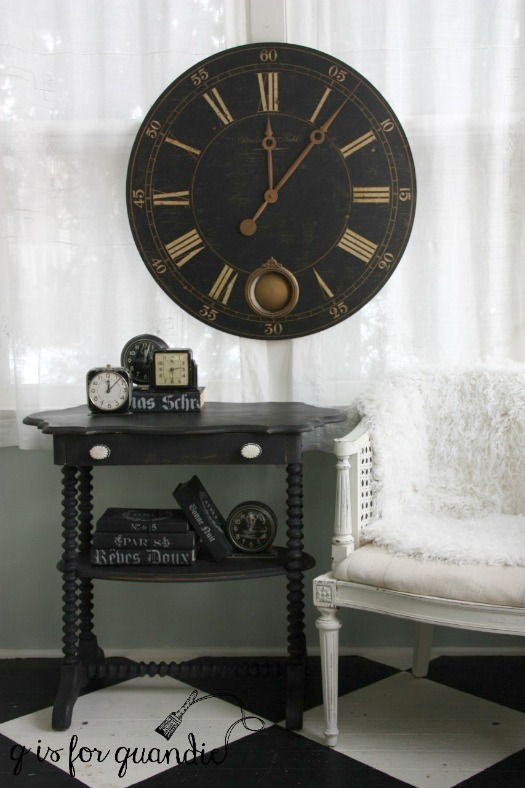
I had to discard the knobs that came with the table. They were metal and one of them was badly misshapen. No loss really, they were pretty blah. I replaced them with two of the knobs that I picked up at the thrift store a couple of weeks ago.

Along with a few vintage clocks, I used my painted books to stage the table.
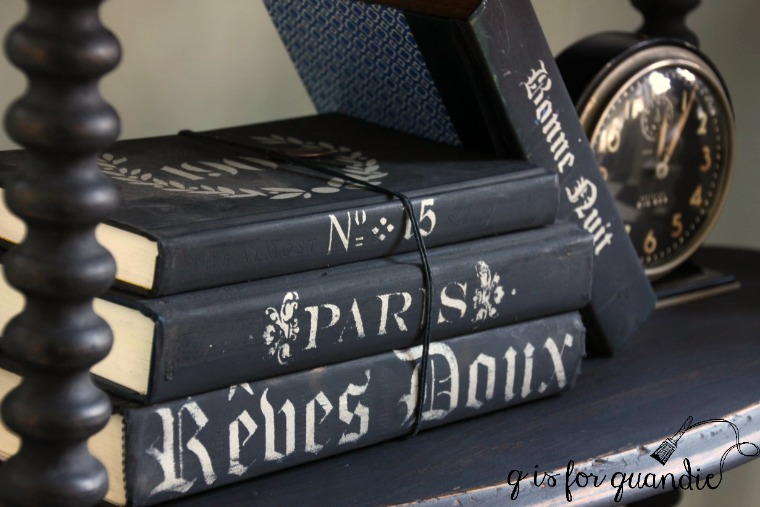
Who remembers back when I painted these? It was way back when my blog was practically brand new. They are also painted in black milk paint (Miss Mustard Seed’s Typewriter).



















 q is for quandie