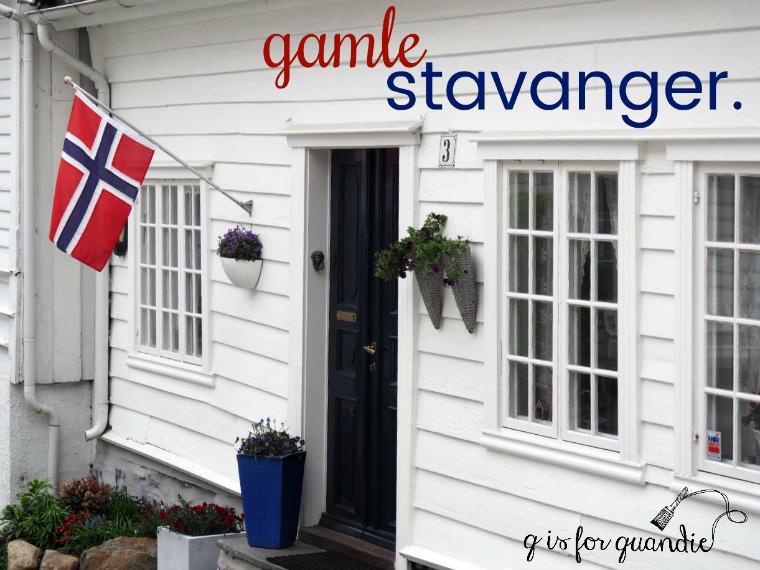
The 4th port of call on our recent cruise was Stavanger, Norway. This was yet another instance where our ship docked right in the heart of town. The historic area, Gamle Stavanger, was literally just across the street from our ship. In fact, it kinda messed with a lot of my photos! Somehow quaint Norwegian houses with a background of cruise ship balconies and orange life boats doesn’t quite work for me.
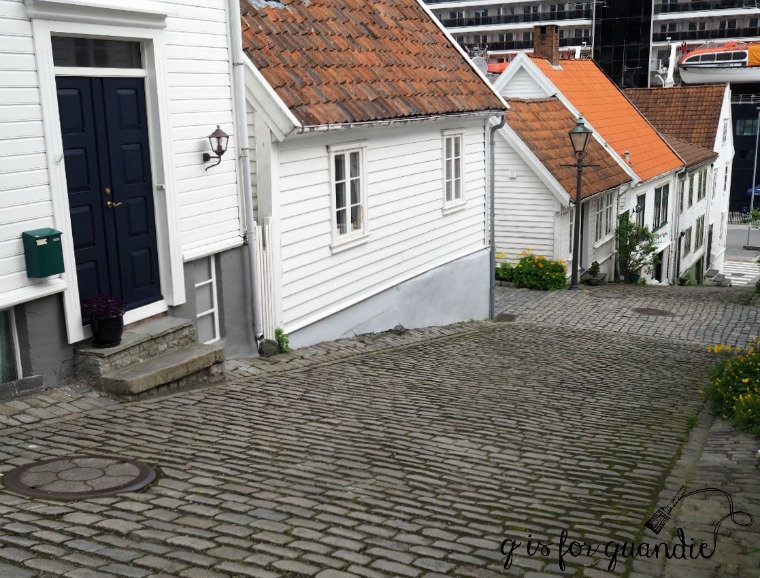 Here is what wikipedia has to say about Gamle Stavanger …
The area consists largely of restored wooden buildings which were built in the 18th century and in the beginning of the 19th century.
In the aftermath of World War II, a new city plan was created for Stavanger. It included razing most of the old wooden buildings in the city centre, and replacing them with new modern structures in concrete. One single voice spoke up against this plan, and today it is recognized that Gamle Stavanger owes its existence to Einar Hedén (1916-2001), then City Architect of Stavanger. In 1956 the city council voted to conserve part of the old city centre.
The area selected for conservation was the one considered the least desirable, consisting of small rundown wooden buildings located on the western side of Vågen, the inner harbor area of Stavanger. This area has a selection of preserved wood houses dating from both the 19th and 20th century. Some of the houses are owned by the municipality, but most are privately owned. Over the years the area has changed from seedy to trendy, and today is considered a choice location for the urban-minded with a sense of history. Gamle Stavanger has grown such that it now covers more than 250 buildings most of which are small, white wooden cottages. The area also includes the Norwegian Canning Museum which displays a typical factory from the 1920s.
The Municipality of Stavanger has received several awards for the preservation of Gamle Stavanger. During the Council of Europe’s 1975 European Architectural Year, Gamle Stavanger, together with the historic fishing village of Nusfjord in Nordland and the former mining town of Røros in Sør-Trøndelag, were identified as examples of how conservation of old buildings may well coincide with use, and how rehabilitation can be done without loss of character.
I’m sure that this story really speaks to you guys as much as it does to me, “rehabilitation … without loss of character” could very well be my own mission statement when it comes to furniture!

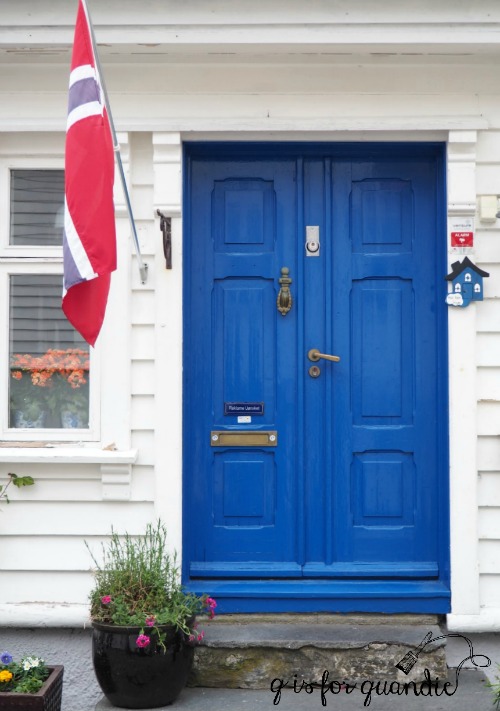
The all white houses (with the exception of the occasional rebel such as the blue one below) reminded me of the Jackson Meadows housing development that I posted about last fall.
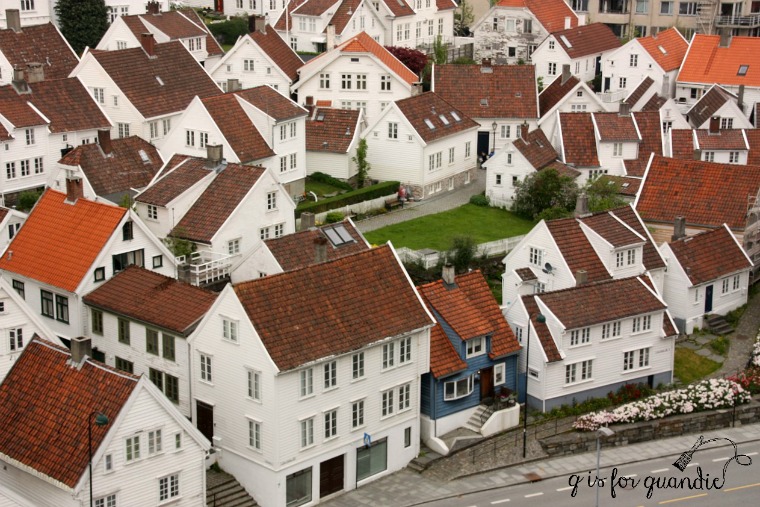
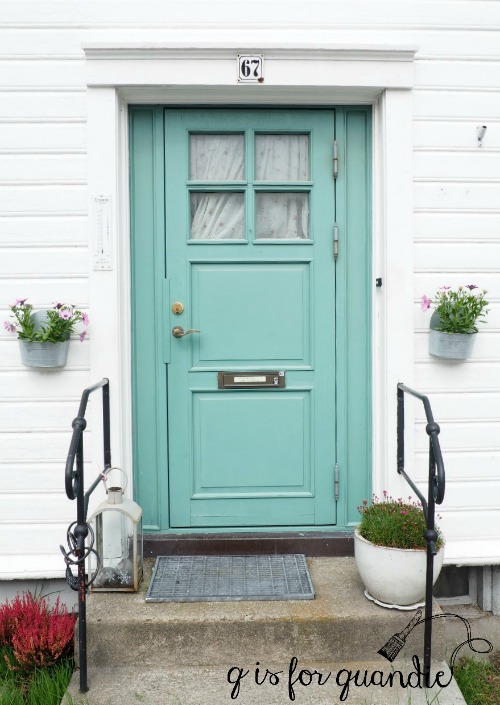
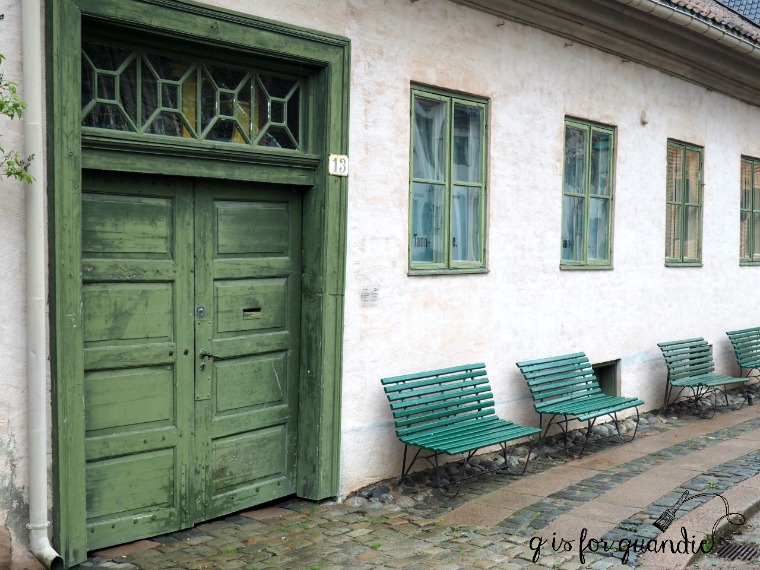
Although in Gamle Stavanger, unlike Jackson Meadows, home owners clearly showed their own personalities in their choice of door color.
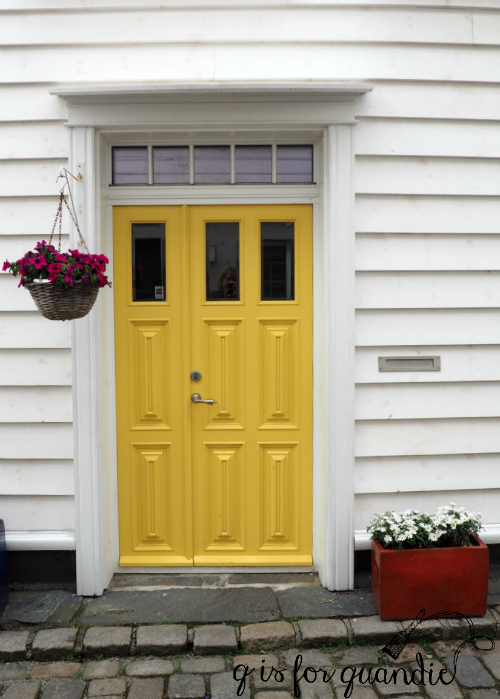

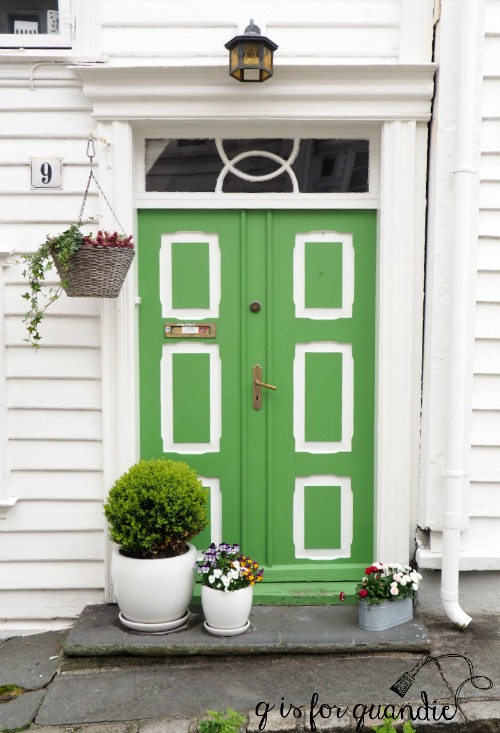

I could have walked around forever in this picturesque little area with my camera.

I wish I could have figured out how to get one of these street signs home in my suitcase!

Seriously, I could use a ‘strandgate’ sign in my garden!
Just for fun, here’s a little ‘miniaturized’ Stavanger.
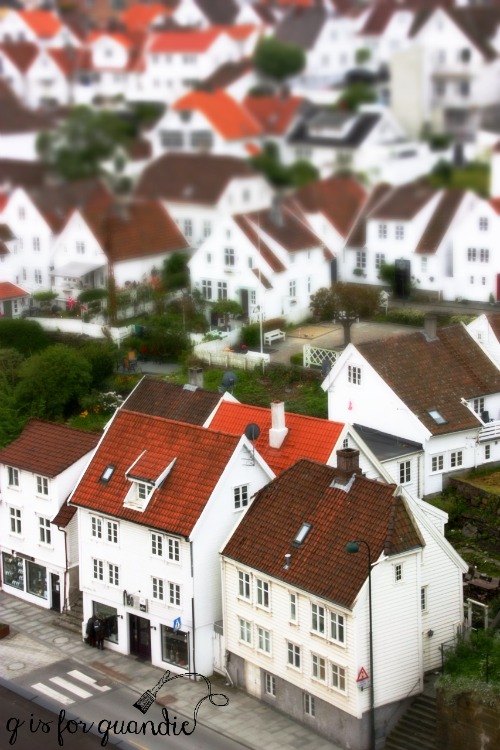
I get such a kick out of this photo effect. To read more about how I did it, check out this post.
Anyway, while we were wandering around someone tipped us off to the fact that one of the houses was open to the public. Called The Workers Cottage, this house had been lived in by four generations of the same family. It was built in 1836.
It has been restored and furnished based on two different time periods and opened to the public as a museum. The main floor is c. 1920 …
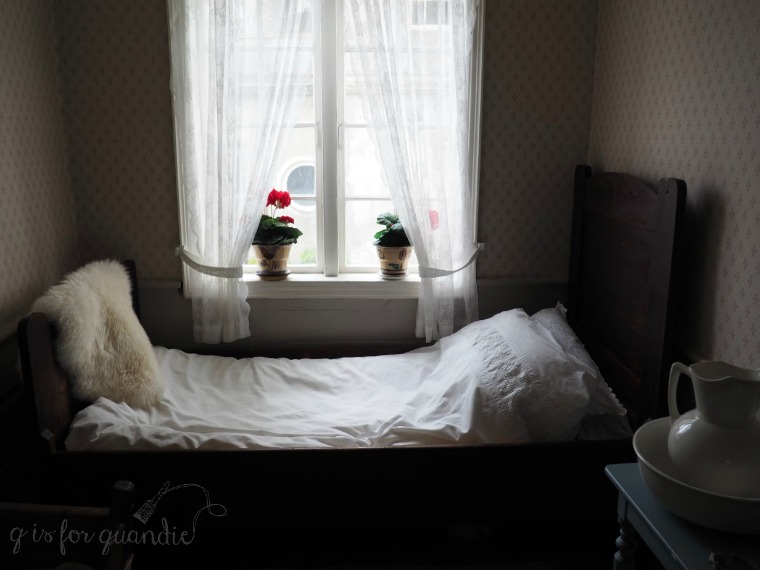
and the upstairs is c. 1960.
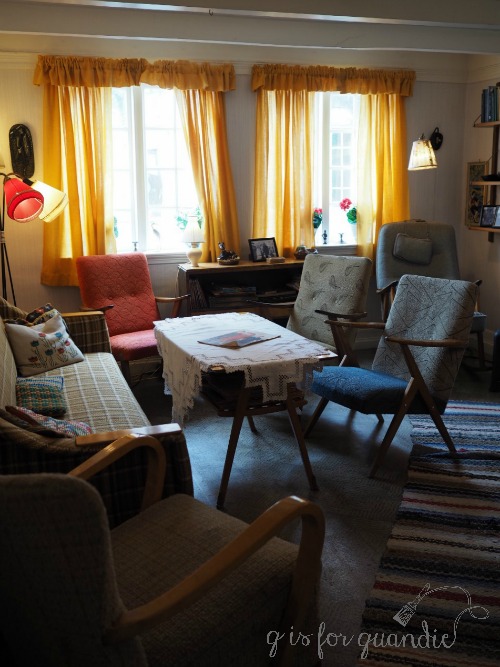
I just loved the 60’s kitchen upstairs.

And the adorable kid’s bedrooms that were tucked under the eaves.
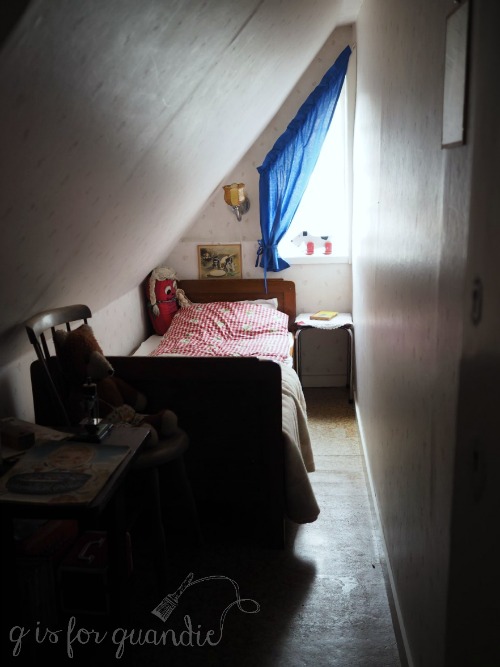
Doesn’t that just look like the perfect cozy kid’s hideaway?
Mr. Q isn’t quite as interested in vintage furnishings as I am, so he took a seat on the patio with some coffee to wait for me.
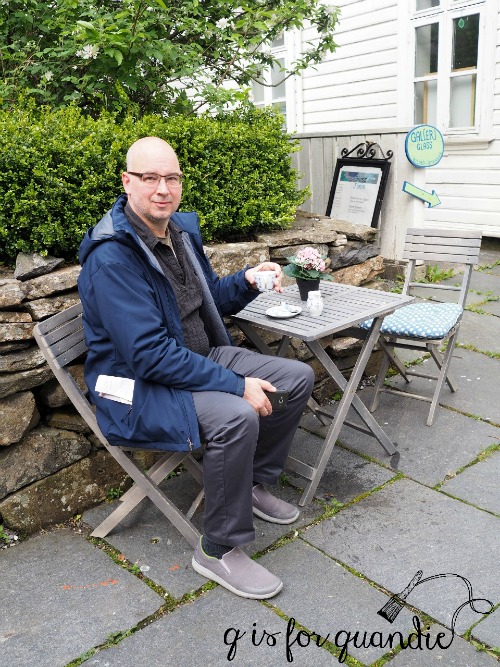
When I joined him there I somehow managed to knock into the table just right causing the whole thing to collapse sending his coffee, and the pretty china it was served in, crashing to the ground. How mortifying! But the ladies serving the coffee took it all in stride and in fact were very apologetic about the table saying that it wasn’t very sturdy and they really should just replace it. They suggested we move to another table, brought out new coffee in more pretty blue and white china and all was well.

As lovely and enjoyable as gamle Stavanger was, it only took the morning to see all of it. You’ll have to check back next Wednesday to see how we spent our afternoon in Stavanger!