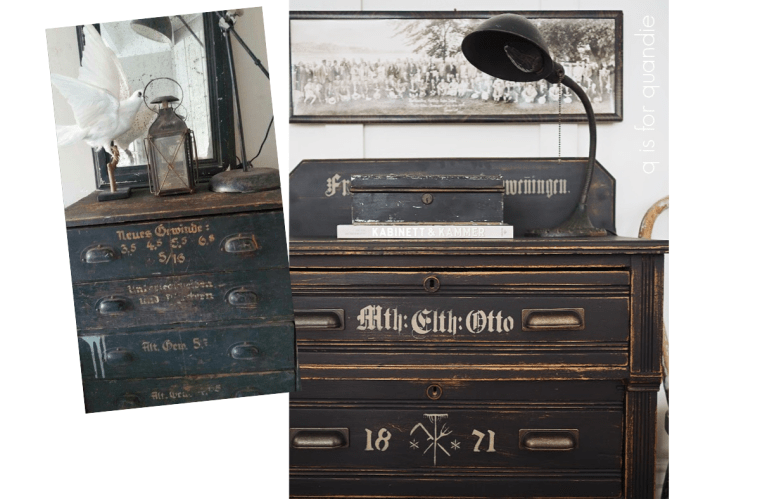
I know it’s not everyone’s cup of tea, but I’m rather drawn to primitive pieces. It’s hard to find a definitive description of ‘primitive’ when it comes to furniture, but I’m referring to pieces of furniture that look like someone made it by hand, most likely out in their barn. I’m also referring to pieces that have a very worn paint finish, and really just look like they have been around for 100 years. That brings me to the inspiration photo for today’s piece.
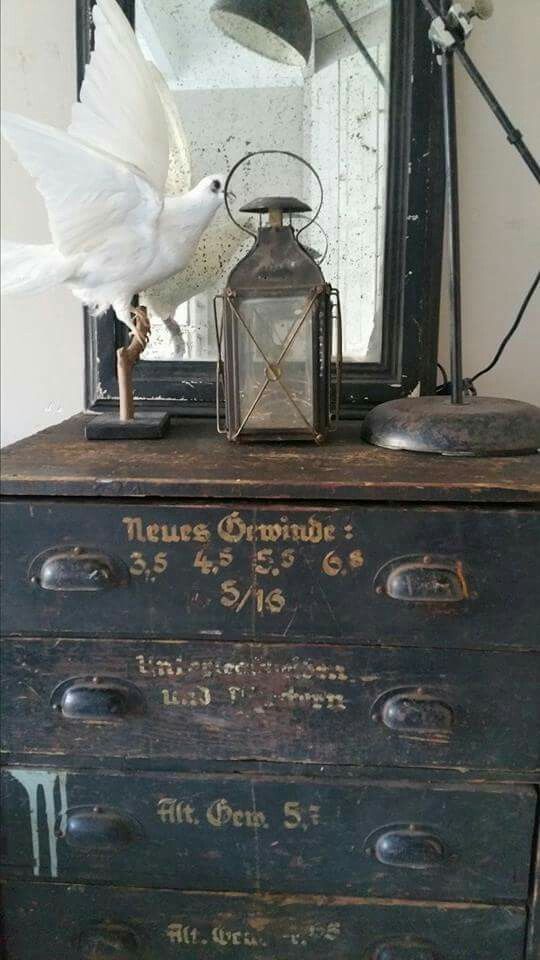
I found this photo on pinterest when searching for ‘black painted dressers’. I’m not sure where it originates from, so I don’t have any info on this piece. But it was definitely the jumping off point for the dresser I painted last weekend. I knew I could approximate this look with some black milk paint, and in case you are wondering I am going to forgo adding the dripping paint spill on that third drawer down.
I’m starting with this dresser that I purchased at my local ReStore a few weeks ago.
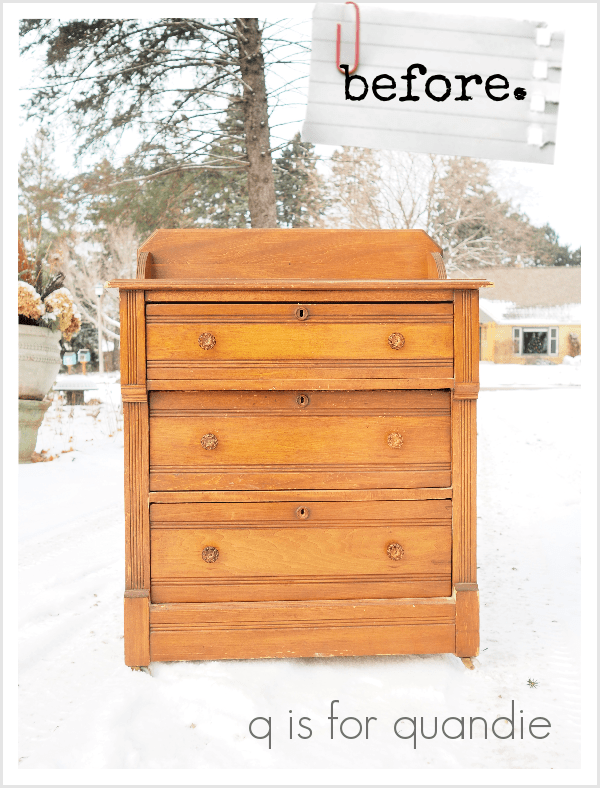
You’re probably not quite seeing any comparison to that inspiration photo just yet, but trust me on this one.
To start with, I really didn’t care for the knobs that were on this dresser when I bought it.

I don’t think that these knobs were original to the piece. Usually this style of furniture has a pull that looks somewhat like this …
Or this …

Or this …
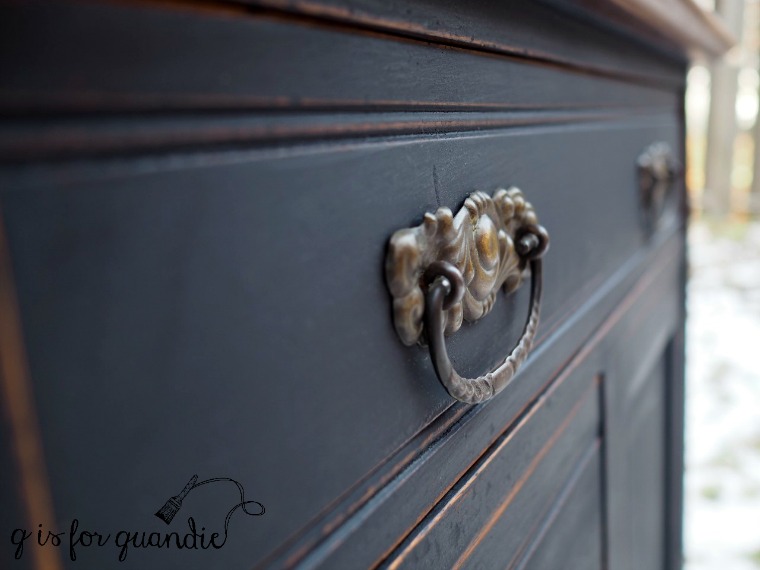 But this dresser only has one hole for a knob, so obviously it didn’t originally have drawer pulls that required two holes. So I guess I’m really not sure if those knobs were replacements or not. Either way, they had to go.
I wanted to get pulls similar to those on my inspiration piece, but have you guys tried to order things like this lately? It felt like every affordable version I found online was out of stock, or only available in a shiny brass or chrome. I ended up using some cup pulls that I found at my local Menards.
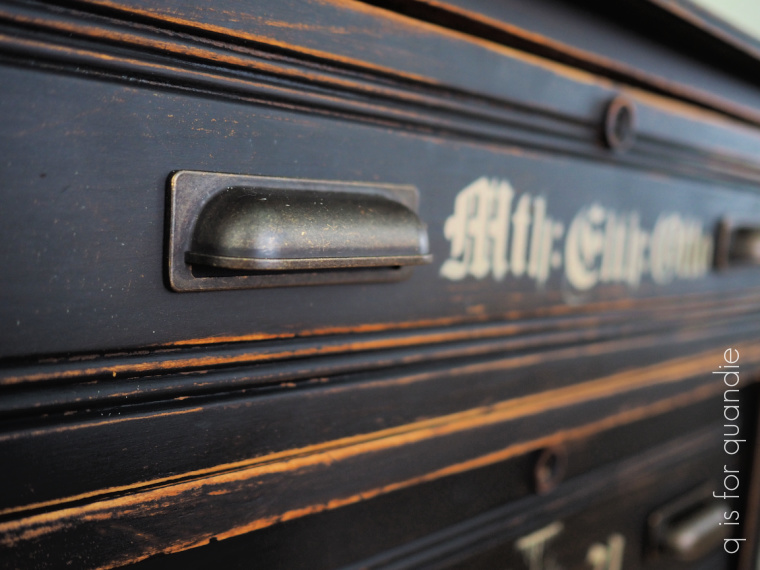
The other change I made to this dresser was to remove the wooden brackets on either side of that back piece.
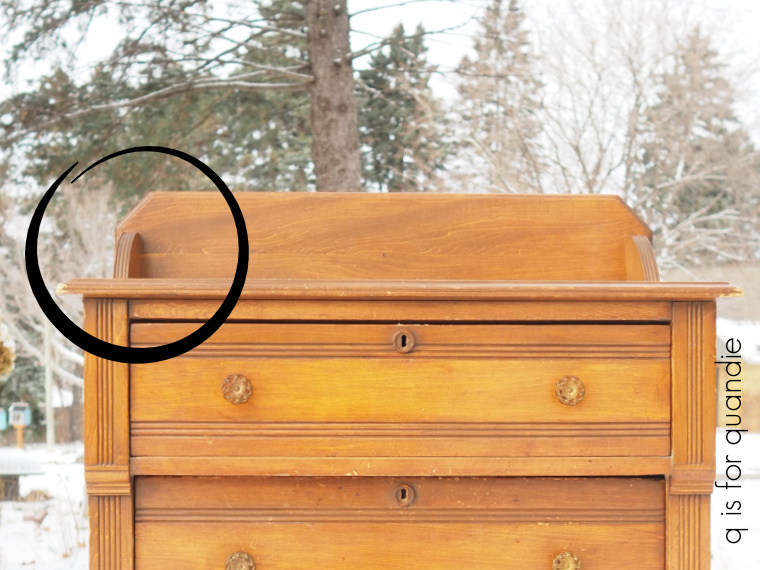
I just didn’t like the look of them. They were screwed in place from the back, so it was easy to remove them. I took them off and then gave that back piece a wiggle to make sure it didn’t absolutely require them for support (which it didn’t). I filled the holes where the screws went through the remaining back piece with Dixie Belle’s Mud.
Next up I cleaned the dresser using TSP Substitute. This piece was pretty gross, so it required a good clean. However, I did not sand it before painting. I knew I was going to use milk paint, and I was willing to risk some (or even a lot) of chipping.

Today’s q tip: Milk paint is intended to soak into the surface of bare wood. When using it on a surface that isn’t bare wood, it will chip when it meets resistance to absorbing into the wood in the form of oils (such as grease, oily finger prints, furniture polish, etc) or previous finishes such as varnish, poly, paint, etc. If you want to mitigate that chipping, you can be sure to clean off any oily residues using TSP or TSP substitute, and/or you can scuff sand your piece to break down previous finishes.
I chose to just clean my piece and not scuff sand because I’d be OK with some chipping. If you’re worried about excess chipping with milk paint, do both. Or use a bonding agent.
While cleaning the inside of the dresser, I found that it had been signed …
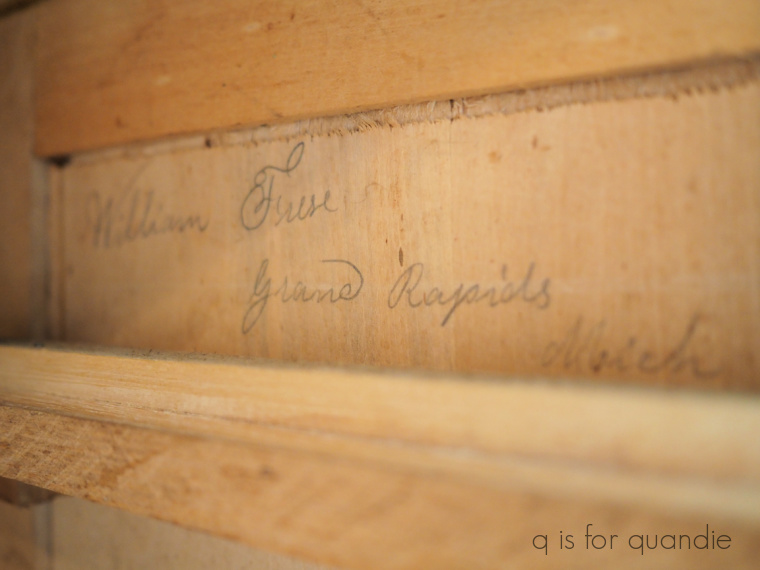
I think that’s definitely a clue that this piece was made by hand rather than by machines in a factory.
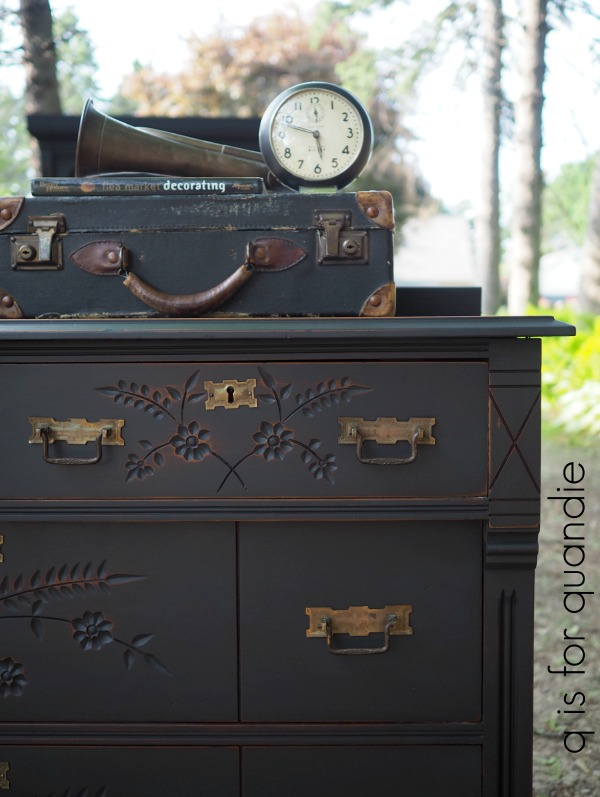
When I went to pull out my Miss Mustard Seed milk paint in Typewriter, I found that I only had about 1/4 cup of the powder left in the bag. Yikes! I was really nervous that this wouldn’t be enough paint for this project, but it turned out to be plenty. Mainly because I ended up needing only one coat of paint. I was going for a worn look anyway, so it was perfectly fine if I didn’t end up with fully opaque coverage.
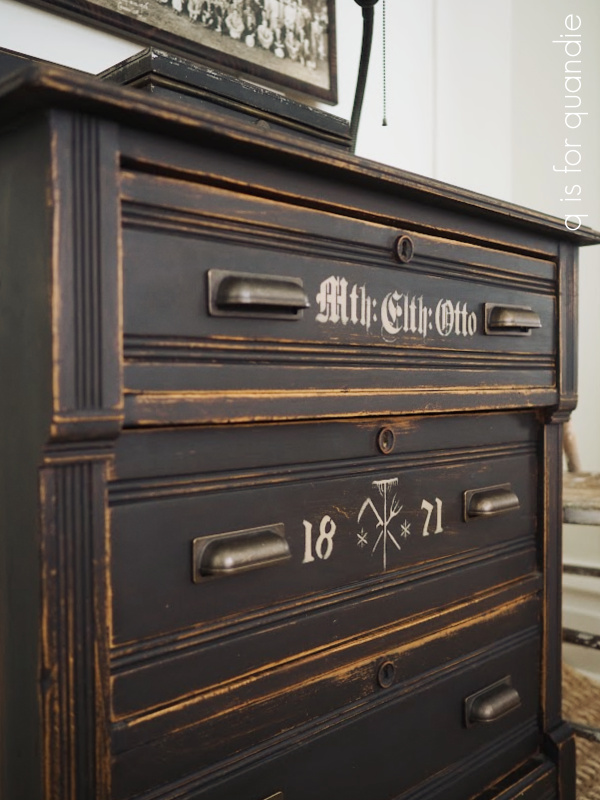
Milk paint dries really fast, especially when you’re painting inside a heated house with pretty much zero humidity. So once the paint was dry, I sanded my piece with vigor to get the worn look that I wanted. I focused on areas that would have received more wear over time, like around the key holes and the edges of the drawers.
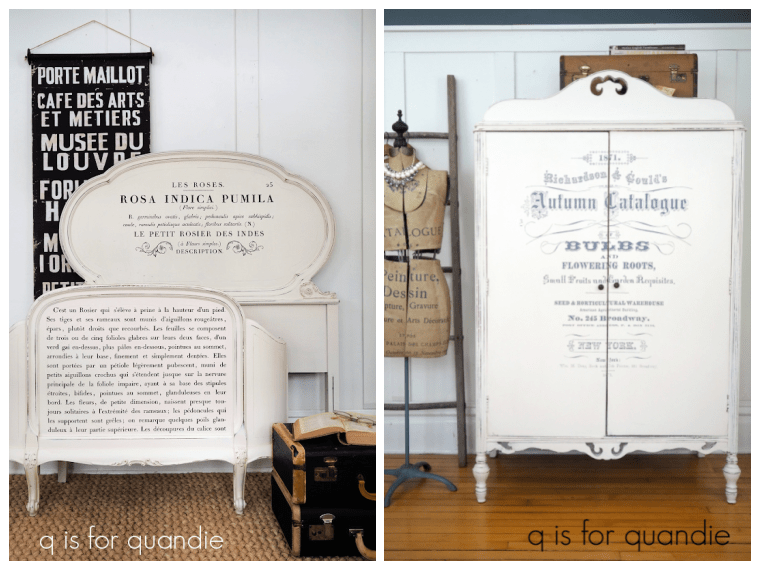
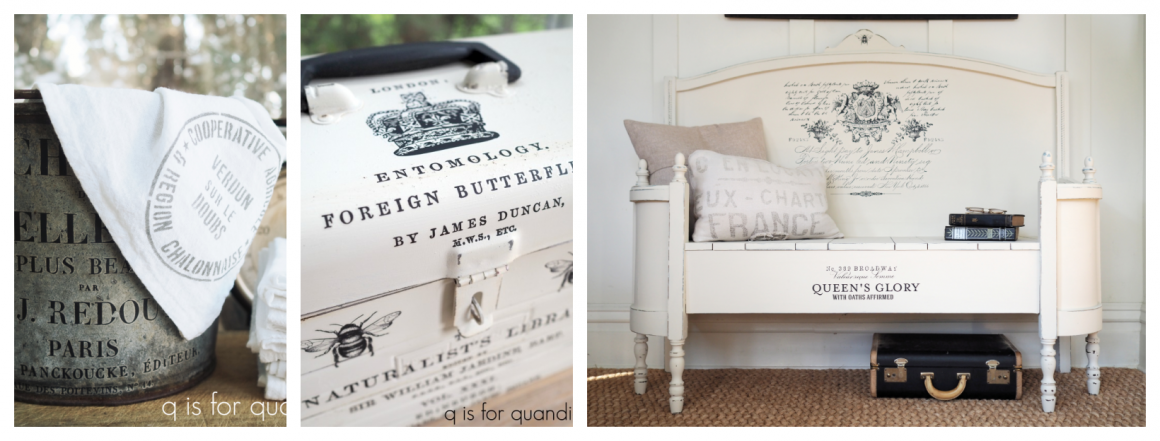
Next, I pulled out some of my European grain sack style stencils (from Maison de Stencils). I knew I’d have some that could give me a look similar to the inspiration piece.

I used Dixie Belle paint in Putty to do the stenciling.

Finally, after vacuuming away all of the dust, I used Dixie Belle’s Big Mama’s Butta to seal the dresser. I usually describe this product as halfway between hemp oil and wax. It provides a little more protection than plain hemp oil, but not quite as much as wax. I love using it over dark colors in particular though. I think it really brings out the richness of the color.

I chose to line the drawers of this dresser with some map themed wrapping paper. They had some ink stains that were a little unsightly, so I opted to add this last detail.
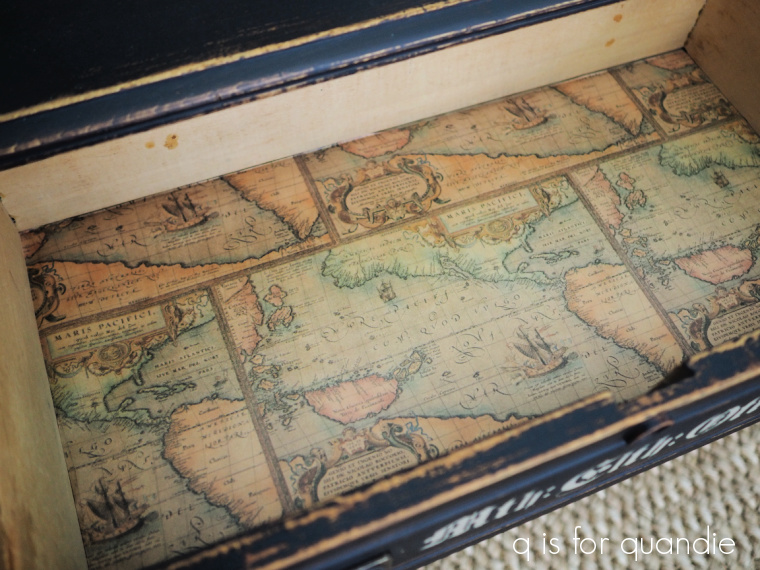
This was a fun one to work on and the perfect project for milk paint.
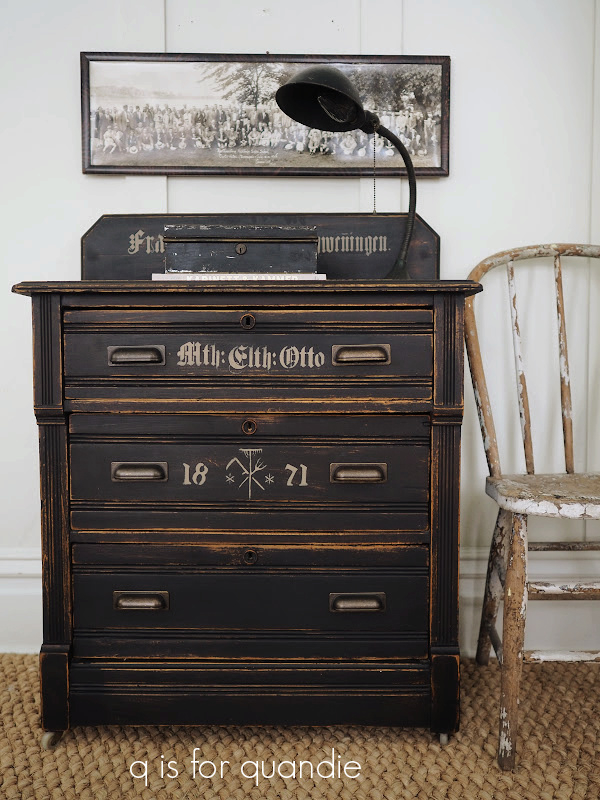
I think I did a pretty good job of creating the same ‘look’ as my inspiration piece, what do you think?
This dresser is the perfect size to use as a nightstand, it’s not terribly large. It is for sale locally, so please check my ‘available for local sale‘ page for the dimensions and other info if interested.