do as I say, not as I do.

I always joke that I like to learn things the hard way.  But really, that isn’t too far off the mark.  Over the years I have accumulated a fair amount of knowledge about painting furniture that was mostly acquired by making mistakes and then learning from them.

I know there are other (and most would say better) ways to learn, such as taking a class or workshop.  I’ve taken a couple of workshops in my day too.  They are absolutely great for learning the basics, but you can’t learn every last detail in the space of just a few hours.  Another way to learn is by reading blogs like mine.  We make the mistakes so that you don’t have to!

In the long run, experience ultimately comes from practicing, trying things out, and yes, making mistakes.

So today I thought I’d share some of the lessons I’ve learned by making mistakes.

No. 1 – Do not apply a furniture transfer over freshly applied wax.

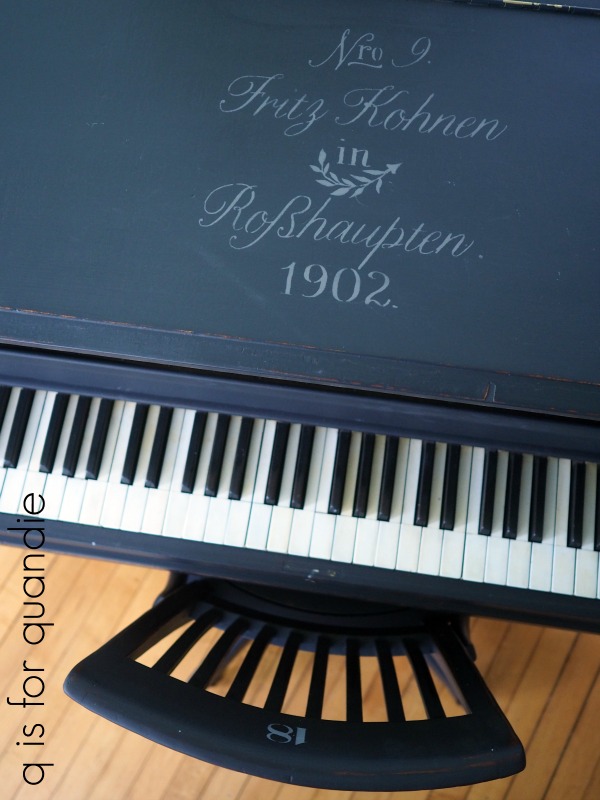
I wanted to use dark wax over bare wood on this piano stool seat to add some color.  For some reason, I thought I needed to wax before adding the transfer.  Big mistake.  The rubbing motion that you use to apply a transfer creates friction, friction creates heat, heat turns freshly applied wax and the adhesive of the transfer into a sticky gooey mess.  I simply couldn’t get any more of that transfer to adhere to the stool.

By the way, this experience also taught me that it’s fairly difficult to remove a transfer too.  Even though parts of this transfer wouldn’t adhere at all, the parts that did adhere were stuck down good.  I tried using mineral spirits and a scrubbing pad and after lots of elbow grease I only got this far …

The fix.

I broke out the orbital sander and sanded the entire seat down to bare wood.  Then I stained the stool top to give it some color.  Next, I added the transfer, followed by wax.  It turned out beautifully.

A little sidebar:  I refinished that stool in March 2018, long before I painted my piano black.  Then I sold it.  Kicking myself now because this stool would be perfect with my now black piano!  I’ll be on the hunt for another like it while garage saling this summer.

q tip:  If you decide you simply must have a transfer on your piece but you’ve already waxed it, you will need to wait 30 days for the wax to cure before adding the transfer.  Or you could remove the wax with mineral spirits, but who wants to go down that road?


No. 2 – Do not use Color Change Wood Filler when painting a piece with milk paint.

This is the Elmer’s Carpenter’s Color Change Wood Filler.  It goes on purple and when it turns white you know that it’s dry.  The packaging says it is paintable and stainable.  So it seemed like a reasonable choice at the time.  The problem is, because milk paint is much thinner (ie. more watery) than other paints it turns the filler back to purple!  I suspect this might happen with chalk style paints too, but I’ve never tried it.

I used it on a desk that I was painting with Miss Mustard Seeds Marzipan.  Not only did the paint turn purple, but I then tried sealing it with Tough Coat and repainting, but the purple still bled thru that too (keep in mind that Tough Coat is not intended to seal bleed thru, I just thought I’d try it).

The fix.

Since it was summer, I used some spray paint primer to block the purple bleed thru.  Then I repainted the entire side of the desk with the Marzipan.


No. 3 – Do not use the Prima Marketing Décor stamps with ink over milk or chalk paint without a topcoat.

This pair of nightstands were perfect for trying out the Decor Stamps.  However, I had painted them with milk paint and hadn’t added a top coat yet.  Because milk paint is so porous it soaked up the ink like a sponge and the pretty stamp that started out looking crisp and fabulous bled into the paint and after about 10 minutes it ended up looking like a fuzzy mess.

After realizing the error of my ways, I painted a test board with several different treatments and then tried the stamp over them.

The fix.

I repainted the nightstands with Fusion’s Putty, and then tried again with the stamps.  This time it worked perfectly!

q tip:  If you want to use a Decor stamp with ink over milk paint, be sure to seal your milk paint with a water based sealer such as Miss Mustard Seeds Tough Coat or The Real Milk Paint Co’s Finishing Cream.


No. 4 – Even if you don’t see any stain bleeding through your piece before you apply a sealer, a water based sealer can pull the stain through your paint.

I painted this linen press using Rachel Ashwell paint.  I don’t think this product is even around anymore.  I’m guessing she tried the paint thing, found it to be super competitive, and it fizzled.  But you can get this result with any paint when you add a water based top coat.  It’s super frustrating because your piece looks amazing before you add the top coat.  Also, the bleed thru can take a while to show up.  So you might think you’re done, and then a day later start to see bleed thru.

It’s really hard to know when this is going to happen.  Over time, with experience, you’ll get a feel for judging whether or not a stain might bleed.  But sometimes it just sneaks up on you.

The fix.

I used Rachel Ashwell Clear Primer to seal the piece, repainted and then finished with the water based topcoat.


No. 5 – When all else fails, follow the directions.

I really loved that Rachel Ashwell brand Clear Primer, too bad it’s no longer available.  However, another great product for blocking bleed thru is Dixie Belle BOSS (blocks odors, stains, stops bleed thru).

However, be sure to follow the directions.  I used it to block an ink stain on the inside of a drawer and the first time around it didn’t work, even though I had used two coats of the BOSS.

So I went back and read the instructions which said to allow for a longer drying period.

The fix.

I added two more coats of BOSS and let it dry overnight and it worked like a charm.

Yep, my dad was right, when all else fails, read the directions.


No. 7 – Be sure to mix your milk paint really well, especially the shades of green.

True milk paint is made with just five ingredients; casein (milk protein, hence the name milk paint), chalk, clay, oxide (natural pigments) and limestone.  It comes in powder form and you mix it with water when you are ready to use it.

Some of the pigments used are heavier than others.  Because of that, they tend to settle to the bottom of your container as you’re using the paint.

As a result, if you paint most of your dresser one day and then paint the final bottom drawer on another day after your handyman has fixed it you can end up with an entirely different color.

Yep, not a good look.  That bottom drawer definitely has a lot more of the blue pigment compared to the others.

I learned a couple of lessons from this one.  First of all, when using milk paint, mix your paint before you start prepping your piece.  Let it sit while you prep allowing the pigments time to fully dissolve.  Next mix your paint well again before starting to paint.   Also, frequently give your paint a little stir as you are painting.  And finally, be sure to paint the final coat on your entire piece in one sitting and with one batch of mixed paint.  If you’ve painted the first coat and realize you don’t have enough paint left for the entire final coat, be sure to add more paint to your mix before starting the last coat.

For more milk paint tips, check out my Milk Paint Basics post.

The fix.

I mixed a new fresh batch of Miss Mustard Seeds Luckett’s Green and repainted the entire dresser in one go.

I hope you’ve learned a thing or two from this post.  I’m sure I’ll keep on making mistakes and I’ll continue to share them with you so that you don’t always have to learn things the hard way.  You can do as I say, not as I do.

If you have any lessons you’ve learned the hard way, be sure to share them with us in a comment.

enjoy the journey.

I know, I know.  I share a lot of painted suitcases.  I probably sound like a broken record.  I really enjoy painting them though.  It’s probably the traveler in me.

I have found that certain styles of suitcases will not sell ‘as is’, but usually sell well painted.  This is one of them.

It’s rather blah.  It’s also a bit on the cheap side with a plastic handle rather than leather.

But a little Dixie Belle paint in Caviar and one of Prima Marketing’s new gold Somewhere in France transfers give it an entirely new look.

It was just a happy coincidence that the transfer fit the suitcase perfectly.  And FYI, this is another of the transfers from the yet to be released Spring 2019 line.  They should be hitting retailers in mid-April or so.

There are 3 designs included in the Somewhere in France set …

As you can see, I’ve used the top section on this suitcase.

I used just the bottom two lines of the bottom section on the toolbox that I shared last week.

And again, as on the toolbox, the gold looks amazing over black.

 I took the suitcase in to Reclaiming Beautiful (the shop where I sell on consignment in Stillwater, MN) on Wednesday evening, so if any of you locals are in need of a fabulous painted suitcase be sure to head to Stillwater!

Thank you to Dixie Belle Paint Co and Prima Marketing for providing the materials used for my painted suitcase.

another re-do.

Do any of you remember when I painted this chair?

It was back in October 2015.  I used it in my living room for a while, and then it moved to the Q branch.  I was actually going to sell it a while back, but my niece wanted me to keep it because it was the most comfortable option for added seating in the living room when needed (and she was always the one who ended up sitting in it).

But now that we have the sectional with plenty of comfortable seating for 4, I no longer need the chair.  So I decided to freshen it up with some new upholstery before selling it.

I pulled out some drop cloth material, a couple of stencils, and some Fusion paint in Putty and Algonquin.

I don’t have much paint left in either of those containers, but it doesn’t take much to stencil a faux grain sack look on fabric.

Prima Marketing sent me some of their brushes a while back and I assumed they were stencil brushes.  But, they actually call them wax brushes.  Ooops.  Well, FYI, they work great for stenciling too!

The one above with the round ball-like handle was perfect for adding the grain sack stripe to my fabric.  It made quick work of filling in that fat stripe down the middle.

This next brush worked great on the smaller details of the wording.

So, they may be meant for wax, but these brushes work great for stenciling too!

Once my paint was dry, which really only took about 20 minutes or so, I simply removed the old fabric and stapled the new stuff in place.

And now this chair is ready for a new home.

If you’re wondering where to purchase the Prima Marketing brushes, check out their ‘where to buy’ page.

If you’re wondering where to buy the Fusion paint, check out their ‘where to buy’ page.

And finally, if you happen to be local (Twin Cities, MN) and in need of a freshened up chair, check out my ‘available for local sale’ page to see if this one is still available.

pleasure parties accommodated at short notice.

I purchased this pretty vanity or dressing table at an estate sale last summer.

Just ignore Mr. Q’s legs behind the vanity.  He was holding the mirror in place for me.  Ladies, you know you’ve got a keeper when he’s willing to duck behind a vanity while you take your time with some ‘before’ photos!

This piece has so many pretty details and I knew it would look great painted.  I’m not sure why it took me so long to get around to painting it.  Probably because I also knew it would be more putzy to paint with the mirror frame and all of those curvy, carved details.  And I was right.

But it was totally worth it!

I chose to paint it in Fusion’s Little Piggy from their Tones for Tots line.  If you’re afraid of going overboard with pink, or you’re just not a fan of bubblegum, this is the perfect shade of barely there blush pink for you.  In some lighting you can barely even tell that it’s pink.

This is also the perfect shade of pink to pair up with one of Prima Marketing’s newest transfers, Botanical Rose (available for purchase in mid-April).

This piece provides the perfect example of how to use a 24″ by 30″ rectangular transfer on a piece that is not exactly a rectangle.  Since this transfer is a full image transfer, ie. it has a solid background, you might have thought you couldn’t cut it up and use it sort of piecemeal.  But you definitely can (although you may not totally recognize it when done).

I started out by deciding which parts of the transfer would work best on which drawers.  I wanted to mostly avoid using the giant rose in the middle of the design.  I began with the top center drawer, then the two top side drawers, and then I used what was left of the design to piece together the lower four side drawers.  I measured and cut out each section with the backing paper still in place, cutting each piece just a little larger than I needed so I had some wiggle room.

Here’s what was left of the transfer when I was done.

See how perfectly the background color on this transfer works with the Little Piggy

Each drawer front has a solid piece of transfer over it, those background colors on the transfer blended with the paint color perfectly.

It wasn’t until I was putting the knobs back on that I noticed what the section above said.  I wasn’t sure which phrase I liked better ‘staging and expressing’ or ‘pleasure parties accommodated at short notice’.  I went with the latter for my blog post title, but I may have to use ‘staging and expressing’ some time too.

I kept the original hardware again this time.  Initially I was going to add some gold wax to them, but in the end I liked the way they looked ‘as is’.

So, what do you think?  Pretty in pink?

The Botanical Rose transfer is not yet available to purchase.  However, the new spring designs from Prima Marketing should be shipping to stores in mid-April so be sure to look for them then.

If you’re wondering where to purchase the Prima Marketing transfers, check out their ‘where to buy’ page.

If you’re wondering where to buy the Fusion paint, check out their ‘where to buy’ page.

And finally, if you happen to be local (Twin Cities, MN) and in need of a pretty pink dressing table, check out my ‘available for local sale’ page to see if this one is still available.

somewhere in France.

Here’s a sneak peek at another of the fabulous new transfers coming soon from Prima Marketing called Somewhere in France.  Well, technically, I used only a small part of one of the three transfers that come in this set.

When I unboxed the transfers I immediately wondered how they would look over black.

Although it was a bit difficult to capture in a photo, they are a subtle metallic gold.

Since I wanted to give that a quick test before I planned an entire piece of furniture around one, I decided to try it on an old toolbox that I have.

I got this toolbox from my friend (and picker) Sue.  It’s bigger than it might look in that photo at 22″ wide by 7″ tall.

Each of the three sections of this transfer set are about 24″ wide x 9″ tall.  So I just used the bottom two lines of one.  I simply cleaned the surface of the toolbox and then applied the transfer as per usual.

I wanted to show you guys a close up of how the transfer looked freshly applied.

See that sort of halo or white filmy look around the letters?  Well, look what happens when you apply just the smallest amount of Fusion’s Beeswax Finish over the transfer.

It totally disappears.  Keep that in mind if you end up purchasing this transfer.

And I have to say, the gold looks positively amazing over black, doesn’t it?

This toolbox sits on a shelf in my living room.

And here’s a little secret, it actually holds all of my waxes and other top coats.

It’s a great way to store my painting supplies, sort of hidden in plain sight.  Since I paint in the piano room during the winter, it makes sense to have all of my supplies nearby.

I’ve seen pictures of this transfer used over white and that creates a beautifully subtle look, so I’m definitely going to try that sometime too.

The Somewhere in France transfer is not yet available to purchase.  However, this design should be shipping to stores in mid-April so be sure to look for it then.

If you’re wondering where to purchase the Prima Marketing transfers, check out their ‘where to buy’ page.

the lovely ledger dresser.

A week or two ago Prima Marketing contacted me and offered to send me a couple of the new transfer designs that were coming out so that I could be one of the first to try them out.

How cool is that?  I’m so happy that they thought of me, and trusted me to help unveil some of their fabulous new designs!

As soon as they arrived I knew exactly which one I wanted to try first, and I knew exactly what I would put it on.

Now, I know there are people out there who might think the wood on this dresser is beautiful and that it’s a crime that I painted it.  All I can say to that is ‘different strokes for different folks’.  Personally, I think it’s rather … uh, well … let’s just say unattractive.  So I didn’t feel even the slightest qualm over painting it.

I started by sanding the dresser lightly, vacuuming away the dust, then cleaning it with Krud Kutter.  Then I added two coats of Fusion’s Limestone, which is a lovely creamy white.

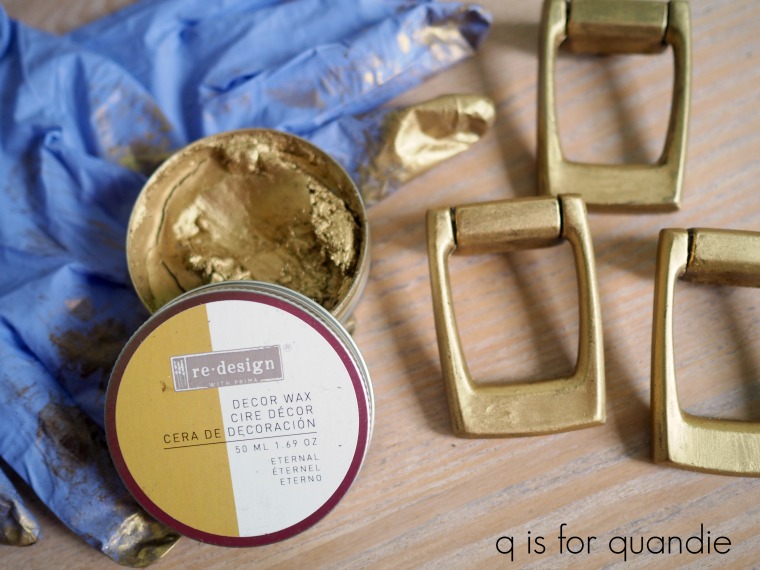
While the paint dried, I scrubbed up the drawer pulls with some dish soap.  I was planning to add a metallic gold wax to them, but in the end I decided I preferred them with a more subdued look.  However, they were a bit dull, so I waxed them with Homestead House Salad Bowl Finish to shine them up.

I couldn’t really get it to show up very well in a photograph, but the pull on the left is waxed and the one on the right isn’t.  The wax adds just a little bit more depth and shine.

Once the paint was fully dry I distressed the edges of the dresser with 220 grit sandpaper.

Always remember that Fusion acrylic paint is much easier to distress before it has much time to cure.  Once cured this paint is very durable (ie. harder to distress).  I always try to distress it within 24 hours of painting the piece, if not sooner.

Next came the really fun part, adding the transfer.  The Lovely Ledger transfer combines two of my favorite things, French writing and … well … ledgers!  I’m an accountant by day, furniture painter by night (or more realistically, weekend), so this Lovely Ledger transfer was perfect for me.

I had to doctor up the design just a tad to fit it on this dresser because of the detail on the middle drawer.

I suspect that you wouldn’t even notice it if I didn’t point it out.

But if you ever buy this transfer yourself and wonder why it doesn’t look exactly like mine, that’s why.  I removed a flower from one spot and filled in with more wording instead.  Always keep in mind that you can cut these transfers up and re-arrange them to fit your piece more precisely.

One of the things I love about using Fusion paint is that it has a built in top coat.  I find that the transfers work really beautifully over the Fusion in particular because it creates the perfect surface for them to adhere to.  Once the transfer is in place I usually go over it with just a little bit of furniture wax, or in this case I used the Salad Bowl Finish.

Today’s q-tip:  Remember, never try to apply a transfer over a freshly waxed surface.  You’ll end up with a sticky, gooey mess.  Always wait until after the transfer is applied to add wax if you want to.  If you’ve already waxed and are dying to add a transfer, you’ll have to wait 30 days for your wax to cure and then you can apply a transfer over the wax.

I have to say, if I’d had some glass knobs on hand I think I would have used them instead.  They would allow the transfer to be the star of the show.  But the pulls that came with this dresser are so gorgeous, I felt like it would be wrong to not use them.  Plus I only had a mishmash of unmatched glass knobs.

The pulls do cover up some of the transfer though.

So, what do you think?  Did I improve the dresser?  Which look is more ‘you’?  The ‘before’ or the ‘after’?

As I mentioned at the beginning of the post, the Lovely Ledger transfer is not yet available to purchase.  However, the new designs should be shipping to stores in mid-April so be sure to look for them then.

If you’re wondering where to purchase the Prima Marketing transfers, check out their ‘where to buy’ page.

If you’re wondering where to buy the Fusion paint, check out their ‘where to buy’ page.

And finally, if you happen to be local (Twin Cities, MN) and in need of a beautiful dresser, check out my ‘available for local sale’ page to see if this one is still available.

living room tweaking.

My magic wand decorating project is almost done, I just have to finish up the piano room walls which has turned into a bigger project than originally intended.  So that one might be a while.

But in the meantime, I’m tweaking some details in the living room.  For example, I finally added something to the chalkboard that hangs over the sofa.  Here it is blank …

and if you’re interested, you can find the original post on how I made that chalkboard here.

As much as I love chalkboards, I have to admit that I’m not very good about changing up what’s drawn on them regularly.  I want to be, but somehow I always find myself looking at a chalkboard that still says “Let it Snow” at the end of August and thinking “well, I might as well leave it now, it’s going to be winter again soon.”  Is anyone else like that?

I also don’t have the patience to draw a design on a chalkboard free-hand.  So instead I fake it either by tracing something, or by using stencils to help get the outline and then filling things in by hand.

So I dug through all of my stencils and came upon a combination for this chalkboard that I thought would work.

And on the plus side, it’s not seasonal, so I can leave it this way for a while.

Once I had the stencils laid out, I used sharpened chalk to fill them in.

I use an old lip pencil sharpener to sharpen regular old white chalk.  Keeping a nice sharp point on the chalk allows me to get a good outline using the stencil.

After I pull away the stencil I go back and connect lines, fill things in, or add a few more embellishments.

I added a couple of my favorite old black & white family photos to one of the shelves too.

So now the chalkboard looks a bit more finished.

Another tweak was to add this cute little chair to the corner of the room.

I mainly use this chair as a prop in furniture photos, but I put it in this spot to get it out of my way one day and ended up rather liking it there.

Finally, I did decide that the brass reading lamp I chose didn’t work in the room.

As much as I like the way it looks, it’s really a reading lamp and we need a lamp in this spot that lights up the entire room.

For now I’ve put my old chrome lamp back in that spot, but I swapped out the shade for this fabulous Light Reading shade.  If you’re from around here, and you want your own amazing lamp shade, it looks like Light Reading will be at Junk Bonanza again this spring, so be sure to look for them there.

This lamp shade looks positively amazing with my dark grey walls, but the chrome is out of place.  I plan to try spray painting the chrome gold as soon as it’s warm enough outside to spray paint.

In the meantime, we’ll just use it ‘as is’.

In other news, I found a little time this past weekend to paint a piece of furniture and I’ll be sharing it here on Wednesday so be sure to stay tuned!

elevating a hankie drawer.

I was surfing around on Instagram the other day and I saw a post by @deerrunvintage of a hankie drawer that she re-purposed by adding little legs to it.  I thought it was a great idea, and I just happened to have an orphaned hankie drawer in my workshop so I decided to give it a try.

But first, what is a hankie drawer?

It’s a small drawer, or in this case more of a hinged box, that sits on the top of a dresser.  They were meant to hold handkerchiefs (hence the name) or gloves.

I often remove them from dressers when I restyle them because I feel like a flat top is more versatile than one with hankie drawers on it.  For example, you can now use the piece to hold your wide screen TV, or use it as a buffet in the dining room.  Plus, who actually uses hankies anymore?

In the case of the above dresser, they didn’t even look like they belonged on top of that piece.  So when I painted it last March I took them off.

You can just barely see it in the photo above, but this pair of hankie drawers were connected to each other by a trim board that went all the way across the dresser.  So after I removed them, I had Ken cut the trim board off …

Next I purchased some parts from my local craft store to turn into little legs for the drawer.

I glued two different pieces together to make this …

And then I glued these to the bottom of my hankie drawer.

Next I painted it inside and out with Miss Mustard Seeds milk paint in Apron Strings.  It took three coats to get good coverage over the original dark finish.  I have to say, this color always seems to lean more towards pink in other people’s photos, while for me it always looks very coral.  Once the paint was dry, I added a section of Prima Marketing’s Overflowing Love transfer to the top of the box.

Once I had that in place I decided the box needed just a little something else on the front.  So I pulled out some of Prima Marketing’s Modeling Material and the Etruscan Accents mold.

I glued the mold in place before the modeling material was set up.  Once it dries it becomes very brittle and hard.  But when it’s fresh out of the mold you can curve it to fit your piece.  In this case the front of the box is a bit curved, so I gently pressed the mold into place while it was still pliable.  This mold was much easier to work with than the little bees I used on the cake plates I shared Monday with their tiny little legs.

Once it hardened up (probably about an hour or so later), I painted it as well.

Once that was dry, I sanded the box to distress it and then added a couple of coats of The Real Milk Paint Co’s Dead Flat Finishing Cream.

I lined the inside with some pretty scrapbook paper.

As you can see I got quite a bit more chipping on the inside of the box than I did on the outside.  I suspect that’s because the original finish was more protected (ie. less worn away) on the inside than it was on the outside.  So that original finish resisted the milk paint more.

To be honest, I’m not sure whether or not the feet were worth the effort.

Not that they required a ton of effort, just an added $10 or so in expense plus some glue.

I don’t know, maybe they do elevate the box just a bit in more ways than one.  What do you think?

um, what is this stuff?

Several months ago Prima Marketing sent me a box full of goodies.  Included in the box were several jars of this stuff …

Chalk paste.

It sure does come in some pretty colors.  This pale blush pink is called Hubbard Squash.

And it has the most deliciously creamy, thick consistency, sort of makes me want to spread it on a cake.  But I’m pretty sure that’s not what it’s for.

So I wondered, what exactly is this stuff?

I’d never heard of chalk paste and had no idea what to do with it.  So I did some googling and it seems to be a sort of cross between chalk paint and a texture paste.  I found that a popular option is to use it with a stencil to create a raised design.

It was time to do some experimenting.

I happened to have this pair of oval wooden plaque thingies that my picker found at a garage sale for 25 cents each.  Perfect for experimenting.

Experiment no. 1 – I painted the oval in a pale blush color that sort of matched the Hubbard Squash chalk paste.  Then I pulled out Prima’s Lenore Corners raised stencil which is .04″ deep.  These thicker stencils are perfect for this technique.

Next I used a putty knife to smooth the Hubbard Squash chalk paste over the stencil.  I made sure that the openings in the stencil were fairly uniformly filled in with the paste and then pulled the stencil away.

I let the chalk paste dry overnight to be sure it was good and set up.  Then I sanded it lightly to smooth out any rough edges.

Next I pulled out some of Prima Marketing’s Decor Wax in a color called Diamond Dust.  The Diamond Dust is a pale, iridescent gold.  I used a q-tip to lightly apply it just to the raised sections of the stenciled chalk paste.

It accented the raised stencil just enough and I thought this might be a very pretty look on the right piece of furniture.

Experiment no. 2 – For  the 2nd oval I painted the base in a medium shade of greige and then used the off-white Vintage Lace chalk paste with Prima Marketing’s Madelia Gardens stencil.

In this case there is more of a contrast between the color of the base coat of paint and the color of the chalk paste.  As you can see, I did get some seepage from the chalk paste under my stencil.  I didn’t especially like the look of that, so after sanding the dried chalk paste to smooth it out, I painted over the entire oval with some Dixie Belle paint in Drop Cloth which improved the look.  Then I added a segment of Prima Marketing’s Endless Story transfer to the remainder of the oval.

From this experiment I concluded that chalk paste stenciled over a contrasting color of paint is probably not a good look for me.  The look of that seepage under the stencil is too messy for me.  However, I really like the subtlety of a uniform color over the entire thing.

Experiment no. 3 – I pulled out the last two wooden plates I had from Prima Marketing for a third experiment.  This time I first painted the plates using Dixie Belle’s Gravel Road.  Then I used the Iron Gate chalk paste, which is a dark charcoal grey similar to the Gravel Road.

Again, once the chalk paste had set up, I sanded it to smooth out any rough spots.  Then I painted over the whole plate with Dixie Belle’s Vintage Duck Egg.  Once that was dry I sanded it back to reveal some of the original color of the Iron Gate chalk paste.

As you can see, each of these techniques gives a slightly different look.  None of them are right are wrong, it just depends on the look you like.

I can’t really say I have a favorite, although I tend to prefer more subtle looks like the white paint over the white chalk paste.  It’s just enough to provide a hint of texture without being too much.

How about you?  Which one is your favorite?  And have you ever tried chalk paste?  If so, what did you do with it.  I’d love to know, so be sure to leave a comment.

Thank you to Prima Marketing and Dixie Belle Paint Co for providing the products used for these projects.

the blue plate special.

A while back I shared a quick and easy craft project using unfinished wooden chargers (or plates) from Prima Marketing …

You can do so many different things with these plates and they are an easy, quick project to have fun with.

Here’s how the plates look when you buy them.

They come in three sizes, 10″, 12″ and 14″ and they are basically a blank canvas for getting creative.  Once finished you could use them as chargers, display them in a china cabinet or maybe just hang them on the wall.  They are light enough that you could easily do that with some 3M Command Strips.

Prima Marketing had sent me 3 of each size, so in addition to the ones I already shared, I’ve now finished up the rest of them.

First off, I made this coordinating set of three.

I painted them with Dixie Belle paint in Dropcloth.  Then I used 4 different Prima Marketing transfers.  French Ceramics (on the top plate shown above), French Ceramics II (on the bottom plate) and Floral Lover (the gingham on the middle plate, and why this is called Floral Lover is beyond me because the set consists of the gingham pattern and a striped pattern, no florals in sight).

To dress up the gingham plate a little bit more I also added one of Prima’s French Pots IV transfers over the gingham transfer.  Yes, you can layer transfers like this.  Just be sure that your first transfer is well adhered before adding the second one by lightly burnishing it with a clean, dry cloth.

After the transfers were in place I sanded lightly to distress them a bit and then sealed the plates with The Real Milk Paint Co’s Dead Flat Finishing Cream.  I think this set would be perfect to hang on the wall.

Next, I tried something just a tad different with a couple of the plates.  I turned them into cake plates by adding some wood pedestals that I picked up at my local craft store for about $6 each (or in my case, I took my sister with me and we each had a 40% off coupon, so they were $3.60 each).

I used Elmer’s Wood Glue to attach the pedestals.  Once that was dry, I mixed up some Miss Mustard Seeds milk paint in Curio, which is a deep brown.  I don’t know that I would ever choose to paint something in this color and leave it that way, but Curio works great as a base color.  Especially over unfinished wood.  Unlike chalk paint or acrylic paint (Fusion or General Finishes), milk paint soaks into unfinished wood rather than sitting on the surface.  That makes it perfect to use as a stain too.

In my case, I just wanted a layer underneath my final color so that when I distressed these you wouldn’t see fresh new wood under the paint.

Once the Curio was dry, I sanded the plates lightly and then I added just a little beeswax to the edges to encourage my next coat of paint to distress just down to the darker layer.  Then I painted them with Miss Mustard Seeds milk paint in Linen, my favorite warm white shade.  It took several coats to get good coverage with the white over the dark brown.

In hindsight, I’m not sure it was worth taking all of this effort.  I didn’t get much chipping.  I did distress down to the Curio layer around the edges though, so maybe it added some depth.

After sanding the plates, I added the same two transfers that I used on my original pair of plates, Simplicity (which is the toile pattern) and Never Ending Story.  Once again I sealed them with The Real Milk Paint Co’s Dead Flat Finishing Cream.

But instead of stopping there I decided to have a little fun with a some new products that Prima Marketing sent my way, Modeling Material and a mold called Regal Findings.
I made a couple molds of the little bees (see them there in the middle row?) and added them to the bases of my cake stands.
I glued them on with wood glue before the molds had hardened which allowed me to form them to the curve of the base.  Once they hardened, I painted them with the Linen milk paint, allowed that to dry, topcoated it with the RMP Co’s Finishing Cream, allowed that to dry, then added a little Miss Mustard Seeds Antiquing wax to give them some definition.

I’m still practicing with the molds.  These tiny ones are a bit trickier than the larger designs.  Especially those fragile little bee legs.  As you can see, this bee lost a leg.
But after I get a little better at it, I plan to share a tutorial post on using the Modeling Material and the molds, so stay tuned for that.

Meanwhile, although I’m not a baker and never have need for a cake stand, these also work well to provide varying layers of height to a display.

Funny side bar story, I never even knew these vintage opera glasses of mine say “PARIS” on them.

It wasn’t until I was editing the photos for this post that I noticed that!  Cool, huh?

Anyway, these were just a few ideas of the ways you can use the wooden plates. I’ve got one more set of them that I’ll be sharing later in the week so be sure to check back!

Special thanks to Prima Marketing, Miss Mustard Seeds Milk Paint, Dixie Belle Paint and The Real Milk Paint Co for providing products used on these projects.