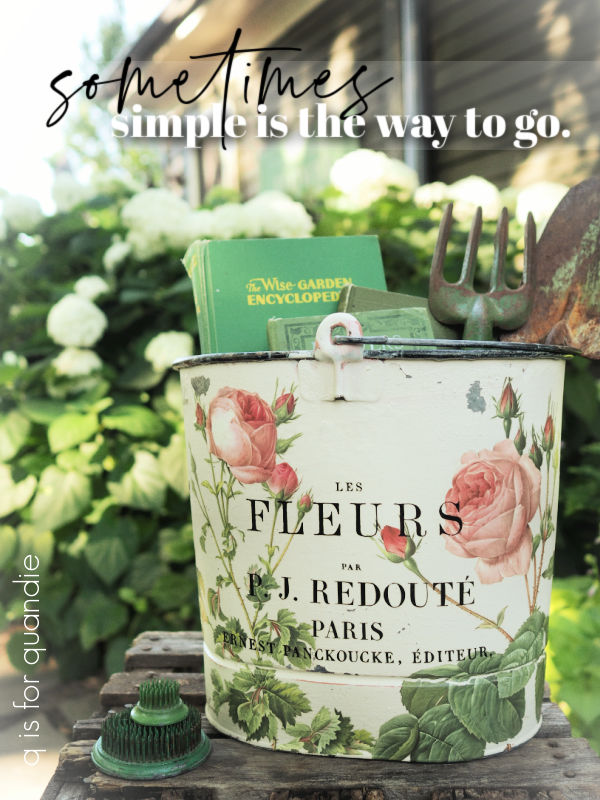
sometimes simple is the way to go.

Today I thought I’d share just a few smaller projects that I’ve worked on recently.  None of them merit their own individual post, so I’ve been saving them up for a bit of a compilation.

First up, a simple painted bucket.

While going through my pile of decor books recently, the blue bucket on the cover of Romantic Prairie Style caught my eye.
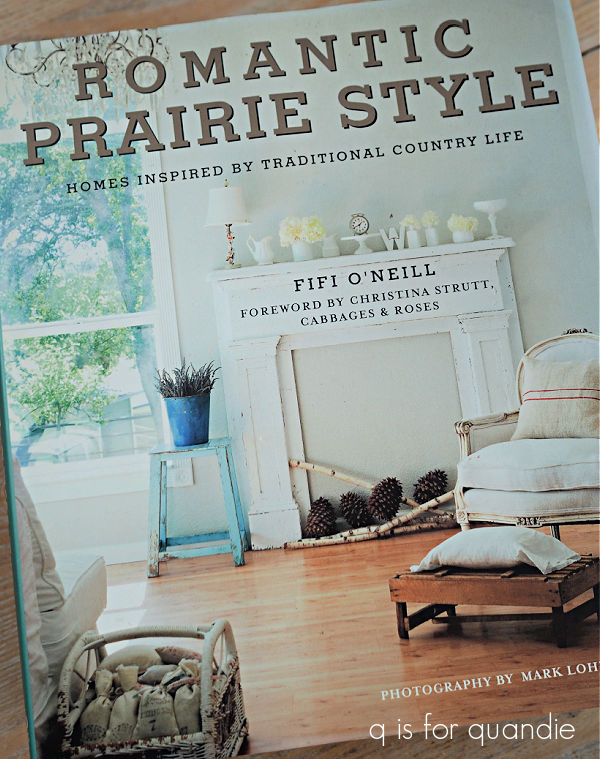
See it there, over by the window?  Isn’t that a fabulous cobalt blue?

So I thought, hmmm … I have some old metal buckets, maybe I’ll paint one blue.

So I pulled out this one …
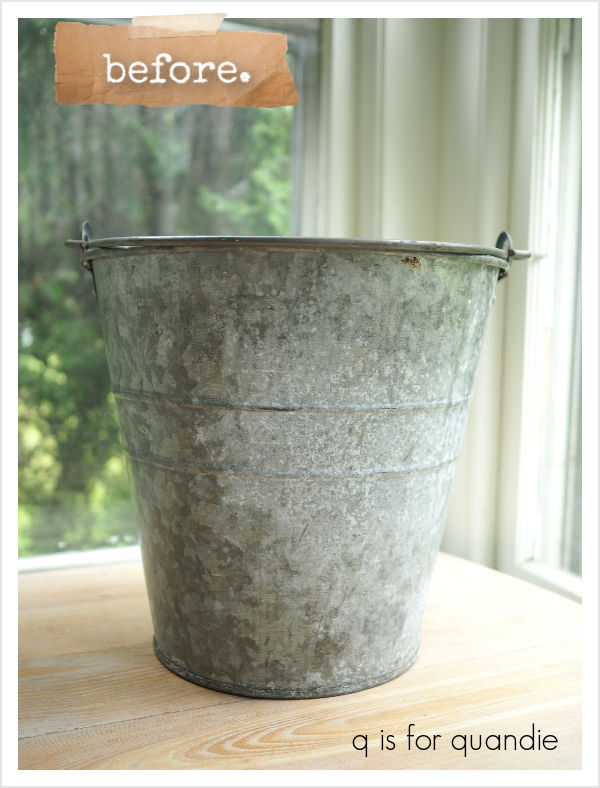
and then I pulled out the Soldier Blue milk paint from Homestead House.
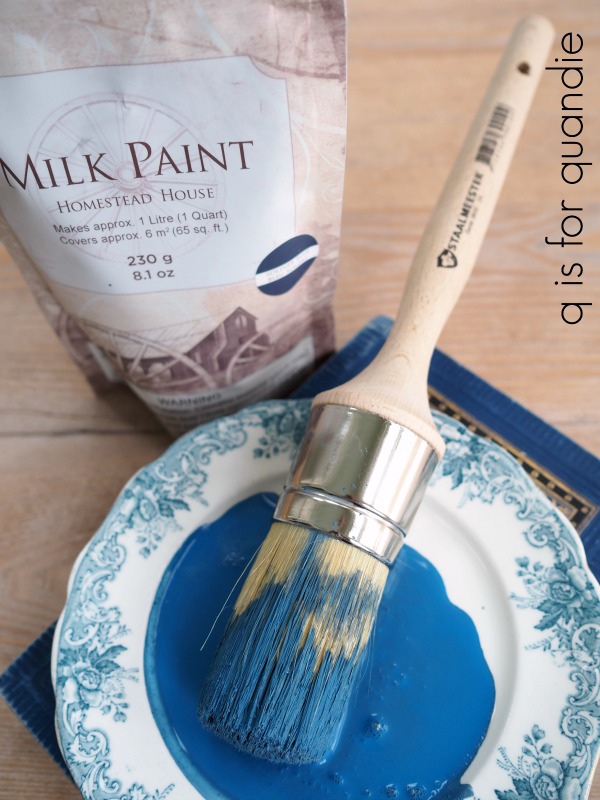
I thought it would be the perfect match for the inspiration bucket.

I gave my bucket a quick wash with Dawn dish soap and hot water, and that was it for prep.  I find that milk paint tends to adhere quite well to old galvanized items, the key word being ‘old’.  The old ones usually have a rough surface that is fairly matte, while newer galvanized pieces have a slicker, shinier surface.  Also, keep in mind that any greasy or oily residue on an old galvanized piece will also resist milk paint so be aware of that.

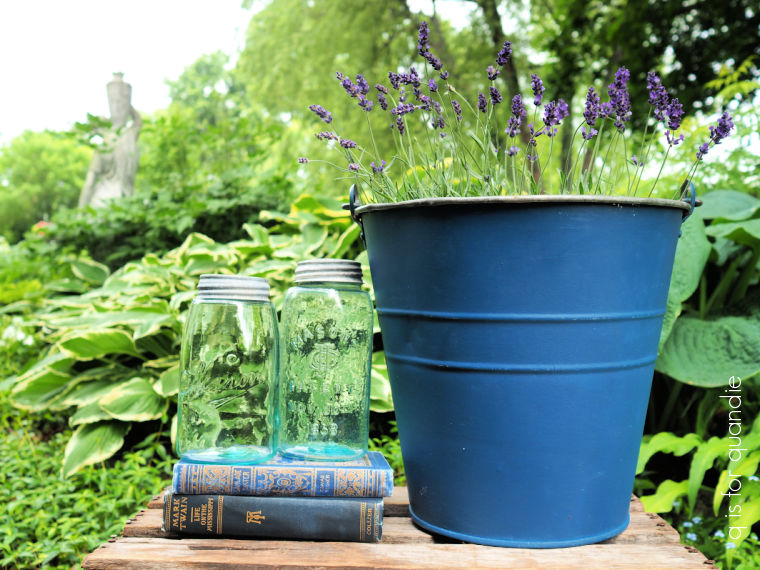
I gave the bucket two coats of the Soldier Blue.
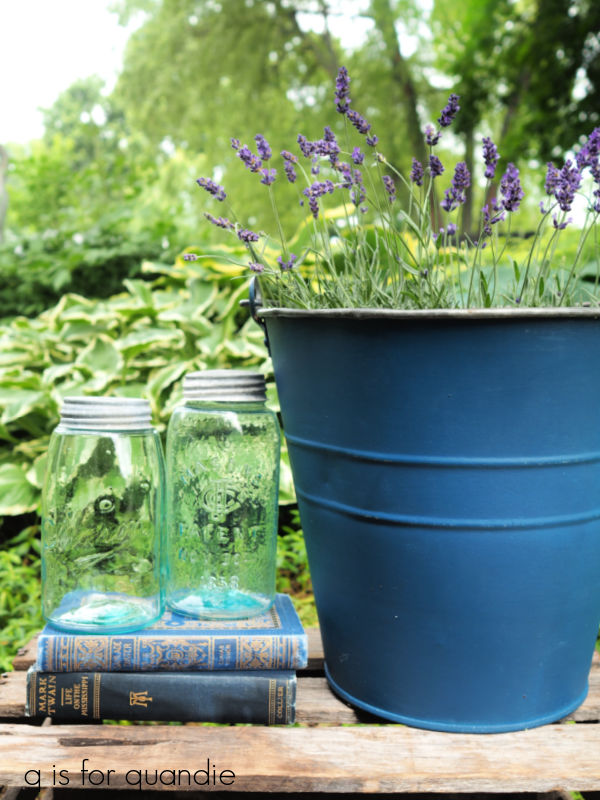
As you can see, I didn’t really get any chipping at all even though I did not using any bonding agent, or any special primer.

Once the paint was dry, I sanded it lightly with some 220 grit sandpaper to smooth out the surface and add a little wear to the edges.  I followed that up with a coat of Dixie Belle’s Big Mama’s Butta.  If you aren’t familiar with this product, I like to say that if hemp oil and wax had a baby it would be Big Mama’s Butta.
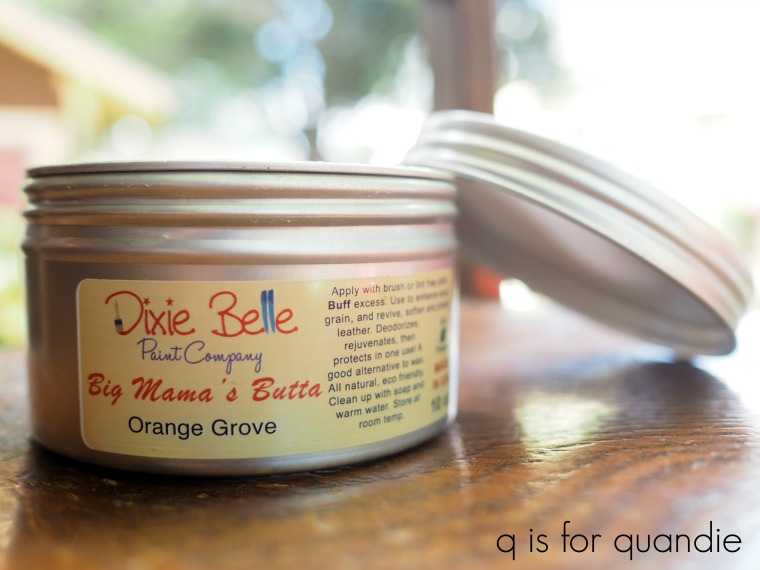
It’s super easy to apply with a brush or a rag, and it comes in some nice scents with Orange Grove being my favorite.  It works beautifully over milk paint.

I popped in a couple of lavender plants that I am attempting to grow this summer.
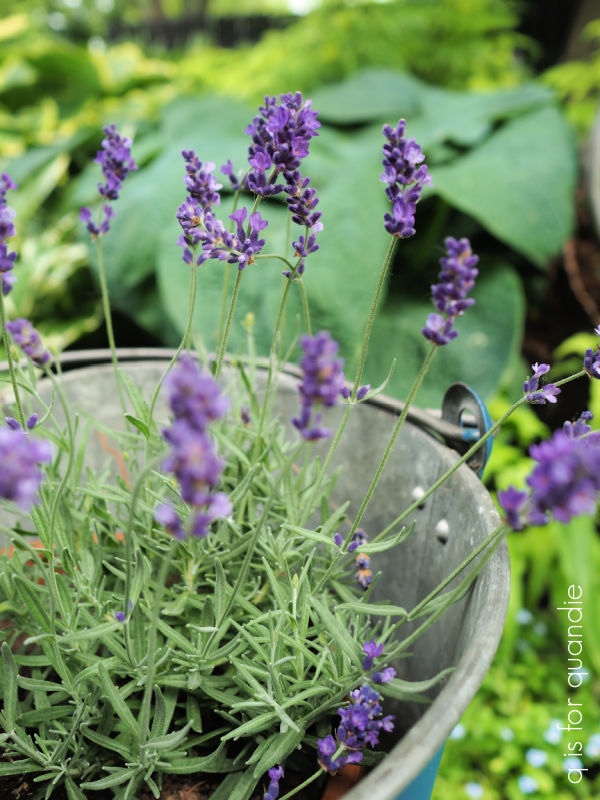
I think my blue bucket is a pretty good match for the one in the book, what do you think?
Next up I have another old galvanized piece.
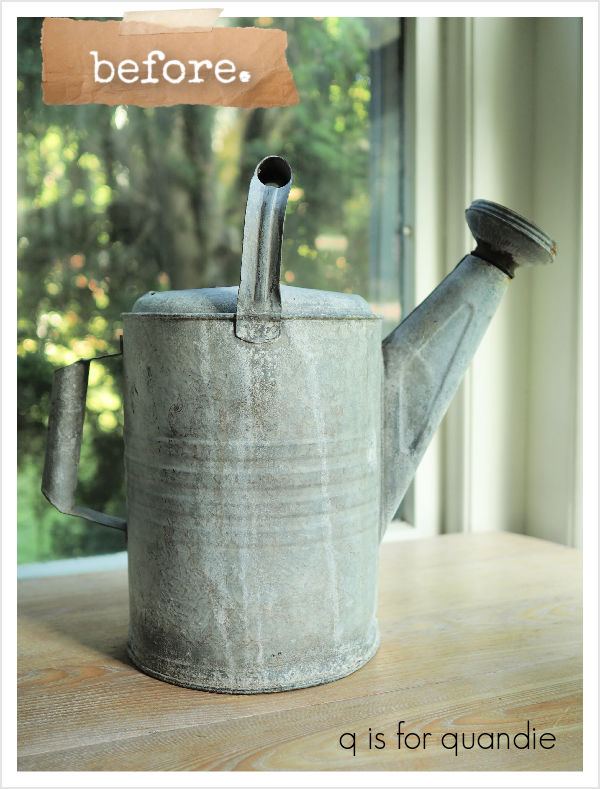
This is the $2 watering can that I picked up at the MacGrove neighborhood sales.

I originally thought it would be kind of shabbily fabulous to just add a paint inlay to the watering can without painting it.  I did that recently on another bucket and it worked out great …
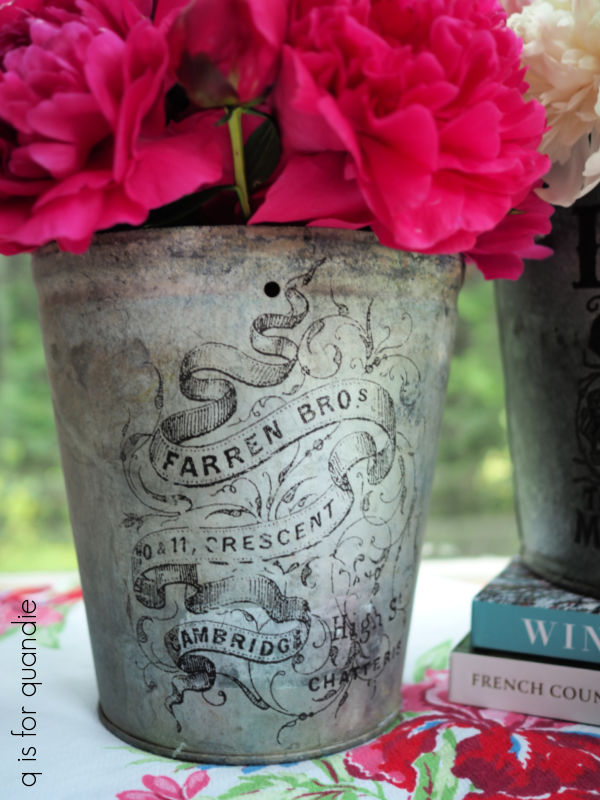
So after giving the can a coat of Dixie Belle’s flat clear coat, I applied the inlay face down into the wet clear coat.  I was fully aware that the watering can had some horizontal grooves, so I was very careful to press the inlay down into the grooves creating good contact.

Apparently, I wasn’t careful enough …
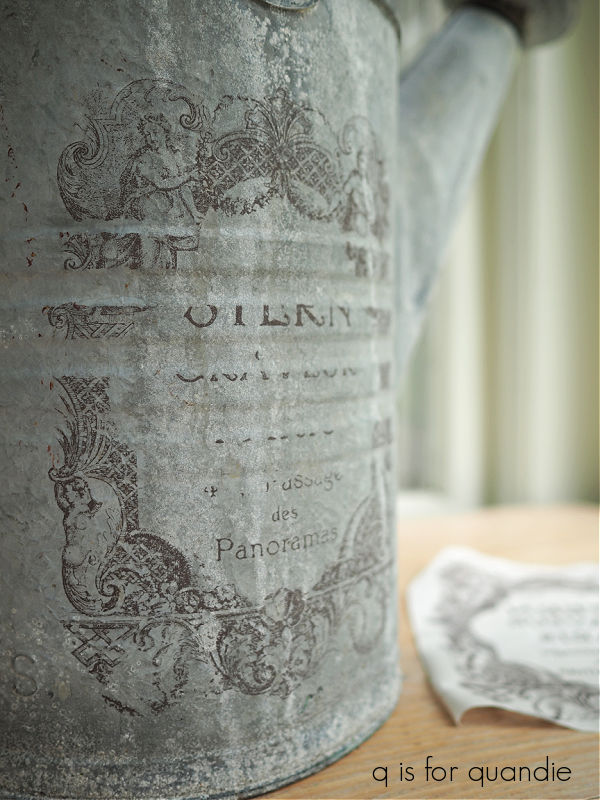
Drat!

I will say that it was absolutely pouring rain the day I worked on this, I believe the humidity level was literally 100% for a good chunk of the day.  So I did also have a problem getting the paint inlay to dry and ended up using a hair dryer to help it along.  So I’m not sure if it was the grooves or the humidity, but either way this inlay didn’t quite work out.

Well, you win some, you lose some.

One major bonus of a paint inlay is that you can wash it right off if you haven’t sealed it yet.  It wiped right off this watering can, and then I was back to square one.

Since the blue bucket turned out so nicely, I decided to give the watering can a simple milk paint treatment as well.  In this case, I went with Sweet Pickins milk paint in In a Pickle.
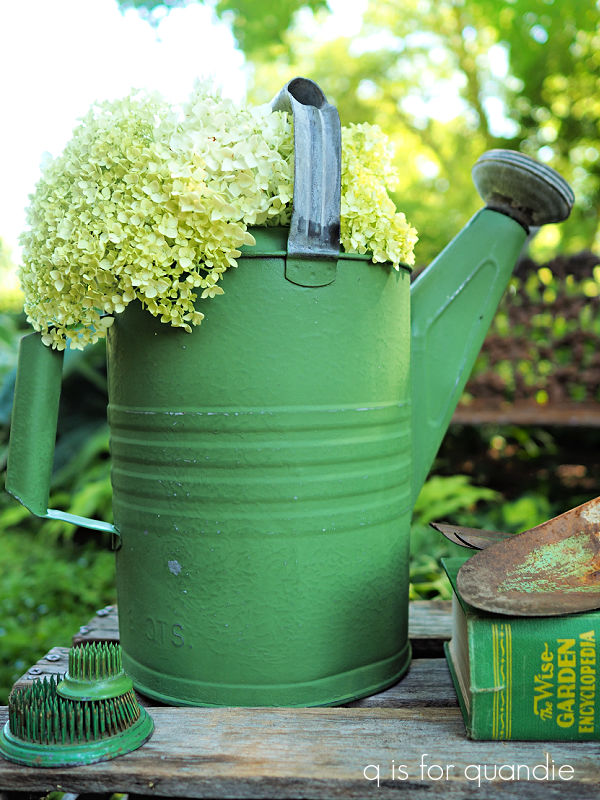
Once again, very little chipping, but I think it looks somewhat authentically old after a little distressing with 220 grit sandpaper.
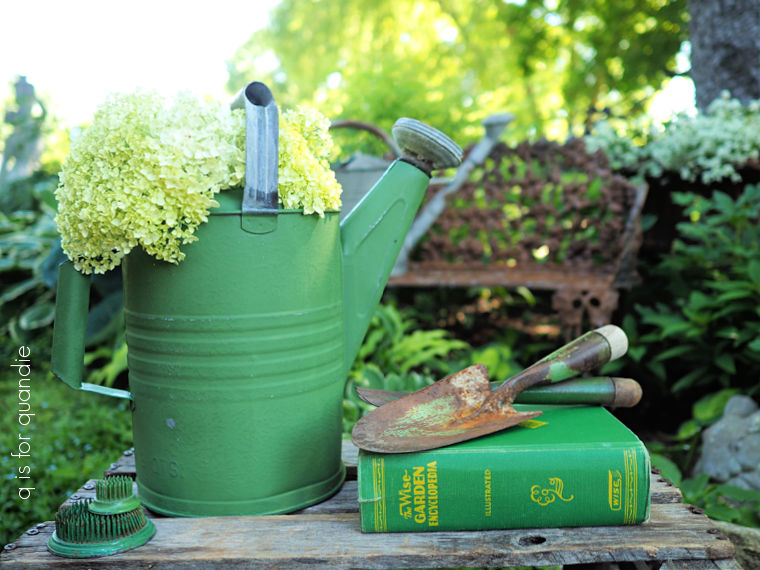
I did debate putting a transfer over the green paint, but in the end sometimes keeping it simple is the way to go.

But then sometimes not so simple is a better option, which brings me to project no. 3.

This is the oval bucket that I purchased at the So. St. Paul city wide garage sales.
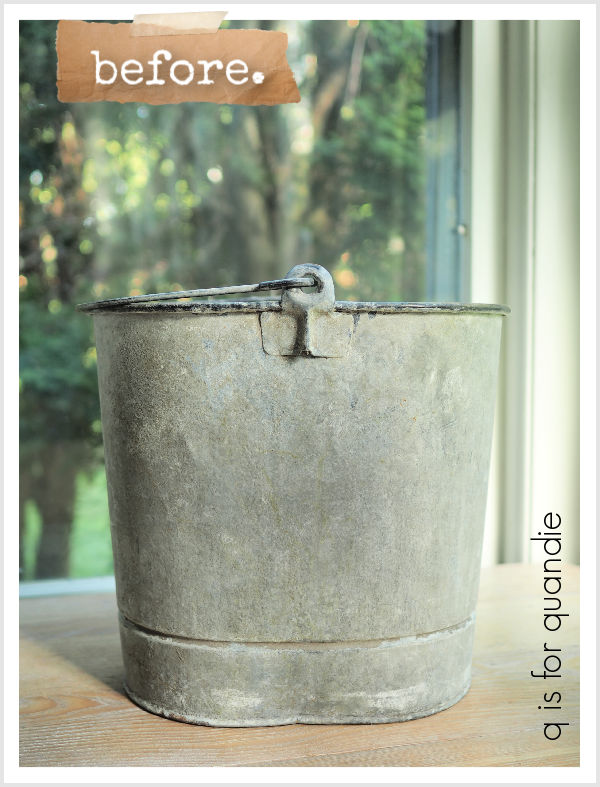
I decided to play around with some layering on this one.  So, after giving it a good cleaning, I added some of Dixie Belle’s Sea Spray texture additive to their Cottage Door paint.  I then applied just one coat of that to the bucket using a chip brush.

Once dry, I sanded with 150 grit sandpaper and then wiped away any dust.  I followed that up with a a coat of Rust-Oleum semi-gloss spray sealer.
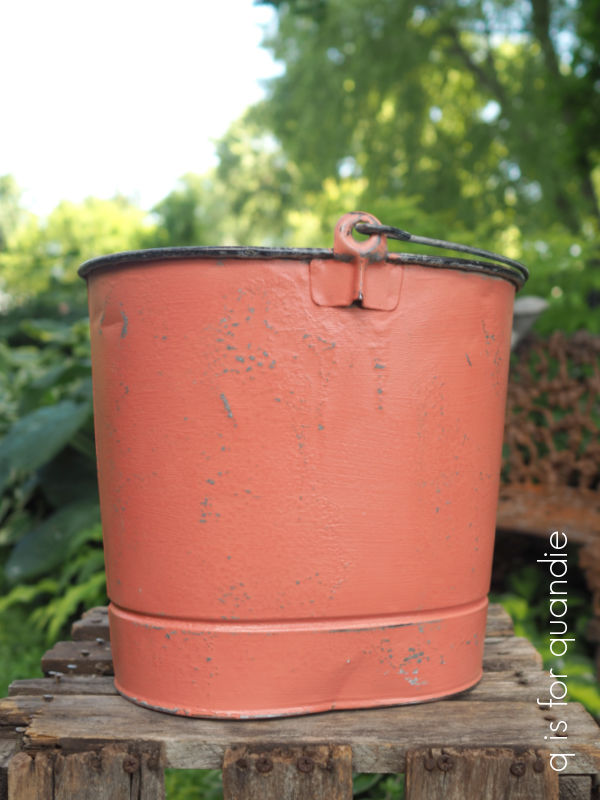
I then mixed up some off-white milk paint using a combination of Fusion’s London Fog and Homestead House Sturbridge White.  The London Fog is too creamy, and the Sturbridge White is too white for me, so I salvaged both colors by mixing them together.

I was hoping to get a good crackle finish, like I did on the box I painted back in June.  I applied a layer of clear coat first, then brushed on the milk paint.  Only this time around I put the bucket out in the hot sun to dry rather than adding heat with a blow dryer.  I’ve inadvertently had milk paint crackle under the hot sun in the past, so I thought it would work here.
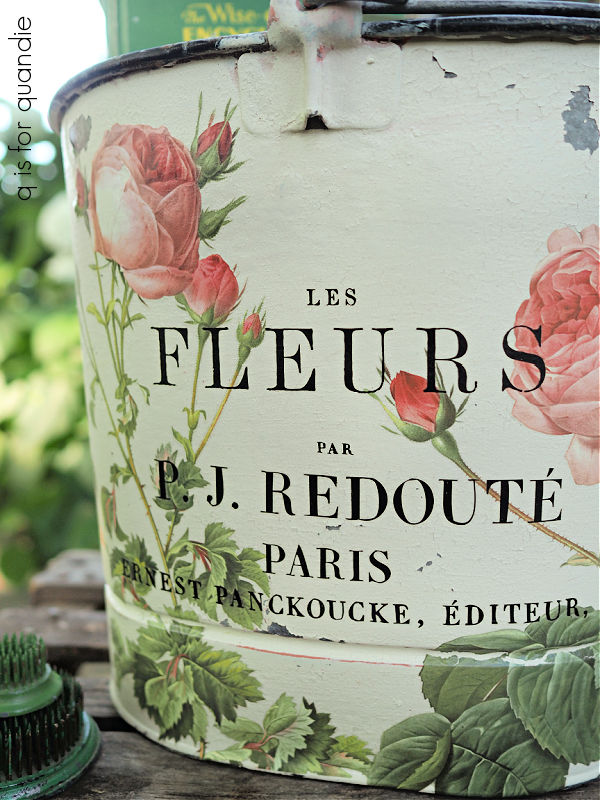
Ultimately I did get some crackling, but not enough to really reveal that underlayer of pink.  In hindsight, I made two mistakes with this treatment.  First, I shouldn’t have sanded the textured Cottage Door color as much as I did.  I basically removed most of the texture.  I should have waited until after adding the off white, and then sanded lightly to reveal the pink.  I also should have added some beeswax here and there over the pink to create a resist before adding that off white.

Regardless, after adding some of I.O.D.’s Rose Botanicals and a little wording from that retired Label Ephemera transfer, I love how this bucket turned out anyway.

I wrapped the roses around the back.
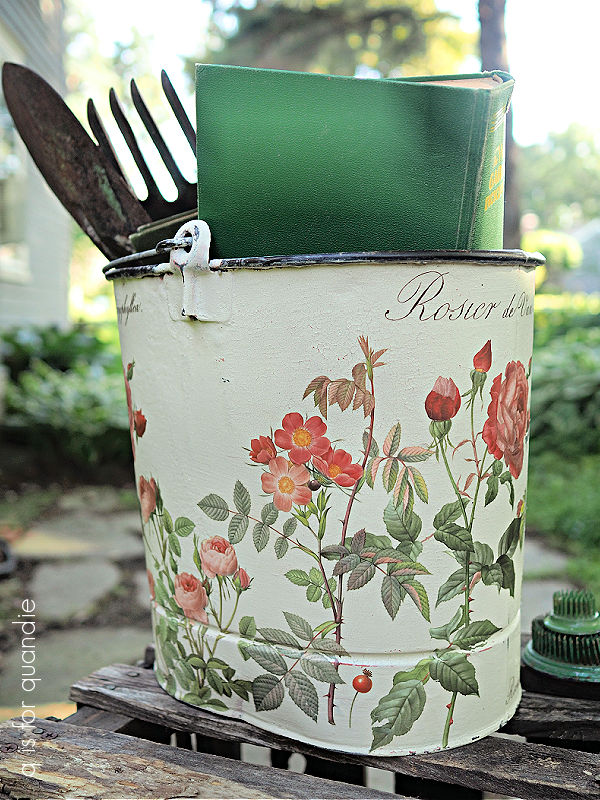
And I finished the whole thing off with a couple of coats of Rust-Oleum’s matte spray sealer.
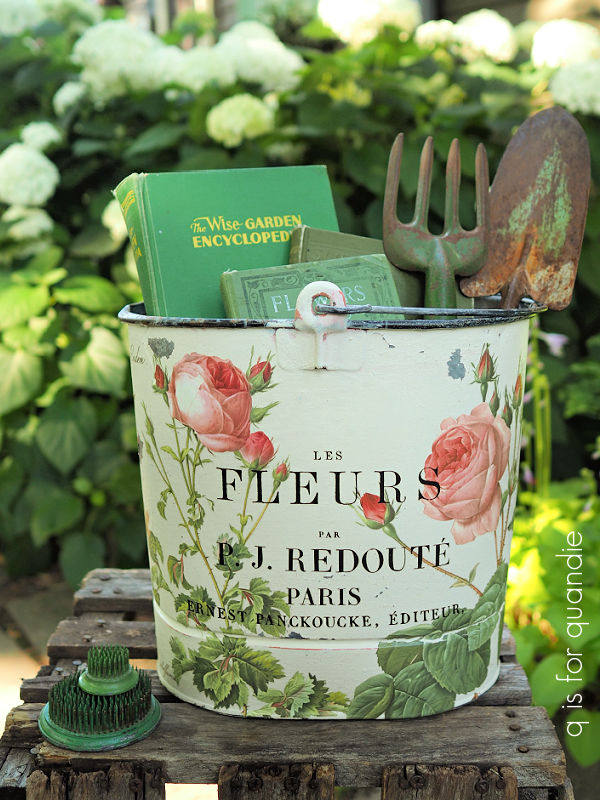
Although sometimes keeping it simple is the way to go, other times dressing it up is definitely the way to go.

What do you think?  Leave a comment and let me know.

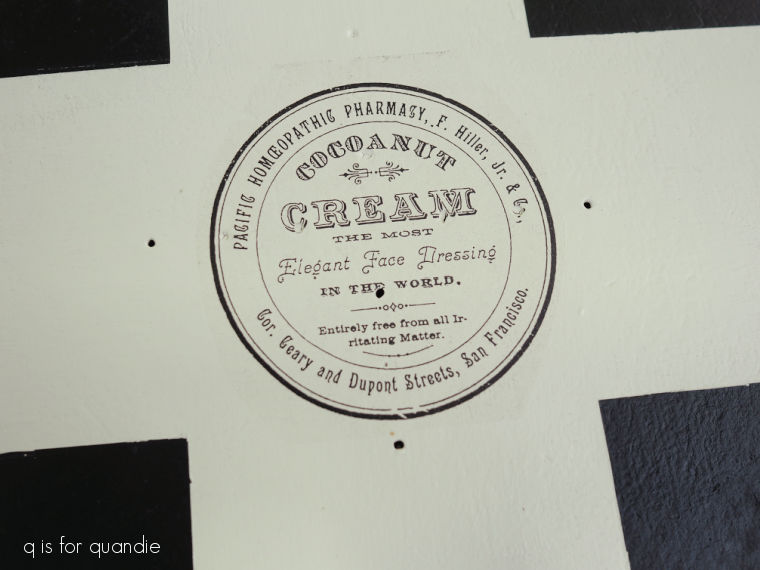
free from all irritating matter.

First up, congrats to Sue P. who won my Brandywine Valley giveaway!  Thank you to everyone who took the time to leave a comment, I wish you could all be winners 🙂

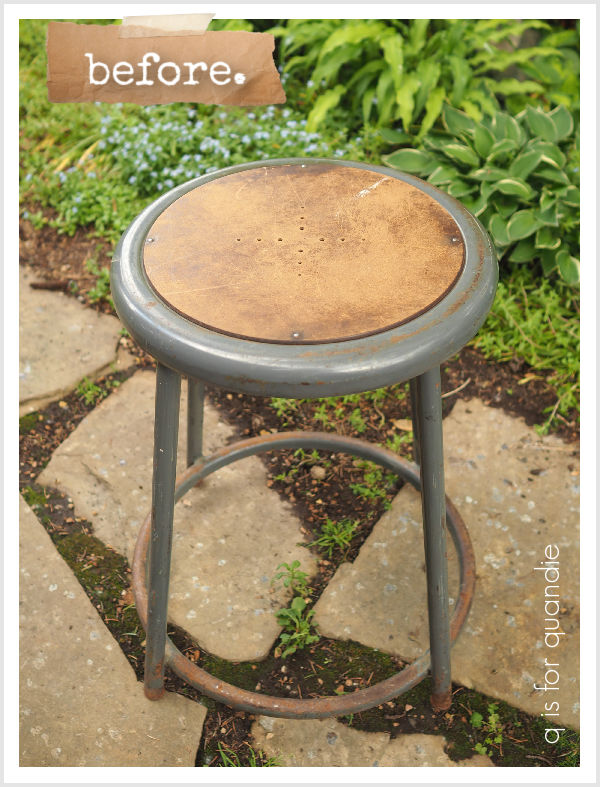
I picked up this stool while out garage saling a few weeks back.

It’s just your typical shop stool, but it’s got a vintage vibe that I like.

After giving it a good cleaning, I first painted the entire thing in Dixie Belle’s Midnight Sky.

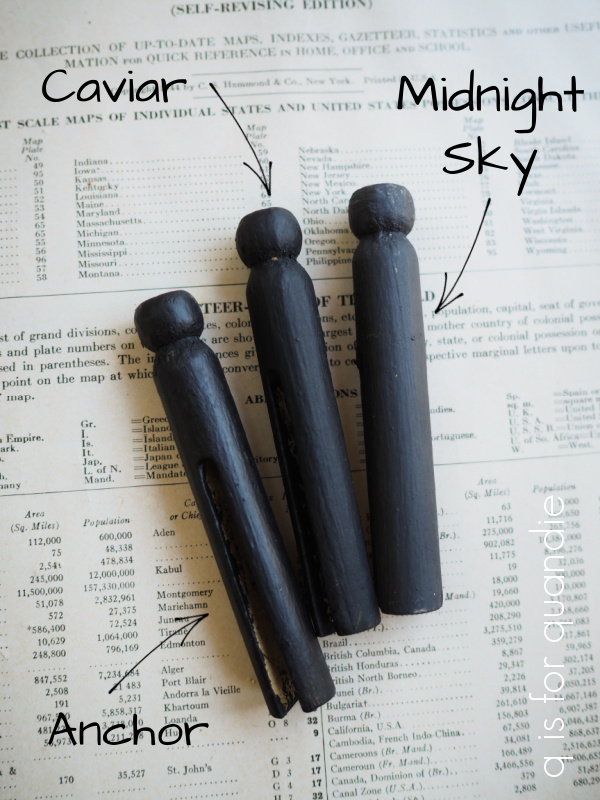
It seems like whenever I mention this paint color, at least one reader thinks it’s a dark blue based on the name.  It’s not.  It’s a soft black.  Not quite as black as Dixie Belle’s Caviar, but still black.  Here’s a comparison of a few of the different shades of black available from Dixie Belle that I did back in 2021.

The Anchor is from DB’s Silk Paint line (ie. a 3 in 1 acrylic paint with built in primer and top coat) and you can see that it has a little more sheen than the two chalk paint options.

Anyway …

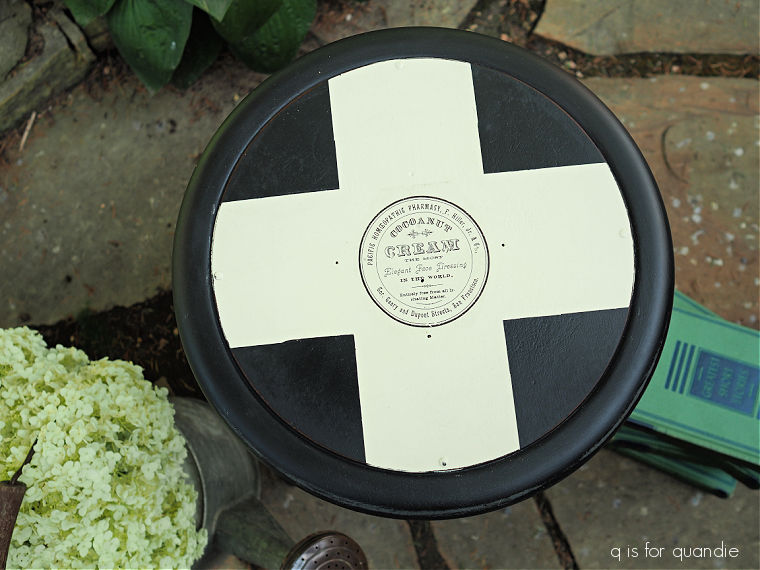
I painted the stool with two coats of the Midnight Sky, then once fully dry I taped off a Swiss cross on the seat and painted it with DB’s Drop Cloth.

Then I decided to add just a little something extra.  I applied one of I.O.D.’s Floriography paint inlays to the seat.

At first I thought the wording on the inlay didn’t really work on a shop stool, but I liked the look of it anyway.

But then I thought, hey, the Swiss cross has long been a symbol denoting a pharmacy.  Originally they were red, until the Red Cross sort of commandeered it.  Now throughout Europe if you see a green Swiss cross you know immediately that it’s a pharmacy regardless of whatever language is written on the sign.

So … maybe this is an old stool from the Pacific Homeopathic Pharmacy in San Francisco advertising their Cocoanut Cream.

Apparently it’s the most elegant face dressing in the world.  And it’s also entirely free from all irritating matter.  Who couldn’t use a little more of that in their life?

After first sealing the paint inlay with some Rust-Oleum matte spray sealer (always seal your paint inlay before rubbing over it in any way), I then sanded spots here and there to add some faux wear.  Then I applied a coat of Dixie Belle’s Big Mama’s Butta over the entire stool.

And that’s it.

I’m a pretty big fan of stools in general.  Currently I have 4 in my own home.  They are great for tucking into a spot that just needs something, like the space between my pantry door and my bathroom door.

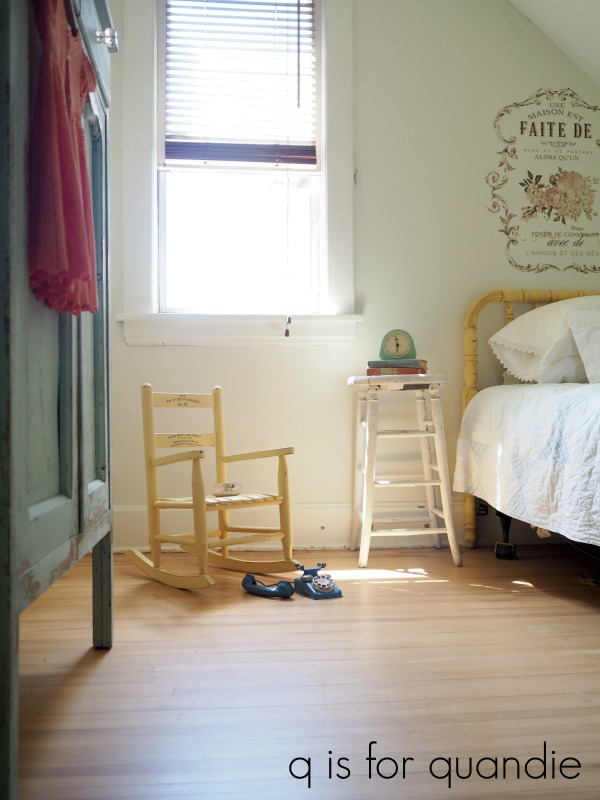
  They also make a good nightstand in a pinch.

They work well as plant stands.

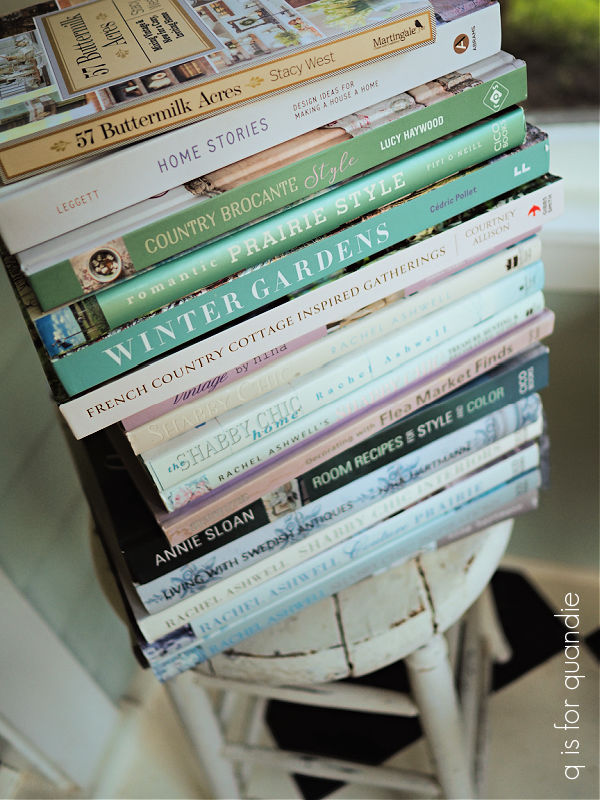
And they also make a great perch for a big stack of books.

So if any of you local readers think you have a good spot for a stool, this Swiss cross stool is for sale.  Check out my ‘available for local sale‘ page for more details.

Thank you to Dixie Belle Paint Co for supplying their products used in this makeover.

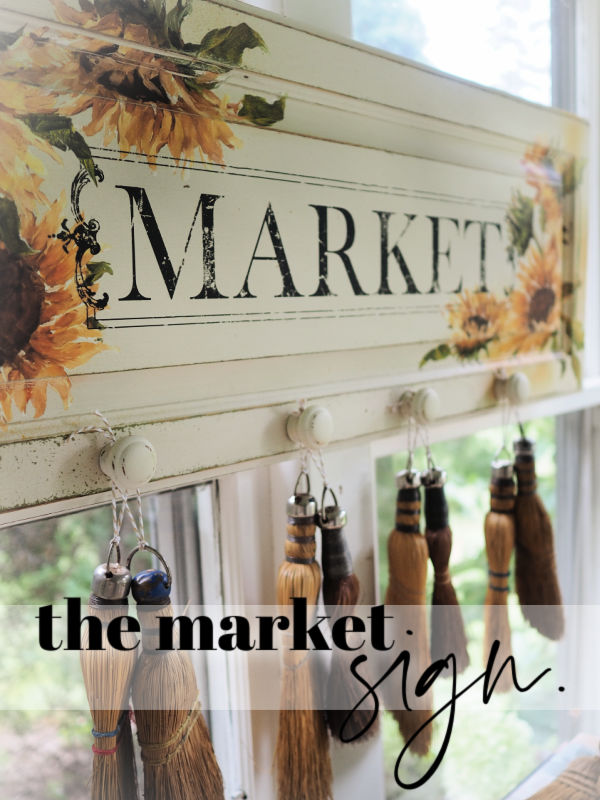
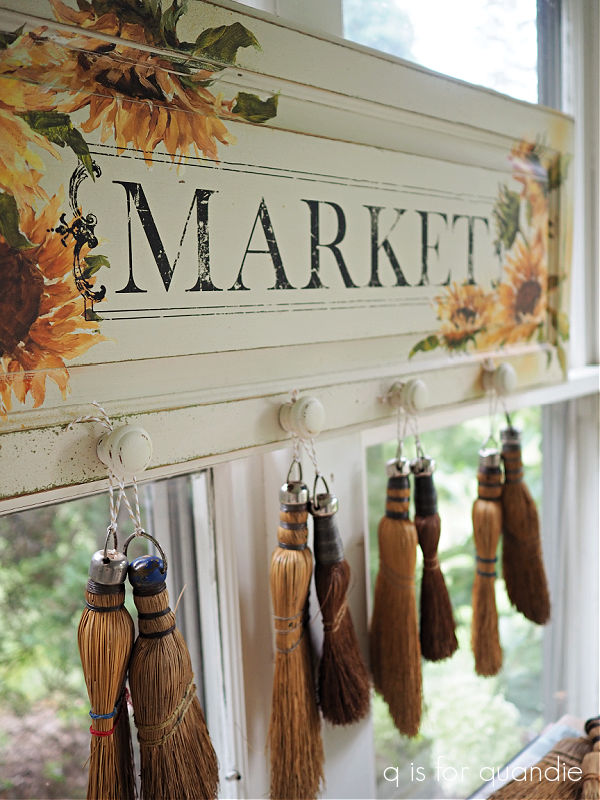
the market sign.

Earlier this summer one of my readers offered me some cupboard doors.  She was removing a cabinet from her bathroom and before just discarding the doors, she thought maybe I would want them.

Sure enough, I did want them!  I’m saving three of them for Christmas, but I decided to attempt something more fall-ish with one of them.

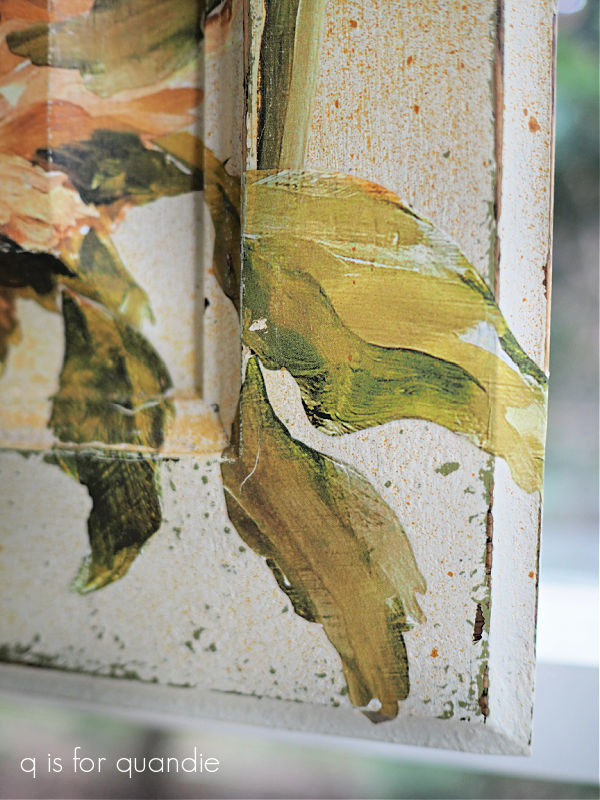
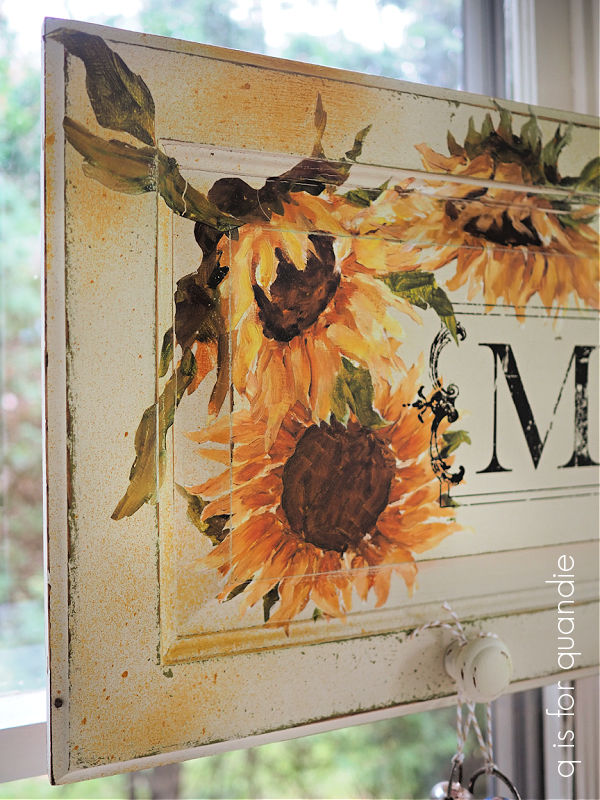
I started out by cleaning it well with TSP substitute and then decided to add a little faux age to the door with Dixie Belle’s Sea Spray texture additive.  I mixed it with some of their Holy Guacamole paint and stippled it onto the door in key areas.  Once that was dry, I added two coats of DB’s Drop Cloth over it.

Once the Drop Cloth was dry, I sanded over those areas to reveal some of that avocado green color.

The results are subtle for sure, but I think this technique goes a long way towards adding some age.

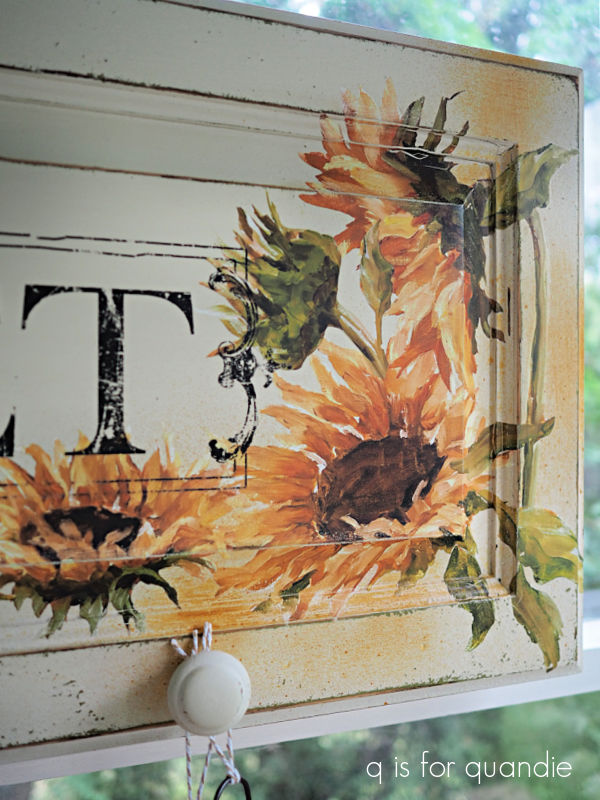
Next up I pulled out another I.O.D. transfer that my reader Monica (thanks again Monica!) sent to me called Painterly Florals.  This particular transfer includes roses, lavender and sunflowers.

I think sunflowers have a fall-like feel, don’t you?

So I added some sunflowers to the opposite corners of my sign.

Next I pulled out the word “MARKET” from my stash.  This word is part of the I.O.D. Label Ephemera transfer, yet I’ve never used it.  If you’ve been following me for long, you know I’ve used umpteen sets of that transfer!  And each time I set the “MARKET” portion aside, to the point where I have at least half a dozen ‘markets’ in my stash.

And “MARKET” just happened to fit almost perfectly on this cupboard door.

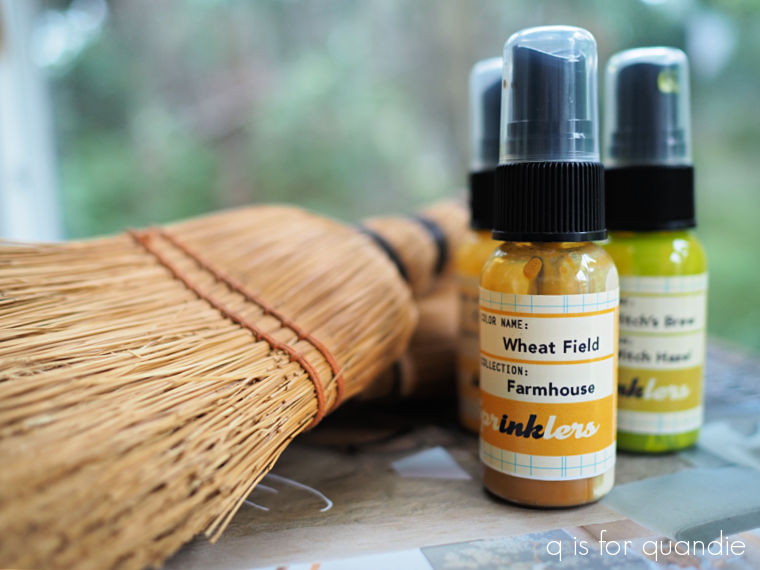
Next up I decided to try something new.  I’d been cleaning out some of my old scrapbooking supplies when I came across some of the October Afternoon Sprinklers.

October Afternoon describes these as ‘high-quality pigment spray inks’ and I used them all the time when I was scrapbooking on a regular basis.  Unfortunately, October Afternoon went out of business and I’m not sure if you can even find these to purchase anymore.

But I thought it would be a fun experiment to try these on my sign.

So after giving it a very thorough shaking to mix it, I spritzed the Wheat Field color on my sign.  I really like the results, what do you think?

I was a little bit worried that adding a wiped on (wax) or brushed on (clear coat) final finish would smear the ink though.  So I opted to just use some of Rust Oleum’s matte spray sealer over the entire sign.

For one final detail, I added some painted wooden knobs to the bottom of the sign.

This would be a great way to display your non-collection of whisk brooms, should you happen to have one.  If not, you could hang your kitchen towels on it, or maybe some ironstone pitchers.

I have to admit, as much as I love autumn, fall décor isn’t really my thing.  I think that mother nature provides the most beautiful display in fall and there isn’t much need to add to it.

But if you do like to add a little fall-ish décor to your house, this sign might be just the ticket.  I brought it into Reclaiming Beautiful last week, so I don’t know if it’s still there.  But you locals could always head out to Stillwater to check!

What do you think?  Leave a comment and let me know.
Thank you to Dixie Belle Paint Co for providing the Sea Spray and paint used for this makeover.

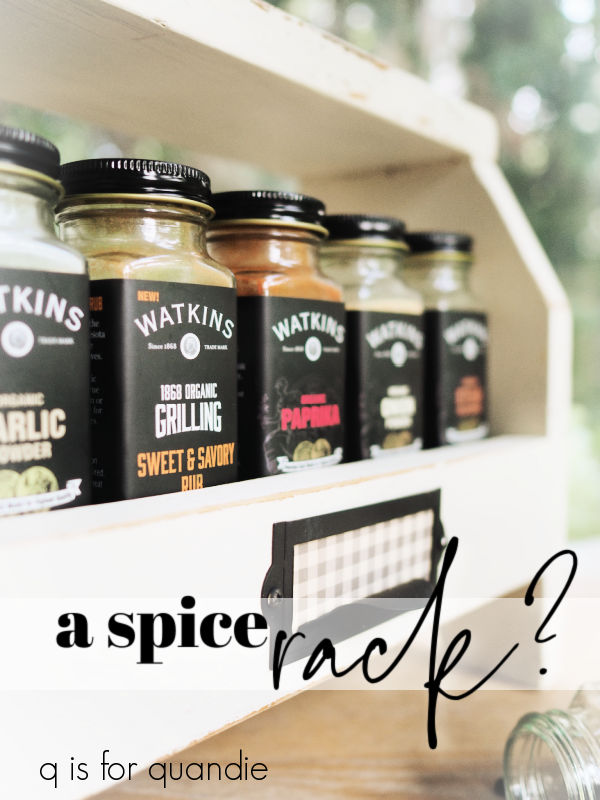
a spice rack?

My friend Sue found this … well … I don’t really know what it is … for me recently.

What do you think its original purpose was?  I’m leaning towards shoe shine box.  Those dark stains could be shoe polish.

I thought I’d give it a new life repurposed for something else though.

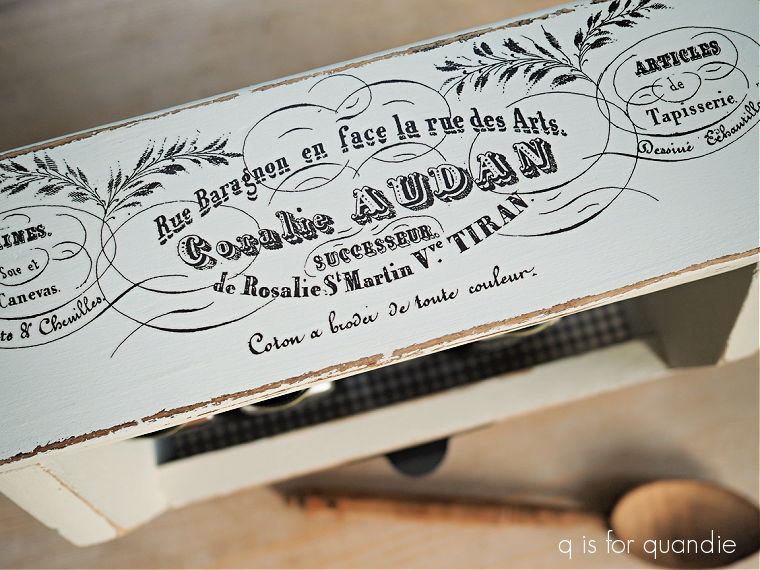
I started by painting it with Dixie Belle’s Drop Cloth, once dry I distressed the edges and then added an I.O.D. transfer to the top.

That section from the Brocante set fit perfectly.

I then gave the entire piece a coat of clear wax.

Next I lined it with some gingham paper, and added a metal label holder to the front with the same paper added.

Now all that’s left is to figure out what it could be used for … other than a shoe shine box that is.

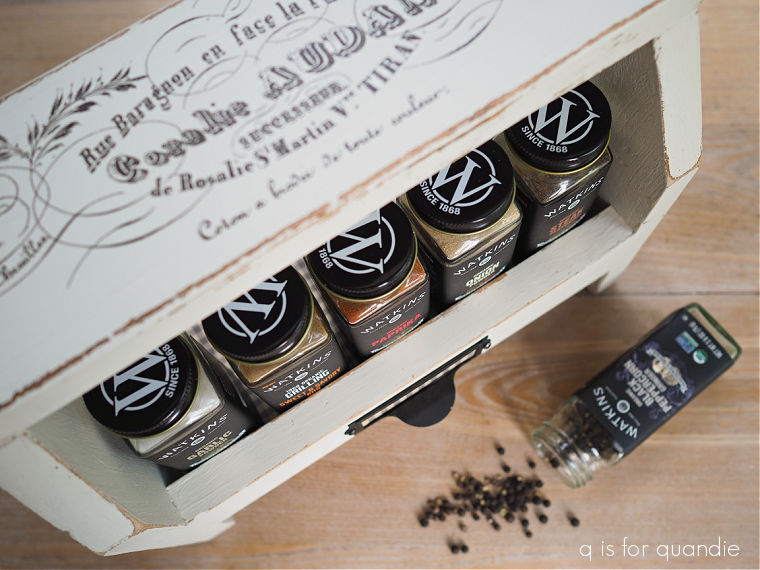
My first thought was ‘spice rack’.

Wouldn’t it be cute sitting on the kitchen counter filled with spices?

But maybe you don’t really cook all that much, and instead you prefer to spend your time crafting.

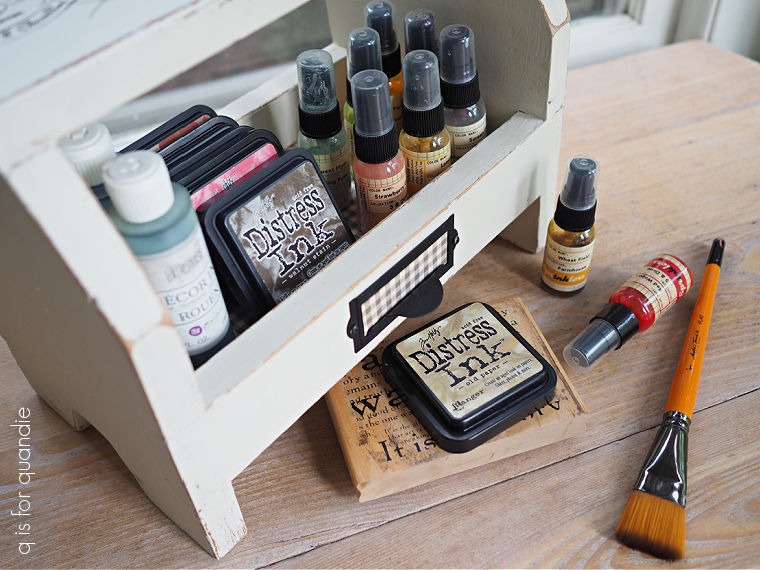
Well, it would work great for holding your craft paints and/or inks.

Why do I have so much ink, when I rarely use it any more?

Somehow I just can’t seem to part with it.

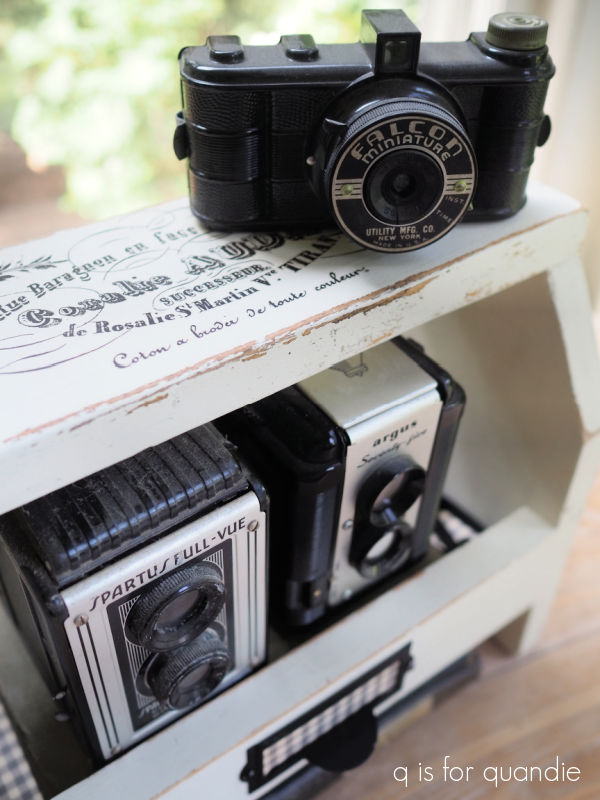
Then of course, there is always the option of just using it to display your non-collection of vintage cameras.

Or some other non-collection that is on the small side.

So many possibilities!

What would you use it for?

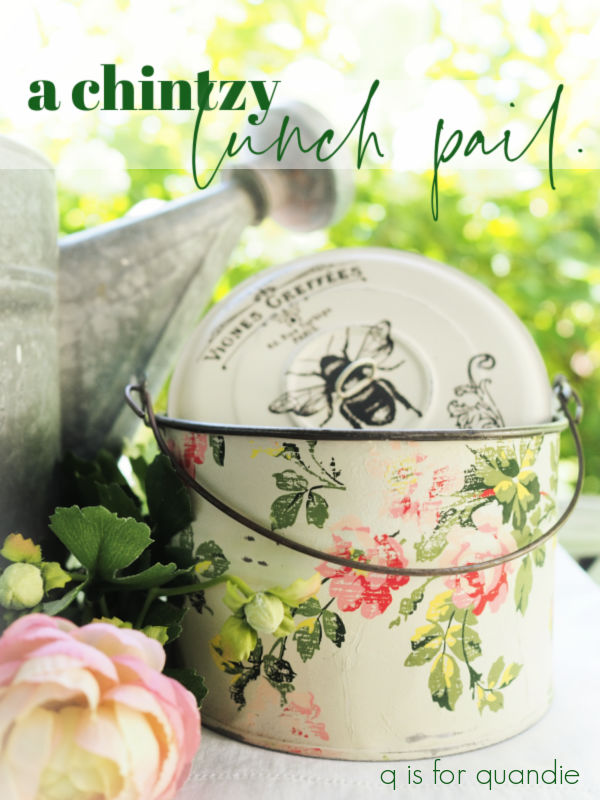
a chintzy lunch pail.

I picked up this little tin pail at a garage sale recently.

My friend opK thought it may have originally been a lunch pail, but I wasn’t sure.  It would only hold a rather small lunch.  But I did a little online research and found identical pails being called ‘lunch pails’ as well, so she was right!

I suppose you could fit a hunk of homemade bread with butter, some hard boiled eggs and an apple inside.  Isn’t that what children brought for lunch back in the olden days?

You definitely couldn’t put a Lunchables in there.

I didn’t much care for the original patina on this one, it wasn’t very pretty, so I decided it would be a good candidate for a paint job.

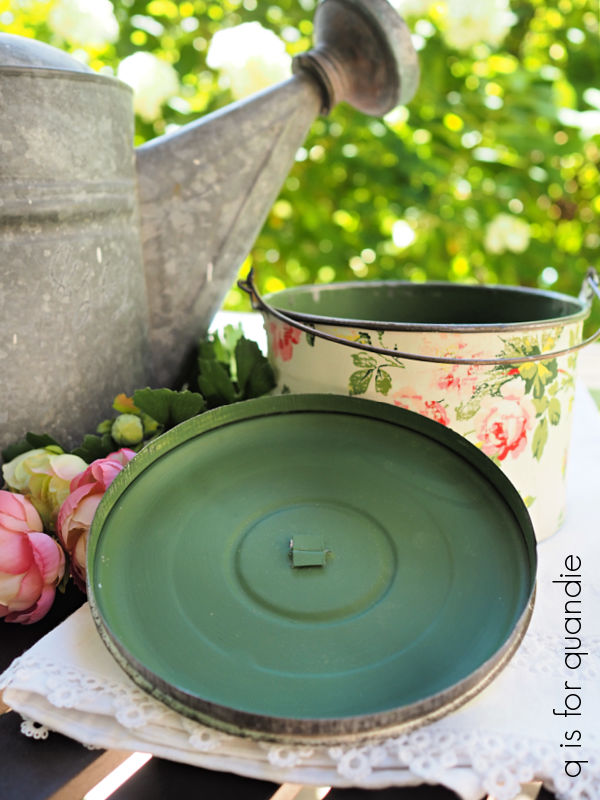
I started by cleaning it well and then giving it a coat of Dixie Belle’s B.O.S.S. to prevent any rust spots from bleeding through my paint.  Next I painted the inside in another of Dixie Belle’s new Cottage Core colors, English Ivy.

I love that DB added this green to their line up.  It reminds me a lot of the English green that I’ve been talking about this summer.  I suspect I’m going to get a lot of use out of English Ivy.

I must point out that the lid is a really tight fit on the pail, so painting the inside probably wasn’t the best decision I’ve ever made.  The paint would be worn off the edge of the interior in no time, so I decided to just go ahead and ‘pre-distress’ it.

I added some wax to both the edge of the lid and the edge of the pail to allow it to open and close more easily, but it’s still a tight fit.

I’ve already given you a little hint in that photo above as to what I did on the outside.  After giving it two coats of Dixie Belle’s Drop Cloth, I added the I.O.D. Rose Chintz paint inlay to the sides of the pail.

Once the paint inlay was dry, I spray sealed it with some RustOleum matte clear sealer.  Always remember that you have to seal the paint inlays with a spray to avoid reactivating the paint.

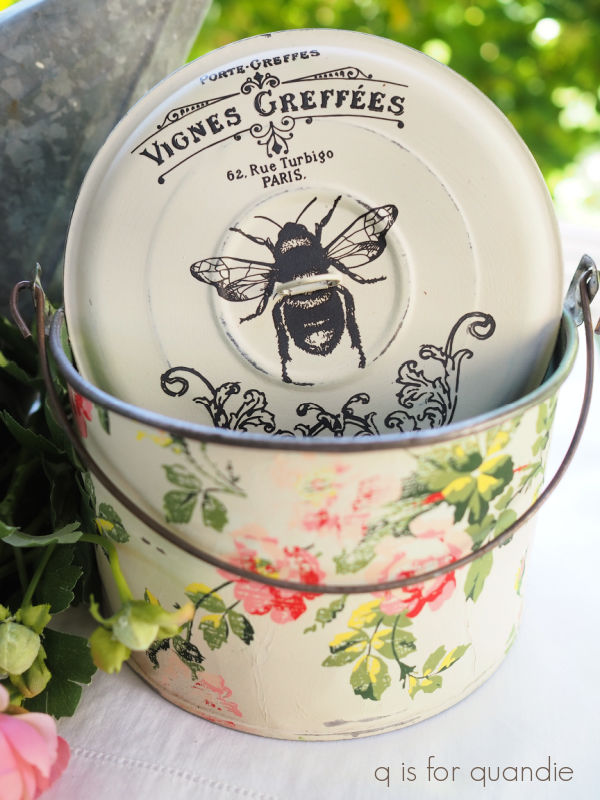
Then I added a few bits from the re.design with prima French Labels transfer to the lid.

I cut the bee in half horizontally, and applied the halves one at a time to accommodate the little ring handle on the lid.

I used some 220 grit sandpaper to distress some of the raised detail on the pail, then I gave everything a coat of clear wax.

I think this little lunch pail is totally adorable now.

It’s not chintzy at all.

What do you think?

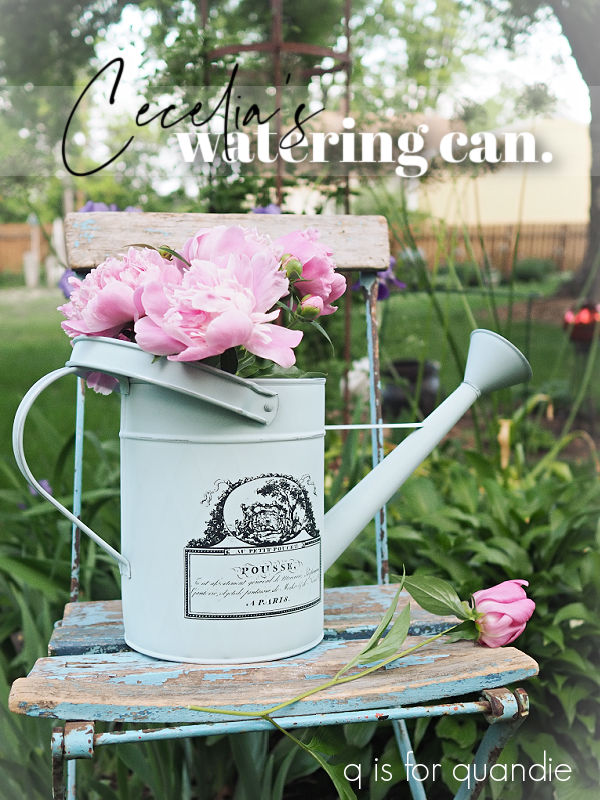
cecelia’s watering can.

A friend reached out to my husband the other day asking if I’d like to have a watering can that she was getting rid of.

Most of you know that I have a thing for watering cans, and I have quite a few in my non-collection (so called because I’m in denial that I collect things).

But I usually stick to vintage watering cans, and Cecelia was discarding a new watering can.

Still, she was giving it away, and Mr. Q was happy to go pick it up from her.  We hadn’t seen Cecelia in quite some time.  So I said yes.

Cecelia had purchased this can planning to actually use it for its intended purpose, but in the end it wasn’t really very functional.  The water sort of trickled out and dripped all over.  I know how she feels, I purchased a new (and rather expensive) watering can myself last year intending to use it for fertilizing my flower pots with a water soluble fertilizer and it also doesn’t really work very well.

I know, I know, you are now wondering why in the world I would purchase a new watering can rather than using one of my many vintage ones.  Well, that’s because most of those don’t actually hold water anymore.  The bottoms have rusted out, or the seams have deteriorated.

That being said, I did find one at a garage sale last year that works beautifully.

In fact, I considered it my find of the day back then because it’s perfect for my fertilizing needs.

So now the expensive new one is gathering dust in my workshop.

But I digress, back to Cecelia’s watering can.

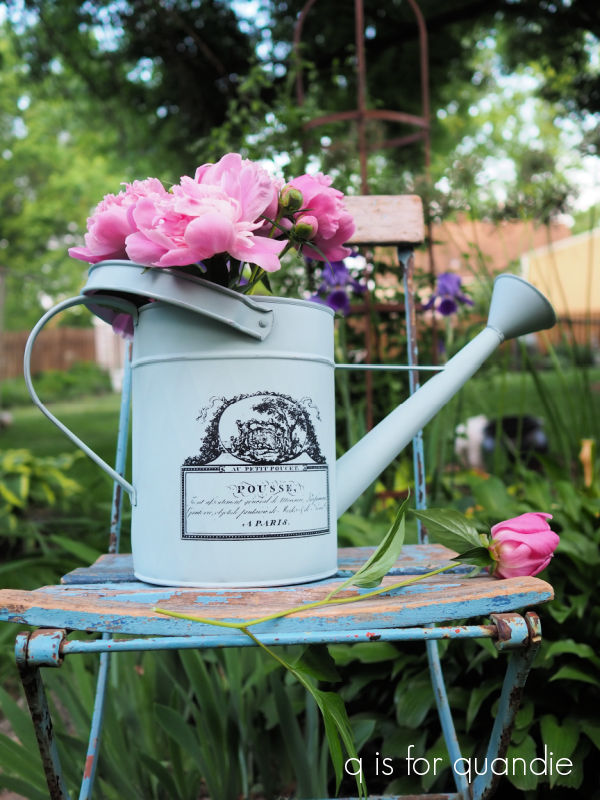
As you can see in the ‘before’ photo, the finish was pretty slick and shiny.  So rather than attempting to paint it with my usual Dixie Belle paint, I decided to spray paint it.  Spray paint will do the best job of sticking to a surface like this one.  Plus, I happened to have a can of the Rust-Oleum Chalked paint in Serenity Blue on hand.  I have to admit, if I’d had to purchase the paint I probably would have come up with another option.  Have you seen the prices on the Chalked spray paint these days?  The cheapest I’ve found is $10.39/can at Target, but most places are charging nearly $12 per can.  And one can doesn’t go that far.

Once the paint was dry, I added one of my favorite Classic Vintage Labels transfers from re.design with prima.

I did a little light sanding on the edges to add some slight distressing, and then finished it all off with a coat of clear wax.

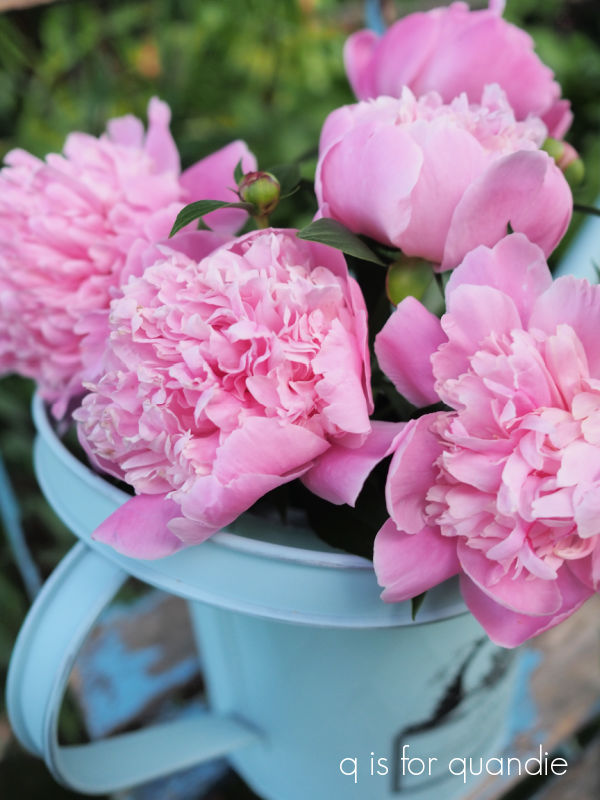
Next I filled it up with some of my earliest peonies.

I took these photos last Saturday morning, and as of then only my old-fashioned pink peonies were open.  These are peonies that came with the house, so I have no idea what variety they are.  Plus, they are at least 34 years old, and likely much, much older than that.

As seems to be the case nearly every year, the opening of the peonies coincided with a hot spell, which speeds up the peonies.  By Monday morning I had flowers open on almost all of my peony plants.  I’ll be sure and post a peony update sometime later in the week.

But for now, how do you like this quick and simple watering can makeover?  It may not work well for actually watering things, but it makes a great vase for peonies!

a step ladder update.

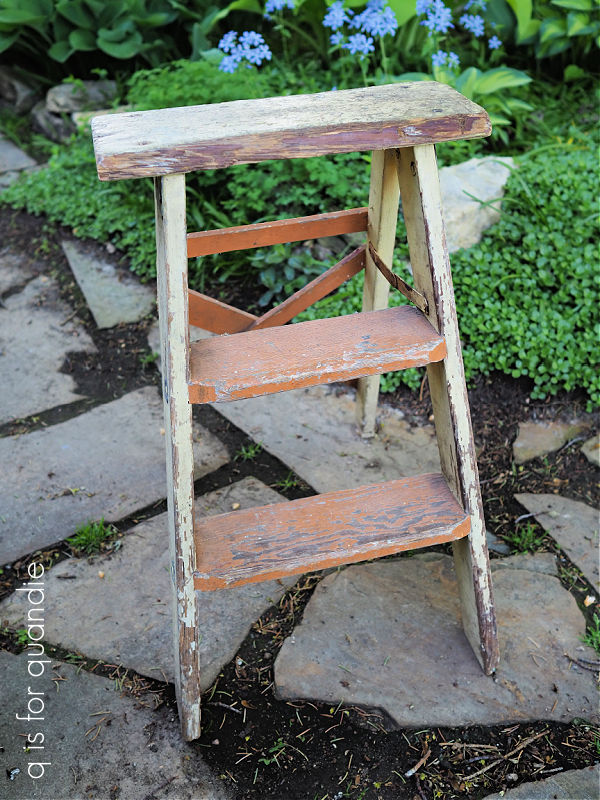
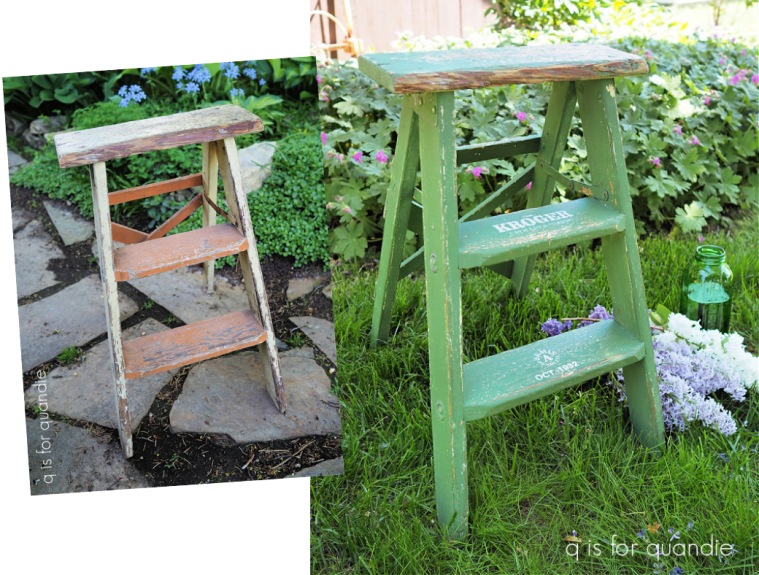
Last week I shared the chippy step ladder that I picked up while garage saling.

As much as I like the chippy look, I didn’t love the color scheme.  Orange and yellow have never been my favorites.

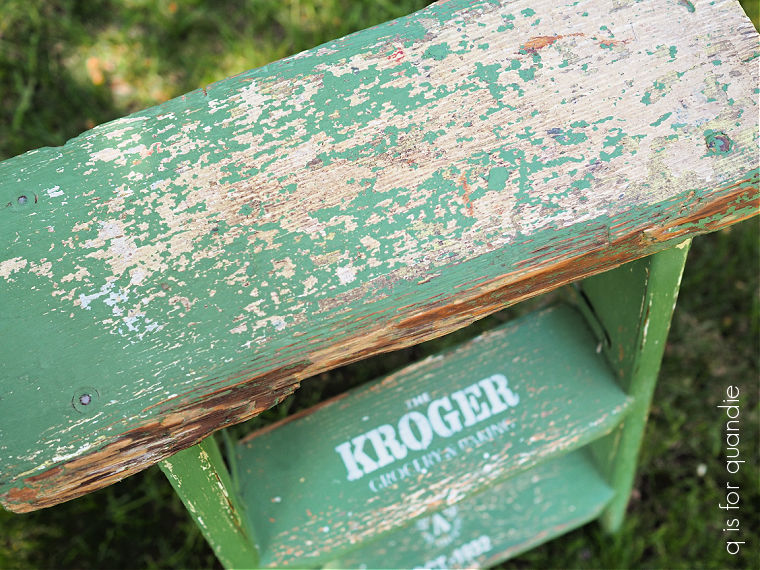
I wanted to ‘save’ the chippy-ness, but give it a new color.  So I sanded off all of the loose paint, wiped it down with a damp rag, and then added two coats of Sweet Pickens’ In a Pickle milk paint.

Once dry, I sanded it again.  Most of the new paint on the top chipped off.

But that’s exactly what I wanted, it looks authentically chippy … and authentically green.  I’ve successfully covered up most of that yellow and orange, although there may be little bits of it peeking out here and there.

Before adding a topcoat of clear wax, I added a couple of stencils to the lower two steps.

and to the back …

That stencil is from the Grain Sack Minis stencils from JRV Stencils, fyi.

This step ladder is a bit too rickety to actually use as a ladder, but it would make a fabulous ‘side table’ on a covered porch.  Or possibly a plant stand.

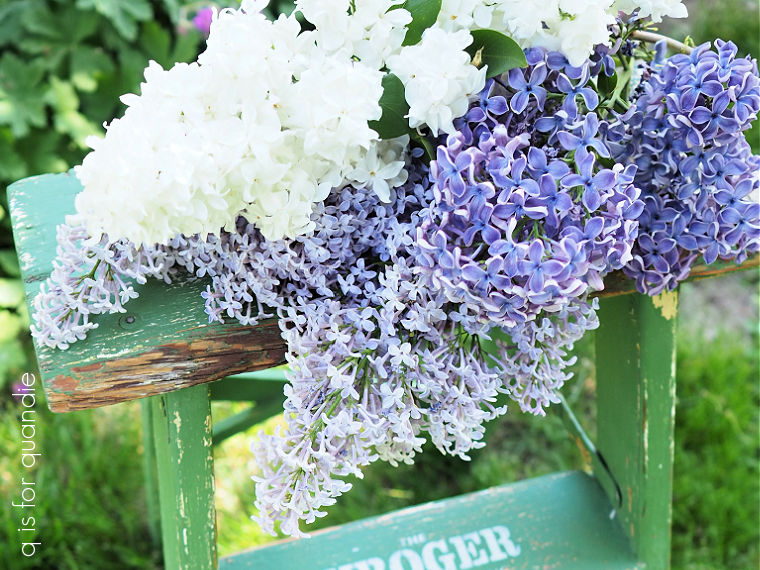
I staged up these photos with the last of my lilacs.

Don’t forget, the time to prune lilacs is immediately after they are done blooming.  I’ll be getting to that in a couple of days.

In the meantime, how do you like the step ladder makeover?

Do you agree that green is better than orange and yellow?  Or maybe you preferred the original color.  Leave a comment and let me know!

a little bit rusty.

Between my most recent trip to my mom’s and then to Florida, I feel like my painting skills have gotten a bit rusty.  Since coming back I’ve been so busy in the garden that I haven’t even picked up a paint brush … well, except to paint the obelisk trellis in my garden.

But more on that later in the week.

In the meantime, speaking of rusty, I did pull out the Dixie Belle patina paint before my trips to turn some small garden statues into rust.

As you probably know, I just love this stuff.  The Iron paint combined with the green spray creates a perfectly authentic looking rust.

Here’s where my two pieces started out.

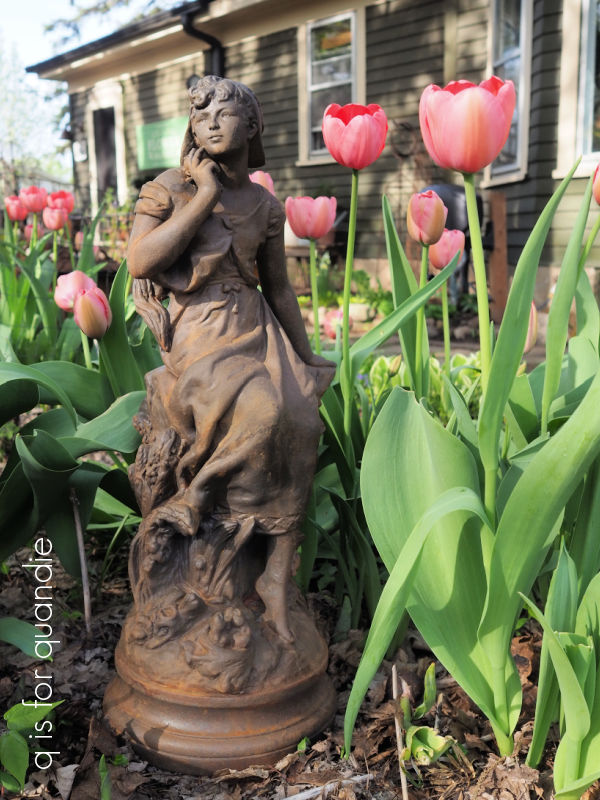
The pretty girl on the left is from the thrift store, and St. Francis came from my friend Sue.

Both are made from some sort of plastic or other man-made material, and have faux finishes.

After cleaning them up, I gave them a base coat of spray red primer from Rust-Oleum.  Dixie Belle does make a primer to be used with the patina paint called Prime Start, and they recommend you use that on metal pieces to prevent the patina paint created rust from becoming actual rust.  But I prefer to use a spray primer on pieces like these that have lots of nooks and crannies simply because it is easier.  In addition, neither of these are metal, so technically they don’t require the Prime Start.  However, both of them have a surface that may not hold onto paint well.  So rather than attempting to scuff sand, I just spray primed them.

For the full instructions on using the patina paints, check out my how-to post here.

I painted both pieces with the Iron paint, followed by the green spray.  After a day or two, they still weren’t looking as rusty as I wanted so I sprayed them with water.  That’s not an official technique for using this product, but I have noticed on my outdoor garden pieces that more rust comes out after they get rained on.  Sure enough it did the trick.

Here is how St. Francis turned out …

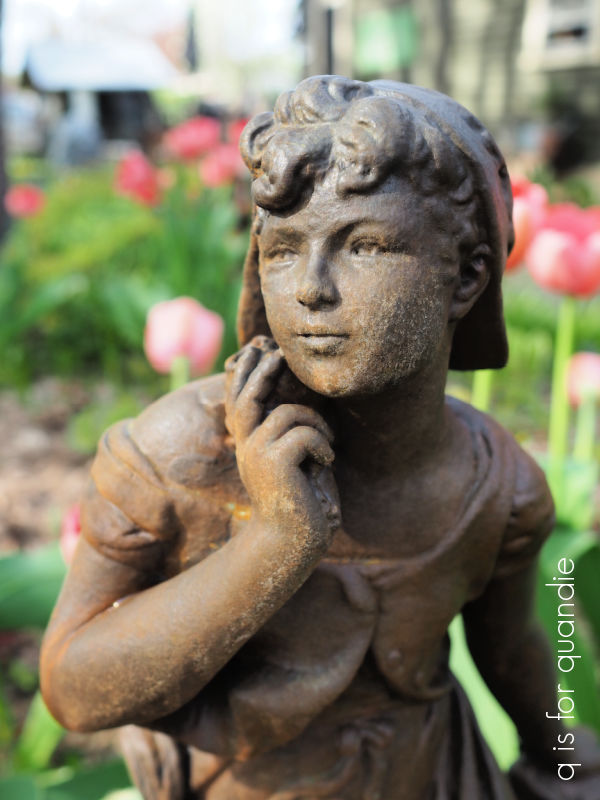
And here is how the peasant girl turned out …

I’m always rather particular about faces when it comes to statues like these.  Some of the cheaper versions have some fairly awful faces.

But her face is quite sweet I think.

At this point you may be wondering how this rusty patina holds up outside, and if it continues to develop more rust over time.

I’ll start by first noting that the durability of any paint treatment really depends upon what you are painting over, and in addition whether or not you applied it correctly.

But here are some examples of my rusty pieces that have been outside for a while.

I painted both of those last summer, and they both sat outside all winter.

Sometimes, in fact, even literally buried in snow.

They get some pine sap drips on them from the tree overhead, but otherwise they look really good.  I didn’t blog about the bench specifically, but I did share the two matching chairs and small table with all of the details here.

But how about items that have been outside for more than one year?

You may remember that I rusted up a pair of planters back in the summer of 2019.

These are made out of that molded plastic composite stuff, I don’t know exactly what that material is made out of.  But they are lightweight, not iron, not metal, not concrete, but some kind of man-made material.

These have been outside since they were painted, including winters.

So they are going on four years and are holding up fairly well, except for the very bottom where they often sit in snow.

When I purchased these pots, they were dark brown.  So actually, it’s the original paint that has failed down to the white material underneath it here, not the patina paint.  I plan to touch these up with some more patina paint, and that will be quite easy to do.

Also, you may notice that the pot looks a bit rustier now than it did when I first finished it (first photo with purple flowers).  So yes, these items will get rustier over time when outside in the elements.

I think my advice would be to take these items in for winter (if you live in a climate like mine in Minnesota) if you want them to last for many years.  However, if you only paid $30 for the pair at a garage sale, and you don’t mind having to touch up the patina paint down the road here and there, I say enjoy them outside in the winter!

Tell me what you think of my garden statues, was the rust an improvement?  Leave a comment and let me know.

adding a little age.

Hey everybody!  I’m back from visiting my mom, but haven’t had a spare moment yet to sit down and respond to comments.  I’m going to get to that this morning, but in the meantime, here’s a quick project to enjoy with your morning coffee.

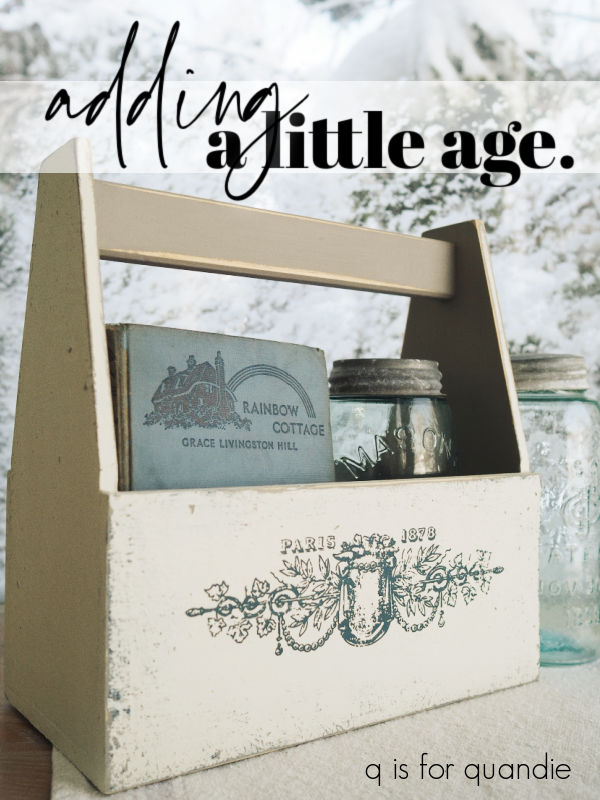
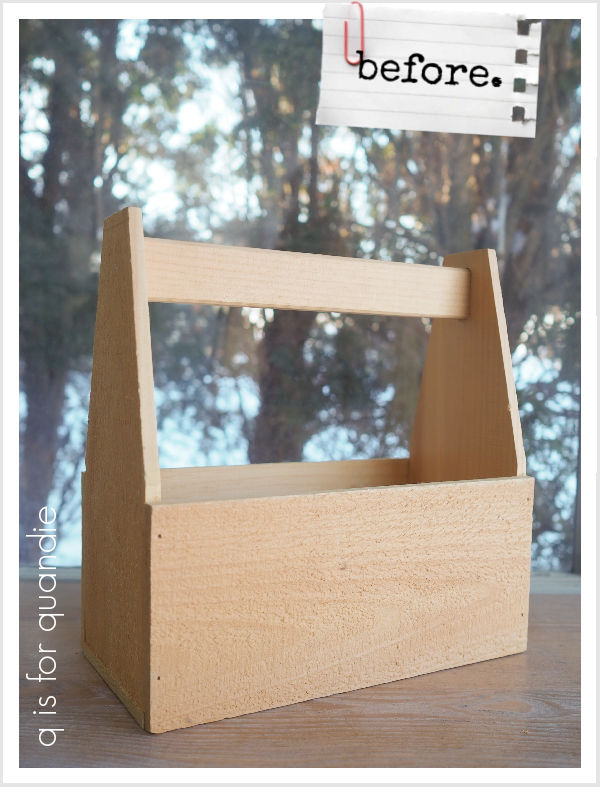
You may remember that I picked up this wooden tote while thrifting a few weeks ago.

It pretty much looked freshly constructed out of new wood.  The one downside was that it was made out of fairly rough sawn wood.

So a week or two ago when I was looking for a quick project to fill some spare time, I pulled this out of the pile to see if I could age it up a bit.

I started by sanding down that rough wood a bit.  I didn’t get it totally smooth, but now you can handle it without getting a splinter.  Next I gave it a base coat of Dixie Belle’s French Linen.  Once that first coat was dry, I added a little bit of Dixie Belle’s Sea Spray (a texture additive for paint) into the French Linen and stippled it on randomly.  Adding some texture to the paint helped further disguise that rough sawn wood.

I think the key to aging a piece is to have several layers of different colored paint, so I then added some of DB’s Bunker Hill Blue here and there.  Once that dried, I painted the entire outside of the tote in DB’s Drop Cloth.

Next up came sanding with 120 grit paper to both smooth out the Sea Spray a bit, and to reveal some of those layers of colors.

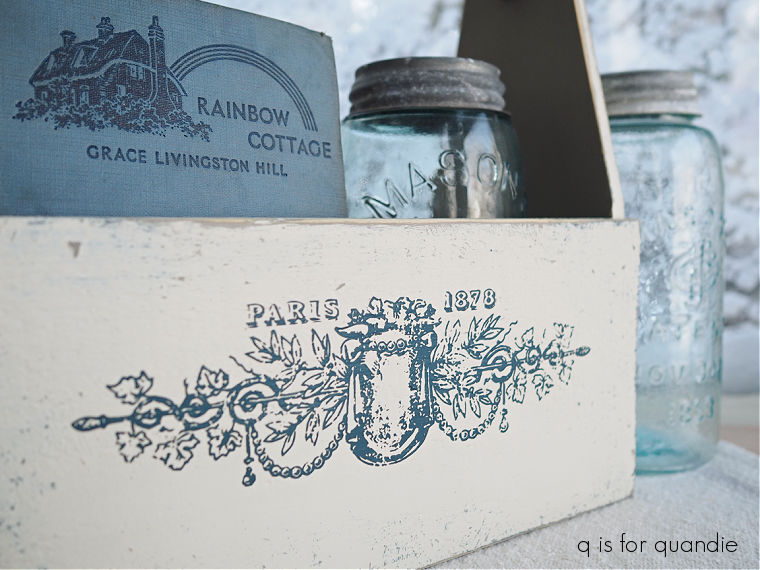
I’d recently used one of the Lovely Labels Middy transfers from re.design with prima on a bucket, so I knew there were a couple of segments in that transfer set that would work perfectly on this tote.

I put the ‘Paris 1878’ section on one side, and the ‘blessed’ section on the other side.

Once I had them both applied, I top-coated everything with some of Dixie Belle’s Easy Peasy spray wax.

And yes, that is snow on the window behind the tote, but I took these pics after our April Fool’s Day snow storm.  I returned home from my mom’s to see that all of our snow has melted.  It’s always kind of amazing how fast those big snow banks will melt away in the spring.

I hope you enjoyed this quickie tote makeover.  Leave me a comment and let me know!

on the flip side.

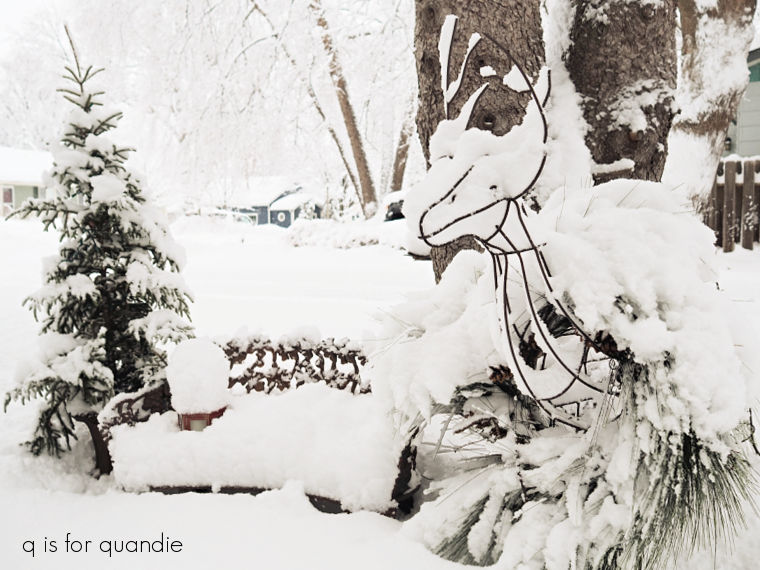
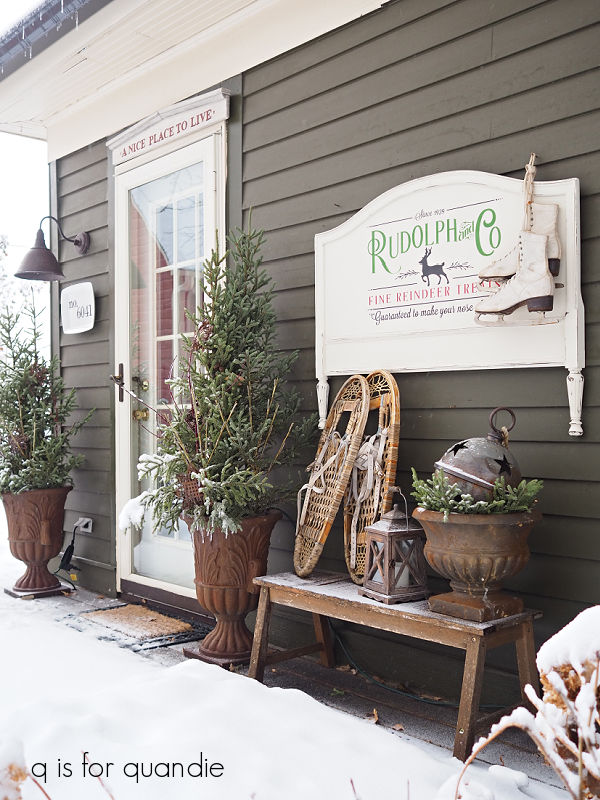
I’m embarrassed to admit that my Rudolph and Co. sign, and all of our other outdoor Christmas decorations, were still up until last week when we’d finally had enough snow melt to be able to reach some of it.

You have to cut us some slack here in Minnesota, especially when we’ve had a winter with a lot of snow.  We can’t always get through the snowbanks to take things down.  In addition, decorations often get frozen into place and we have to wait for them to thaw.  The spruce tips in my rusty urns only just thawed out enough to remove them, and I still can’t get to the potting shed or my front window box at all.

But now I’ve gotten at least some of my Christmas things tucked back away for next year, and I wanted to put something else in that spot on our deck for spring.

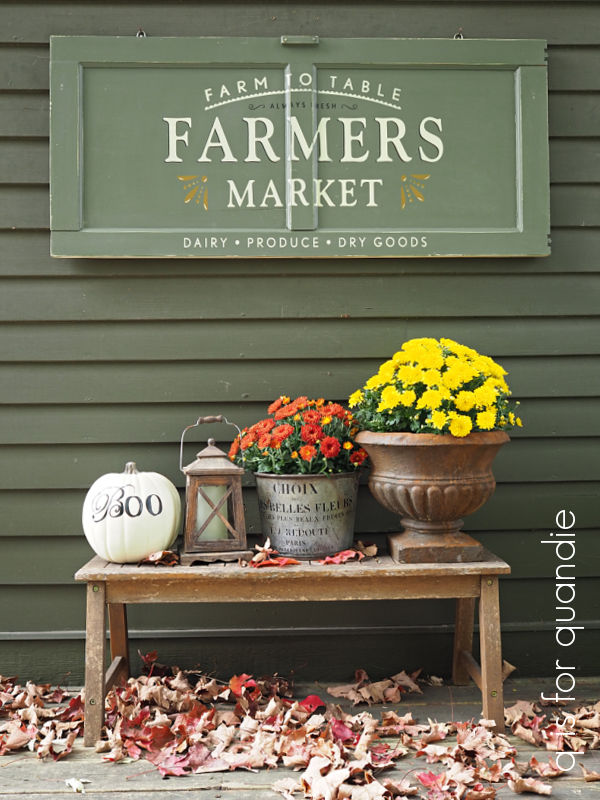
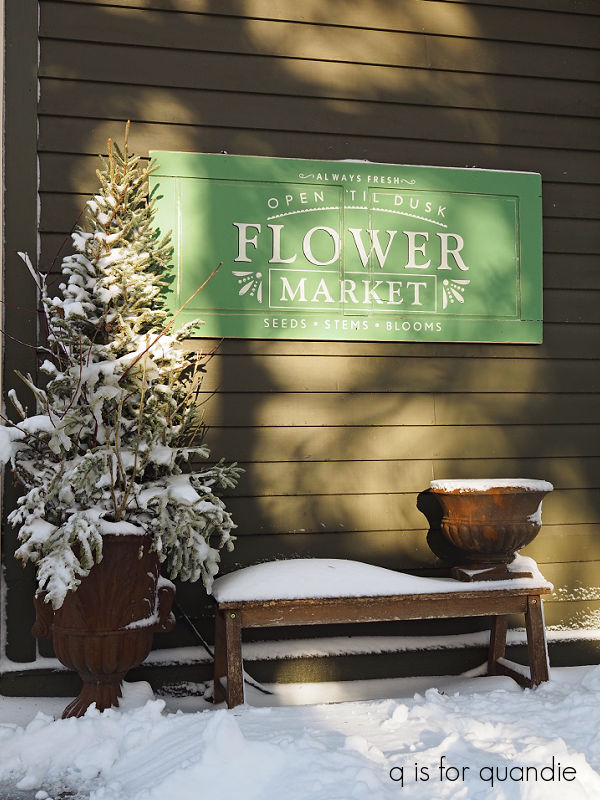
Last fall I painted a Farmers Market sign to hang there.

Somehow ‘Farmers Market’ says autumn to me though, so I didn’t want to just put that back up again.

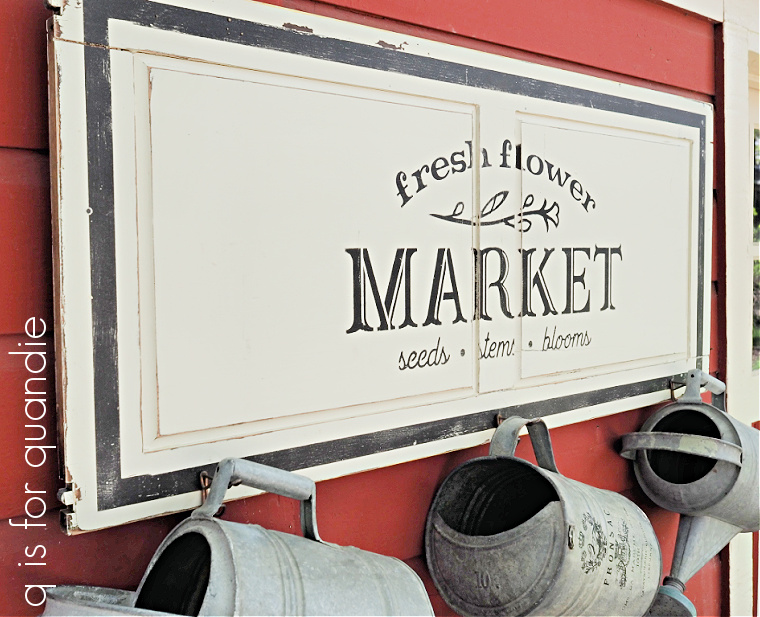
You may also remember that I had a fresh flower market stencil on the flip side of that sign though.

But I was rather tired of that black and white look.  It definitely pales in comparison to the Farmers Market side, doesn’t it?

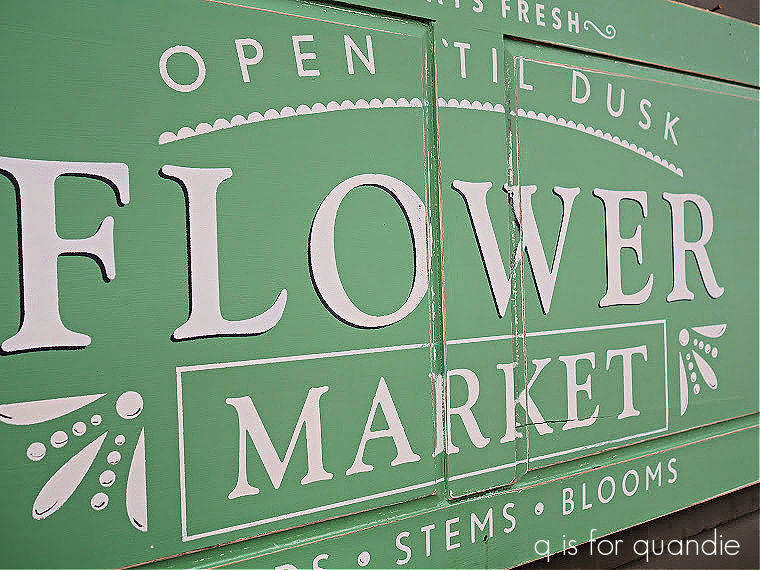
So I decided to give the flip side some new life with the Flower Market – Open Til Dusk stencil from Wallcutz.  I started by sanding over the previous stenciling.  You always want to do this to prevent seeing a shadow of that old stencil under your new paint.

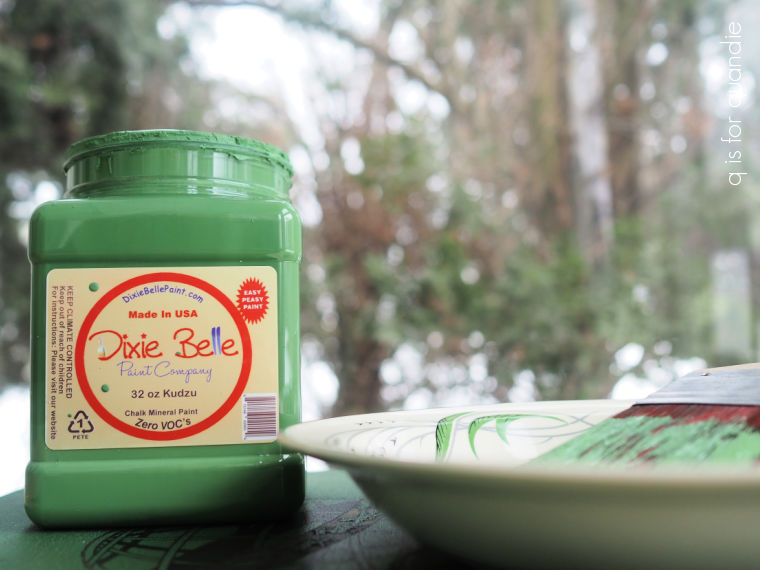
Next I painted the sign in Dixie Belle’s Kudzu, a spring-ier green than the Dixie Belle Juniper I used on the other side.

I followed that up with the stencil, painting a shadow of the word “FLOWER” in DB’s Midnight Sky, followed by the full stencil in their Drop Cloth.

That tiny black shadow adds so much!

You may remember that the first time I used this stencil on a dresser, I separated the first two lines of wording.

But no worries, I was still able to use the entire thing on this piece.  In fact, it made it even easier for me to once again re-arrange the layout somewhat to fit my sign.  I moved the “always fresh” to the top where it fit nicely on that raised trim, and then put the curved “open ’til dusk” wording below that instead of above it.

Once all of the paint was dry, I sanded to distress.

It’s always fun to distress down to a pre-existing color that works well with your new look.
To finish the sign, I added a topcoat of clear wax.  I’m often asked if clear wax is suitable protection for an item that will be outside, and if I wanted to be on the safe side I would say no.  Certainly not if the item will have standing water on it, and maybe not if you want the piece to look good for years and years.  This sign hangs vertically and although it will get wet, it won’t sit in water at all.  The Rudolph sign that I took down is also finished in clear wax and it has held up just fine in our snowy climate.

So, for me, wax is good enough for things like this sign.  Plus, I don’t mind a little accelerated aging … at least when it comes to painted décor items.

Once the sign was finished, I hung it back up outside.  Just in time for April Fool’s Day!

Yep, Mother Nature played a cruel joke on us and we got a foot of fresh snow on April 1.  I had been planning to get some pansies to replace those spruce tops and fill the urn on the bench before taking some pictures of the sign for this post, but luckily I hadn’t done that quite yet.

But I think it’s going to warm up enough for pansies next week, fingers crossed!

In the meantime, I’m still enjoying my Flower Market sign and telling myself that garden season is going to be here before I know it.  Right?