

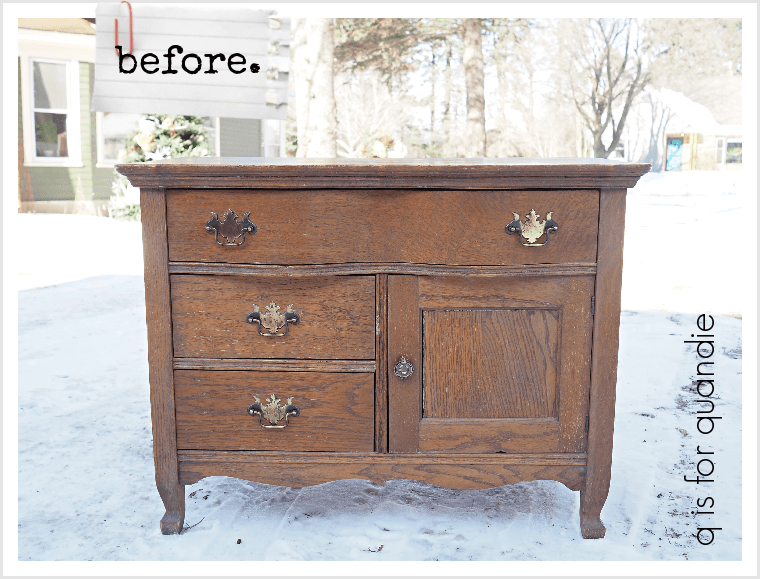
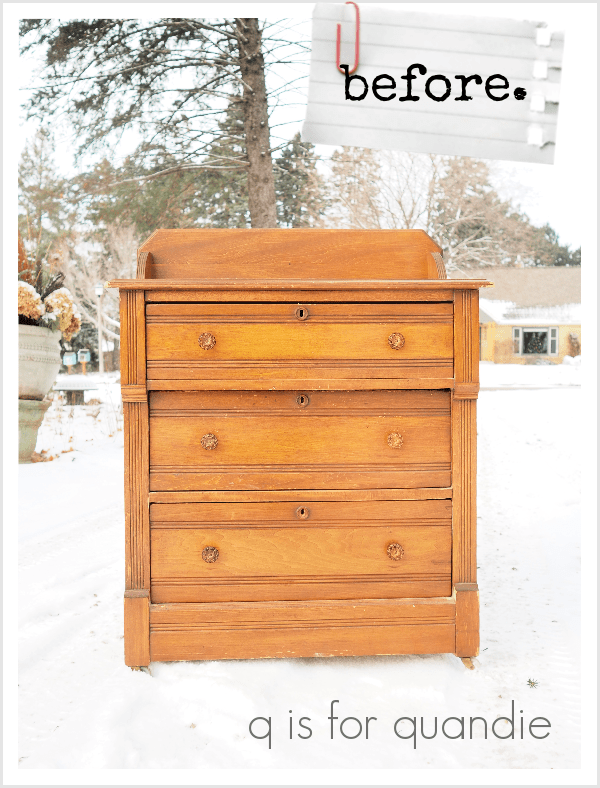
I picked up this dresser at my local Habitat for Humanity ReStore a few weeks ago while out thrifting with my friend/picker Sue.
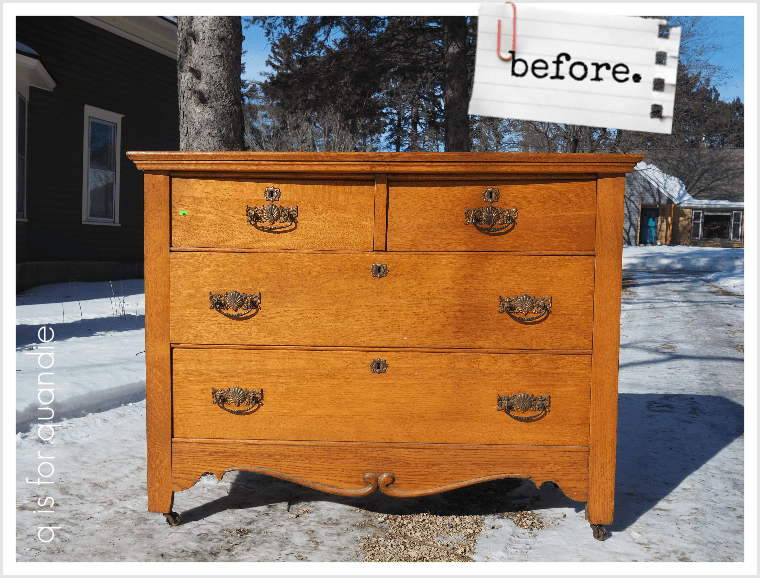
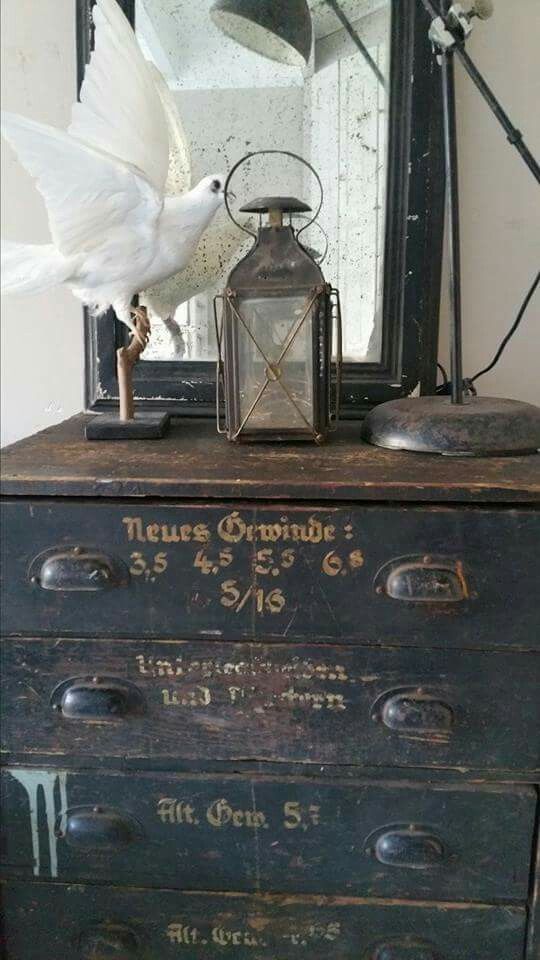
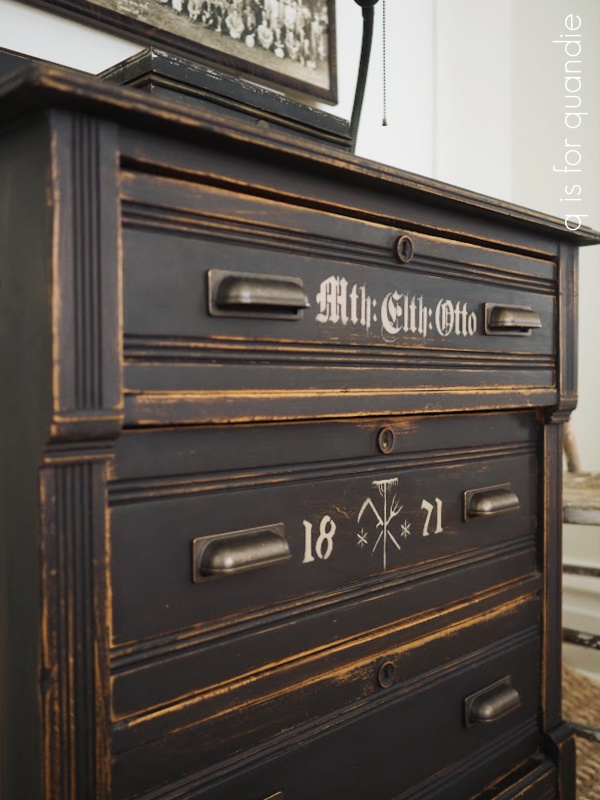
It felt very much like a blank slate to me. I knew it would be pretty with the top stripped, and the bottom painted. There were a few ideas that went through my head from there, but then I saw this photo …
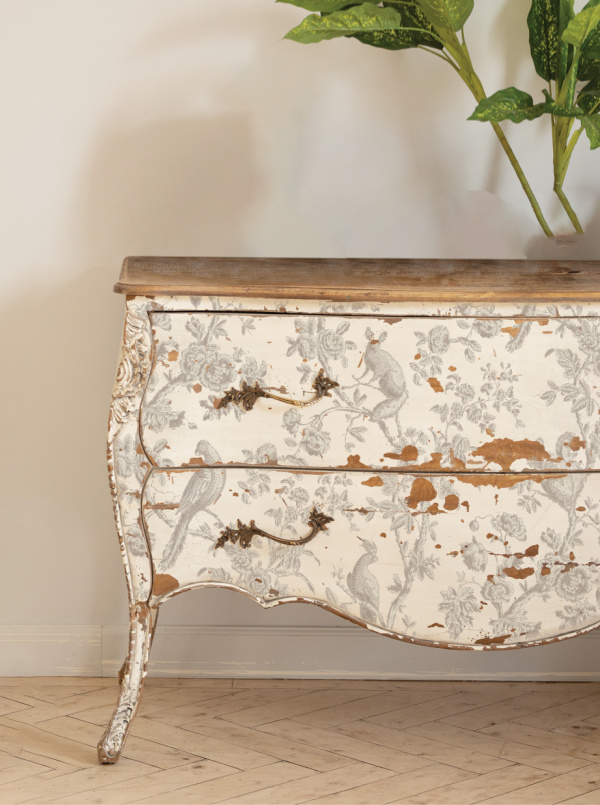
I love that look! I know it may not be to everyone’s taste (sometimes I feel like I’m the only one out there who still loves toile), but I thought it was gorgeous. That is another of the new IOD paint inlays called Grisaille Toile on the front of that dresser. I immediately thought that this would be the perfect look for my piece. So I ordered the paint inlay online. While I waited for it to arrive, I stripped the top of my dresser, and prepped and painted the base in Dixie Belle’s Drop Cloth.
I was basically going for the same look as on the example piece above.
I was super excited waiting for my package to arrive. And FYI, I ordered from The Painted Heirloom. My order arrived promptly and I would certainly order from her again. The paint inlays were on sale for $38.40 (and last I checked they still are) and shipping was $2.95 for orders over $100 (and free for orders over $150). I added some Homestead House milk paint (including more of their fabulous Soldier Blue) to my order to bring it over $100.
I pulled the paint inlay out of the package and trimmed off all of the edges as per the instructions (for my complete tutorial on applying a paint inlay, click here). I then laid out the sheets trying to match up the edges to create a cohesive design to fit across the front of my dresser. And that’s when things went haywire. I just couldn’t figure out how to lay out the design at 4 sheets wide by 2 sheets tall and still match up the repeat (think of wallpapering).
I had made the assumption, based on that photo above, that I would be able to use it that way.
Turns out that in order to go wider than two sheets of the paint inlay, you have to have more than one packet (and even at $38.40, these things aren’t cheap). Clearly I should have read the fine print!
To save any of you from making the same mistake, here is a helpful graphic that I found online.
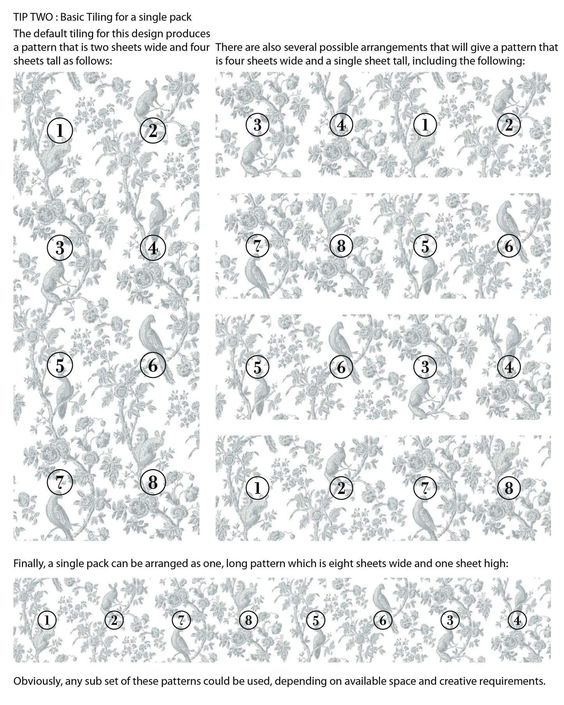 You can do 2 sheets wide by 4 sheets tall. Or you can do 8 sheets wide by 1 sheet tall. You can not do 4 sheets wide by 2 sheets tall without using multiple packs.
So, now I have the Grisaille Toile inlay in my stash of supplies waiting for another project that it might work on. I’ll have to find a tall narrow piece because I can’t see myself ever wanting to put over $80 worth of paint inlays on one piece of furniture. OK, it would be one thing if I was doing a piece for myself. In that case I might splurge in this way, but if you’re painting furniture to sell and trying to make some sort of a profit, this is a non-starter (in my opinion).
Back to the drawing board. I still had my dresser ready to go with a stripped top and a body painted in Dixie Belle’s Drop Cloth. So I gave some thought to how I could create a similar look using supplies that I already had on hand. I started by going through my stencils and pulling out the Dixie Belle Royal Damask stencil.
Then I tested out a couple of different paint colors for stenciling over the Drop Cloth on a test board.
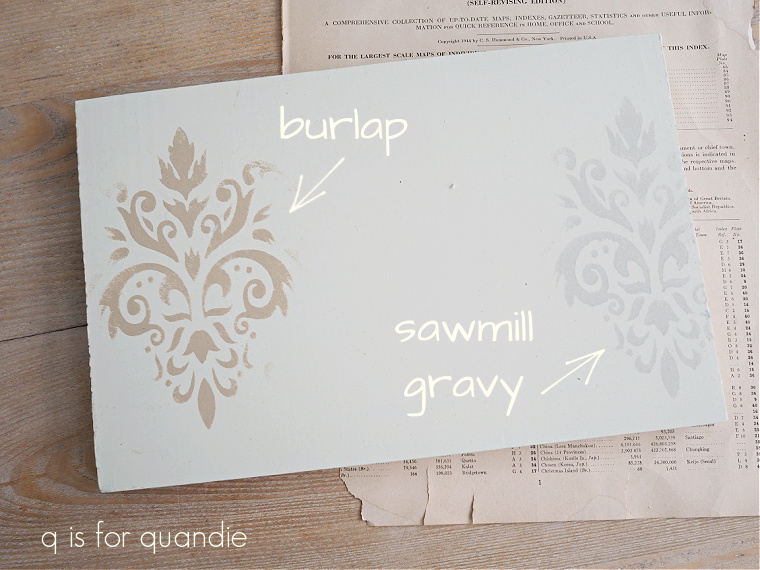
I decided that using Dixie Belle’s Sawmill Gravy would give me a look very similar to the example piece, at least color-wise, plus I preferred how subtle it was compared to the Burlap.
As I was stenciling the front of the dresser I was reminded of the benefits of using a stencil rather than a transfer or paint inlay. You can cover as much square footage as you need with a stencil at no extra cost. You can use whatever paint color you want to. If you mess up, you can just paint over it and start again without any additional outlay of cash. You can re-use a stencil over and over on other pieces, thus bringing the cost per use way down. So at $24.95, this stencil is a much better buy than the paint inlay. Just sayin’
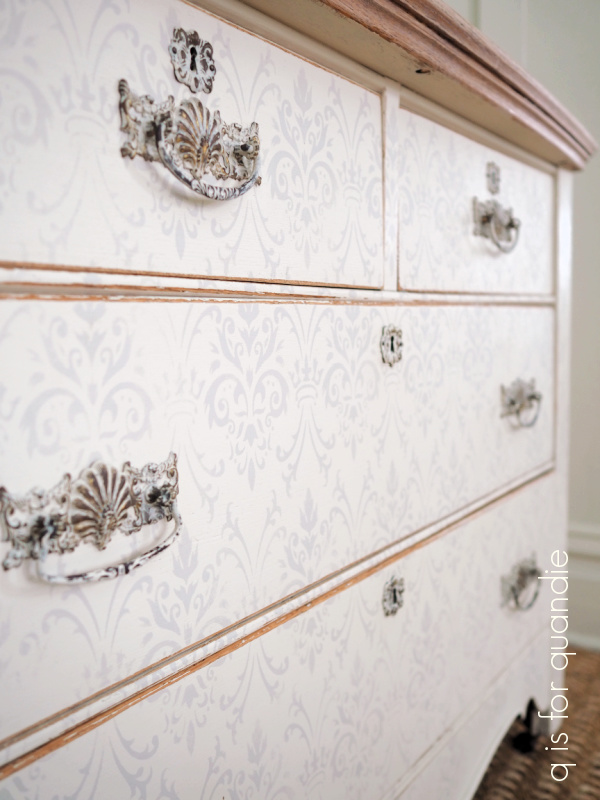

Today’s stenciling q tip: when working with an overall pattern like this be sure to start stenciling in the center of your piece and then work your way out on either side. This way your finished design will be symmetrical.
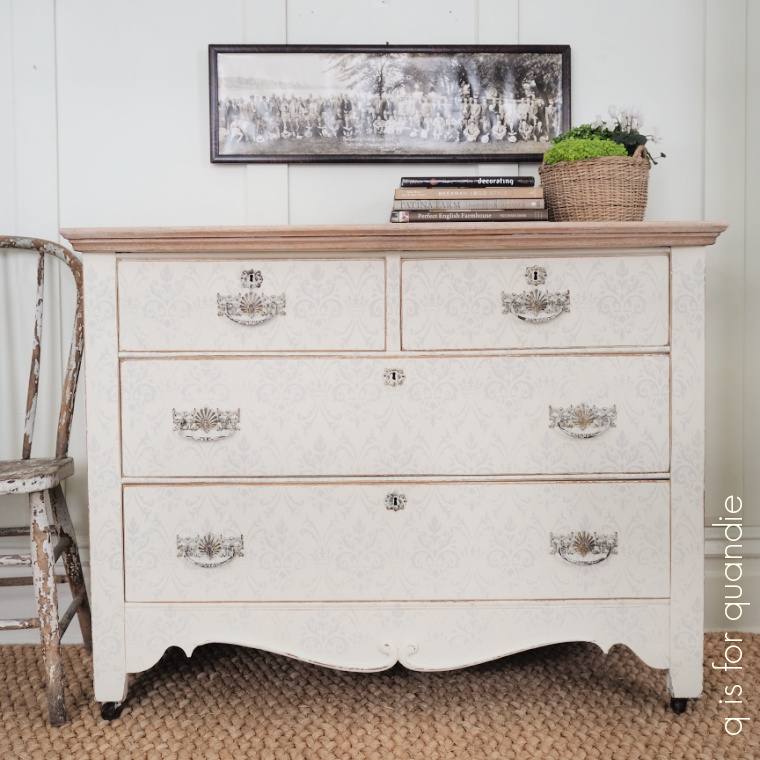
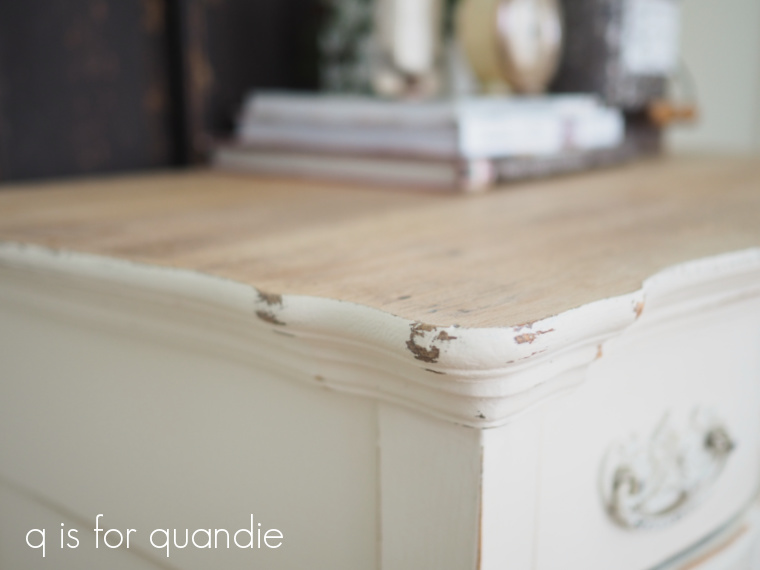
Once I had the front of the piece stenciled, I sanded the edges of the dresser with 120 grit sandpaper to distress them and then sanded all of the flat areas with 220 grit to smooth them out. I then added a top coat of clear wax.
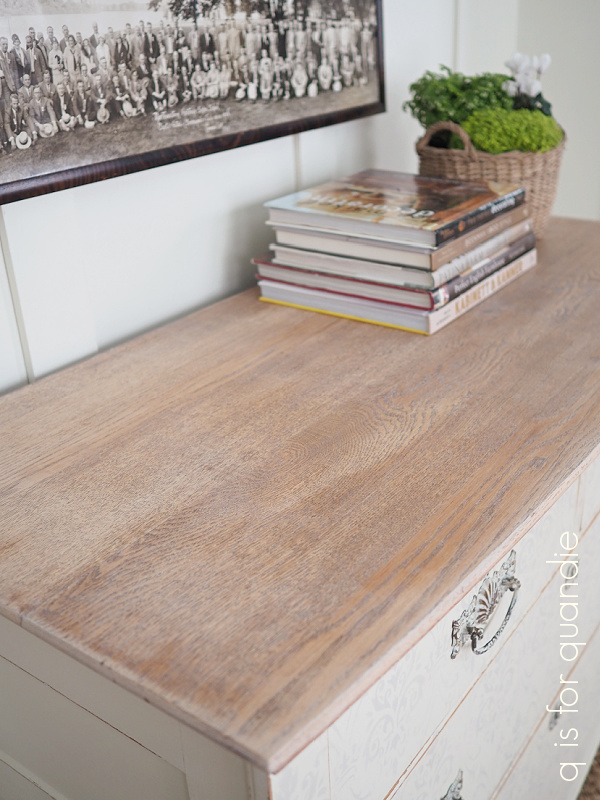
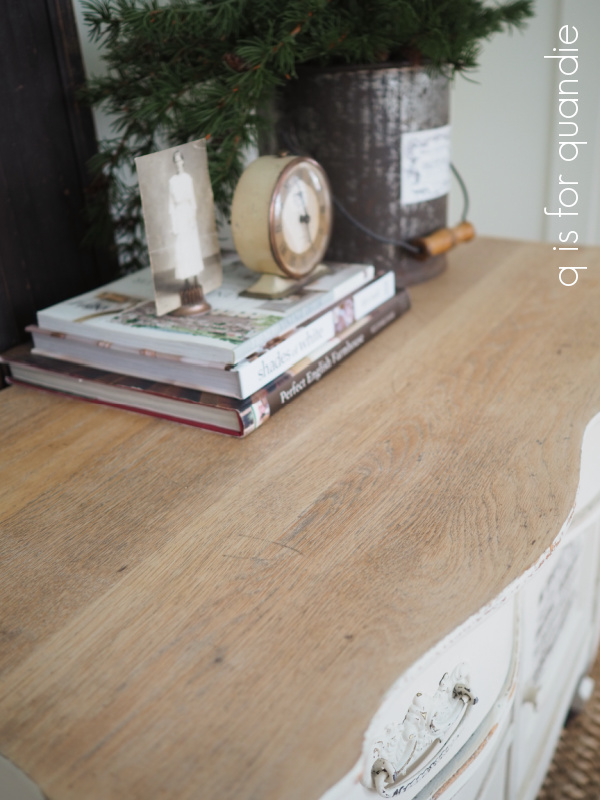
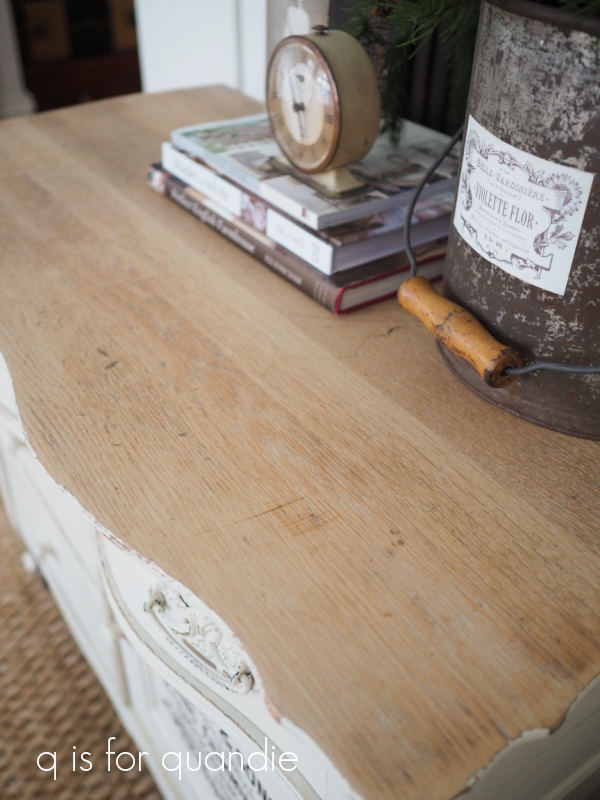
For the top of the dresser, I had already stripped it using CitriStrip, so I simply sanded it smooth and then finished it with some white wax.
I toyed with the idea of adding a more modern hardware to this dresser. Unfortunately, all of the options that I found online that I thought would work were out of stock. Have you tried finding inexpensive hardware lately? Is it just me, or is it hard to come by?
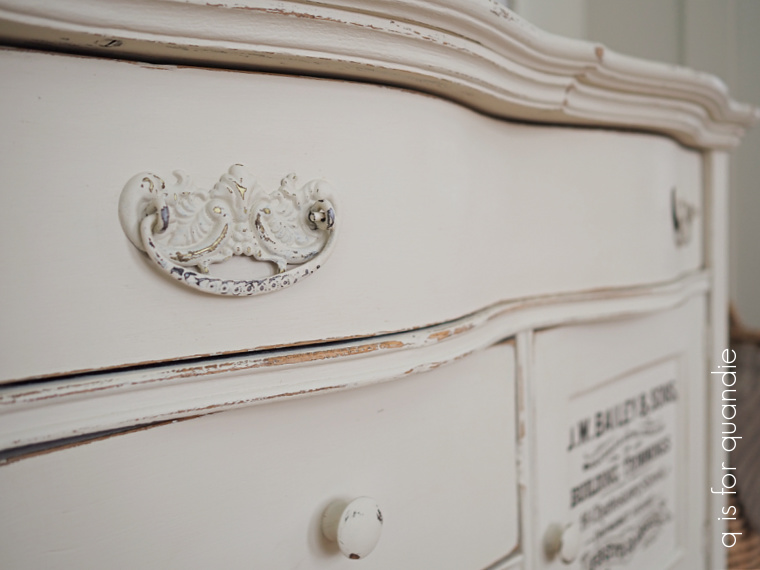
I felt like the drawer pulls and key hole escutcheons that came on the piece were just a tad over the top, so I decided to try toning them down with a little paint. I didn’t want to give them a solid coat of paint though.

So I made a wash of the Dixie Belle Drop Cloth paint by mixing water and paint about 50/50. I painted that on the hardware, making sure it was in all of the crevices, and let it dry. Then I used a damp cloth to remove the paint from all of the high points. I followed that up with some clear wax.

I like the look of painted hardware that has been worn down over time.
I also like the subtlety of the almost tone on tone look of the Sawmill Gravy over the Drop Cloth …
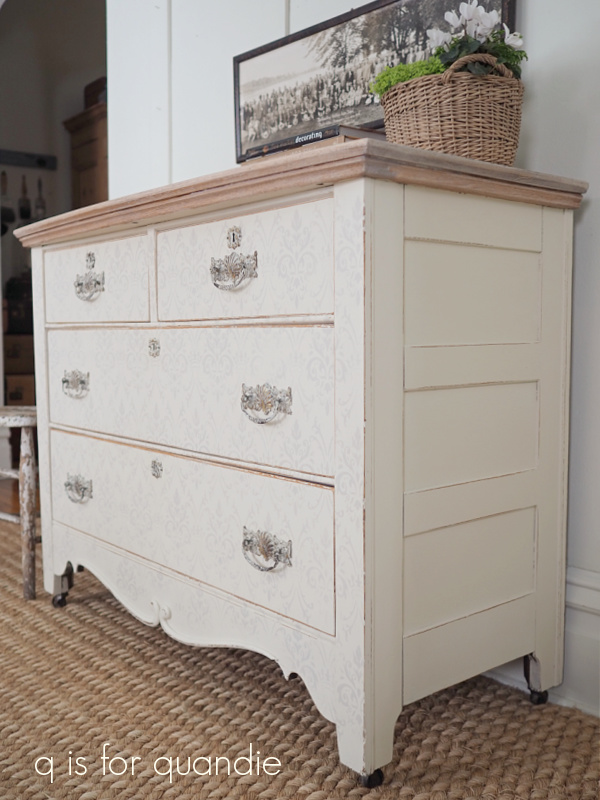
and that sort of washed out, beachy vibe from the pale colors paired with the white waxed top.

I also think the fine print of this stencil gives a more delicate look than had I used the Grisaille Toile inlay.
Personally, I feel like there is pretty much no contest between the ‘before’ and ‘after’ of this dresser. That ambered oak finish had to go.

What do you think?
If you’re local and in need of a dresser, be sure to check my ‘available for local sale‘ page for details on this piece.
Thank you to Dixie Belle Paint Co for supplying the paint and stencil used on this project.

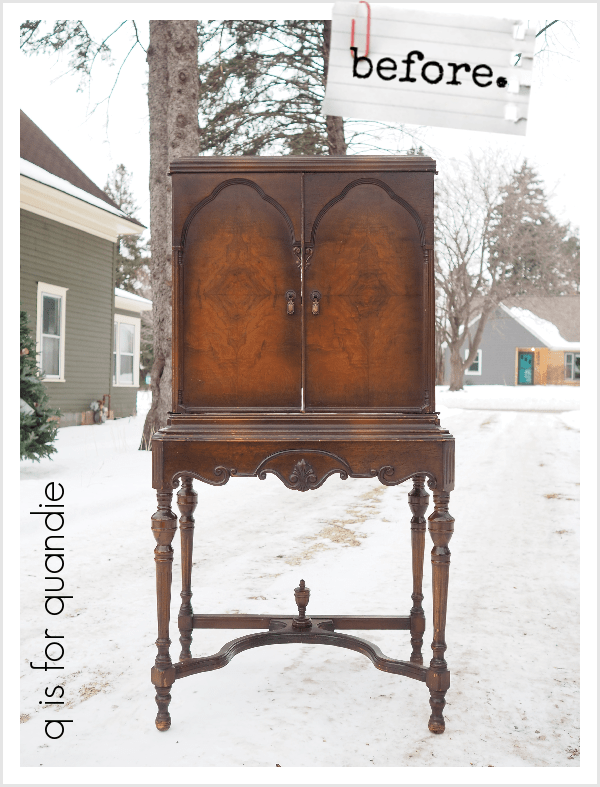
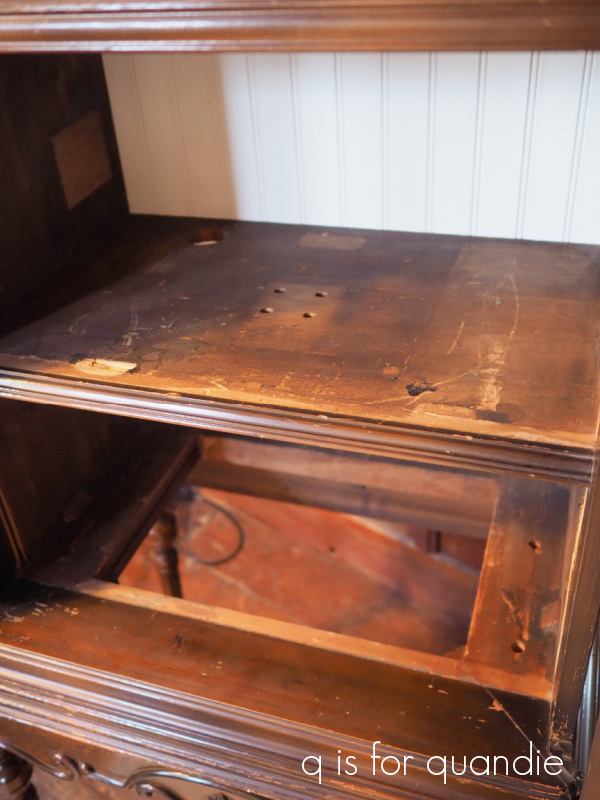

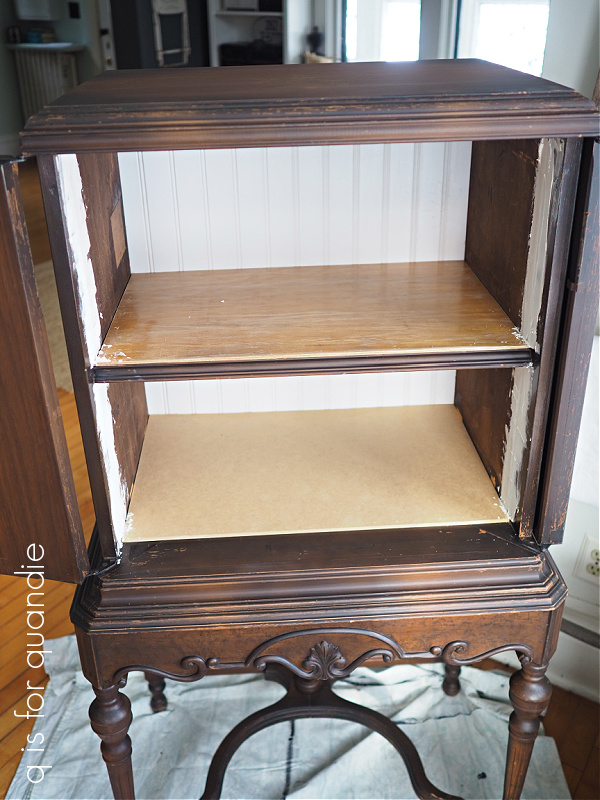









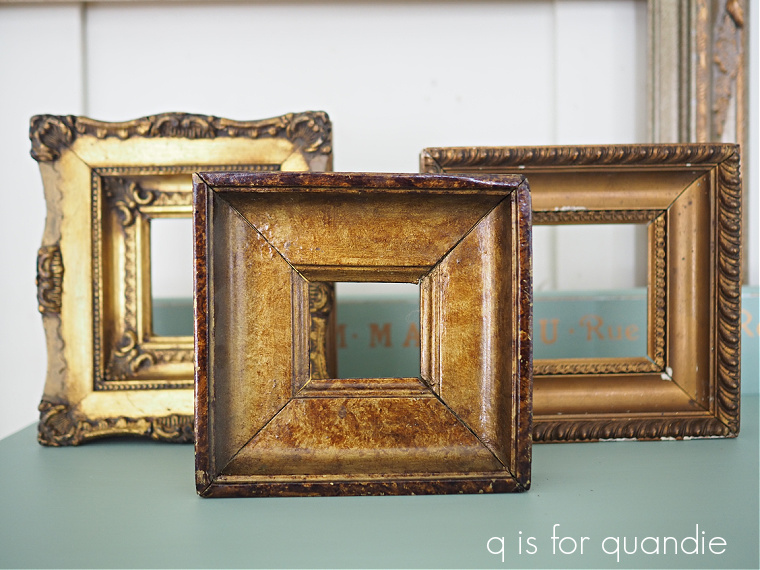



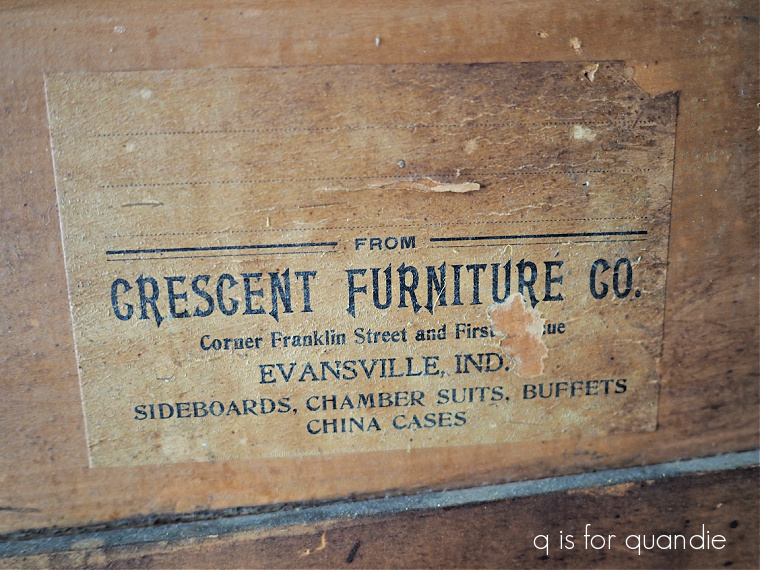


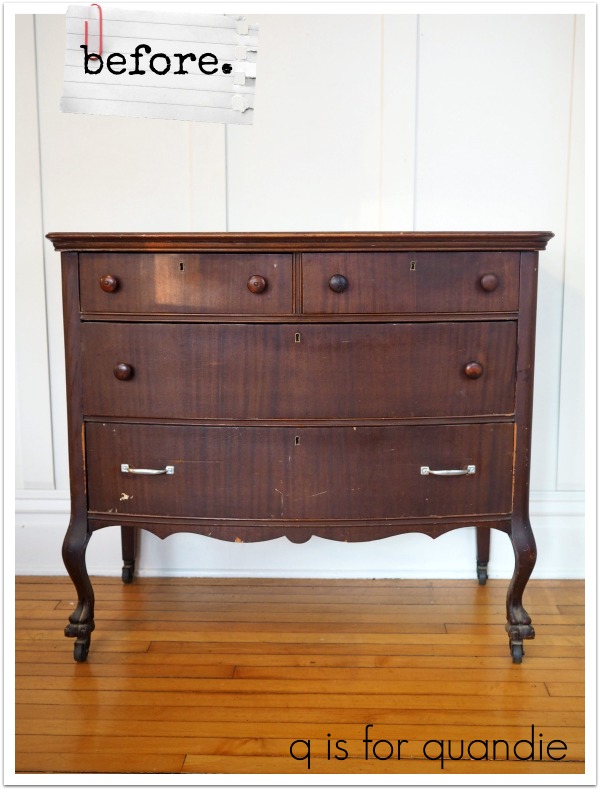


















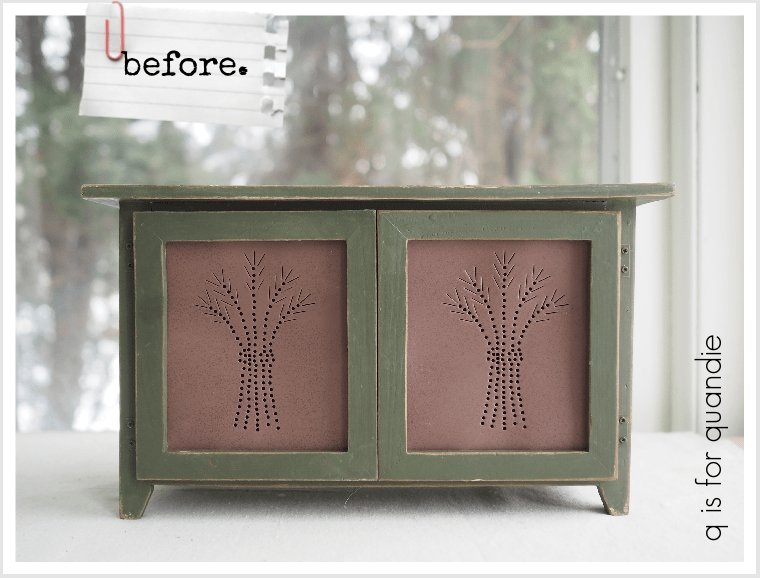
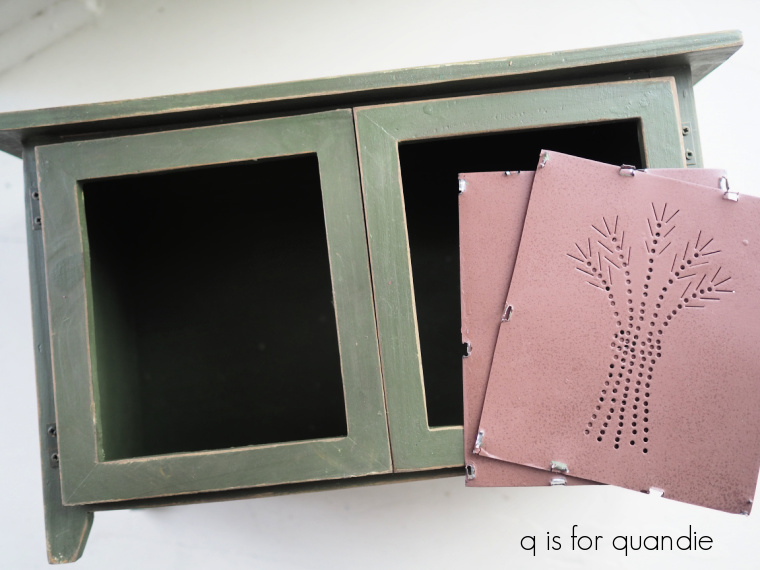
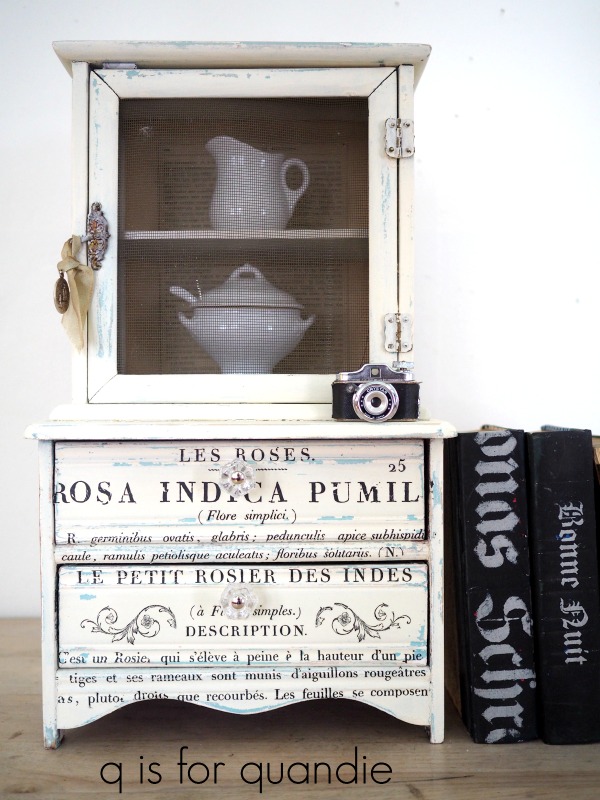
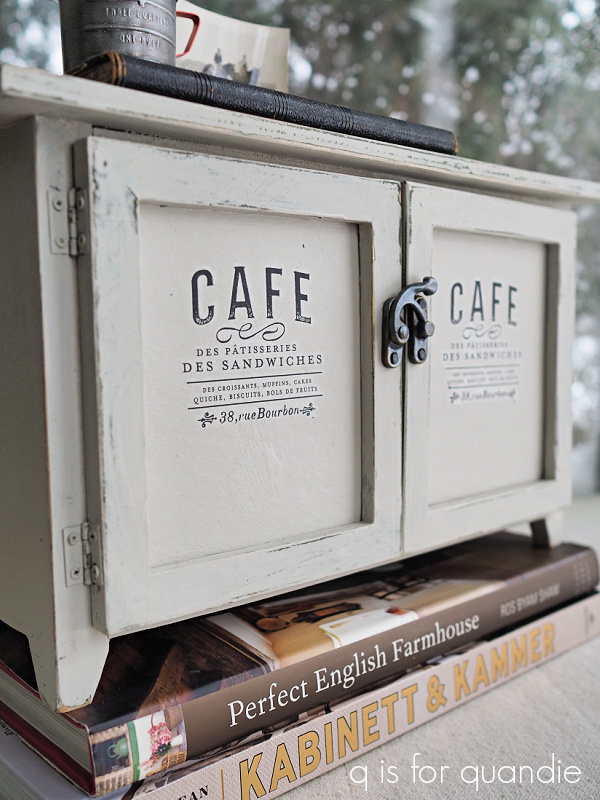











 But this dresser only has one hole for a knob, so obviously it didn’t originally have drawer pulls that required two holes. So I guess I’m really not sure if those knobs were replacements or not. Either way, they had to go.









 q is for quandie