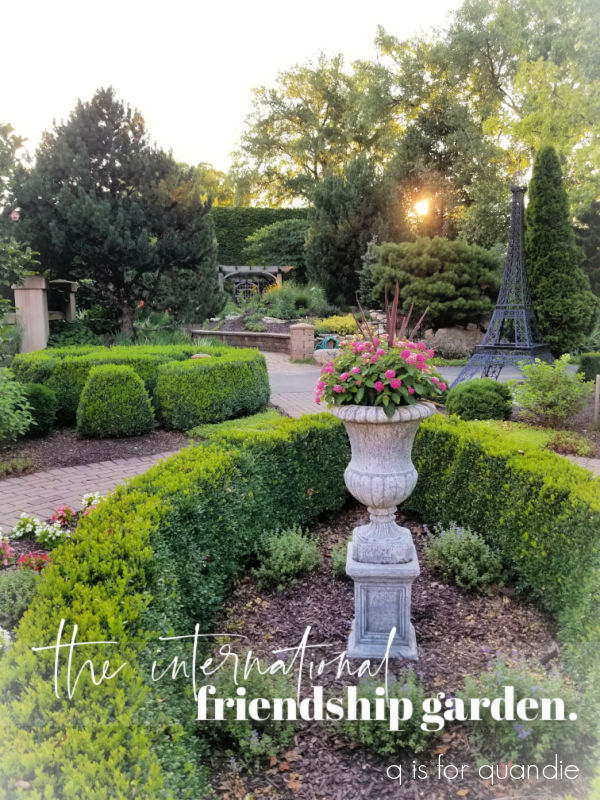
the international friendship garden.

Good morning from the garden!

Once again, this morning’s post doesn’t come from my own garden.  If you read my recent post about our road trip to La Crosse, Wisconsin, you may remember that I promised I’d share the surprise from behind the lovely hotel we stayed in, Hatchery.

When we booked our room, I had no idea that the Riverside International Friendship Gardens surrounded the side and back of our hotel.

Had I known, I would have booked even faster!

Apparently La Crosse has seven sister cities.  For those of you who might not have heard of sister cities, here is the definition from Wikipedia:  A sister city or a twin town relationship is a form of legal or social agreement between two geographically and politically distinct localities for the purpose of promoting cultural and commercial ties.

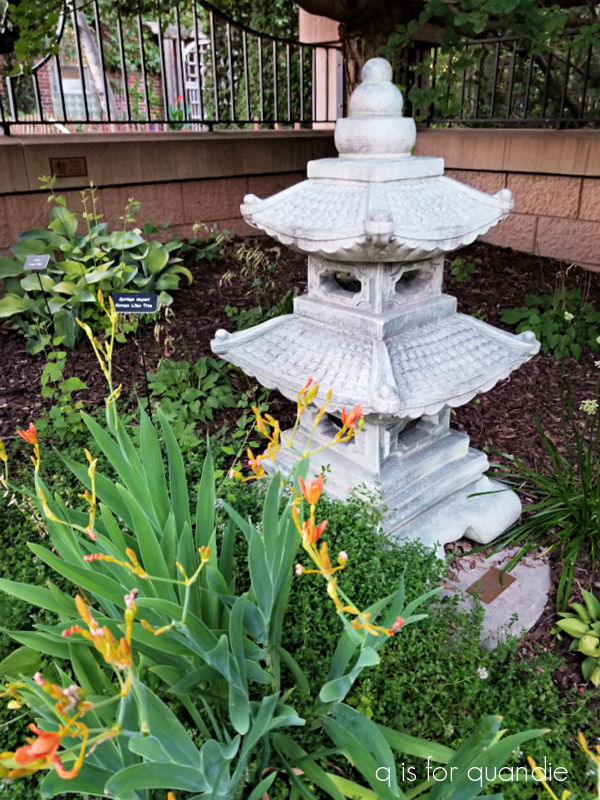
For La Crosse those seven sisters are located in China, Germany, France, Norway, Russia, Ireland and Cameroon.  There are 7 sections to the International Friendship Garden, each meant to represent one of the sister cities.

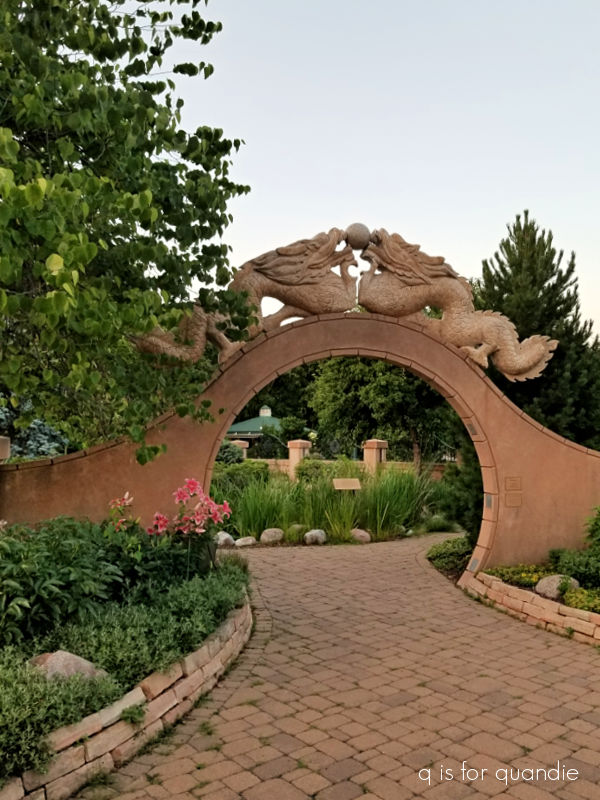
Let’s start in the Chinese Garden.

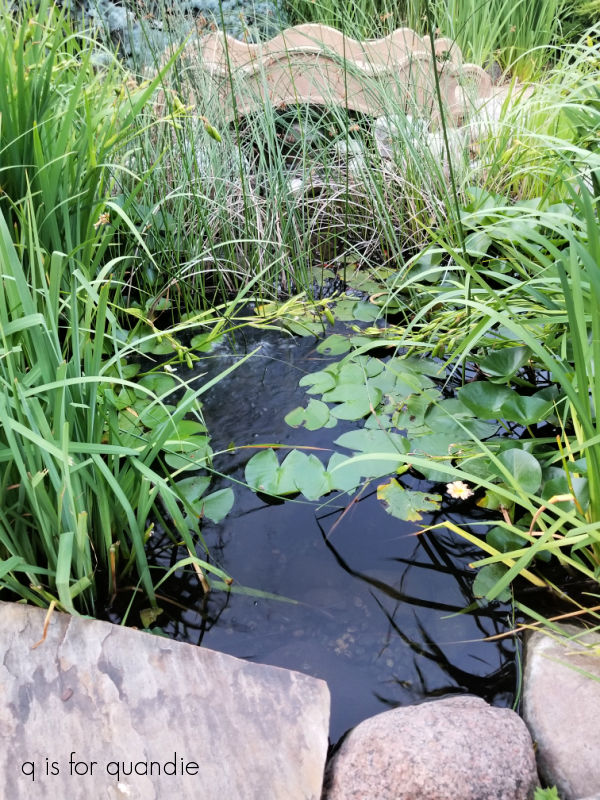
You enter this garden through a dragon gate to find a lovely koi pond.

La Crosse’s sister city in China is Luoyang and the garden brochure calls it the ‘city of peonies’, but unfortunately July isn’t peony season.

But the garden was still beautiful.

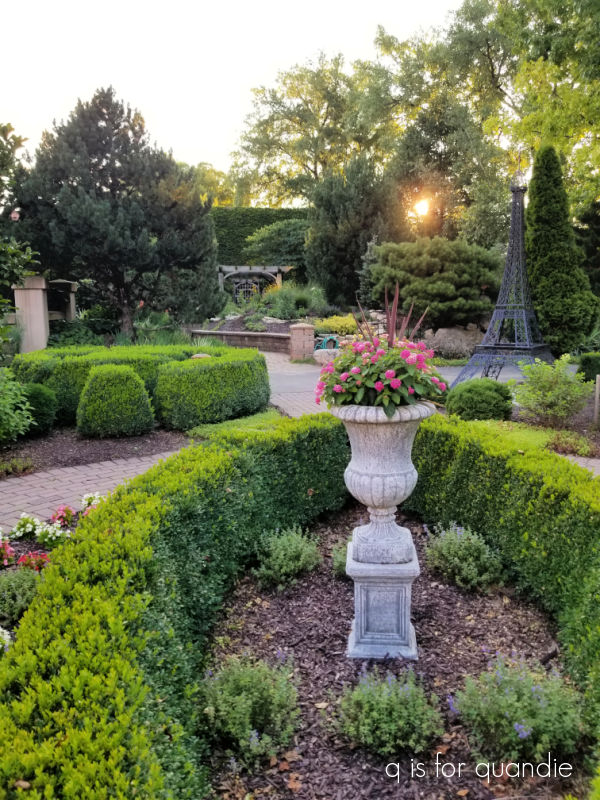
Next up was the French Garden.  The sister city of Épinal, France was the inspiration for this formal garden with its knot garden and formally trimmed shrubbery.

This was definitely my favorite section, I just love a formal garden with urns and fountains.

There was even a mini hedge maze.

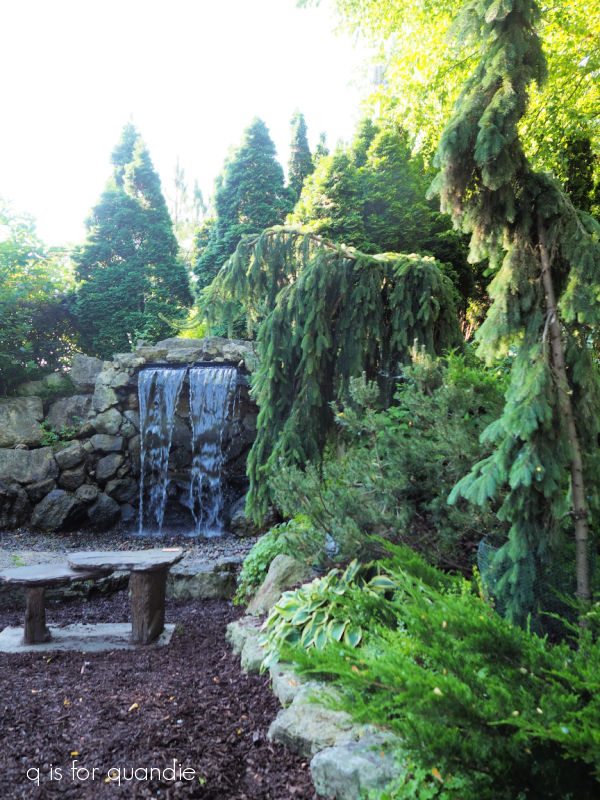
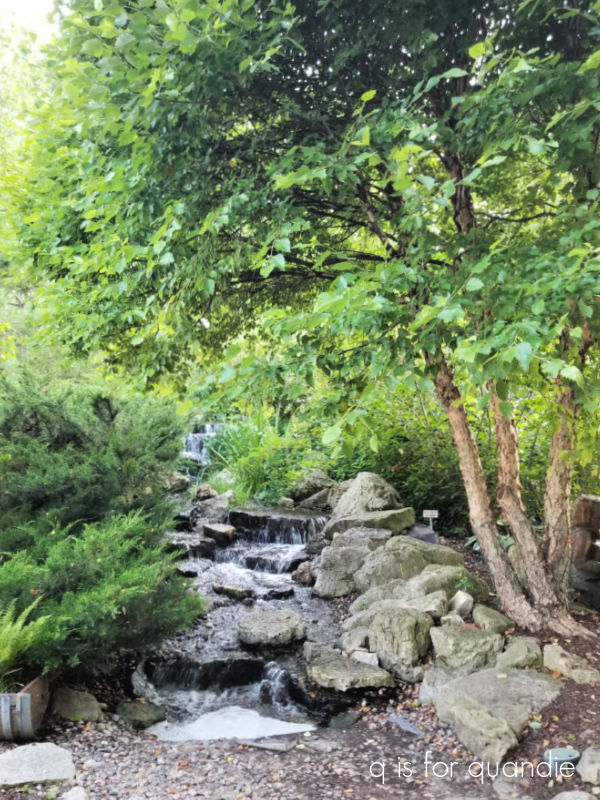
La Crosse’s sister city in Norway is Førde, and it is located in the waterfall region.  The Norway section of the garden has not just one, but two waterfalls.

Here is the second …

The Norwegian garden also features seven ‘hidden’ trolls, although they weren’t terribly hidden.

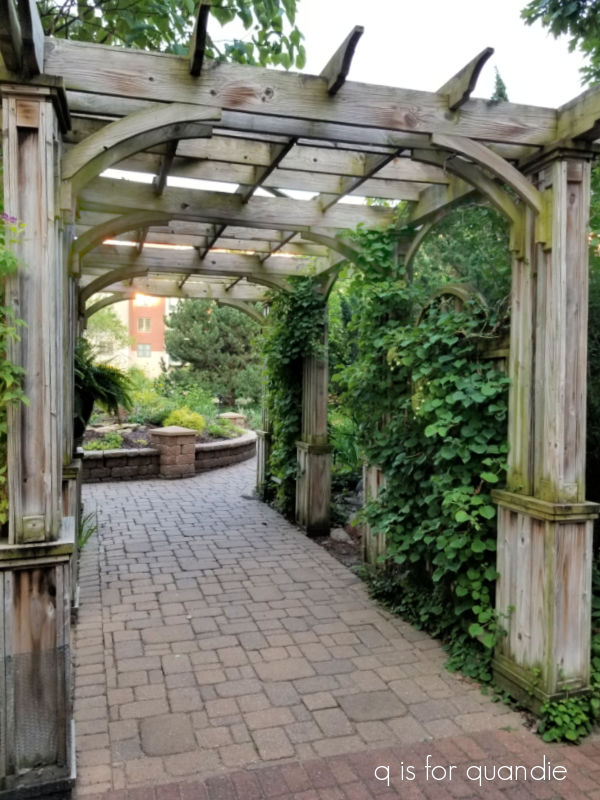
La Crosse’s German sister city is Friedberg.  This section of the garden contains a lovely pergola with a climbing hydrangea, unfortunately not in bloom while we were visiting.

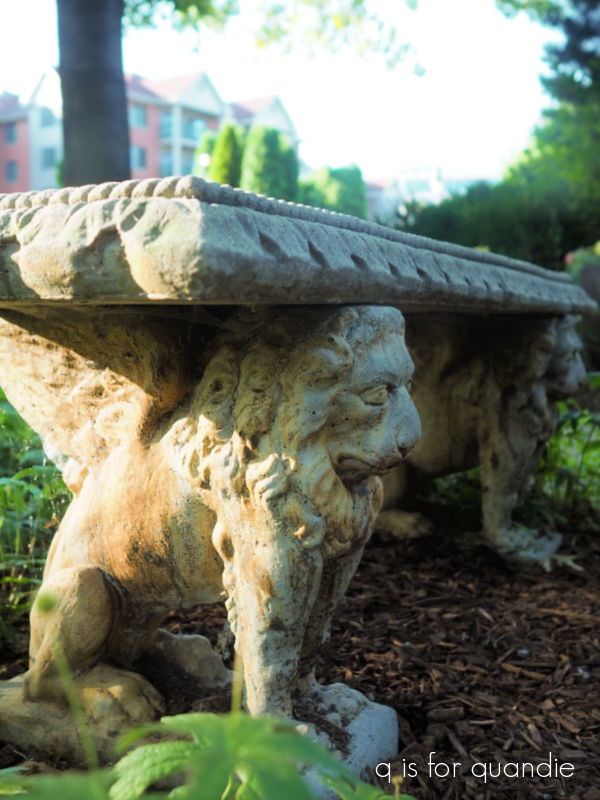
I loved this bench with its winged lions for support.

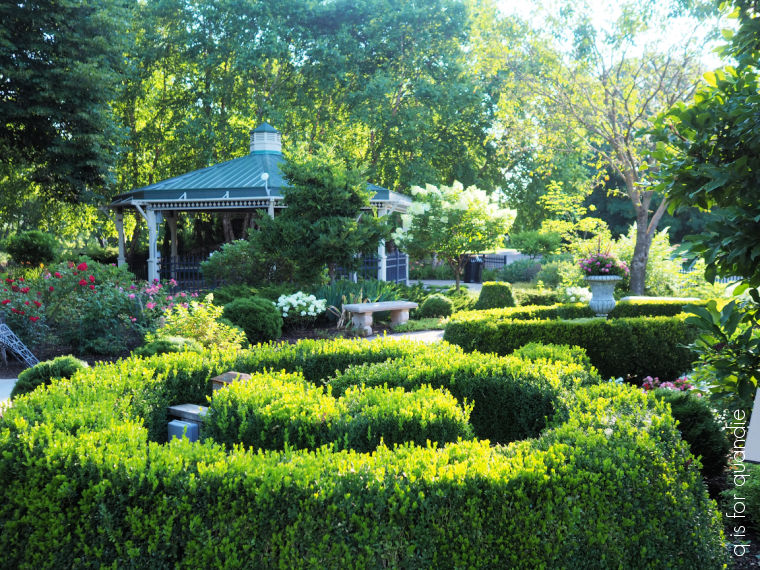
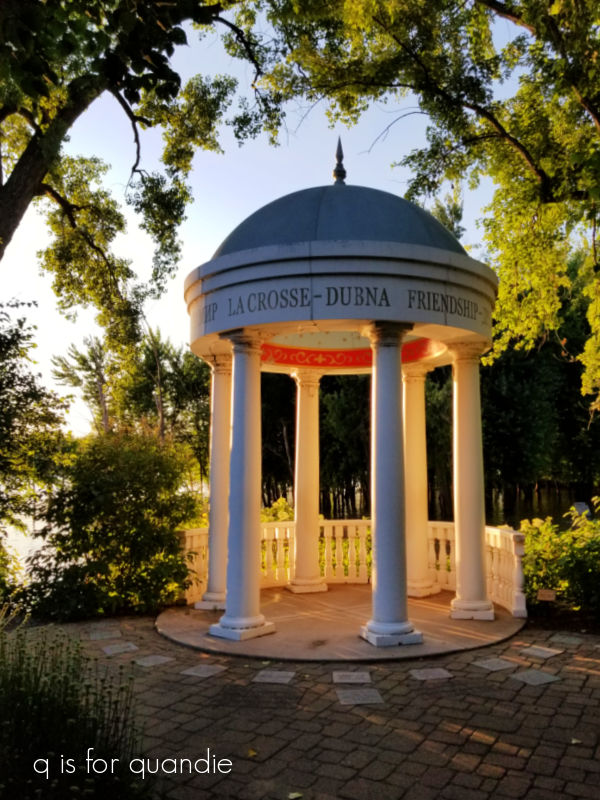
The Russian garden has this beautiful pavilion, or besedka.

It is a replica of one on the banks of the Volga River in Dubna, the sister city in Russia.

We just happened to catch it in the most beautiful evening light as it was nearing sunset.

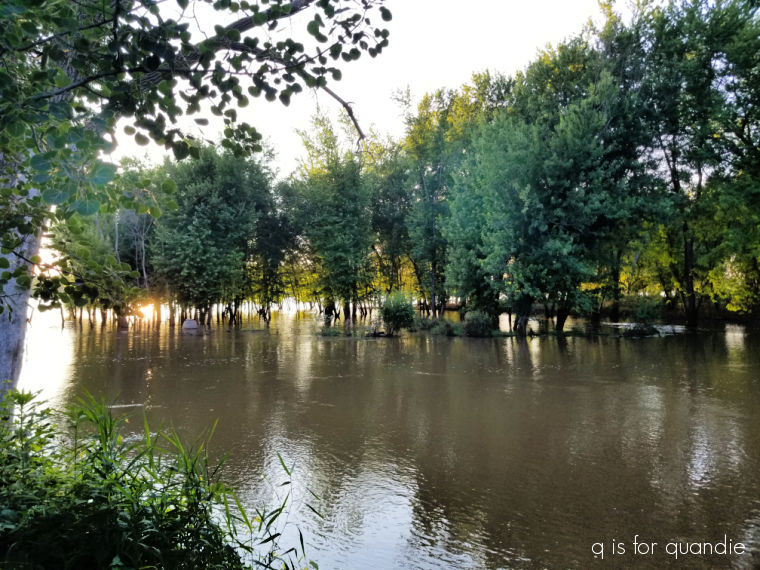
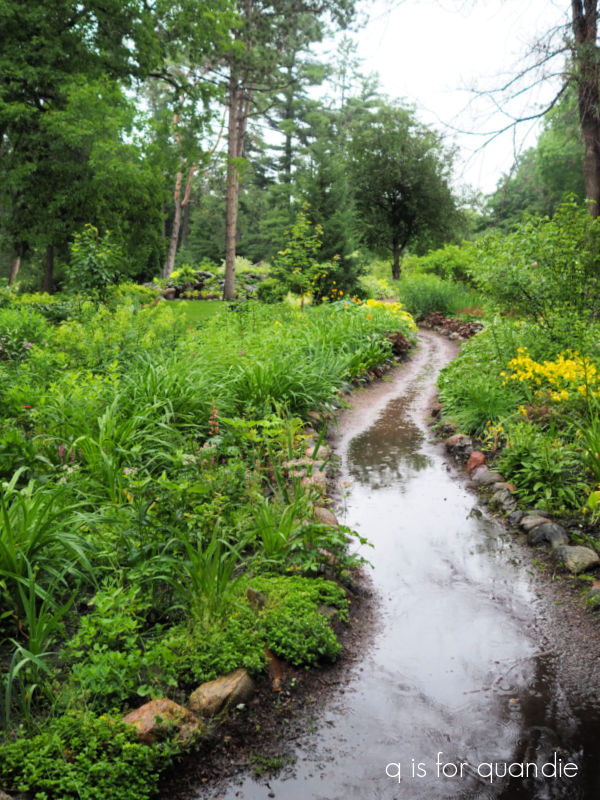
Three rivers come together in La Crosse, the Mississippi, the Black and the La Crosse, so I’m not precisely sure which river is directly behind that besedka.  I just had to grab a photo showing how high the water is this year.

We’ve gotten so much rain.

The mill wheel in the Irish Garden was copied from one in Bantry, the Irish sister city.

It totally reminded me of one we saw in Prague.

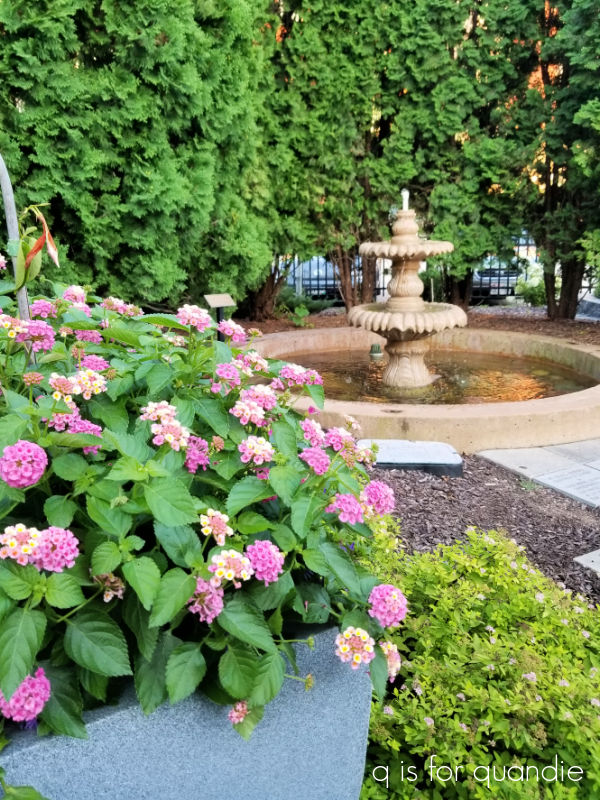
Lastly, we have the Cameroon Garden.  Kumbo is the sister city in Cameroon.  This garden contains the Mami Wata, an Africian water spirit, fountain.

I was so impressed by the Riverside International Friendship Gardens.  They were beautifully designed and maintained.  Each section felt very different, and totally reminded me of the country being represented.

I mentioned that the French Garden, with its formality, was my favorite.  Which garden would you pick as a favorite?  Leave a comment and let me know.

And if you ever happen to be in La Crosse, Wisconsin be sure to check out this gem of spot.  It is located at the north end of Riverside Park.

the fairy garden, 2024.

 Good morning from the garden!

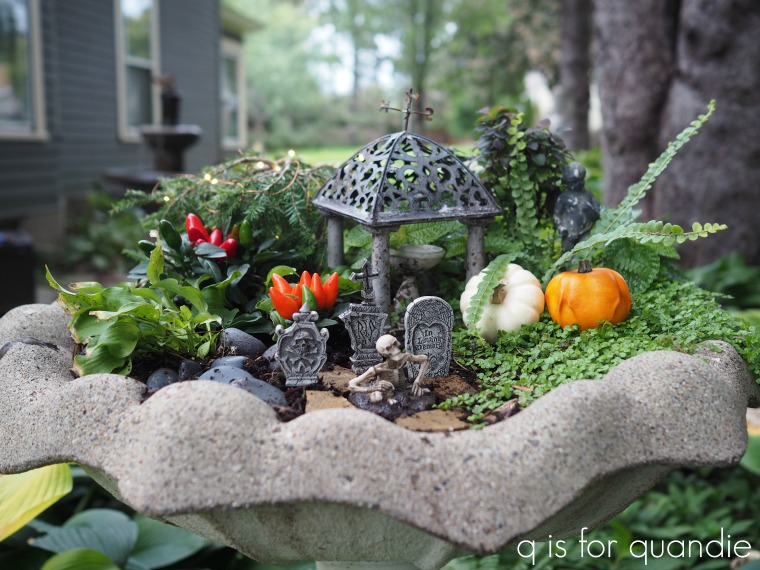
This morning I thought I would share my 2024 fairy garden.  But first, let’s take a look at its history.

My fairy garden started out in an old cracked concrete birdbath.  The crack allowed for drainage, so that made it perfect for planting in.

It was sweet, although a bit on the small side.

But back in late 2022 the crack became fatal, the bowl broke into 3 pieces.

I debated trying to somehow glue it back together, but ultimately decided that it probably wouldn’t hold up to the elements over time.

Later that year my sister gifted me with a fairy house for Christmas.

So I knew it was time to expand.

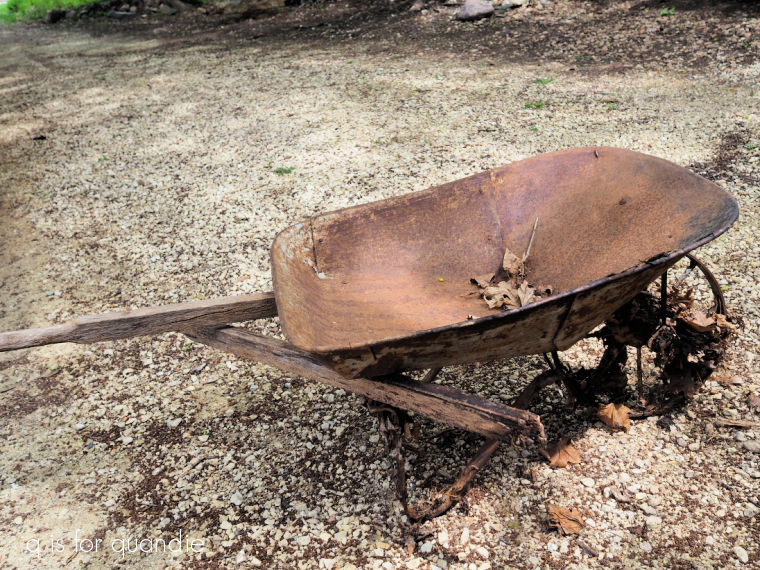
I happened to have an old rusted out wheelbarrow on hand, and that seemed like the perfect container for a fairy garden.

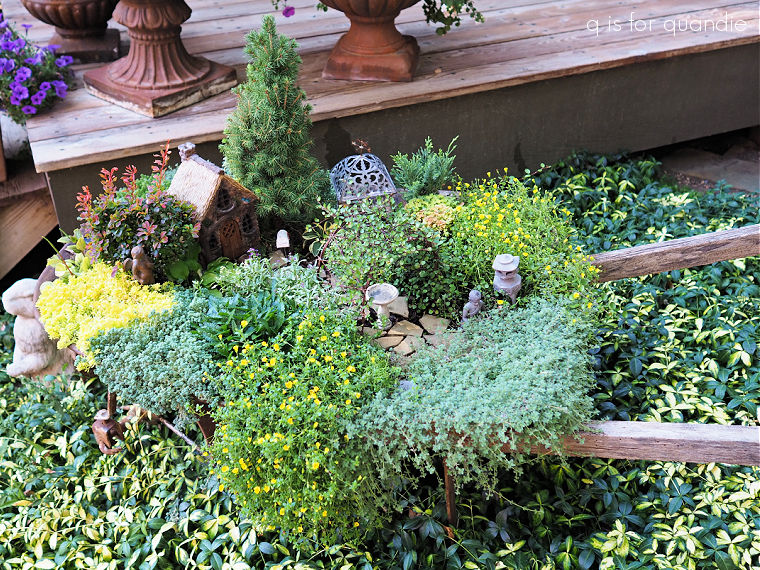
So after getting some help from my handyman Ken to shore it up a bit, I nestled it in a bed of variegated vinca and planted it up.

I have to admit, although it looked quite nice when first planted last year, quite a lot of the plants grew like gangbusters and everything became quite shaggy by the end of the season despite several pruning sessions.

Also, even though I protected it with a mound of leaves and a burlap covering for what was a relatively mild winter for us, the only plants that came back this spring were the Dwarf Alberta Spruce, one mini Feather Boa hosta, and the creeping thyme.

Sadly the mini barberry shrub, the mini betony and the Mighty Mouse hosta all died.  I was especially bummed about that dwarf betony, or stachys minima.  I was really hoping to see that bloom this year.

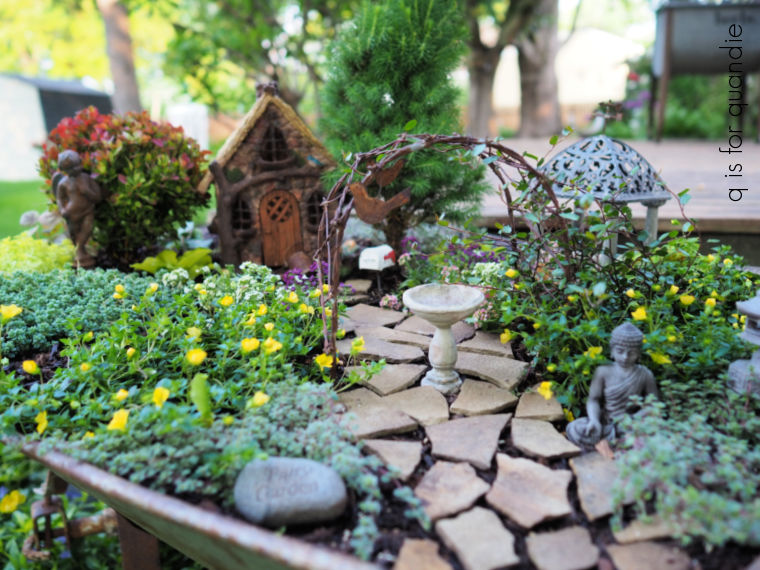
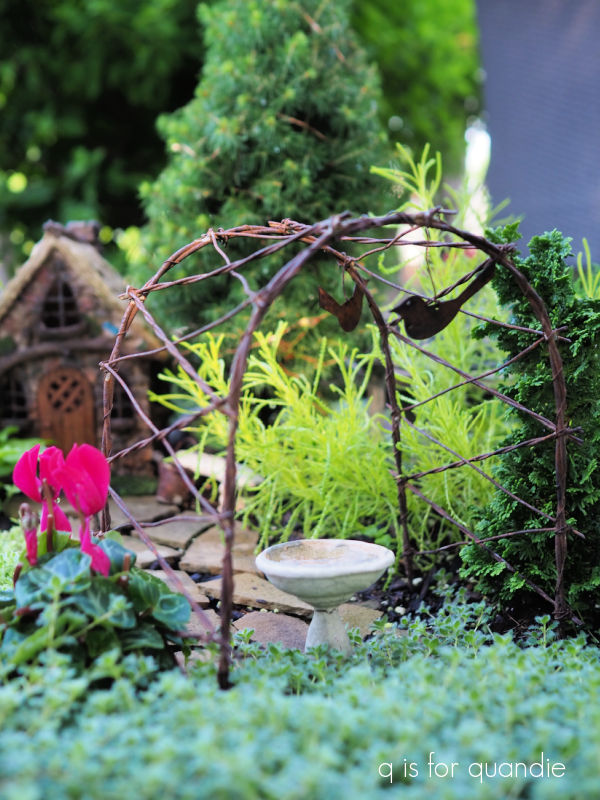
This year I decided to take a more minimalistic approach to the fairy garden.  I had traditionally planted a small wire vine on the arbor, but it always took over.  So this year I opted to not plant anything that would grow over it.  Instead I added a small evergreen to one side, and a mini caladium to the other.

Although the Golddust Mecardonia bloomed all summer last year, and the flowers were the perfect scale for a fairy garden, it was a bit too prolific for the space.  It totally took over.  So this year I opted to plant another variety of creeping thyme in those spots instead.

After pulling out the dead barberry shrub next to the fairy house, I replaced it with a miniature Japanese maple.

To be honest, I think there is little chance it will survive next winter in the wheelbarrow so I plan to pull it out in the fall, pot it up and then try to overwinter it on my unheated three-season porch.  We’ll see how that goes.

My neighbor, nnK, shared a couple of divisions from her miniature hostas with me.

I don’t know the name of that one, but it’s doing well under that pergola.  Hopefully it will survive the winter and return next year.

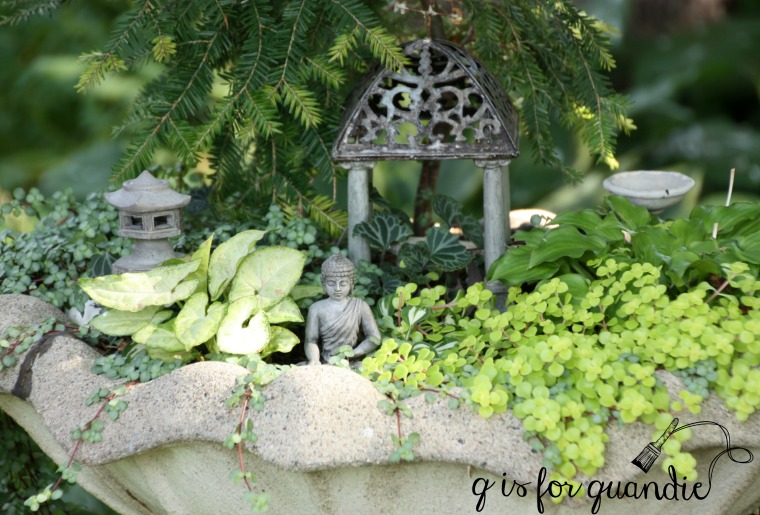
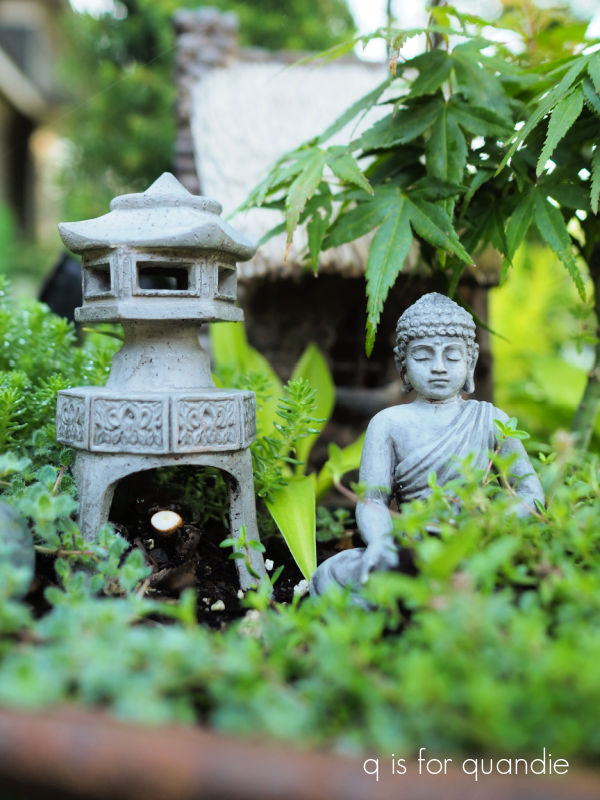
This year the fairies moved their meditation garden out back under the Japanese maple.

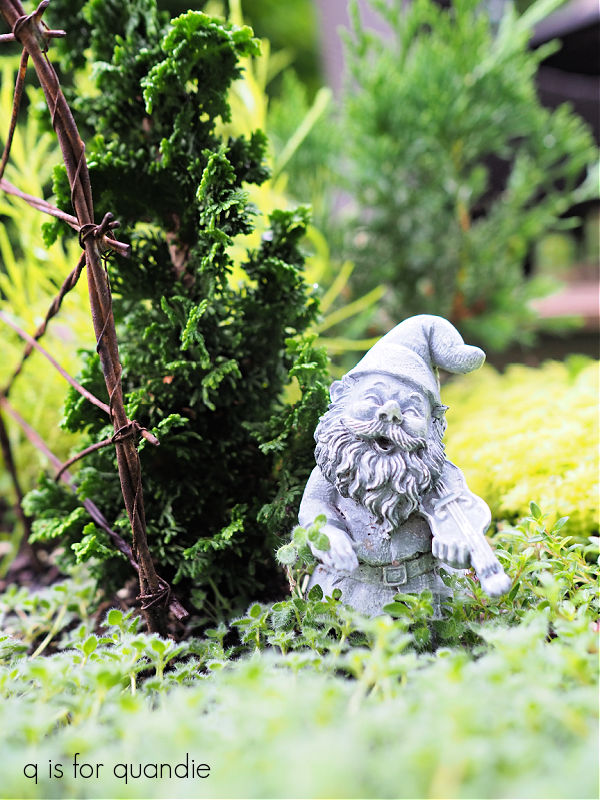
They also opted for a little gnome in the front of the garden instead of the angel statue they had last year.

My sister and I found these at a garage sale earlier this year and we each bought one.

The fairy garden is definitely requiring a little less maintenance this year, so I’m happy with the choices I’ve made.  I do wish I could find more miniature plants to include though.  I was really hoping to replace that dwarf betony, but I couldn’t find it this year.  If any of you have resources for mini plants be sure to leave a comment and let me know.

a succulent experiment.

Good morning from the garden!

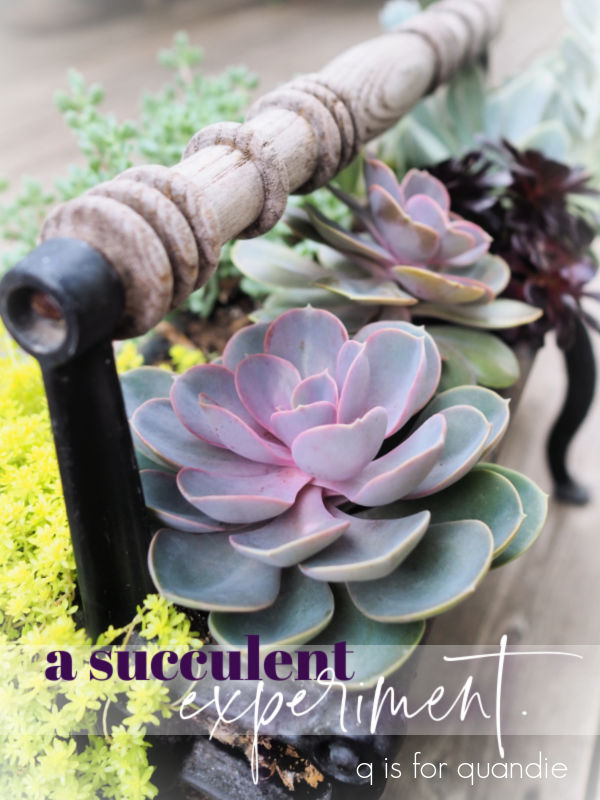
Remember the antique newspaper roller that I turned into a succulent planter last year?

It did really well out on my deck over that summer.

I brought it inside to overwinter it, but by spring it was starting to look a bit rough.

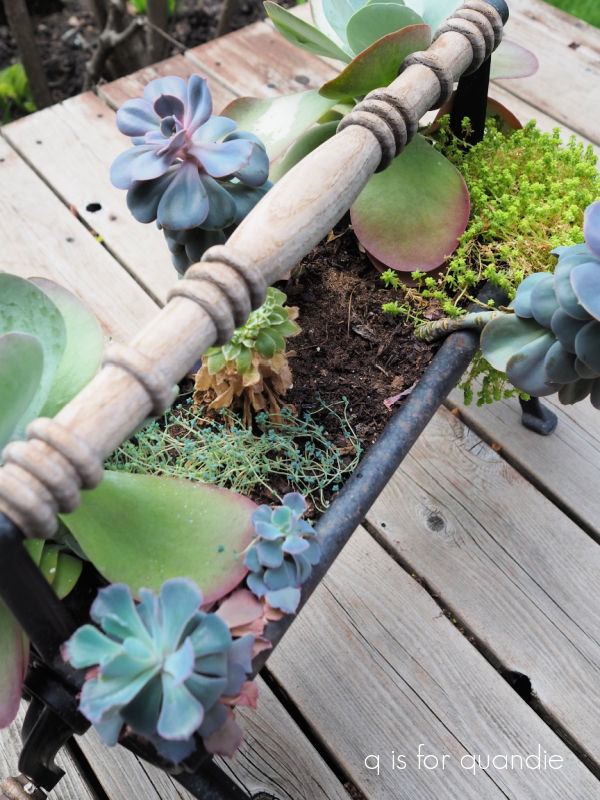
The succulents had all gotten either quite leggy or too big for the container.

Initially thought I would just pull everything out and start over.

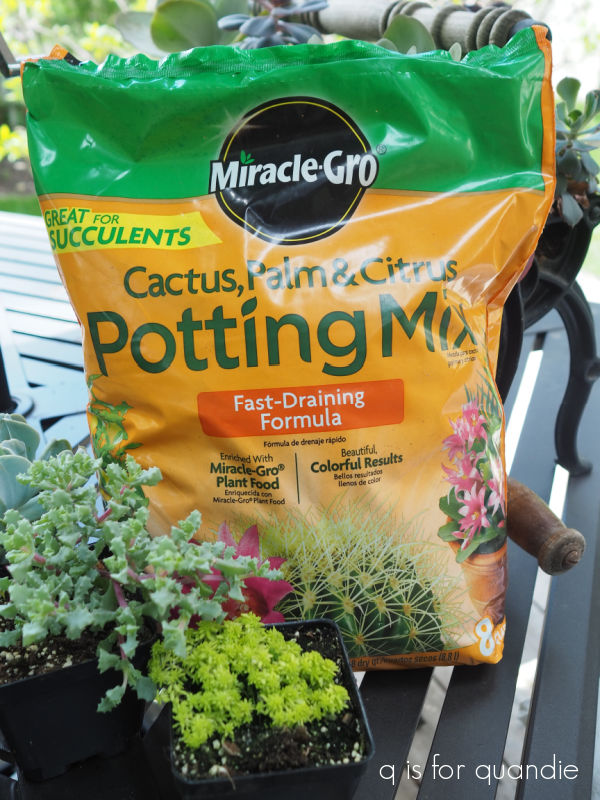
So I picked up some fast-draining potting mix and a few new succulents.  But just as I was about to pull out the leggy succulents I thought, gee, this is a waste.  I really should try reviving some of them.

Now, I’m definitely no expert, so if you’re looking for the best advice on this process you may want to look further.  But I thought I’d go ahead and share the results of my efforts here anyway.

After a bit of online research, I discovered that succulents are theoretically really easy to propagate.  There are different methods, but I went with what looked the easiest to me.  That was simply cutting them off and then setting the cuttings aside for a few days to let the cut ends dry out.

That felt entirely bizarre to me.  Who would think that you can let a cutting just sit there for days without water or soil?  But after three days, they still looked perfect fine.

So I filled up some small plastic pots with the soil I’d purchased and simply pushed the cuttings into the soil.

I’m not sure where I went wrong with this process, but ultimately those two big succulents were the only ones that survived this method.  All of the smaller ones ended up with rotted stems.  It’s likely that was the result of too much water.  As I’ve mentioned (ad nauseum), we’ve had a lot of rain so far this summer and I had left these outside.

As a sidebar, I also planted five Amstel Netja Dark begonias this spring and every single one of them ended up rotting at the base as well.  That was despite zero watering on my part and pots with good drainage.  We just had so much rain!

Anyway, back to the succulents.  Although those cuttings didn’t make it, I did leave some of the cut off stems in the container.  And lo and behold, some of those sent out new plants.

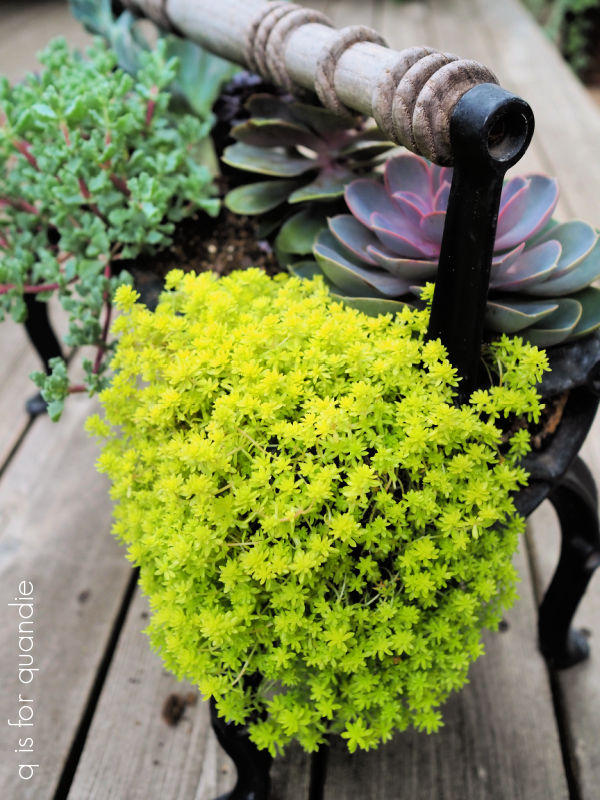
I also left the bright lime green drapey succulent (sorry, I don’t know the name of this one) in place, even though it was looking a bit shabby, and it has bounced back beautifully.

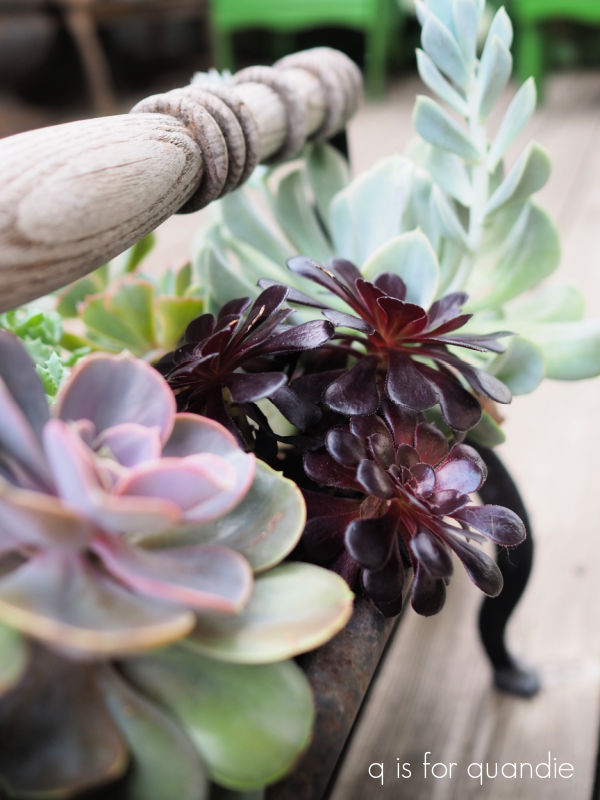
I also added a few new succulents to the mix including this funky one …

I also wanted to add something dark to balance out that bright lime green.

And I had to add these next two just because I thought they were so sculptural.

In the end, I guess I was following that rule I talked about a couple of weeks ago of having each of the four colors of green, yellow, blue and red represented.

I really love how this succulent planter has turned out again this year, but I can’t seem to find the perfect spot for it in my garden.

For that reason, I put a price tag on it at my recent occasional sale.  It didn’t sell though.  Perhaps because I marked it $40 (after all I have at least that much into it, if not more).

So, I still have it.  In fact, I just pulled it inside because as I’m writing this post on Saturday there is a big thunderstorm rolling in.  More rain.  I’m trying not to drown this bunch of succulents.

I’ll keep carrying it around my garden looking for a spot that is worthy of it, but in the meantime I’m also listing on it on my ‘available for local sale‘ page just in case one of you locals has the perfect spot for an antique newspaper roller turned succulent planter.

Now, how about you?  Have you had luck propagating succulents?  What was your method?  Leave a comment and let me know.

a rainy garden tour.

Good morning from the garden!

We’re not in my garden this morning, instead I’m sharing the Munsinger and Clemens Gardens in St. Cloud, MN.

These are two distinctly separate gardens that are across the street from one another.

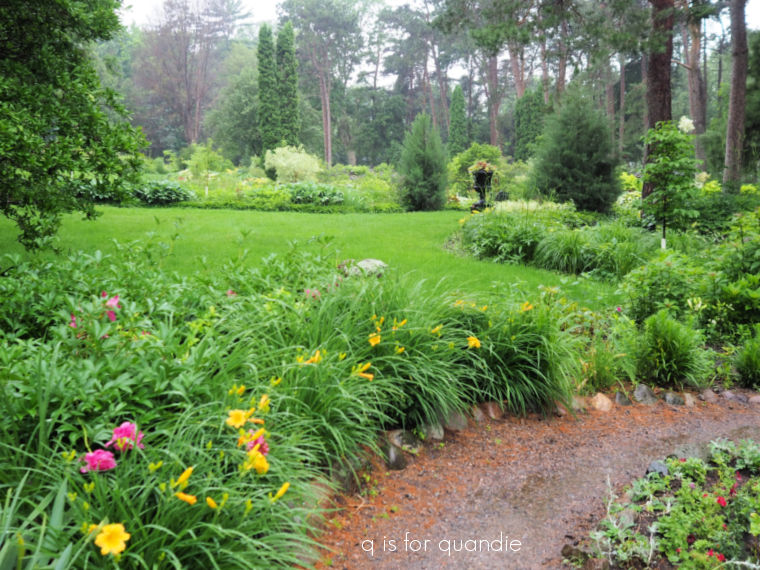
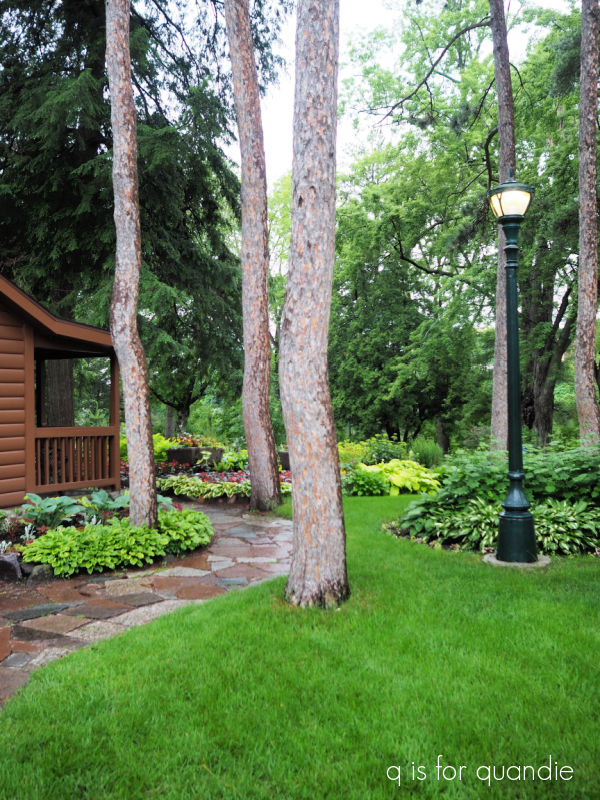
The Munsinger Gardens are shady, informal gardens located right on the bank of the Mississippi River.

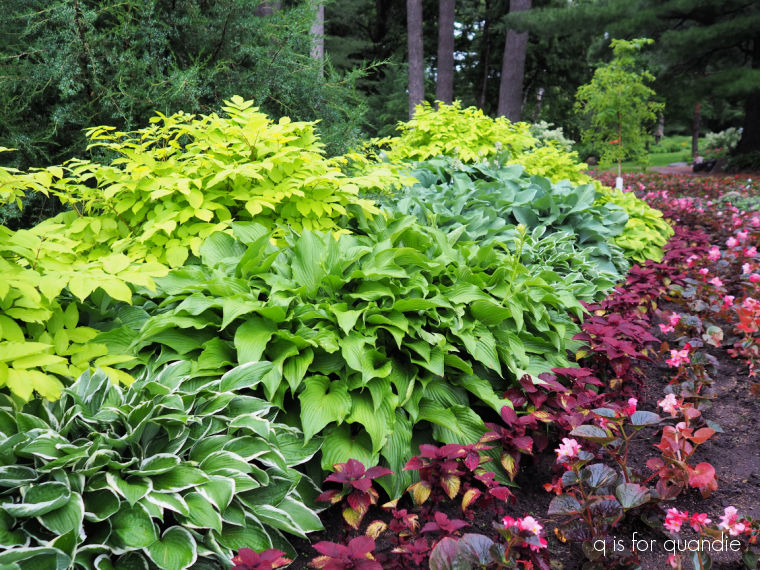
These gardens are filled with some lovely examples of things you can grow in the shade like hostas, coleus, begonias …

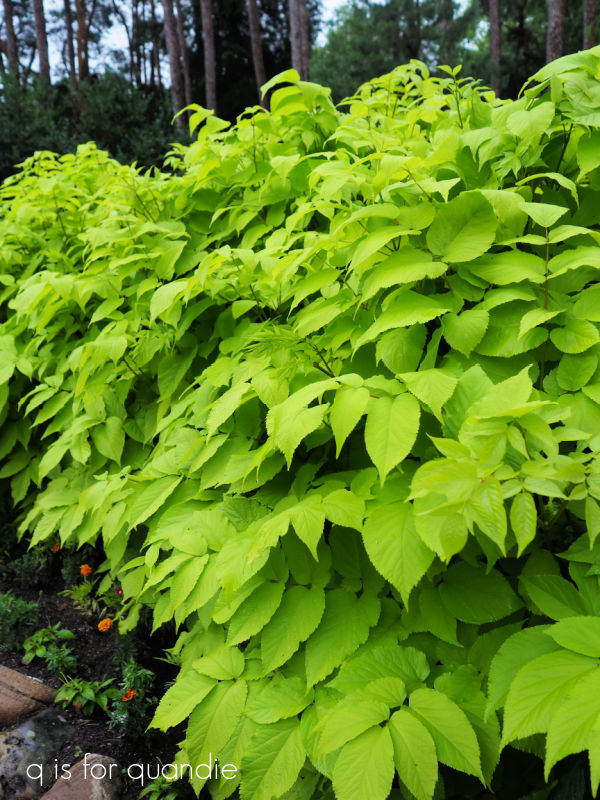
and that trendy favorite from last year, Sun King Aralia (or Golden Japanese Spikenard).

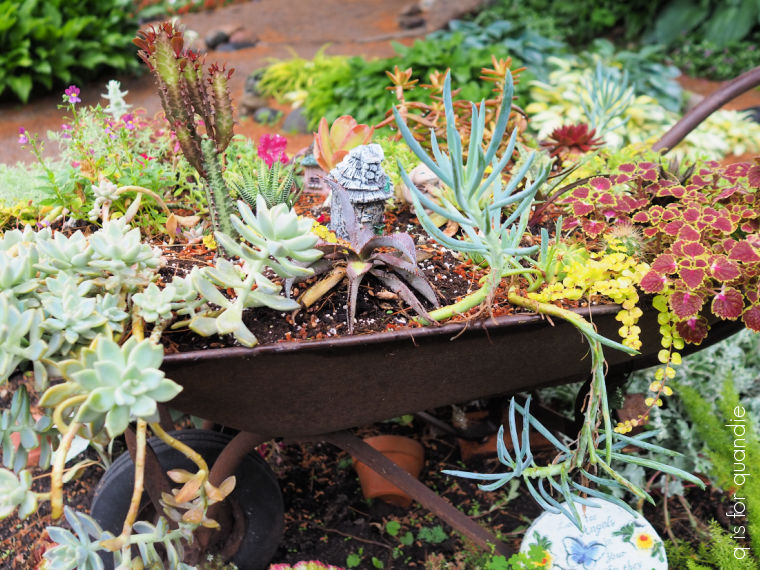
They also have a fairy garden in a wheelbarrow (sounds familiar!).

The Munsinger Gardens were created in the 1930’s using labor from the WPA.

As you may have already noticed by these photos, it was raining the day my sister, niece and I drove up to St. Cloud.

It was also super buggy.  All of the rain we’ve been having has meant bumper crops of mosquitoes.

Fortunately we were armed with umbrellas (after a quick stop at Target because I forgot mine) and bug spray.  Plus, I happen to think that most gardens look prettier in the rain than they do in blinding sunshine (lucky thing since we also visited de Hortus in Amsterdam in the rain!).

Across the street from the Munsinger Gardens are the Clemens Gardens.

These gardens were developed in the 1990’s by Bill Clemens in honor of his wife, Virginia.

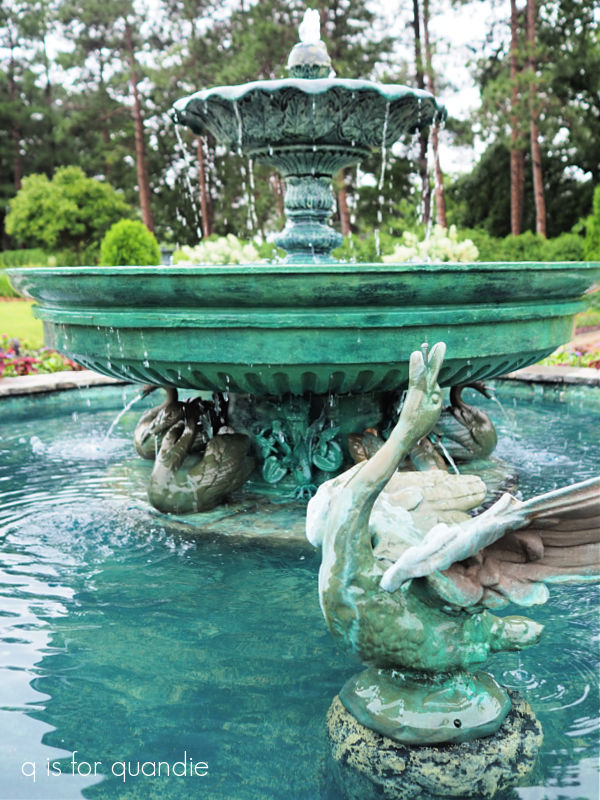
They are much more formal and include some really beautiful fountains like the Renaissance Fountain with Cranes …

and the Windsor Court Fountain.

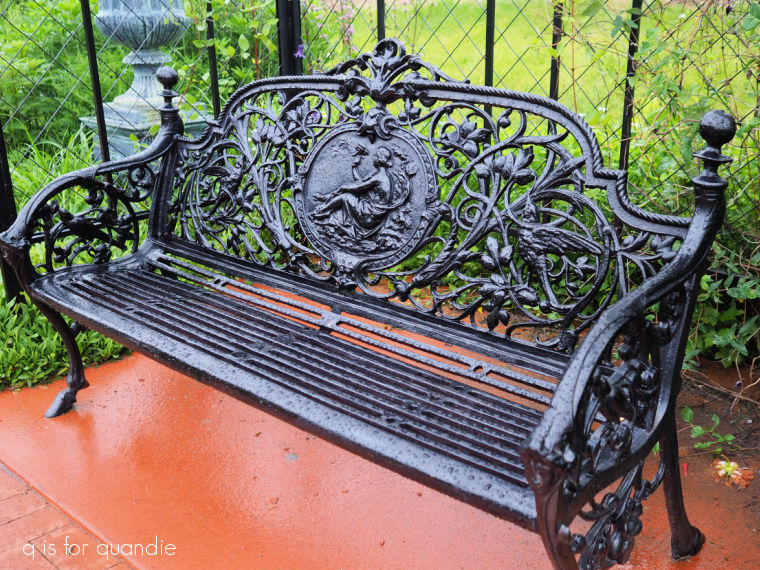
There are also some gorgeous examples of ironwork including some lovely benches …

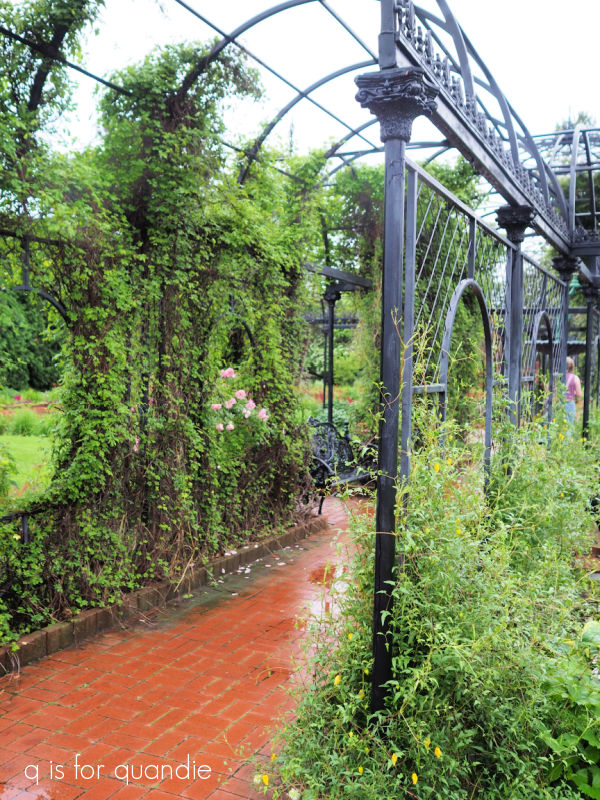
and a beautiful arbor.

The quadrants surrounding the arbor are each devoted to a monochromatic scheme.

There is a yellow garden.

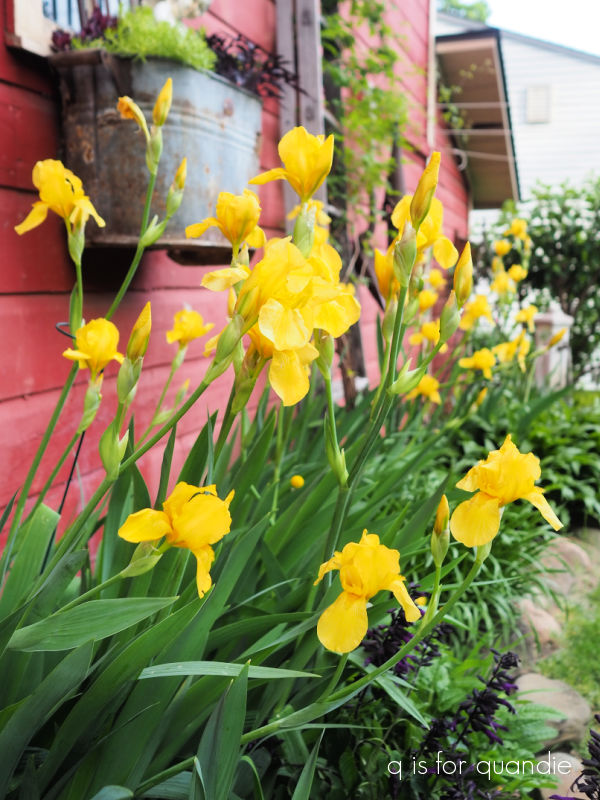
Although I’ve never been a big fan of yellow flowers, I defer back to my motto, never say never.  Lately I’ve been really enjoying the yellow in my garden starting with yellow daffodils in spring, then my yellow bearded iris, followed by evening primrose.  I even added a yellow Baptisia this year.

But that being said, I’m still not sure I like a monochromatic yellow garden.  To me it just looks a little bit sickly.

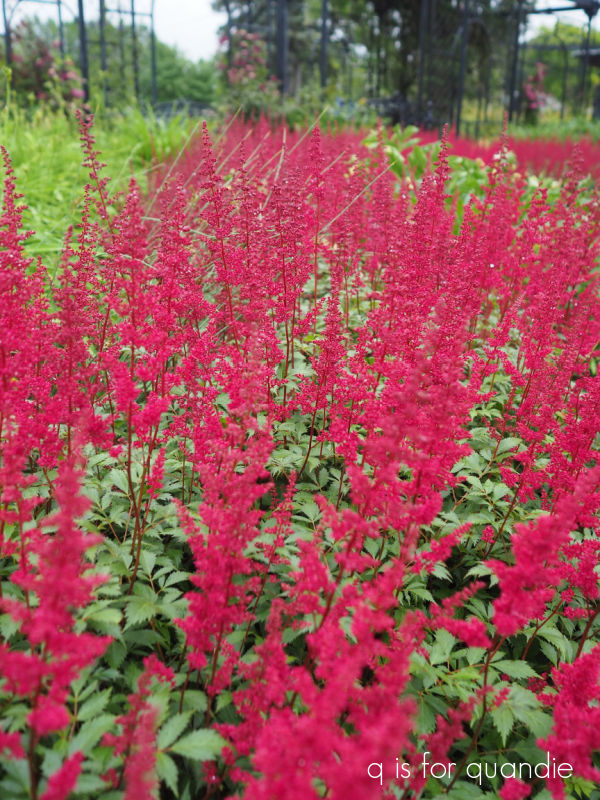
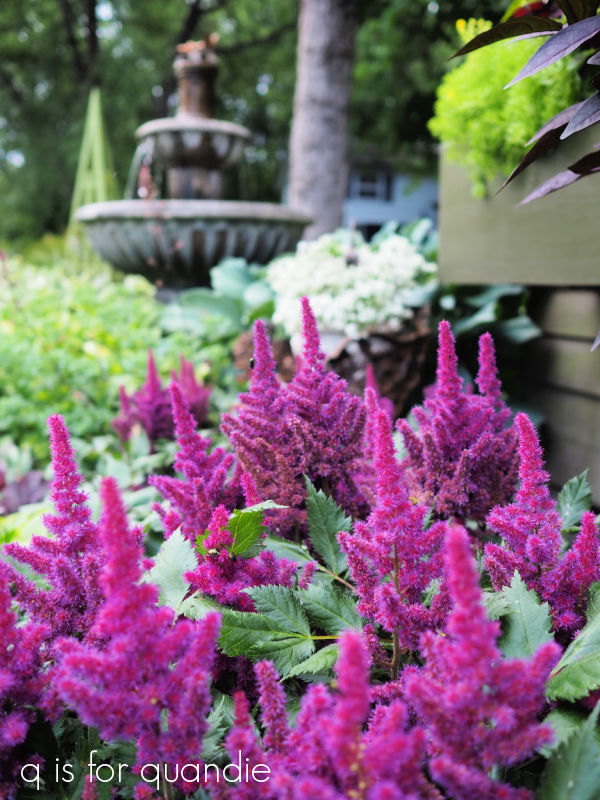
The red garden was full of Astilbe while we were visiting.

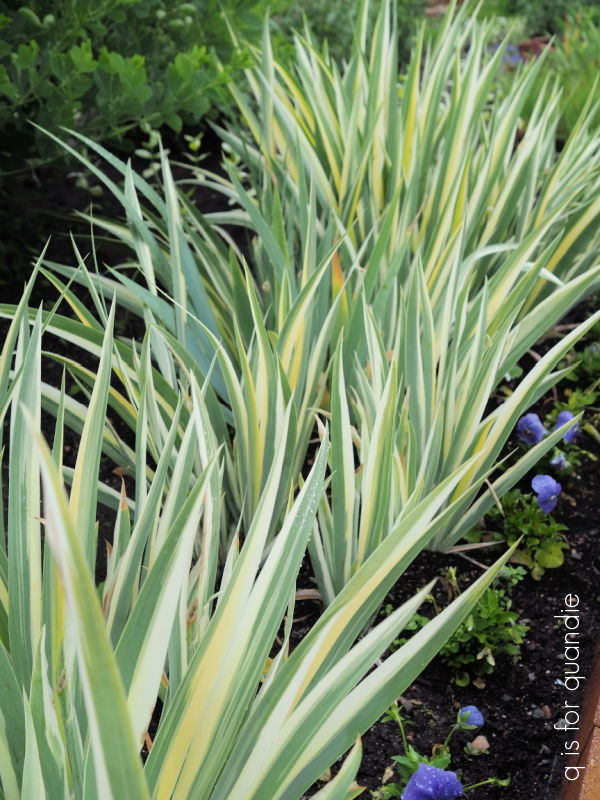
Unfortunately I somehow managed to miss getting photos of the blue and the purple quadrants, aside from this photo of the gorgeous variegated foliage on what I am guessing is an iris.

There is also a formal rose garden, and all of the roses are labeled.

  So if you’re into roses, you can pick out some that you want to try in your own garden.

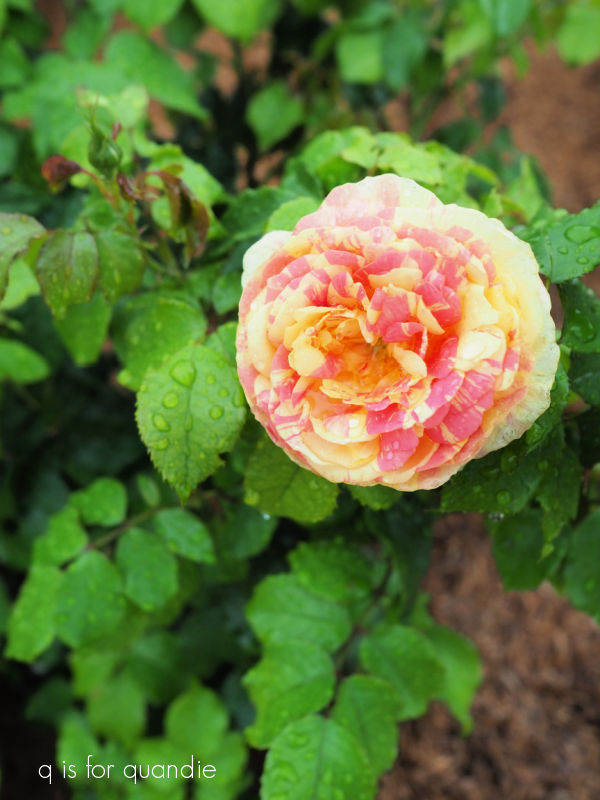
If I grew roses, I’d be tempted by this one called Pop Art.

But the Japanese beetles in our area make a mess of roses, so I’ve mostly quit growing them.  I have one shrub rose left and that’s it.

I do prefer the look of a slightly wild, less formal shrub rose in the garden also.

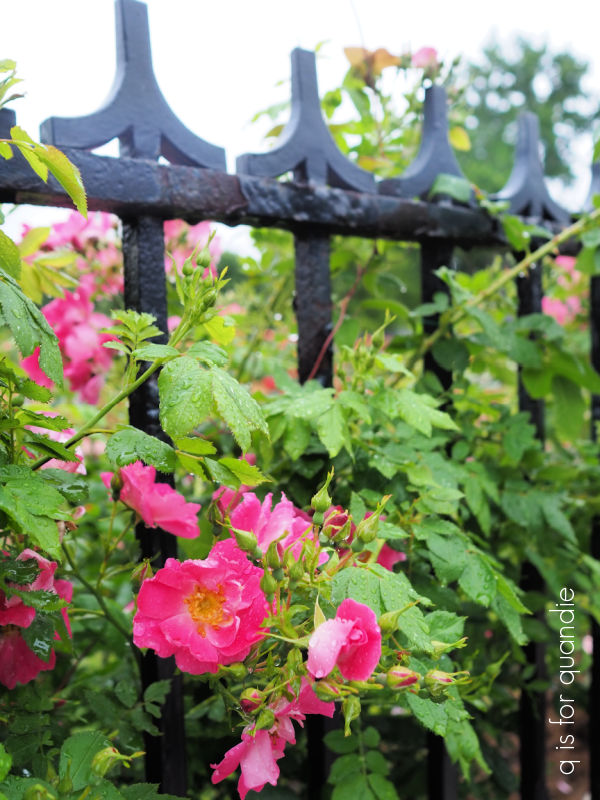
Unfortunately, aside from the roses, I didn’t see many other plants with identification tags.  So I can’t tell you what variety of clematis this is …

but it sure was pretty.

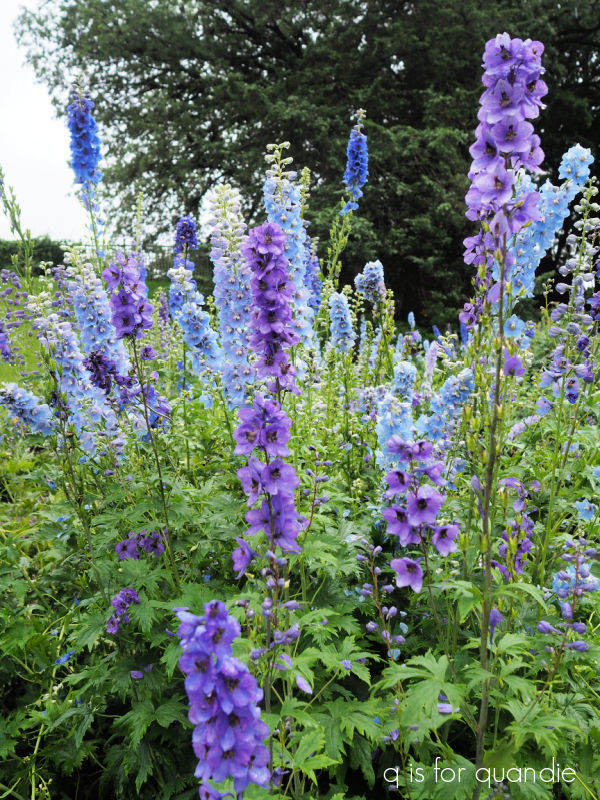
As were the delphiniums that were in full bloom.

It may have been rainy, but it was still fun to visit both of these gardens.

Do you have any fabulous gardens near you that are worth a visit?  If so, leave a comment and let me know.  I’d love to hear about them.

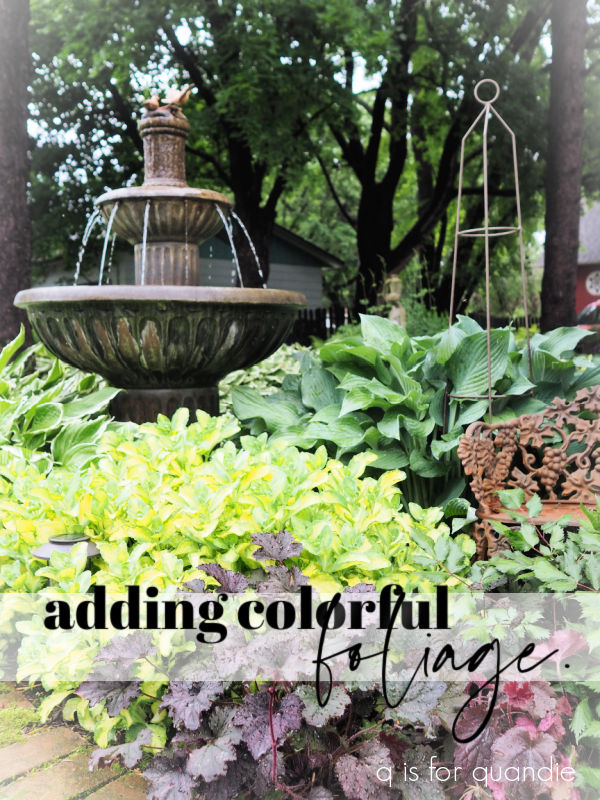
adding colorful foliage.

Good morning from the lush, and very wet, garden!

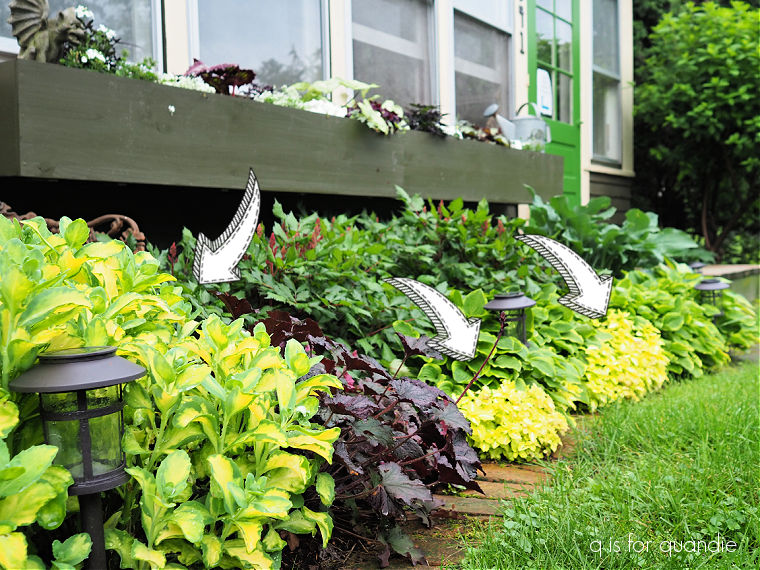
Today I thought I would share the advice that Laura on Garden Answer gives about foliage color.  She says that to create interest in a garden bed you should include something in green, something in yellow, something in blue and something in red.  Unless, of course, you are going for a monochromatic look, such as with an all white moon garden.

You might initially think that would be easy with flowering plants, but impossible to do with plants grown strictly for their foliage.  Aren’t they all just green?

Well, not in garden terminology.  Obviously there aren’t any plants with truly ‘blue’ foliage. But in plant lingo, ‘blue’ means something like this …

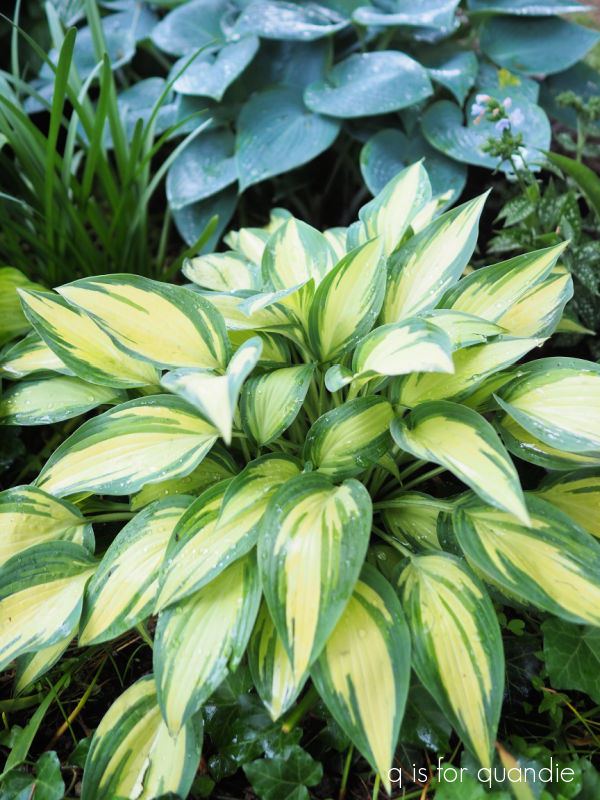
And ‘yellow’ refers to a brighter chartreuse-y green, like the color on this Sun Power hosta.

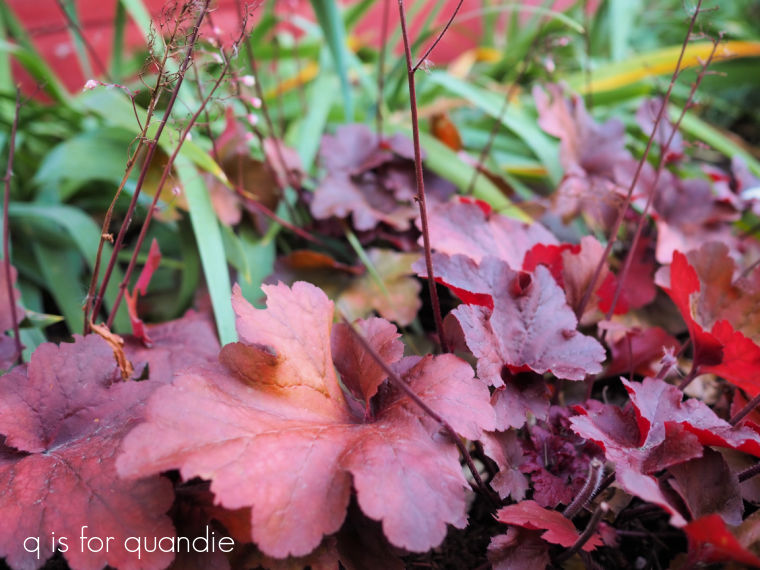
And red foliage can be found in lots of heuchera.

As for ‘green’, well, that one’s easy.

It’s just green.

Ever since the first time I heard Laura give this piece of advice, I’ve been trying to put it into practice.  I started with my front garden.

And I really love the results.

I think it packs a lot of punch, even when nothing is blooming which is the case right now.

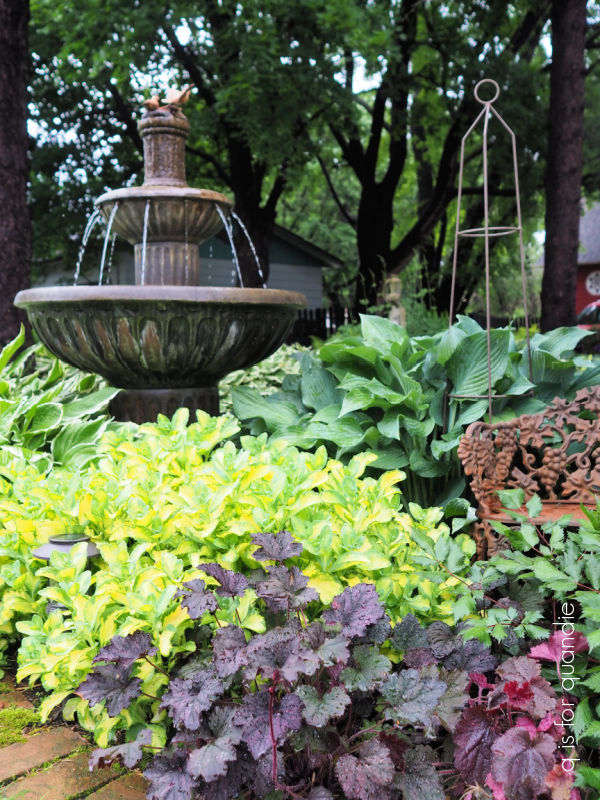
The ‘yellow’ is provided by the varigated sedum, as well as the Lemon Frost lamium.

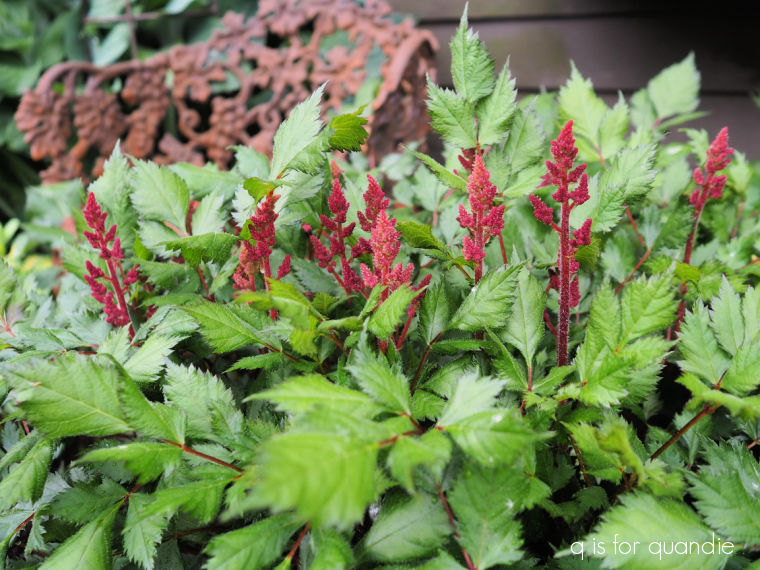
The ‘green’ is provided by the large swath of astilbe in the back.

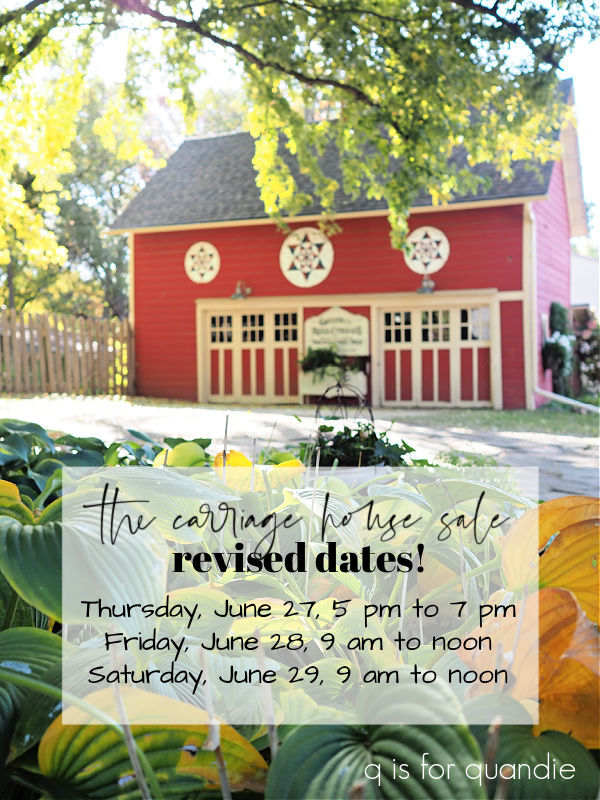
Quick sidebar on that astilbe, I divided it early last year and it had a very mediocre season with just a few blooms last summer.  But this year it has more than doubled in size and is loaded with buds right now.  One bonus of delaying my sale is that it just may be blooming by Thursday, if we ever get any sunshine.

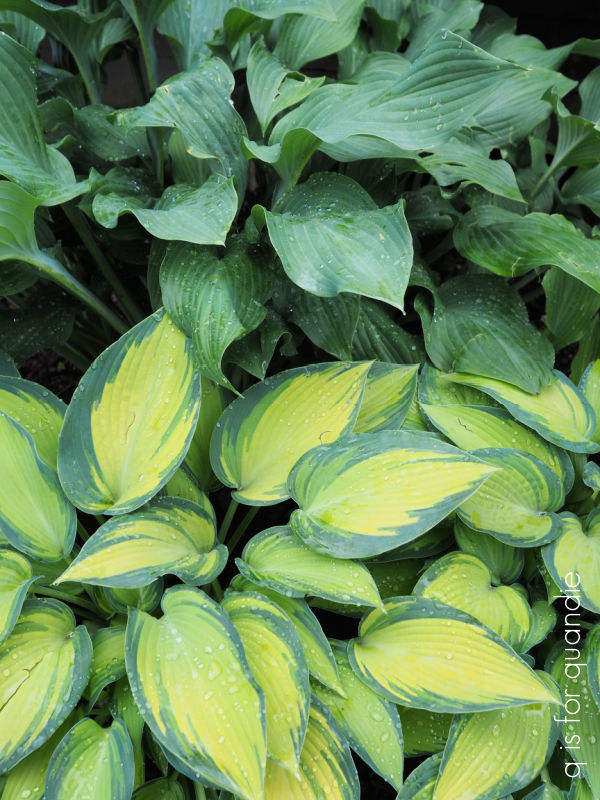
I don’t have a lot of blue in this garden, just three large Krossa Regal hostas anchoring the corners.

Well, I guess I can also include the blue that is in the June hosta as well.

In fact, that one can count as both ‘blue’ and ‘yellow’.  Well, and even just a touch of plain old green.  It’s one of my favorite hostas, isn’t it pretty?

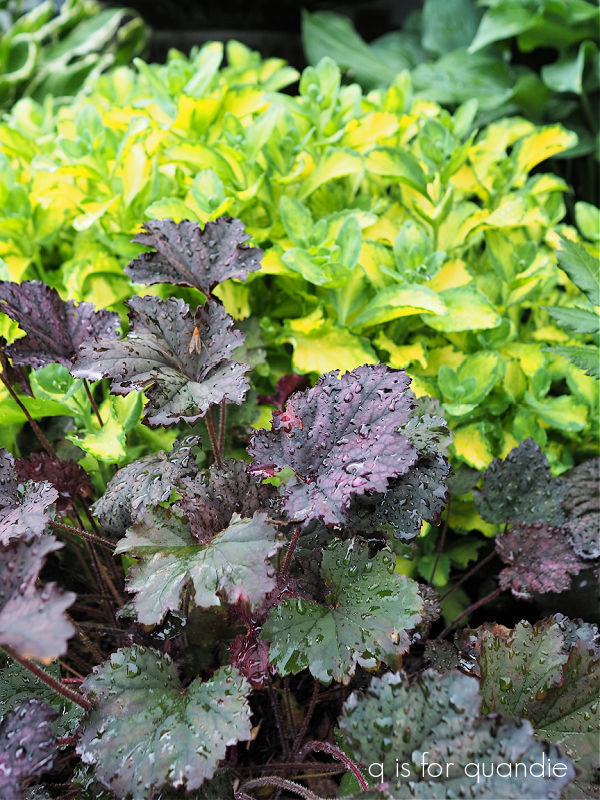
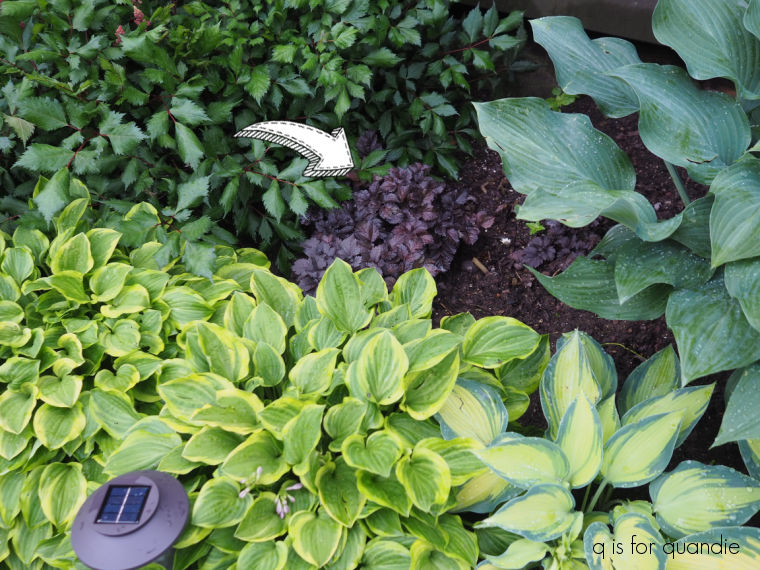
And finally, the ‘red’.  For that element I’ve got a Northern Exposure Black heuchera, along with a Palace Purple heuchera.

It’s only been within the last couple of years that I began to appreciate the impact of adding dark foliage to contrast with the brighter colors.  I had planted a May hosta beside a Palace Purple heuchera and it was ended up being a lovely combo.

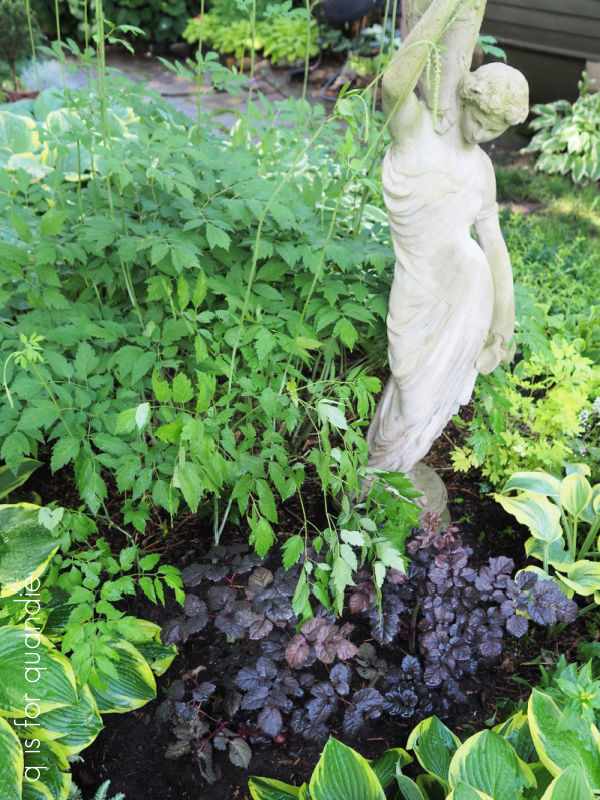
When I divided those astilbe that I mentioned a minute ago, I also removed some white flowering astilbe from that spot and replaced them with one of the newer astilbes from Proven Winners called Dark Side of the Moon.

They are looking pretty small so far, this being only their second year (plus, I rather tortured them by moving them three times last summer before I decided on this spot).  But hopefully next year they will ‘leap’ and fill out that space a bit better.

I’ve been so happy with the results in this front garden that I’m planning to systematically apply this approach to my other garden beds as well, starting with the shade garden.

I’m doing pretty good with the blue, yellow and green, but I need a bit more red.  So far I just have a few Black Taffeta heuchera (front right corner of photo).

So earlier this week I pulled out the Boston Fern that I had planted in front of my statue, Cossetta, on a whim many years ago (just to see if it would overwinter, and spoiler alert, it did).  I replaced it with some more of that Dark Side of the Moon astilbe (and FYI, I purchased them at Home Depot).

It feels a bit scandalous having revealed Cossetta’s ankles.  Now I have to wait for the astilbe to sleep, creep and then leap.  Gardening definitely requires some patience.

By the way, if any of you locals are planning to come to my sale, please feel free to take a wander around the garden while you’re here.  I won’t mind.

And maybe, just maybe, things will have dried out a little bit by then!

Now, how about you?  Do you try to add all four of these foliage colors to your gardens?  Do you have any favorite plants with blue, yellow or red foliage?

Leave a comment and let me know!

from tasteful to tacky.

Good morning from the garden.

When it comes to garden ornaments, do you ever ask yourself ‘how much is too much’?

We’ve all seen them, those yards that have more garden ornaments than actual living plants.

At what point do you cross the line from tasteful into tacky?

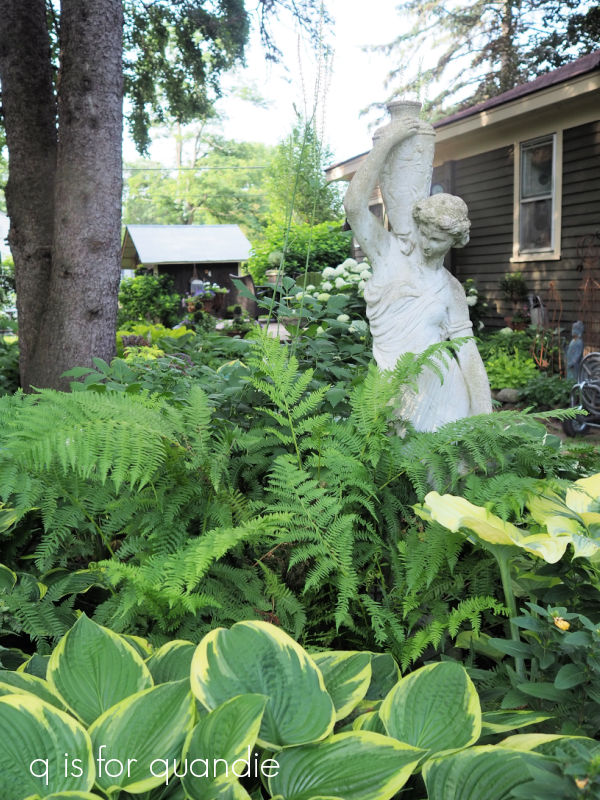
When I brought my statue home from a garage sale (yes, I purchased her at a garage sale), I was a little worried that might be the moment when I crossed that line.  But I think she works because I have her tucked in among plants that get nearly as tall as she is.

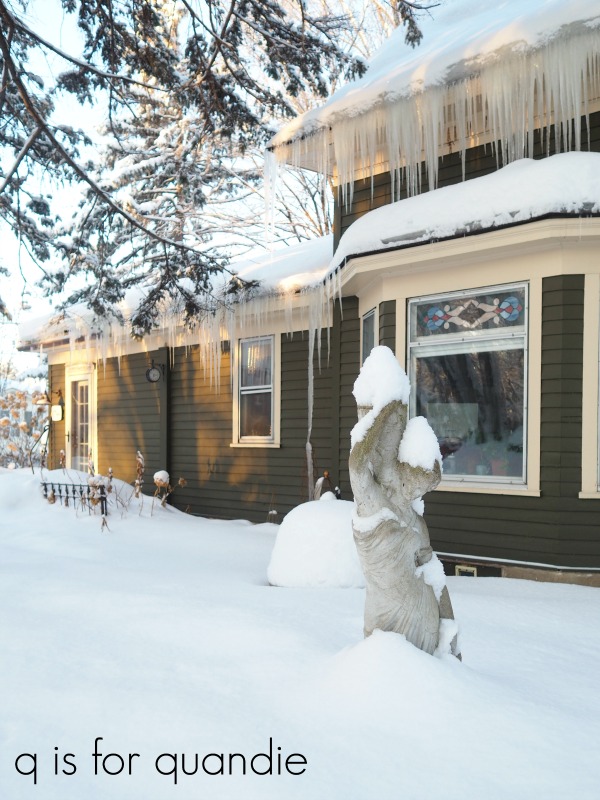
But even without the plants, in winter she looks quite lovely too I think.

Well … maybe that’s not a good example, lol.  She is half buried in snow.

I do have another smaller concrete ‘statue’, this one is of St. Francis and he is watching over the remains of our two dogs, Buck & Sasha (we’ve buried their ashes at his feet).

I also have quite a few metal obelisks scattered about my garden.

Nearly all of them have also come from garage sales.  Whenever I see one at a sale, I grab it.  I think I might be getting close to the metal obelisk saturation point now.

But will you just indulge me for a moment while I admire that clematis once more?

It is absolutely stunning right now.  I just can’t get over what a little fertilizer will do.

I only have one arbor in the garden.

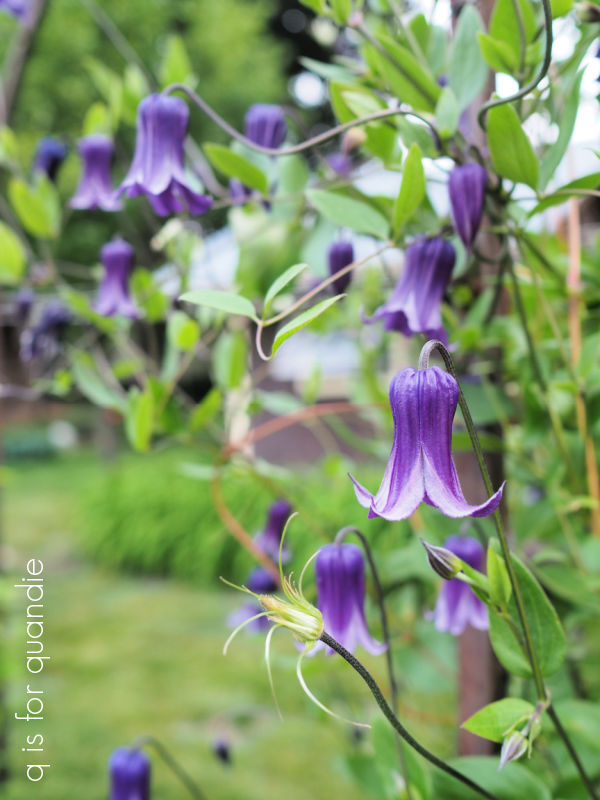
And that’s probably plenty for my space.  The bell shaped flowers on the Roguchi clematis on the right are just starting to open.

I do also have two fountains.  The larger one was purchased at a garden center …

But the smaller one is from a garage sale.

It does have a repaired crack in it, so I have to add more water about every other day.  But the hostas, irises, astilbe and hydrangea planted near it are all fans of moist conditions so they don’t mind having a leaky fountain nearby.

I’m pretty sure that two fountains is the maximum allowance for a yard the size of mine.

I have two pieces of iron furniture tucked into the garden.

They also provide some good winter interest too.

Then there is my buddha and my Japanese lantern (free at the curb), both of which have been given a paint job using Dixie Belle’s Bronze patina paint.

I also have a couple of concrete bunnies scattered about.

At this point they feel a bit like an invitation for the real bunnies.

I definitely have one living under my deck and she comes out every evening to eat the clover in my lawn, and for that reason we are now calling her ‘Clover’.  I’m willing to put up with her as long as she sticks to the clover and doesn’t start going for the hostas!

And I can’t forget to mention my concrete gargoyle.

Fortunately I don’t have any real gargoyles living under the deck.

I have to admit, I also have three vintage iron bed headboards in my garden.  That might sound like a lot, but two of them are barely even visible.

The most visible one is beside the potting shed and I keep trying to grow a clematis on it.  I’ve had little success so far, possible because I suspect this spot was a former sandbox (the potting shed was a playhouse when we moved in), the soil here is really sandy and doesn’t retain much moisture.

I also have a brass headboard out back in the cutting garden, although once the peonies are at full height you can’t even see it.  And then I have one that helps support the Annabelle hydrangea under the kitchen window, although you can barely see it under there either.

Then there are the vintage watering cans.

There are definitely a few of those scattered about.

After seeing this listing of garden decor, you will probably doubt the veracity of my next claim, but I have been working on editing the number of ornaments in my garden.  I’m definitely getting too close to having too many things.  I’ll be parting with a couple of vintage watering cans at my upcoming sale along with a few other garden items.

I’m planning to sell the concrete basket toting dog that I purchased at the Bryn Mawr garage sales, even though I think he’s totally adorable.  I did think about keeping him, but then I might be crossing that line from tasteful to tacky.

The rusty St. Francis has to go as well.

As well as this planter that I rustied up recently.

I’ve also got another larger planter that I used the Dixie Belle Patina Paint on.

Fingers crossed that they all sell so that I don’t have to be tempted to add them to my own garden anymore!

How about you, are you a fan of garden ornaments?  Do you worry about crossing that line from tasteful to tacky?  Leave a comment and let me know.

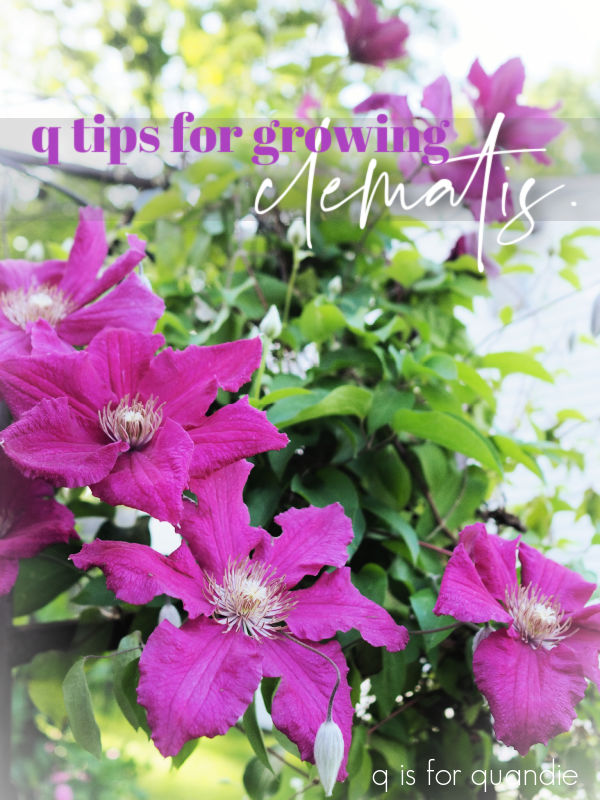
q tips for growing clematis.

Good morning from the garden.

Last week I shared some photos of my three earliest blooming clematis, which are doing incredibly well this year.

Especially that one.  Wait, let me back up the camera a minute and show you the entire plant …

See what I mean?  It is spectacular.

Last year it was a bit of a bust, with only a few flowers at the top …

So its performance this year is quite a lot better.

This particular plant is well over three years old, so it’s not just that it finally came into its own.  There have to be other factors at play.

So I’ve been taking note of what I did differently this year (so that I can do it again next year), and there were a couple of things.

First, and probably most significantly, I fertilized my clematis in early spring.  I’d never done that before.  I used the Espoma Plant-tone which is an organic all-purpose 5-3-3 fertilizer.  That’s not precisely the formula recommended for clematis, but it was what I had on hand and I figured something was better than nothing.  To apply I simply sprinkled about 1 cup of Plant-tone around the base of each clematis.

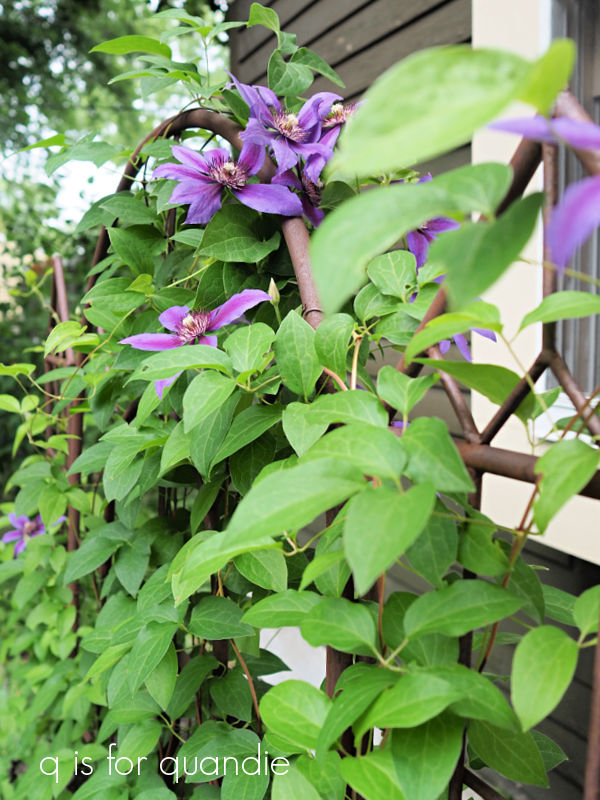
I was also more diligent about helping the clematis climb the trellis this year.  As it was emerging and growing in the spring, I went out every few days and tied stems to the trellis.

According to several sources, the growing end of a clematis vine will stop growing if it can’t find anything to grab onto.  In previous years I left a lot of this plant sprawled into the garden rather than guiding it up to the trellis.  Although, as you can see in that last photo, it still reached the top of the trellis, it just didn’t have many flowers.

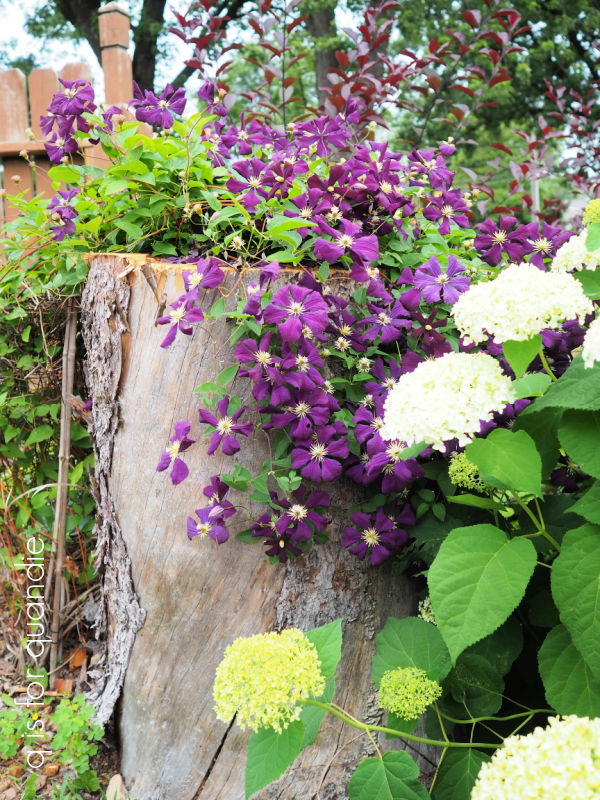
So I’m not sure I can attribute its remarkable performance this year to helping it climb.  As an example, here is a clematis in my neighbor Arlene’s garden …

She doesn’t help that one climb at all, it just scrambles over that stump.  And yet, it’s still covered in blooms.

There may some other variables at play when it comes to blooms.  For example, we had a really mild winter and so far lots of rain this spring.

Also, I suspect due to the mild winter, the rabbits must have had plenty to eat because they didn’t nibble on my clematis like they did the prior winter.  That year they systematically chewed through all of my clematis at about maximum rabbit height (a foot or so from the ground).

And that brings me to the subject of pruning.  If you start going down that rabbit hole (pardon the pun) online you’ll find all kinds of info on the different clematis pruning groups.  And if you aren’t sure what clematis you have, or what pruning group it belongs to, you are totally lost.  After a while your head will be swimming.  Or mine was anyway.

But then I found The Frozen North Pruning System from humingbirdfarm.net.  One caveat here, this system is recommended for northern gardeners specifically.  Those of you in the south may not have success with this method.  But here in my Minnesota, now zone 5a, formerly zone 4b, garden I should be OK with this pruning method.

They’ve simplified clematis pruning into two groups; Don’t Bother and Full Prune.

It’s easy to tell which group your clematis belongs to by its bloom time.  Those that bloom in May or early June (the three I have blooming now), are in the Don’t Bother group.  You can prune out the winter kill once you see live buds on your stems, but otherwise don’t bother pruning at all.

All other clematis that start blooming in late June or later , like my Roguchi, are in the Full Prune group.

That photo of the Roguchi is from last year, it does not have any flowers open yet this year.

Jackmanii, a very popular hybrid clematis, is also one that belongs to the Full Prune group (pictured blooming last year below).

For the Full Prune group, simply give them a hard prune by cutting them off about a foot from the ground in late winter or early spring.

In other words, the winter before last the rabbits gave all of my clematis a Full Prune without regard to which group they were in.  That may be why my Don’t Bother group didn’t have nearly as many blooms last year.

Which brings me to the final bit of advice from Hummingbird Farm, no one has ever killed a clematis by making a pruning mistake (including rabbits).  So don’t get too wound up about whether or not to prune your clematis.  Just pay attention to bloom times this summer, and then act accordingly next spring when it’s time to start pruning.  And while you’re at it, give them a little fertilizer in the spring as well.

Do you have any clematis in your garden?  Do you fertilize, or follow the pruning ‘rules’?  Leave a comment and let me know.

oh, hail no.

Good morning from the garden!

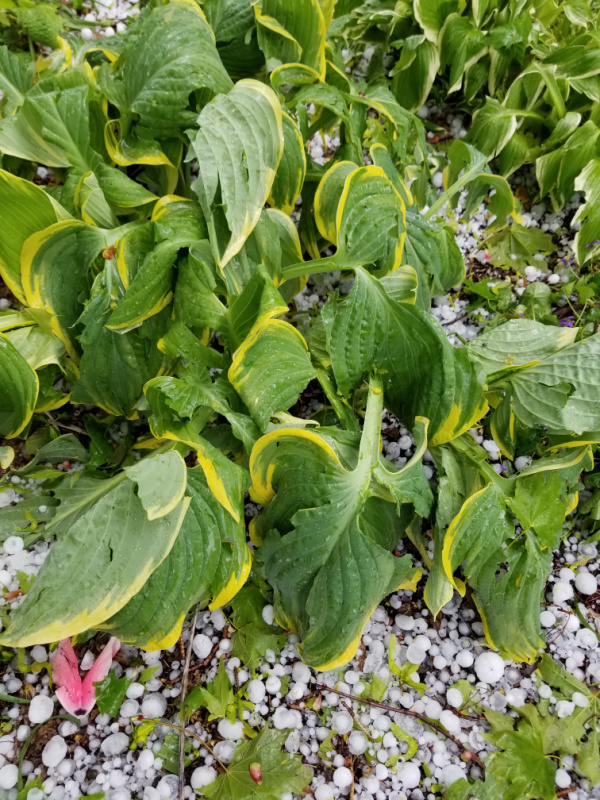
Just when everything was really starting to look good, mother nature stepped in to remind me who’s boss.

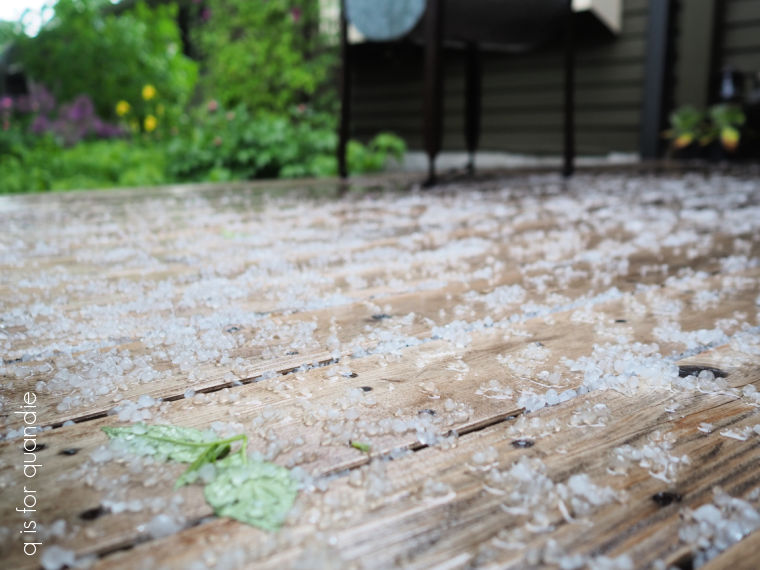
We only had about 5 minutes or so of hail on Memorial Day, but it was enough to do some damage.

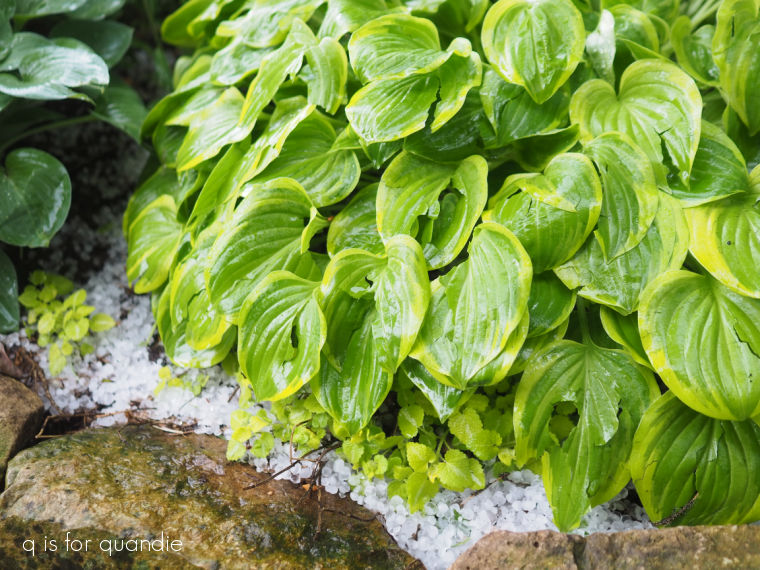
Especially to my poor hostas.

My irises, which had literally just opened that morning, took quite a beating as well.

But I easily removed the damaged blooms and there were lots more buds waiting to take their place.

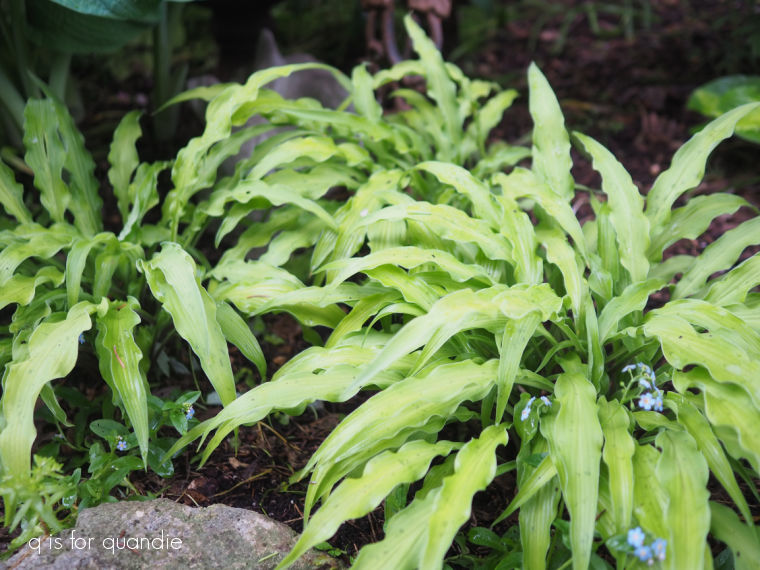
That was about the worst of the damage though.  Some things came through relatively unscathed, like my Curly Fries hosta …

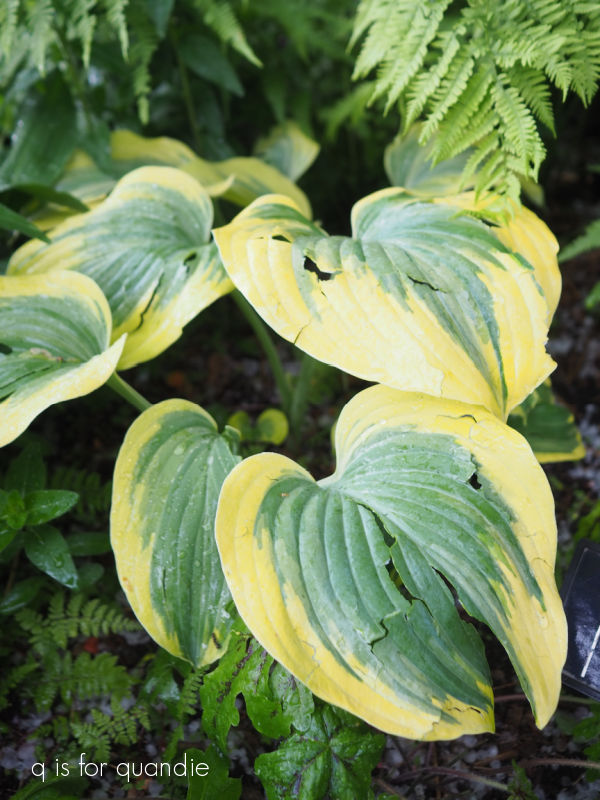
and my favorite Lakeside Dragonfly hosta.

Hostas that are sheltered by the trees overhead fared better than those out in the open, as did those with both smaller and/or thicker, more robust leaves.

Quite a few plants weren’t bothered by the hail at all, like the lungwort …

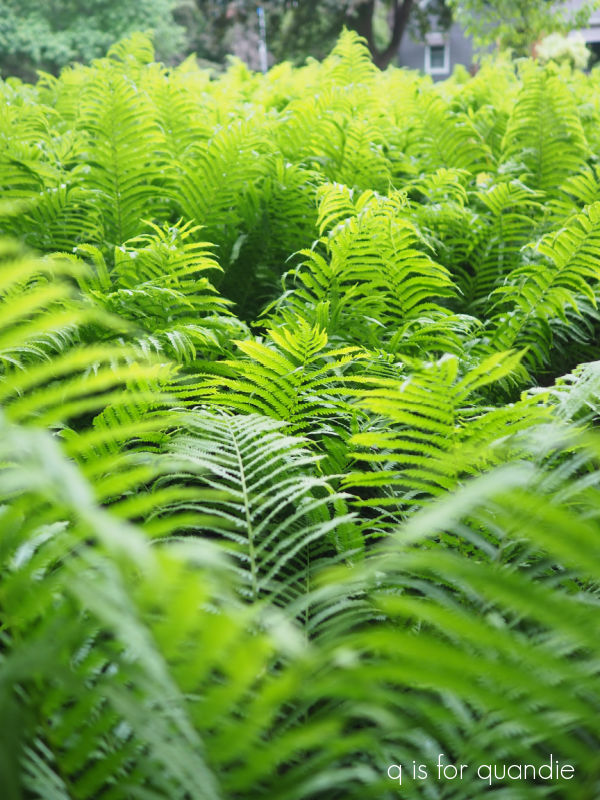
and the ferns.

The variegated sedum wasn’t damaged at all either.

Speaking of which, it’s time to get out and give this sedum the chelsea chop.  If you aren’t familiar with that process, check out this post

My plan this year is to pot up the cuttings and then give them away at my upcoming occasional sale.  For those of you locals who may be interested, I will be potting them up with fresh potting soil so no need to worry about jumping worms.

All in all, I can’t be too mad about the hail.

It definitely wasn’t as bad as the hail storm we had back in May 2022.

That hail was much larger, and pretty much decimated my hostas.

But in the end we got a new roof out of it, so it was truly a blessing in disguise.  We badly needed our roof replaced anyway.

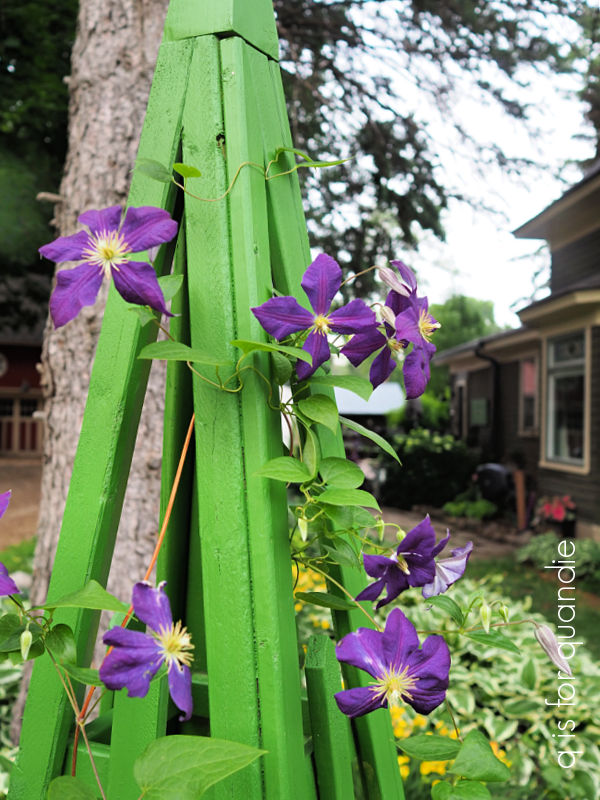
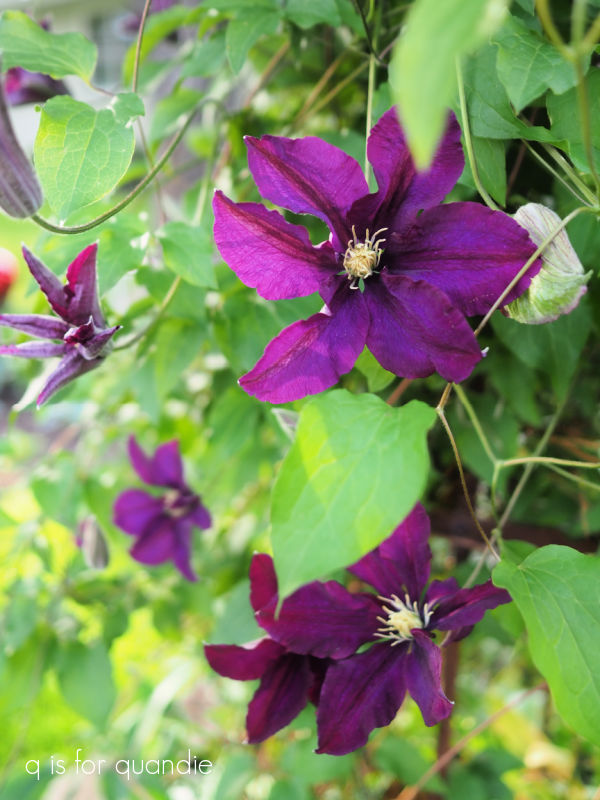
This time around, things have mostly bounced back quickly, and lots of stuff is blooming now such as three of my prettiest clematis …

Unfortunately, the names of all three of these have been lost to time.

I should have written them down.  I am trying to get better about that.

The one above is looking particularly good this year, it’s covered with blooms.  Last year it had a rather poor showing, possibly because the rabbits had chewed on it quite a bit the winter before that.

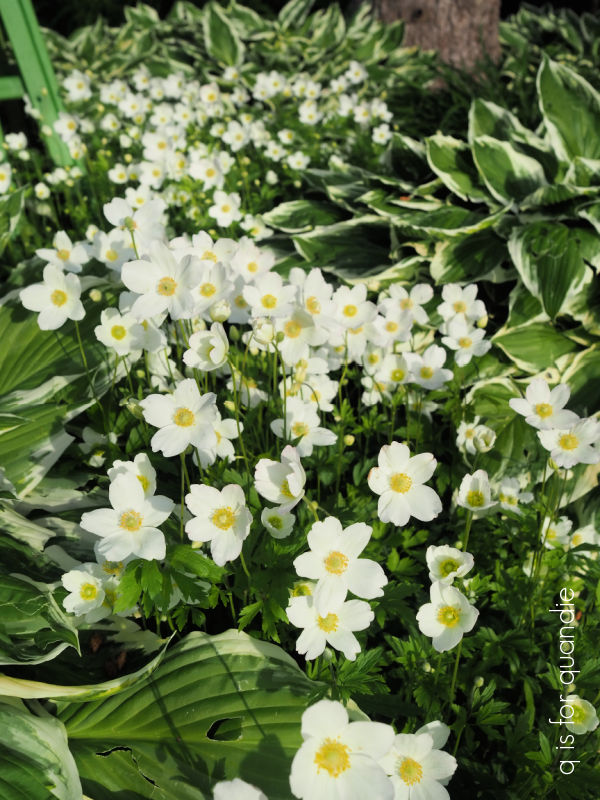
The anemones are looking quite good this week too.

My friend Sue gave me this plant quite some time ago, but I’m pretty sure it is Anemone sylvestris.  They will spread like mad if you let them, but mine are planted in between some quite vigorous (and huge) hostas that keep them in check.

Before I let you go, I want to share my new favorite YouTube garden channel.  It’s called Garden with Marta.  She is located in Poland, but her vlog is in English (her command of English is so impressive).  Both Marta and her garden are absolutely charming.  In her most recent vlog, she is also chelsea chopping her sedum so be sure to check that out!

What have you got blooming in your garden this week?  Are you trying the chelsea chop this year?  Leave a comment and let me know!

a late spring garden tour.

Good morning from the garden!

I’ve had a few requests for a full garden tour, so this morning I thought I would attempt it.

My gardens are broken down into … hmmm … let’s see … 8 areas.  There is the front garden, the fern garden, the shade garden, the carriage house garden, the potting shed garden, the cutting garden, the fairy garden and the sunny perennial border.  Phew!  You may want to grab your favorite beverage because this may be a long one.

The front garden.

Let’s start out in the front garden.  This is just the bit of garden that runs along the front of our house, and it’s where the long window box is.

The box doesn’t look too impressive at this time of the year, but it should fill in quickly.

This area faces north and is very much shaded by the house for most of the day.  This is always where the very last bit of snow melts in the spring, and where plants take the longest to emerge from their winter slumber.

But things are starting to fill in nicely now.  This space is filled with a variegated sedum, a purple astilbe that loves this location, some dark purple heuchera and plenty of hostas.

The heuchera looks the best it ever has for this early in spring, I suspect due to our very mild winter.  Last spring I had decided to give up on heuchera because it did so poorly over winter, but it’s back in my good graces now.

This garden also contains our fountain, and my rusty chair.  My neighbor/handyman Ken gave me a set of this grape cluster iron furniture back in 2022.  It was painted a crisp white when I got it, but I like something a little more subtle.  So I gave the pieces a makeover with Dixie Belle’s patina paint.  This chair and the bench both have broken legs, so no one can actually sit on them.  I also did not seal the rusty finish, so rust would rub off onto your clothing if you did sit on them.  So I tuck them into the garden where no one will make the mistake of trying to actually use them.

There were a few tulips and daffodils in this space that looked good earlier this spring, but right now I’m mostly still waiting for things to fully emerge.  The big star of the show in this garden is the astilbe.  I divided it last year and found that there weren’t as many blooms, but I’m hoping it rebounds this year.  When it blooms in mid-summer, it should look like this …

The fern garden.

Our driveway runs alongside the house all the way back to the carriage house.  The fern garden is on the east side of the driveway.

The ferns look gorgeous right now, especially with my newly blackened fence behind them, but if we have a dry summer they will start to fade by mid-August and then they don’t look so good.

But I’ll enjoy them while they last along with some vinca vine and lily of the valley, both of which are currently flowering.

The shade garden.

On the opposite side of the driveway is my shade garden.

I have to admit that this is my favorite, and thus it gets the most attention from me.  It’s filled with all kinds of shade loving perennials including bleeding heart, brunnera, maiden’s hair fern, japanese painted fern, lungwort, and more.

It’s also home to quite a few hostas including a few of my favorites like Lakeside Dragonfly

Sun Power (on left) and June (on right).

Autumn Frost is one of my newest hostas, and it’s looking really good so far.

My garage sale find statue, Cossetta, also lives in this garden.

Right now the foam flower, or Sugar & Spice Tiarella, is in bloom.

I have these sprinkled throughout the front of the shade garden and I like the way they repeat here and there.

There are some foundation gardens alongside the house that I consider part of the shade garden as well.

You may remember that I used the Bronze patina paint with the green spray on the buddha and the Japanese lantern in the background.

The carriage house garden.

I call the garden that runs along the side of the carriage house the carriage house garden (creative, right?).  I struggle a bit with this one because it is shady all morning, then gets hit with the blazing sun in the hottest part of the day.  Most plants prefer the exact opposite of that, morning sun and afternoon shade.

It also is backed by that red wall of the carriage house, shades of pink looks positively awful next to it and it has taken me about 35 years to accept that.

But this is the first year that it’s starting to come together.  It looked awesome a couple of weeks ago with grape hyacinths, bright yellow daffodils, and that new white azalea.

Right now the only things blooming are a handful of alliums, but the yellow iris are going to open up any day now.

Wait, I take that back.  There is also a fabulous cranesbill, or perennial geranium, blooming at the far end.

This plant was a garage sale purchase back in May 2022, this is its third year so it’s time to leap (first year sleeps, second year creeps, third year leaps).

Here’s how big it was when I brought it home.

So while I still want to caution you to be careful about those jumping worms, you gotta love a garage sale plant.  You can always count on them to be hardy in your area, and prolific (which is why the seller has extra to part with).

The potting shed garden.

Again, another creative name, the potting shed garden comprises the beds around the potting shed.

This garden is mostly shaded on the east side, but gets afternoon and evening sun on the west side.  I popped a few allium in on both sides last fall to see if they would grow, and they seem to have done quite well.  I think I may move these elsewhere and replace them with white allium for next year.  Wouldn’t white allium just pop against my dark green paint color?

The bugleweed, or ajuga, is in full bloom on the east side right now.

And over on the west side the geranium macrorrhizum, or Bigroot geranium is full of flowers now too.

If you need a plant that will grow in sun or shade, will fill in any available space, requires absolutely no maintenance, then this is the plant for you.  It does wilt a bit in hot afternoon sun, but it recovers quite quickly.  It’s very easy to pull out if it spreads more than you want it to.  I have a lot of it, as you’ll see when we get to the perennial border.

As for growing just about anywhere, along the west side of our house we have only about 8′ or so of fully shaded space between our house and the property line.  The previous owners of our house put down plastic and then rock, and planted a row of arborvitae that has gotten massive.  After all of this time enough dirt has accumulated amongst the rocks that I have to weed that area.  So a couple of years ago I decided to see if this geranium would grow in the rocks.

The answer is a resounding yes!  it will.  Quite happily in fact.  And it looks so much better than weeds.

So if you have a problem area in your garden, keep this plant in mind.  Also, if you’re local, keep me in mind.  I have plenty to share if you want to try it.

The fairy garden.

My fairy garden is planted in an old rusted out wheelbarrow that is nestled in a bed of variegated vinca.  Last year it was ended up totally overgrown, so I decided to be a little more minimal with the plants this year.

Usually I plant a wire vine on that arch, but it totally takes over and requires a lot of maintenance to keep it from completely covering it and the path beneath it.

So this year I’m going to leave that out.  Instead I added a couple more miniature hostas compliments of my neighbor nnK (sorry, don’t know the names of them), and I also added a tiny Japanese maple tree to the left of the fairy house.

nnK’s mom, Judy, planted one of these in her fairy garden last year and it did not survive the winter, so I’m taking a bit of a gamble with that one.  Especially since I paid $25 for it a Abrahamson Nursery.  I may pull it out of there in the fall, put it in a pot, and try to overwinter it somewhere more protected.  Japanese maples do require a period of cold dormancy, so I can’t bring it in as a houseplant.

The sunny perennial border.

This garden is directly behind the house and it used to be my sunniest space.  Over time the trees in handyman Ken’s yard next door (yes, that is his house in the background) have grown so big that they shade this bed most of the time except around high noon.  As a result, I’ve been struggling with this one over the past several years.

Can I just point out that the grass in our area is looking particularly fabulous at the moment.  We’ve had plenty of rain mixed in with lots of sunshine and the grass is flourishing for now.  I’d love to keep it looking this good all summer, but if we get dry weather again this year all bets are off.

I have a border of small green hostas along the front edge of this garden that do really well here.  I also have a big mass of that Bigroot geranium in the middle section.

Right now the alliums are definitely the stars of the show, I just wish they would last longer.

There are three clematis in this bed, two on the trellis …

and one on the obelisk.

They are all loaded with buds, but only one of them has started to open so far.

I do have a couple of pink peonies in this garden.

Fortunately they will be done flowering before the self-seeding red bee balm takes over in mid-summer …

The cutting garden.

The cutting garden is hidden away behind the carriage house.  There used to be nothing but weeds back there, but then one day I realized that it was the sunniest spot that I had left for a garden.  Why not use it to grow peonies?

So now I have about 6 peonies back there, plus some siberian iris and a big Annabelle hydrangea.

None of them are blooming quite yet, but the peonies should be opening soon.  Here’s a picture from June 11 of last year that shows them all in bloom.

Since the cutting garden isn’t visible from the house, or really anywhere in our yard, I don’t feel bad at all about cutting all of the blooms and putting them in vases where I can appreciate them.

That about wraps it up for this morning’s garden tour.  I hope you enjoyed it!  And now I’m off to do some work out there.  It seems as though there are always tasks waiting to be done in a garden!

thinking outside the box.

Good morning from the garden!
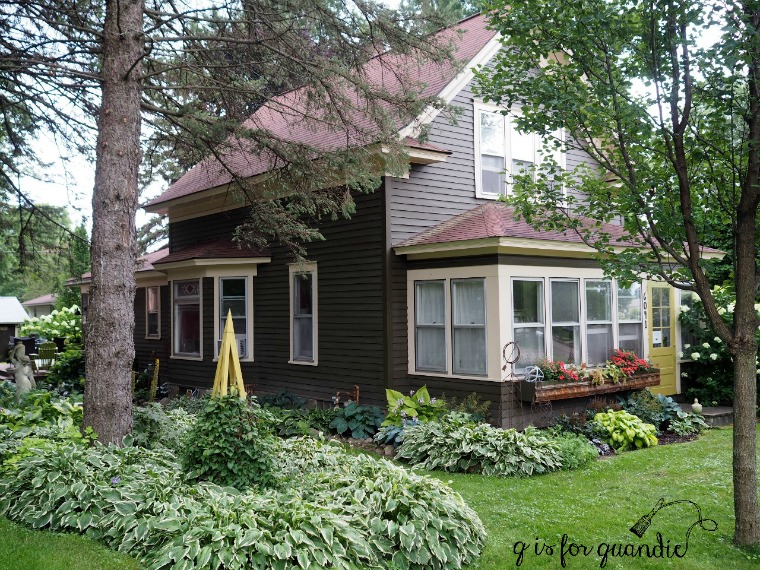
If you’ve followed me for a while, you’ll know that I have a large window box that goes across almost the entire width of our front three-season porch.  Our house faces north-west-ish, so it’s basically full shade in that spot although it does get some evening sun.

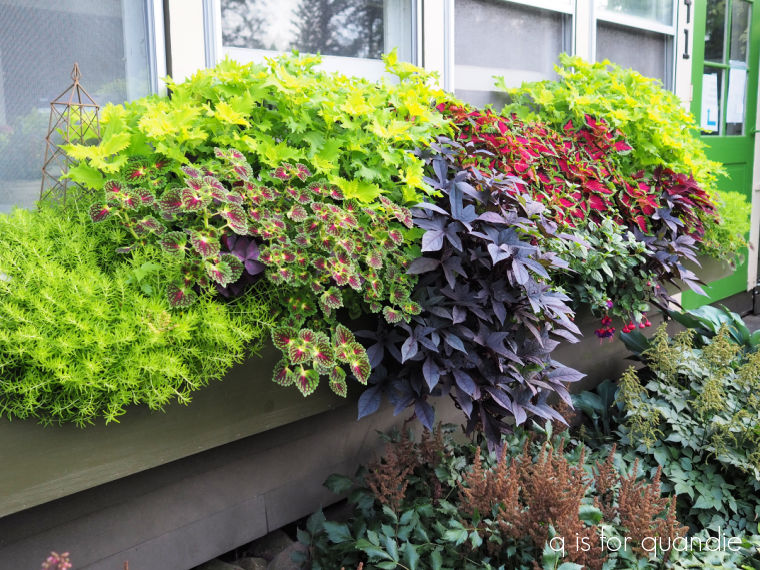
I’ve tried lot of different looks over the years, but so far there is really no contest for the most successful plant for this shady window box, it’s definitely coleus.

It absolutely thrives, and it creates quite a dramatic show along with some sweet potato vine and lemon coral sedum.

In fact, it’s almost too successful as it grows high enough to block any breezes that might want to try to get through those windows.

Quite honestly, it almost feels like cheating to just fill up the window box with coleus and sweet potato vine and call it good.  It’s a little too easy, and it also seems a bit … well … uninspired.

So sometimes I try to change it up, think outside the box a little (pardon the pun).

Unfortunately that can lead to what I consider to be window box fails.  Last year is a good example of that.  I tried experimenting with some new things, and the combination really didn’t work.

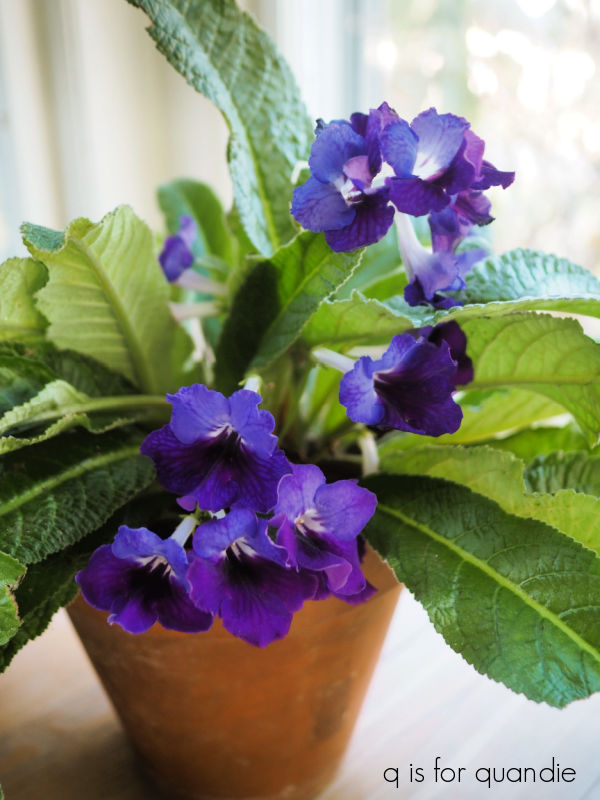
The silver of the Dusty Miller and the Dichondra Silver Falls just wasn’t me.  I put in some lovely coral pink begonias that ended up being totally swallowed up by other more vigorous plants, as did the Streptocarpus Ladyslippers™ Deep Blue Vein.  Although those did become some really pretty houseplants.

The very worst year for the window box had to be 2015 though.

Oh my gosh, does that look like a hot mess or what?  That was the year I tried angelonia.  I don’t know what I was thinking.  They clearly require full sun, and I definitely don’t have full sun here.  Plus, I combined the angelonia with a purple annual salvia and some Diamond Frost euphorbia, all of which have a delicate, airy look about them.  I definitely needed to add something more substantial to the mix.

I did have some success in 2017 when I decided to go with a deep coral pink sort of color scheme.

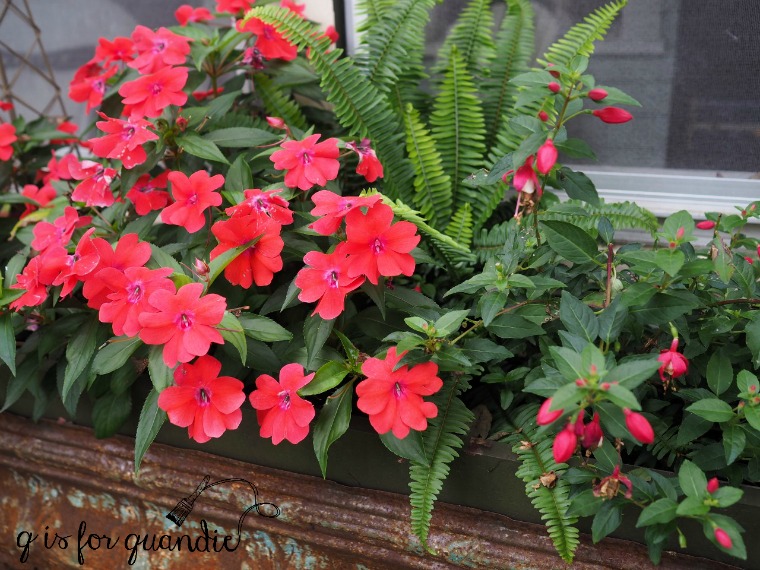
The New Guinea impatiens did well, and paired nicely with some fuchsia.

But when the cooler purple astilbe that is in the ground right below the window box was in bloom, it didn’t really pair well with those colors.

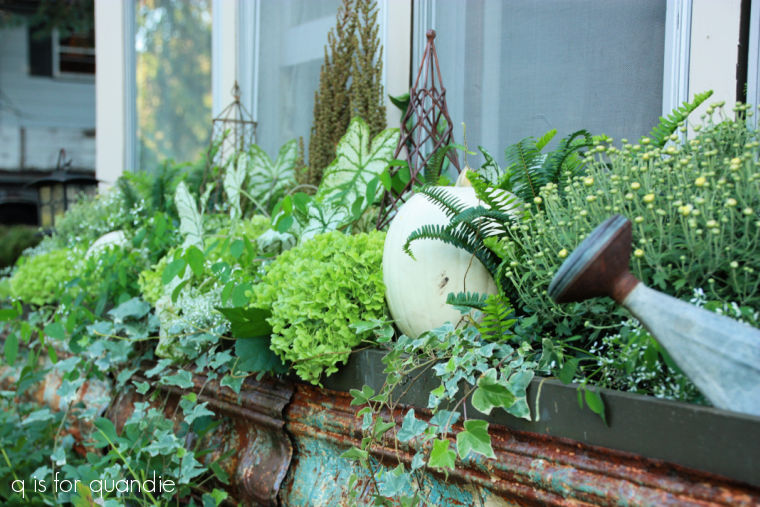
I did enjoy the monochromatic white color scheme that I tried back in 2014.

That year I used white impatiens, euphorbia, jester’s crown ferns, a swedish ivy and a gorgeous white and green caladium.

And when fall came around I pulled out the impatiens and replaced them with white mums.  Then I popped in a couple of white pumpkins, and added some cut Annabelle hydrangea blooms for a less traditional autumnal look.

As much as I love that look, I will admit that it doesn’t have the same impact from the street as the brighter coleus combinations.

Once again this year, I was in the mood to do a bit more experimenting instead of falling back on the tried and true coleus/potato vine combo.  After checking out what was available at a few of my favorite nurseries, I ended up with a ‘black and white’ theme.

First of all, you have to know that gardeners call colors by the wrong names.  Anything called ‘blue’ is typically really purple, while ‘purple’ is often a hot pink or magenta color.  And ‘black’ is really a very deep purple.

I based my ‘black’ on this coleus that I found at the Amish farm that my neighbor nnK and I visit every spring to buy plants.

It didn’t have a label, but I think it may be a variety called Black Coral.

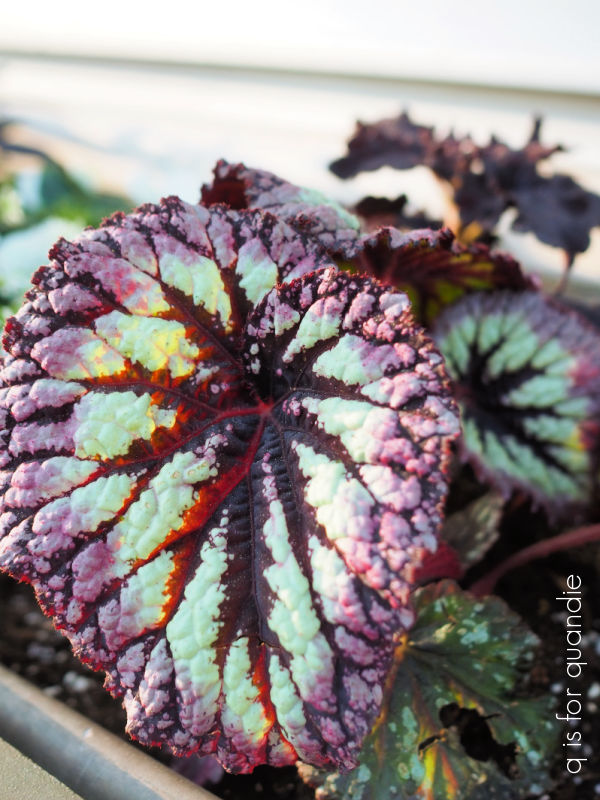
I know it doesn’t look too exciting at first, it’s not bright, it’s not wildly variegated.  But I next found this rex begonia to add to the mix, and it is pretty exciting.  Paired together, I think this is going to make a fantastic combination.

Once again, no label, but I think the begonia may be Curly Mint.

I also added this rex begonia to the mix …

Both of the begonias have that rich plum color that ties in with the ‘black’ coleus.  I’m just hoping that they won’t be overpowered by the more vigorous growth of the coleus.

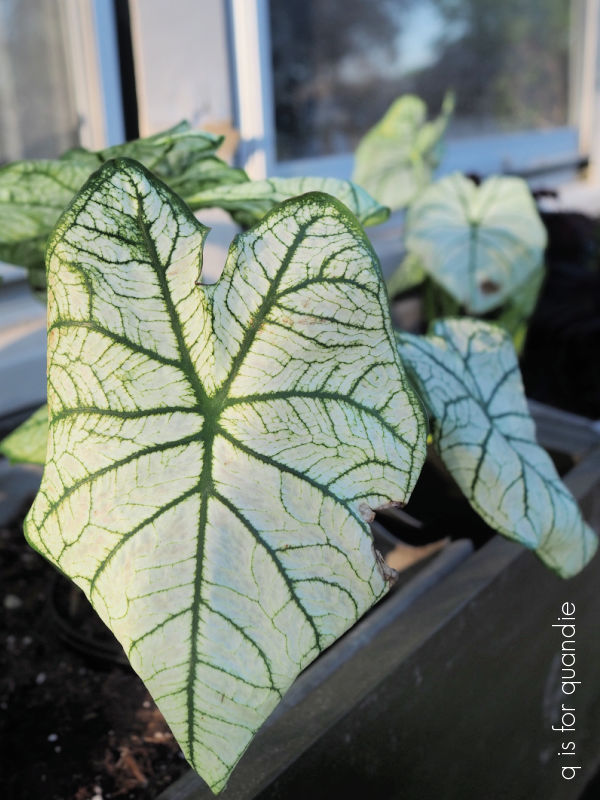
For the ‘white’ component in my window box I went back to that white caladium that I loved so much.

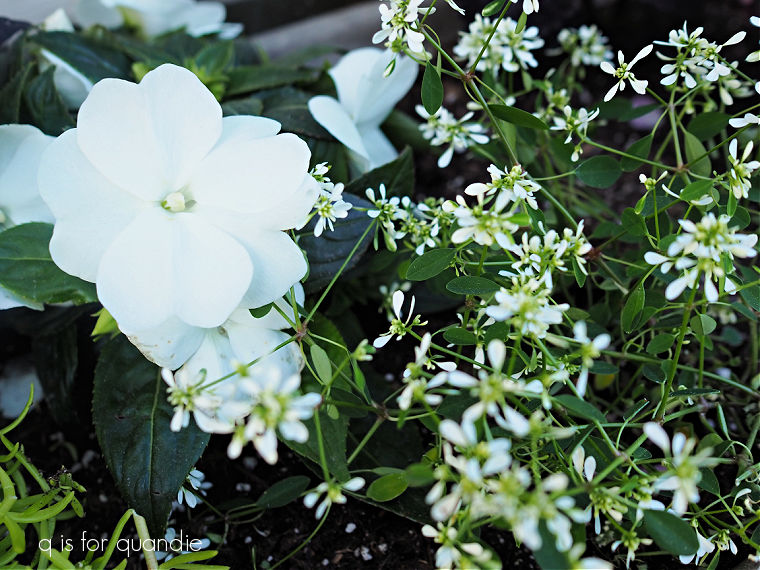
I also added a bunch of white New Guinea impatiens, and some Diamond Snow euphorbia.

The Diamond Snow euphorbia is supposed to be a more dense and compact, less ‘airy’, version of the Diamond Frost that I usually use.  And again, I’m hoping this one won’t overpower the other plants.

Finally, I also threw in a Firehouse White trailing verbena.

I may have trouble getting the verbena to bloom in this shady location, but I thought I’d give it a try.  For now all of those blooms are compliments of the greenhouse that grew it (Country Sun in Stillwater, FYI).  Also, you do need to deadhead trailing verbena to encourage more flowers, so we’ll just have to wait and see if I keep up on that.

I added some more ‘black’ to the mix with this Charmed Wine Oxalis from Proven Winners.

It will have white flowers when it blooms as well, so it’s perfect for my black and white theme.  However, I grow it mainly for it’s foliage, it won’t bloom profusely.  Much like the Streptocarpus I mentioned from last year, Oxalis can be taken inside and wintered over as a houseplant.  I may give that a try in the fall.

Finally I put in a couple of Blackie sweet potato vines.  I guess I couldn’t fully escape the coleus or the sweet potato vines.

Now, I just have to be patient and wait for all of these to fill in.  I’m guessing that’s going to take at least a month or so.  Gardening is not a hobby for the impatient.

I’ll try to remember to give you all an update on how my black and white window box turned out at the end of summer.

How about you?  Have you ever tried a black and white theme?  Or do you have another combination that you love for containers?  Leave a comment and let me know.