
You’ll remember that I picked up this already painted vintage suitcase while thrifting with my sister.
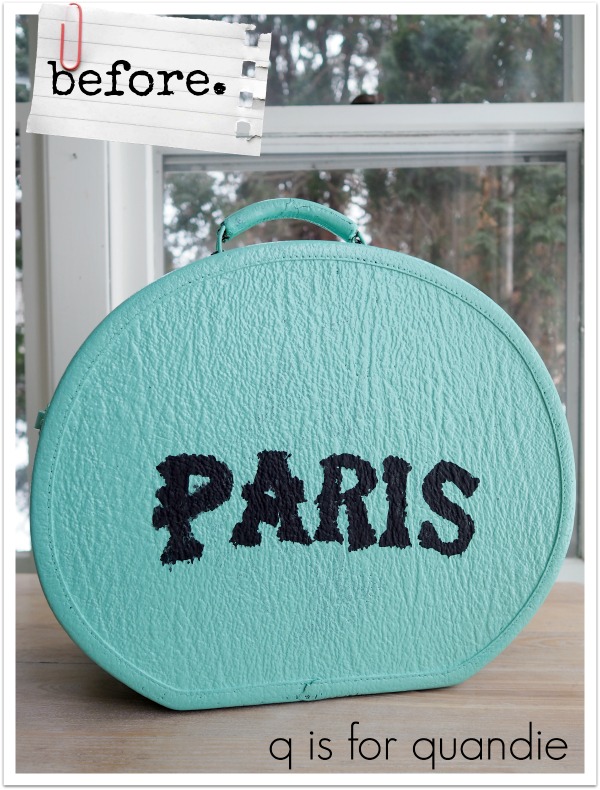
Before I say more, if by some crazy off-hand chance the person who painted this suitcase also reads my blog, then I apologize in advance for criticizing your work. I’m hoping that the fact that this piece was donated to a thrift store means that the previous owner knew it was bad and just decided to unload it. I hope it wasn’t a gift that someone ditched after receiving it.
When I saw this sitting there on the shelf I immediately thought to myself, I must rescue that suitcase from its bad stenciling job!
To be fair, I’ve shown you the worst of the stenciling in that ‘before’ shot above. It’s also stenciled on the other side …

Slightly better, but still not good.
Mr. Q is always reminding me that I tend to make stuff look easy, and that for some people it’s not easy at all. Maybe this is a good example of that. Maybe the painter of this suitcase dove right in thinking ‘Q makes it look so easy, I’m sure I can just whip this up!’ So for those of you who also struggle with stenciling, I thought I’d share some tips for improving your odds for success.

No. 1 – First and foremost, pay attention to which items are good candidates for stenciling and which ones are not. In this instance, the pebbled surface of this case will make it tough to get a clean result with a stencil no matter how good your skills.

No. 2 – It’s easier to get a crisp result if your surface has a little ‘tooth’ to it (tooth refers to the grain of your surface, it’s what allows paint to bind to the surface). Slick, shiny surfaces like the semi-gloss aqua paint on this case have very little ‘tooth’ and will allow your paint to slid around a bit more. A matte finish will work much better for stenciling, as will non-glossy fabric or paper.
No. 3 – Use a thick paint for the actual stenciling. Dixie Belle paint straight out of the jar is perfect for stenciling. I also use the cheap acrylic craft paint that you can buy at any craft store because it tends to be nice and thick.
No. 4 – Use a proper stenciling brush. It should have densely packed bristles that are a bit more stiff than your typical paint brush, but also have some flexibility. I have used the inexpensive Martha Stewart brand stenciling brushes that you can find at Michaels, but you get what you pay for. The ferrule has come unglued from the handle on most of mine (granted, they got A LOT of use). The re.design with prima brushes are better quality, and I really love this large one for bigger stenciling jobs.

No. 5 – always, always, always off-load most of the paint on your brush before using it. I know this feels wasteful because you’re leaving 75% of your paint behind on a paper towel, but trust me, it is crucial for a crisp result. I probably should have made this tip no. 1 because it is definitely the mistake I make most frequently myself, especially when I’m feeling impatient.
In the end, if stenciling just isn’t your cup of tea, then my next piece of advice is to keep it simple and use a transfer instead. That’s what I decided to do with this suitcase.
But first things first, I opened it up to look for hidden treasure. I’m always hoping that I’ll find someone’s secret stash of cash, or maybe a long lost Van Gogh, inside a thrift store purchase. So far no luck on that, but a girl can dream.
The lining of this case is actually in pretty good condition and kind of pretty.

The color isn’t really working with the aqua though, is it?
So as much as I love a good aqua, and as much as I loved it on this suitcase while it was closed, I felt like I needed to switch to a color that worked well with the lining. I decided to stay neutral with Dixie Belle’s Drop Cloth.

Inevitably someone is now going to ask me for a tip on freshening up the smell of an old suitcase, and I have to admit that I don’t have one. I’ve found that since they generally are stored closed up tight, over time the smell returns no matter what I’ve tried. As a result, I use my old cases for looks only. Or for storing things that won’t pick up the smell, like my vintage glass Christmas ornaments or craft supplies. I would never store clothing or other fabric items inside.
Once the paint had dried overnight, I pulled out the Royal Burgundy transfer. 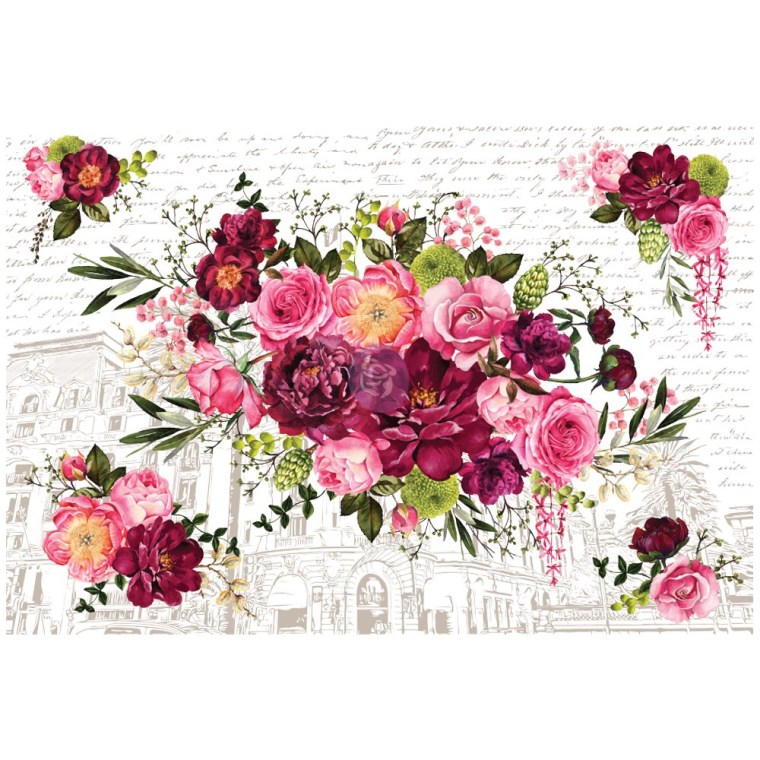 If you’re keeping track at all, this will be the 3rd small project I’ve done with this one transfer. I’ve already used it on a wooden jewelry box and a pair of ice skates. I still have a pretty good sized chunk of it left after doing this suitcase as well. Just something to keep in mind when looking at these larger transfers that are one solid design. You can always break it up for smaller projects.
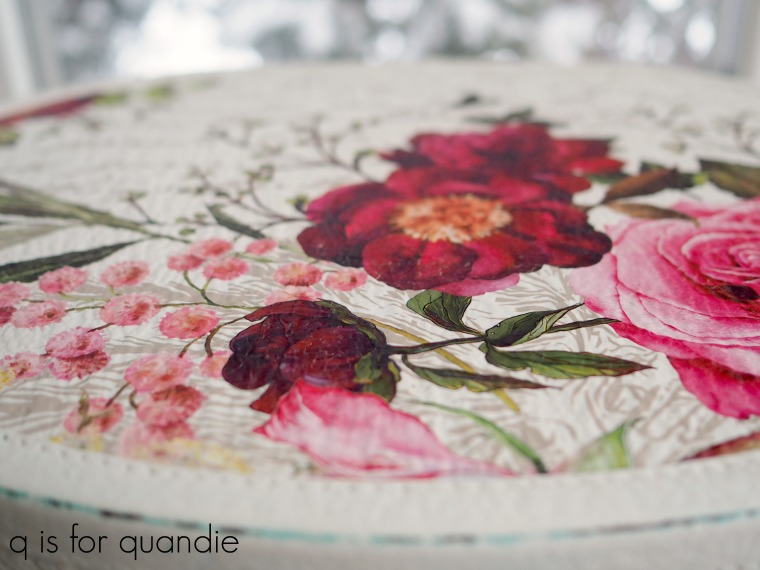
I did have to line up a seam to cover the whole top of the suitcase and I didn’t get it exactly perfect.

But I don’t think too many people are going to focus on that when looking at the bigger picture.
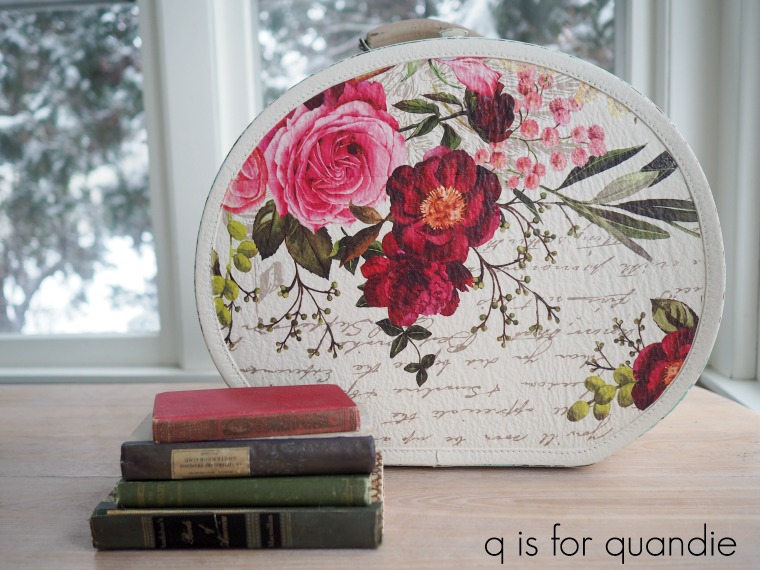
Also, if you’re wondering, I trimmed the transfer to fit the circular top before removing the backing paper and then applying the transfer.
I ended up painting the handle of the suitcase in Dixie Belle’s Putty for a little contrast.

The Putty is an almost perfect match to the color of the background words on the transfer.

I wanted to add just a little something more, so I added the word ‘Beautiful’ from the Hopeful Wishes transfer.
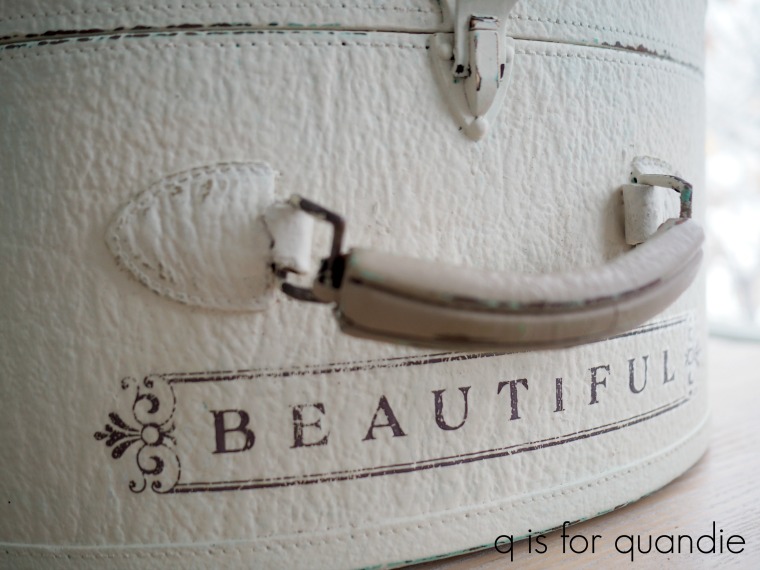
You may have noticed that I sanded the edges and the handle to distress the paint job a bit. You’re always going to see hints of previous paint jobs when you do this, and sure enough you get glimpses of the old aqua here and there.

I finished off the case with a coat of clear wax to give it that subtle patina that only wax can impart.
I think you’ll agree that this vintage suitcase has been rescued from a bad stenciling job.

As always, thank you to Dixie Belle Paint Co and re.design with prima for providing the supplies used for this suitcase makeover.
If you’re looking for Dixie Belle products you can find them here.
Both the Hopeful Wishes and the Royal Burgundy transfers are from re.design with prima. If you’re looking for re.design with prima products you can find local retailers here, or online sources here.
And finally, if you are local and in need of a gorgeous vintage suitcase, I’ll be taking this one in to Reclaiming Beautiful this week.
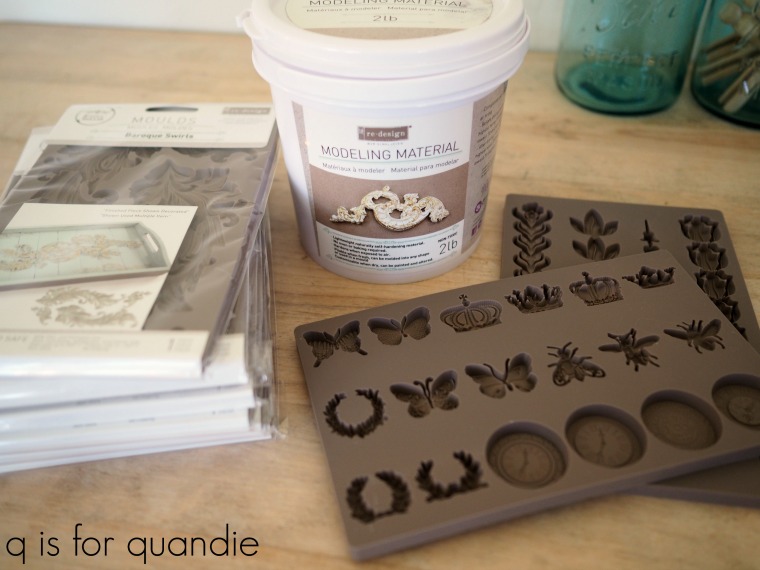
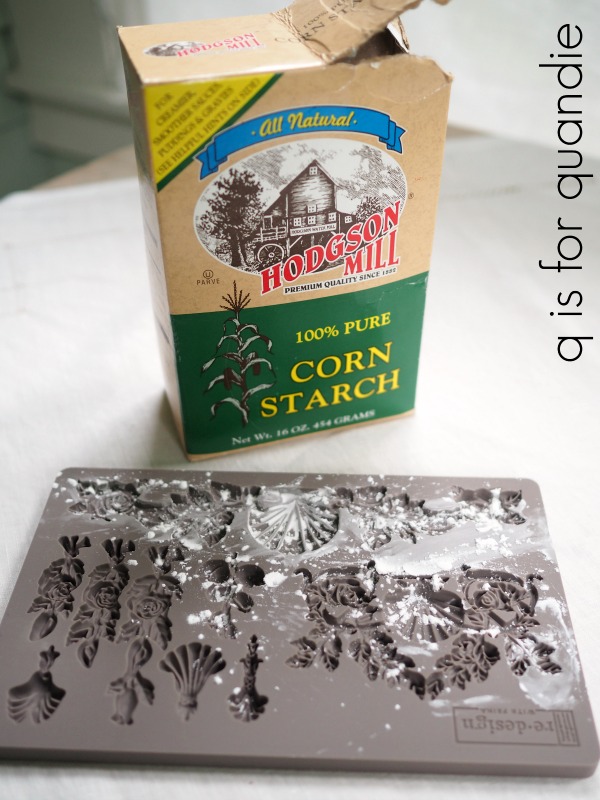



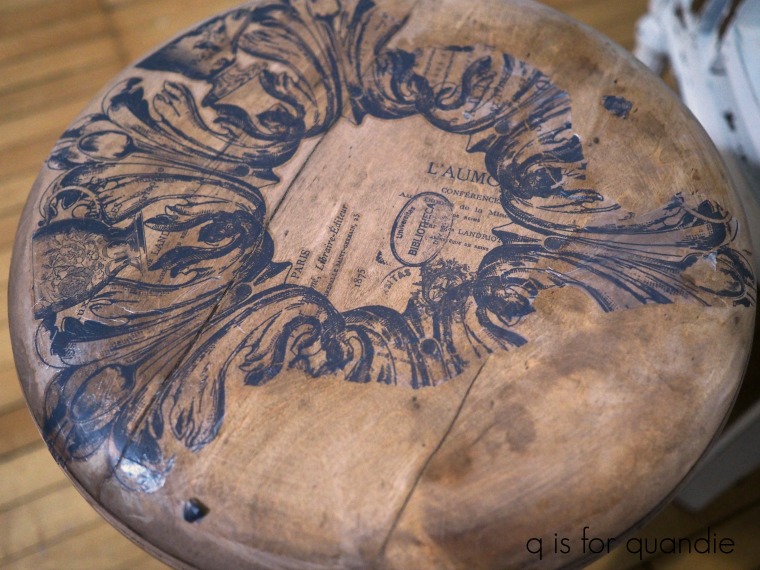
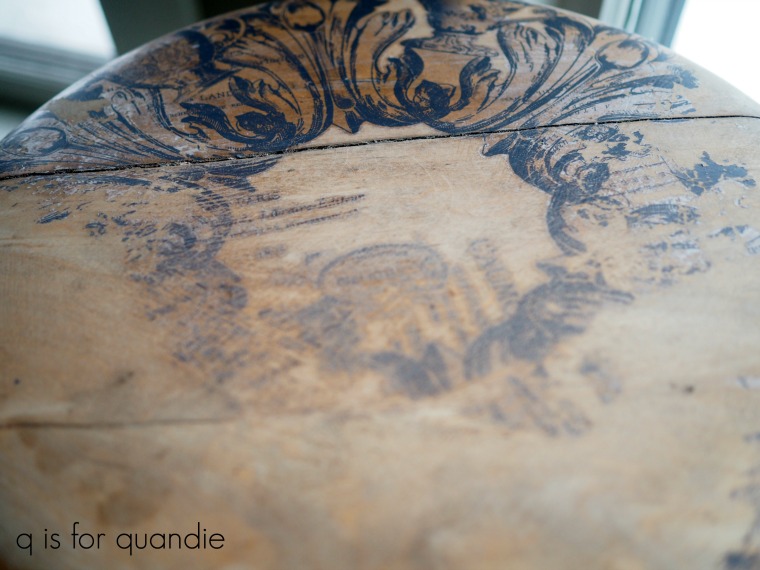
 q tip: If you decide you simply must have a transfer on your piece but you’ve already waxed it, you will need to wait 30 days for the wax to cure before adding the transfer. Or you could remove the wax with mineral spirits, but who wants to go down that road?
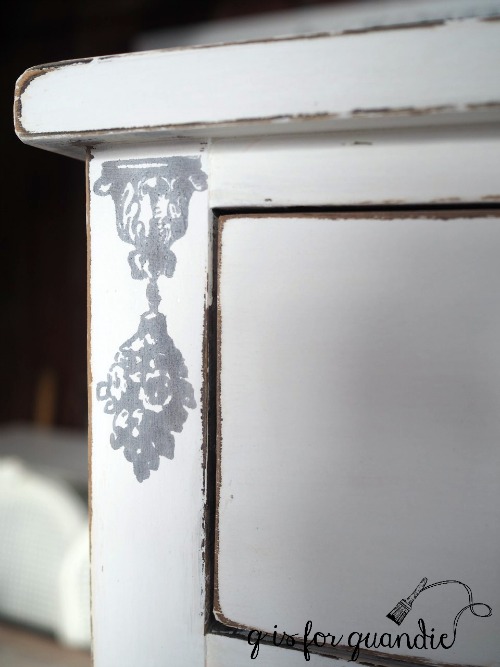

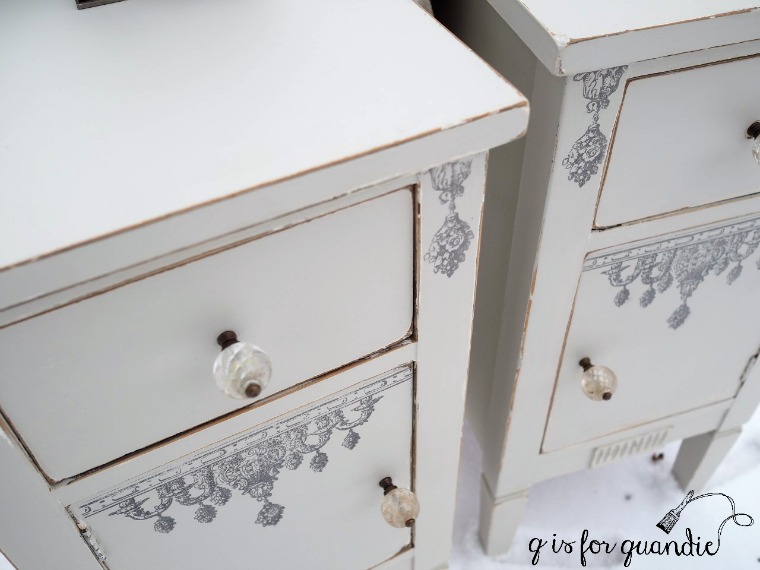




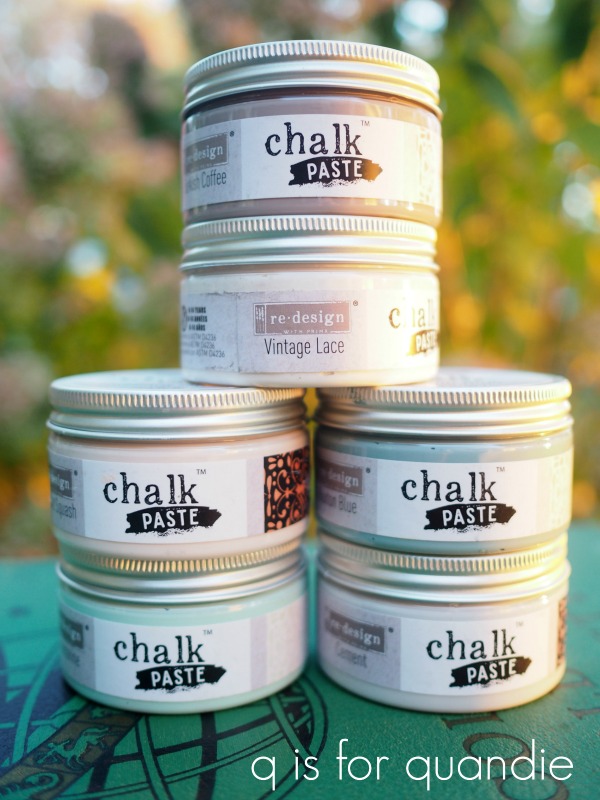
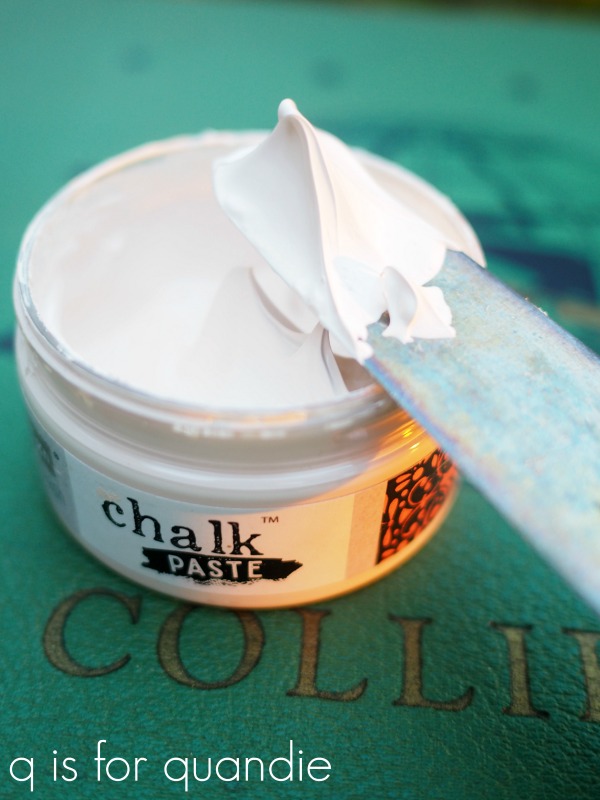
 Experiment no. 1 – I painted the oval in a pale blush color that sort of matched the Hubbard Squash chalk paste. Then I pulled out Prima’s Lenore Corners raised stencil which is .04″ deep. These thicker stencils are perfect for this technique.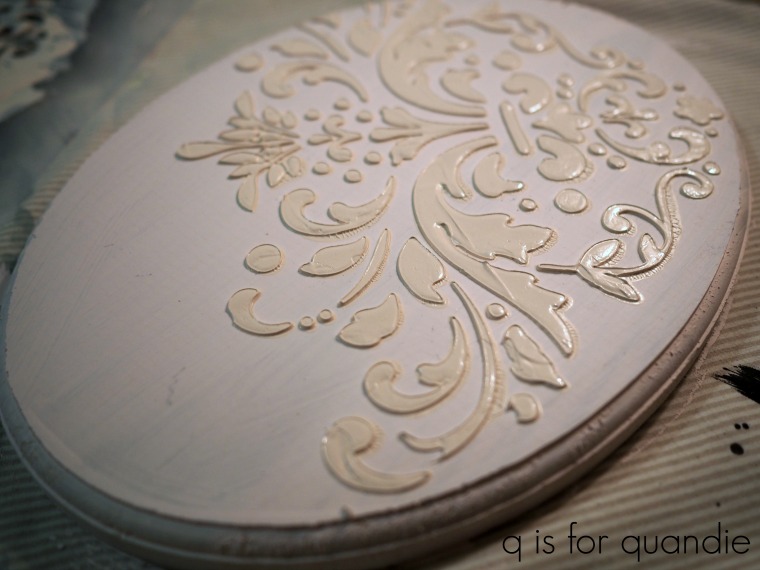

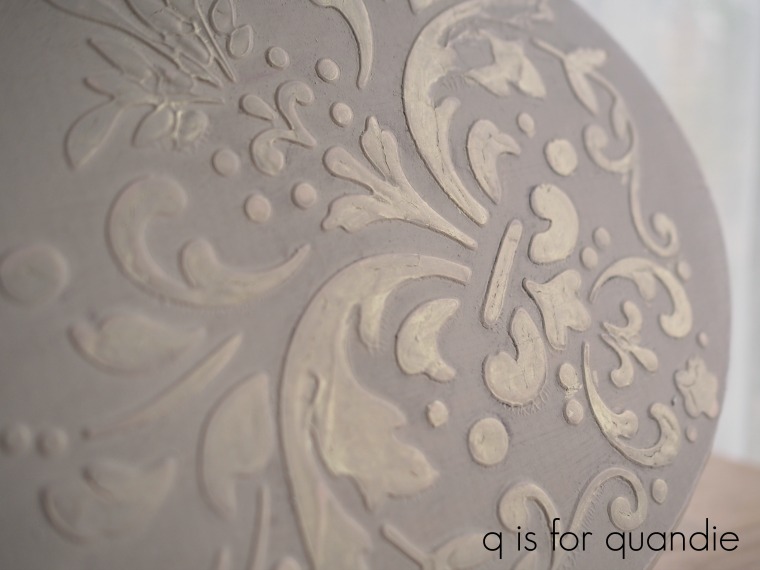
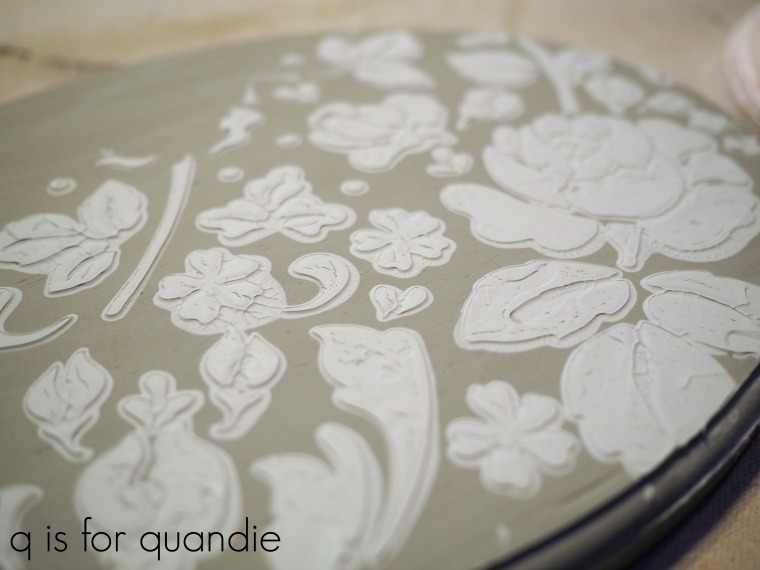

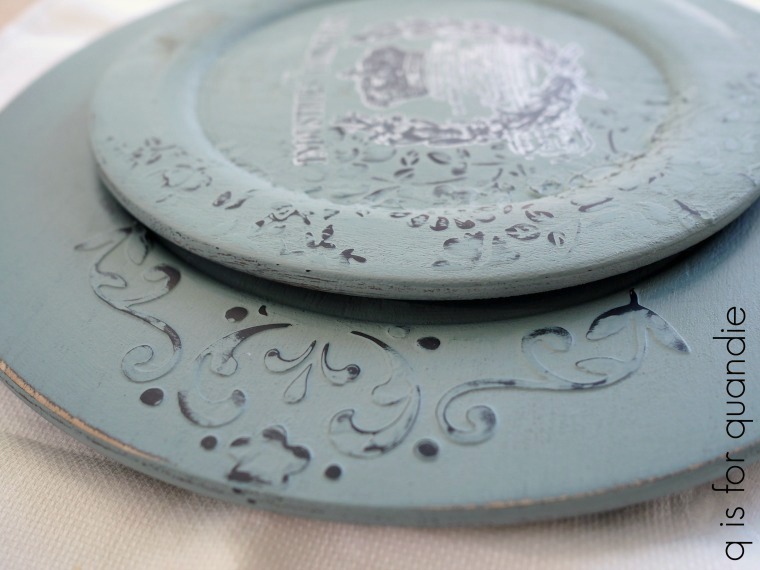























 q is for quandie