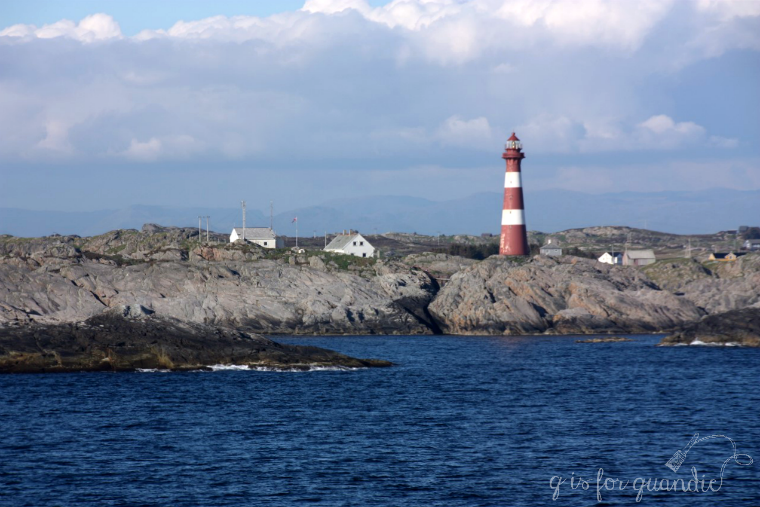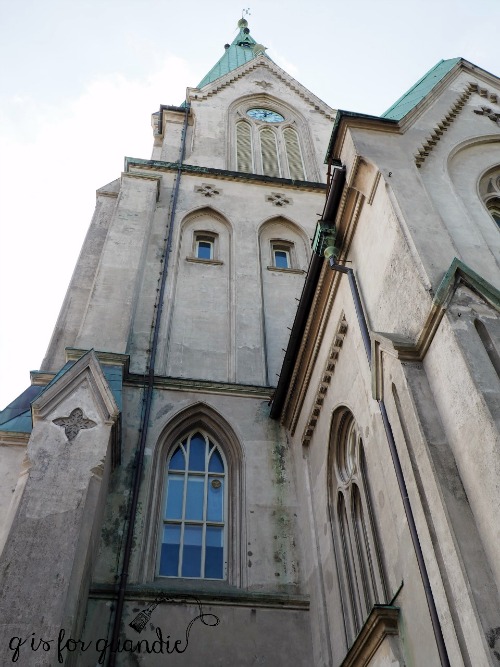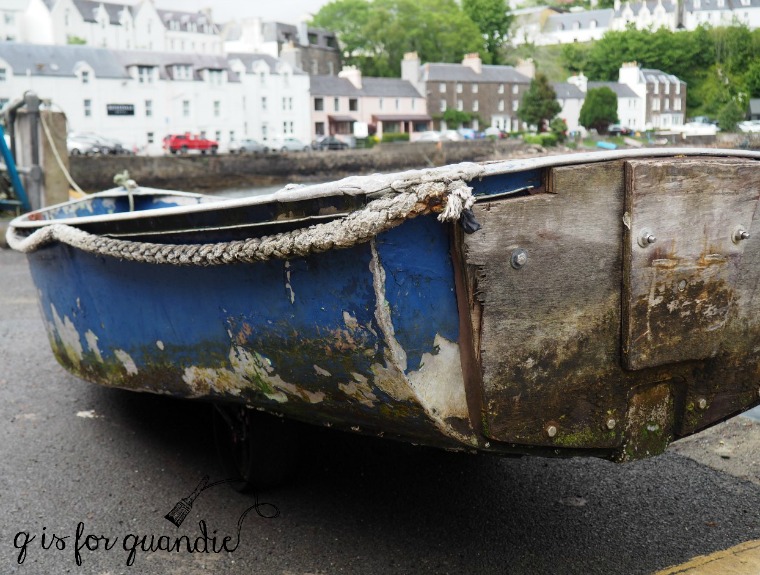
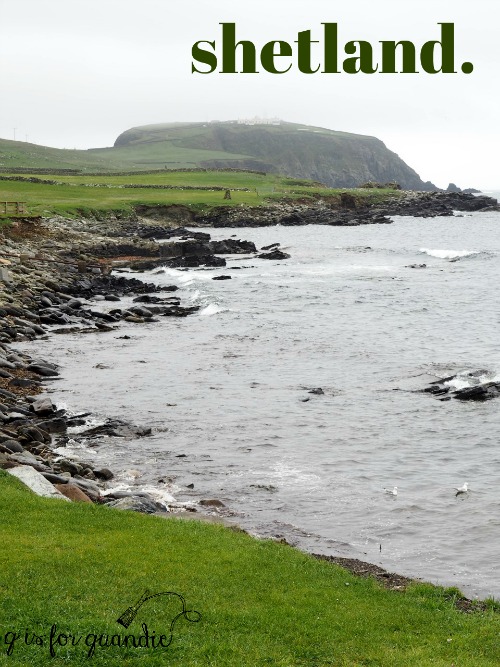
the shetland islands.

After Mr. Q and I booked our May trip to Norway & Scotland, we happened to stumble across the TV show Shetland.  If you haven’t heard of it, it’s a BBC Scotland crime drama based on a series of books by Ann Cleeves.  We binge watched seasons 1 and 2 before our trip.  We fell in love with the unique landscapes that were used in the show (some of which aren’t really in Shetland at all, but mainland Scotland).  Still, we were really looking forward to seeing the place for ourselves.
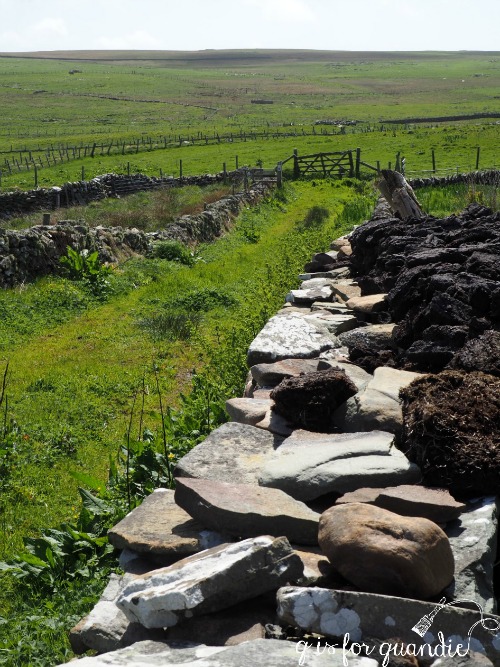
One of the main things you’ll notice is the lack of trees.  I was curious about that so I googled it.  According to this article from shetland.org, that is mainly due to the sheep rather than the climate.

Before I continue on about our day in Shetland, let me explain something.  One of the really fun things about taking a cruise is the opportunity to meet people and get to know them a bit.  These days on most cruise lines you’ll have some options for dining.  You can choose ‘any-time dining’ where you just show up at the dining room and get seated anywhere, or you can choose a specific time slot and be seated at the same table with the same people every night.  You can choose to have just a table for two (or however many are in your group), or you can do what Mr. Q and I like to do, choose to have additional dinner companions.  On this cruise we chose the late seating (8 pm) and a table of 8.

We always feel like we are taking a bit of a risk with this option.  What if we get stuck with a total bore?  Or worse yet, someone totally obnoxious?  But if that happens, you can always ask to be reassigned.  So far we’ve always been lucky and have ended up with friendly, interesting dinner companions.  This time we ended up with Ann & Alex from Australia, Craig & Cheri from California and Paul from Boston who was traveling on his own.  What a great way for him to have company at dinner, right?  We all got along really well and had some great conversations over dinner.

The reason I’m bringing this up now is because Mr. Q and I didn’t have any pre-booked plans for Shetland.  While discussing this over dinner, Craig and Cheri (the couple from California) mentioned that they were renting a car in Lerwick and were planning to drive all over the island.  So we asked if they happened to have some extra room in the back seat for us.  They were willing to let us tag along, and we insisted on paying for half of the rental fee (a whopping $30) and considered it a total bargain.

By the way, kudos to Craig for being willing to drive on the ‘wrong’ side of the road and on some very skinny winding roads at that.  Not to mention some ‘single track’ roads, which I’ll talk about more when I post about the Isle of Skye.

Our first stop was the archaeological site, Jarlshof.  This site was discovered in the 1890’s when some heavy storms washed away the surrounding vegetation.  It was later excavated to reveal a series of dwellings that dated from 2500 BC to the 1600’s AD.
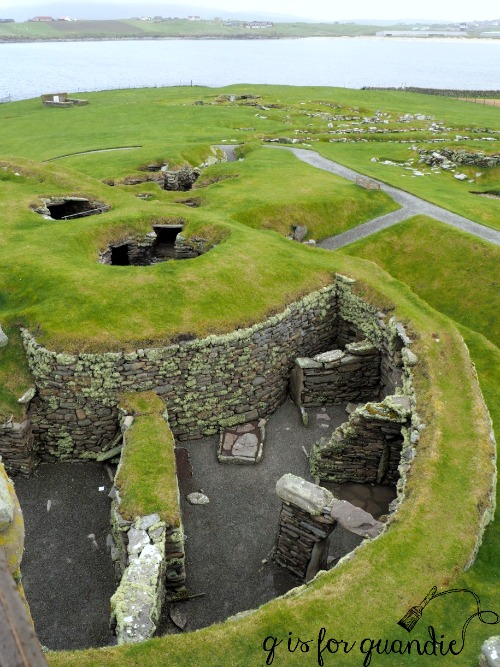
We rented the audio headsets and if you ever make it to Jarlshof I totally recommend this.  You’ll get so much more out of the site if you have a little explanation of what you are looking at.

For example, the large structure in this next photo is the hall of what was the laird’s house.  Those stones in the yard are exactly what they look like, grave stones.  In this case, marking graves of shipwrecked sailors from the 1600’s.

After exploring Jarlshof we moved on to the Sumburgh Head Lighthouse.

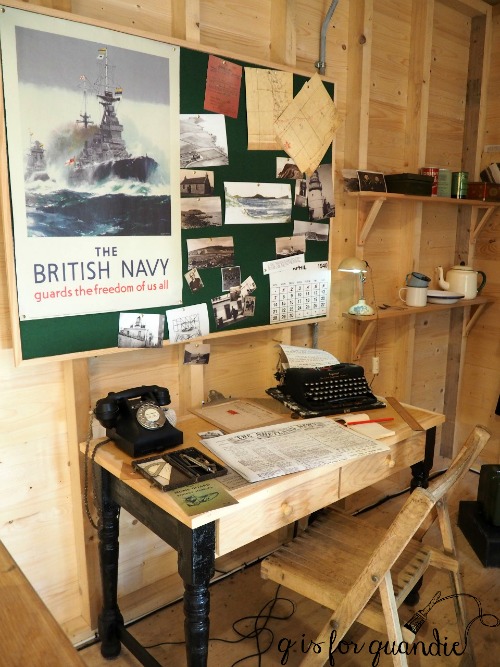
This spot is known for bird watching.  It wasn’t quite the right season for their famous Puffins, but we did see a couple.  We also saw quite a few Guillemots.  In addition, the lighthouse has some interesting historical displays such as the replica of the WWII radar station.
By the way, this next photo is taken from the parking lot.  Yes, you have to walk from here up to the lighthouse, see it there at the tippy top?

Although they do allow cars to drive up and drop off handicapped visitors.

The next stop on our very well planned (by Cheri) itinerary was the Croft House Museum.  I was so excited when Cheri mentioned they were planning to visit this spot.  It was a place I had read about online and really didn’t think I would get a chance to see.
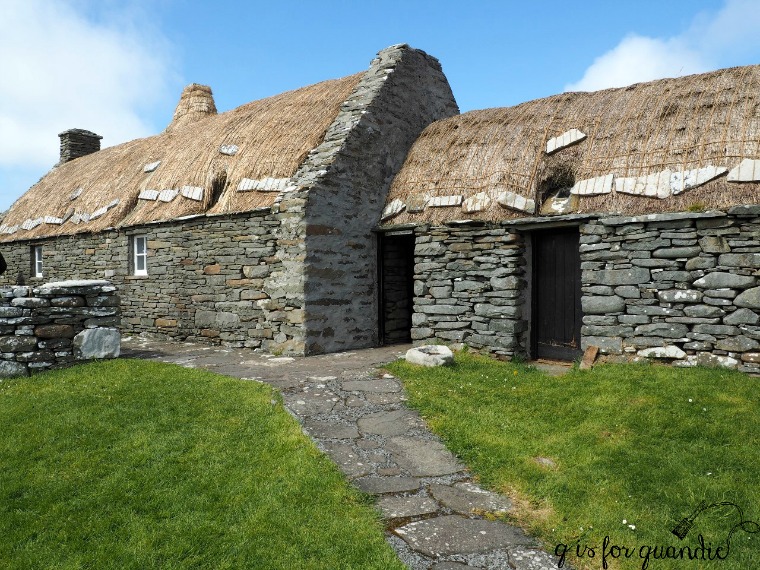
This is a mid-19th century croft that was lived in until the 1960’s.  It was fascinating to get a glimpse of how people once lived in Shetland, with burning peat in the fireplace and box beds for keeping warm at night.
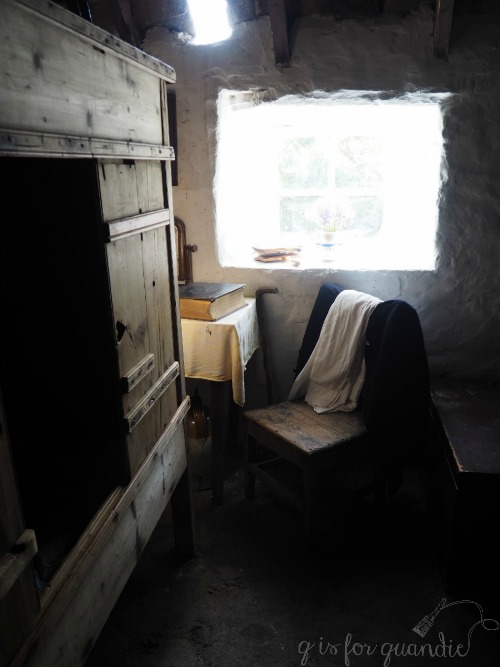
The inside was very dark, with low ceilings and even lower doorways, but I bet it felt like a really warm, snug refuge from the wind and rain on cold winter days.

Of course, there was no rain on our day in Shetland (although wind is another story) as we continued to be really lucky with the weather.

Our last stop of the day was Scalloway Castle.
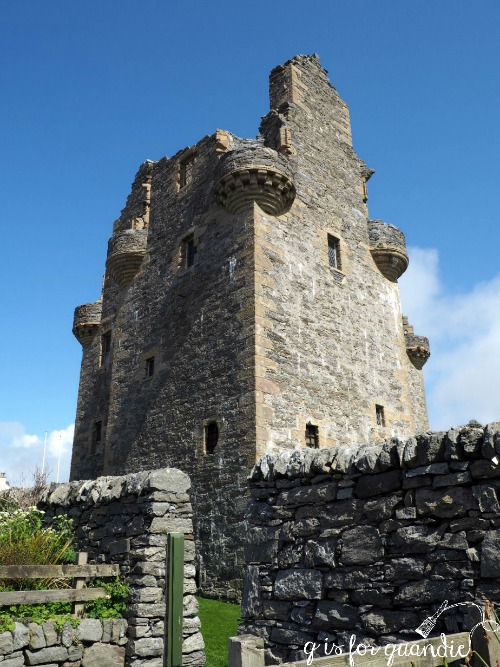
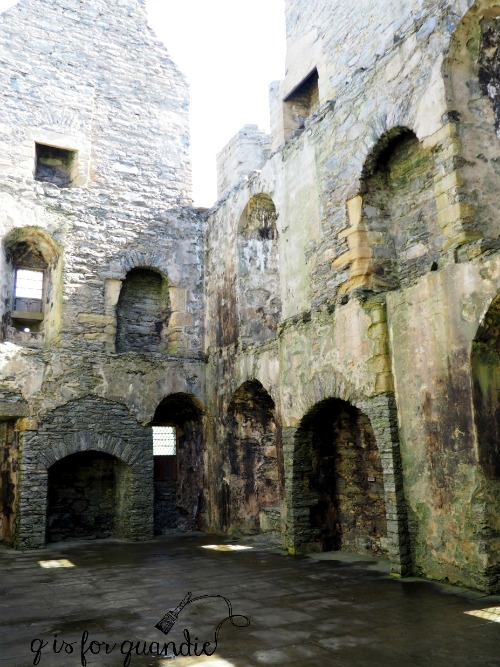
Construction on Scalloway began in 1599 by Patrick Stewart, the Earl of Orkney.  Apparently Black Patie was not a good guy.  He was a ruthless tyrant who oppressed the Shetland people and was ultimately executed.
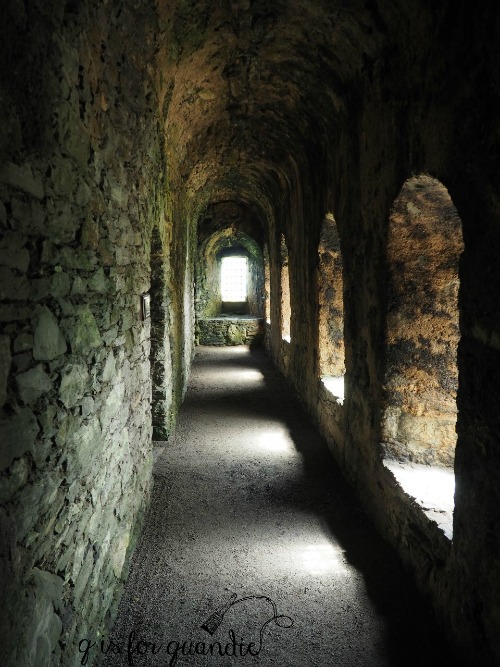
It does have a bit of a sinister vibe, right?

Not much remains except the shell of the castle, but it was interesting to see how it was constructed.  This was a fun stop for us as well because there was a great chase scene in Shetland (the TV show) that was filmed inside Scalloway Castle.  By the way, we heard that they were going to be filming some parts of season 3 the day after we were in Lerwick.  Dang!  We just missed seeing it.
All in all, sharing a rental car with friends turned out to be an incredible way to spend the day in Shetland.  We saw 4 different sights that would have been separate shore excursions from the ship each one costing more than our share of the car for the full day.

If you are brave enough to drive in a foreign country, this is definitely the way to go.  And honestly, once we got out of Lerwick the roads were mostly empty here.  The most complicated part of the journey was getting out of the parking lot at the port!
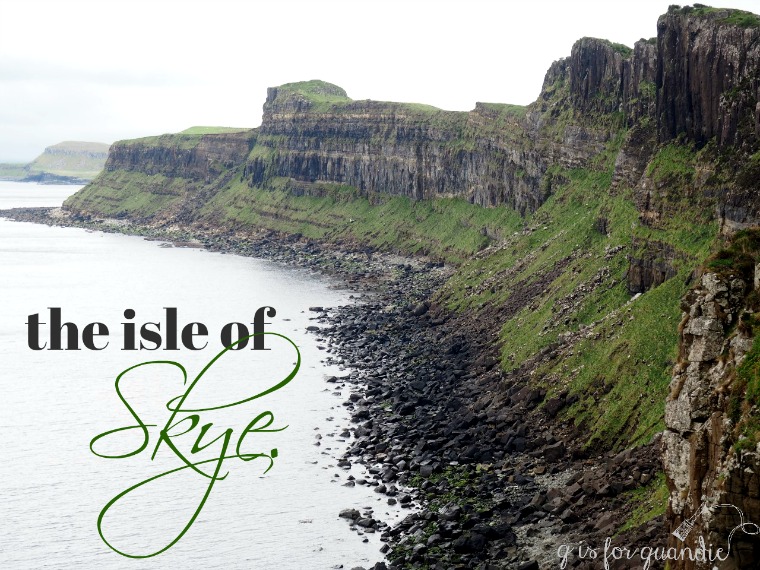
Our next stop is the Isle of Skye, check back next Wednesday to hear more about the seat of the MacLeod of MacLeod, Castle Dunvegan, and what ended up being the most disappointing touring experience from our trip.


bergen.

Today I’m sharing the last of the Norwegian ports of call on our recent Holland America cruise, Bergen!

Bergen is known for being one of the rainiest cities in Europe.  Everything we read about this city said to be prepared for rain, and so we were … and it didn’t rain at all.  It was a bit overcast in the morning, but it cleared up after noon and was perfectly lovely.

Once again our ship was docked in the most convenient location just across the street from the Bergenhus Fortress.

We walked around the fortress and admired the grounds a bit.

Then headed out the other side to walk toward Bryggen.

Bryggen is the old Hanseatic Quarter of Bergen.  The oldest wooden buildings date from the early 1700’s and were built by the German merchants and traders who established a Hanseatic trading post here.

This area continues as a ‘trading post’ and was filled with touristy shops and tourists.

Next we hopped on the Fløibanen, or the funicular, to ride up to the top of Mount Fløyen to check out the views.

I have to admit, Mr. Q and I are not big fans of the ‘view panoramica’.  I guess we just prefer seeing things up close and personal rather than viewing sweeping vistas from on high.

So, after enjoying a cup of coffee with some friends from our ship, we didn’t linger long at the top.  We decided we’d prefer to walk back down, but we weren’t sure just how intense a walk that was going to be, so we took some advice from our Rick Steves’ guidebook and we took the Fløibanen halfway down, got off at the mid-way point and walked the rest of the way (note: if you are ever in Bergen and want to do this, only the funiculars that leave on the hour and half hour stop at the halfway point, Promsgate, the others do not stop).

As it turned out, we could easily have walked the entire way down.  It was a very lovely walk through a wooded area …

And then a really charming residential area.

By the way, Rick Steve’s calls these ‘delightful cobbled and shiplap lanes’.  Huh?  Shiplap lanes?  Clearly the Norwegians had shiplap way before Fixer Upper came along!

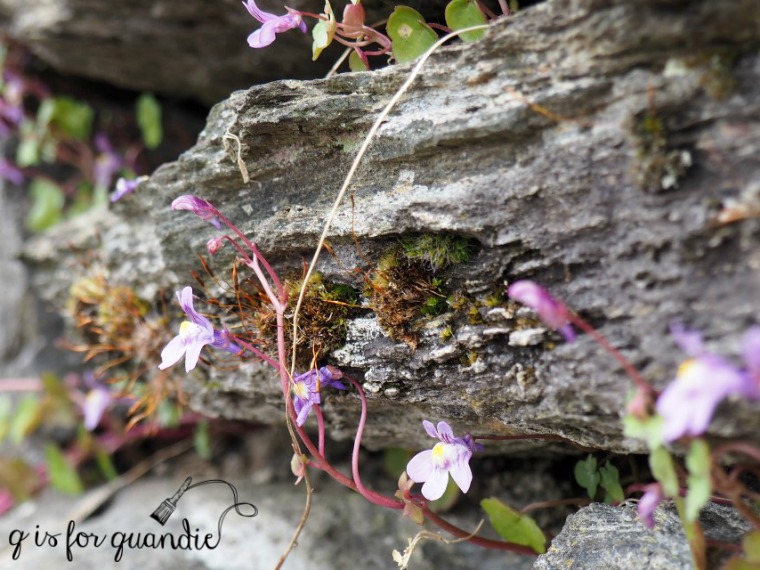
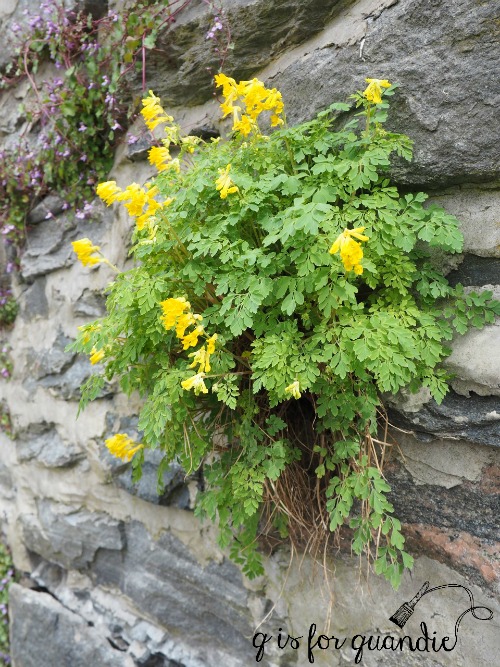
I loved the profusion of flowers along these cobblestone lanes.  Despite the almost total lack of garden space, there were still flowers everywhere.  They were even growing out of the crevices in the rock walls …

I recognized this corydalis right away, I have these in my own garden …

After making our way back to sea level, we headed out to the fish market.  I didn’t take a single photo there.  It was just so touristy and honestly, kind of lame.  We wandered around it for a few minutes, but then after hitting a couple of shops back in Bryggen we headed back towards our ship.

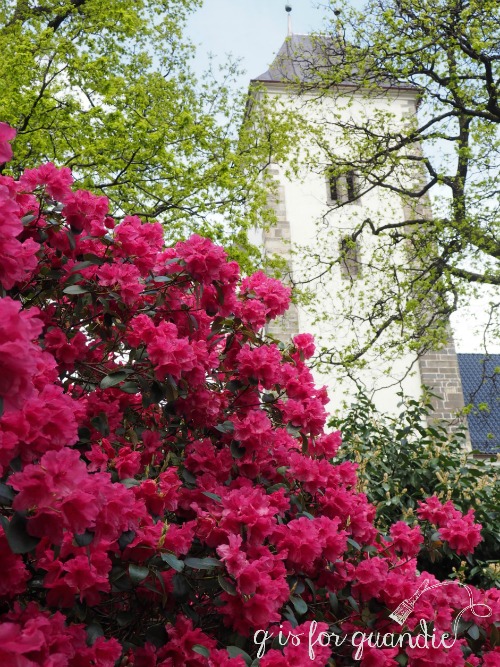
Along the way I spied this lovely azalea in front of the Domkirke, Bergen’s main church that is dedicated to St. Olav the patron saint of Norway.

We had a beautiful sunny evening for sailing out of Bergen.  Mr. Q and I enjoyed it from our balcony.

And alas, this was where we had to say goodbye to Norway, the land of my ancestors.  Our next stop, the Shetland Islands!

Be sure to stay tuned!


flåm.

For those of you who may be new to my blog, in May Mr. Q and I took a Holland America cruise to Norway and Scotland.  I’ve been slowly posting about each of our ports of call on Wednesdays.  So far we started in Copenhagen, then went to Oslo, Kristiansand and Stavanger in Norway.  Today I’m sharing our next port of call, Flåm, Norway.

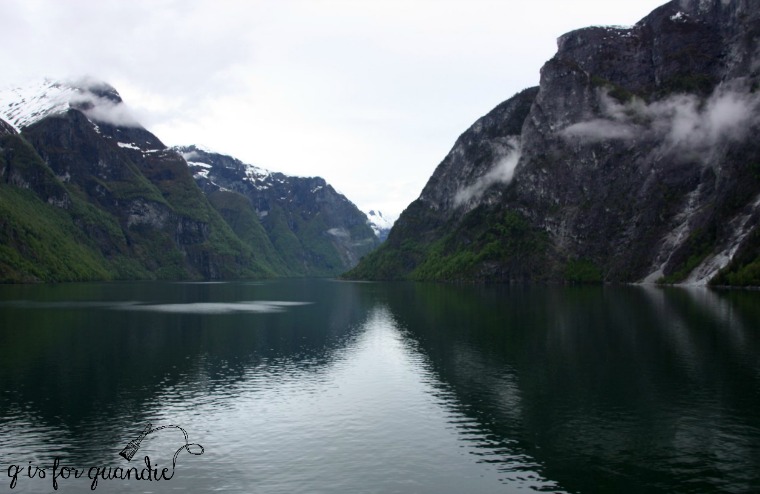
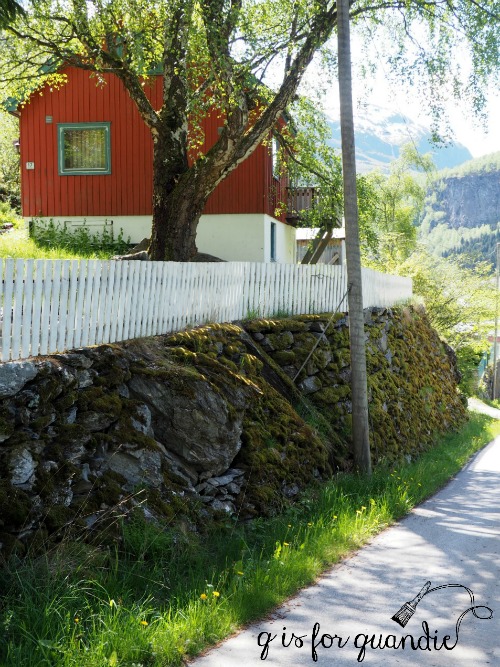
I have to say that sailing down the Sognefjord and the Aurlandsfjord to Flåm was one of the most amazing travel experiences I’ve ever had.

Mr. Q and I woke up in the very early hours to this view outside our window.

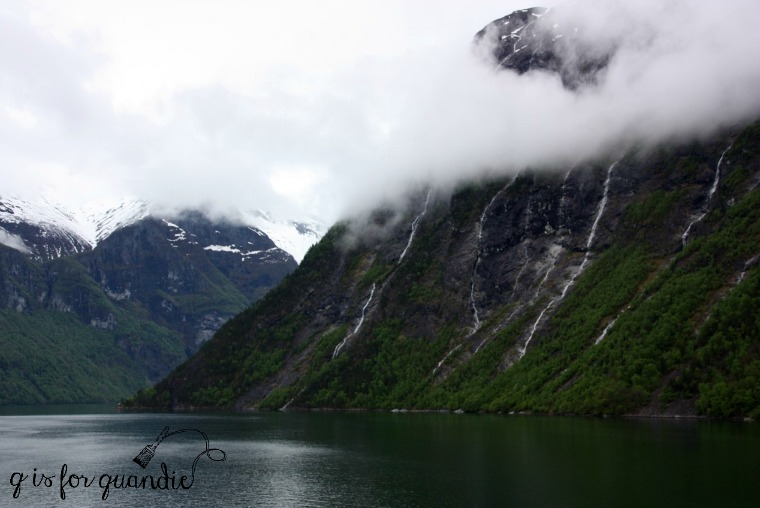
We sailed through this misty and magical scenery for a couple of hours…

passing about a gajillion waterfalls.

By the way, this was one of the moments on our cruise when we were really glad we upgraded to a balcony cabin at the last minute.  We were sailing through here at about 6 a.m.  It was easy to just pop out of bed, walk out on the balcony and enjoy the scenery.  Had we been in an inside cabin I am quite sure we would have slept right through this, and wouldn’t that have been a shame?

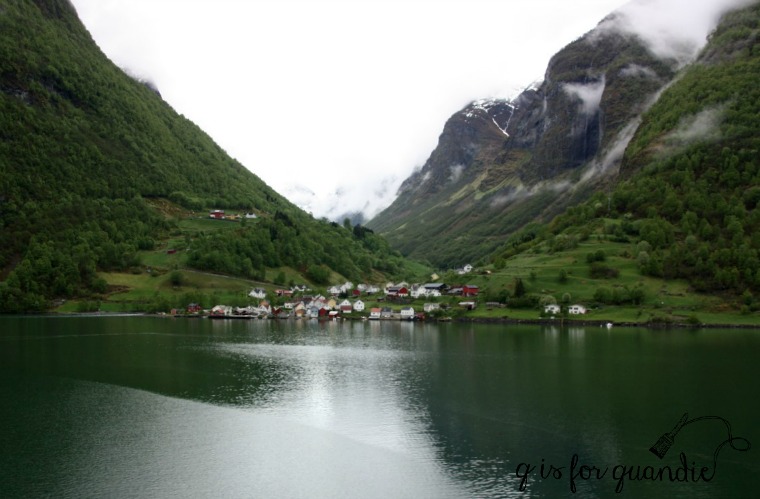
We passed the little town of Undredal.

We docked in Flåm around 8 a.m.  The immediate area around the dock in Flåm is very touristy.

 There is a huge souvenir shop, a tourist info center, a couple of restaurants, the train museum and the train station.  I would say that probably 99% of the passengers on our ship either took the scenic train ride, or else they took a fjord cruise right from here.  We decided to do something else altogether.  We walked the 3 km along a rushing stream to the real town of Flåm.

According to the Rick Steves guidebook there isn’t much to see in Flåm proper and no real reason to go there, and I suppose he is right if you are looking for castles, museums, historic sites or other tourists.  He recommends taking the scenic train ride, as do most people I know who’ve been to this area.

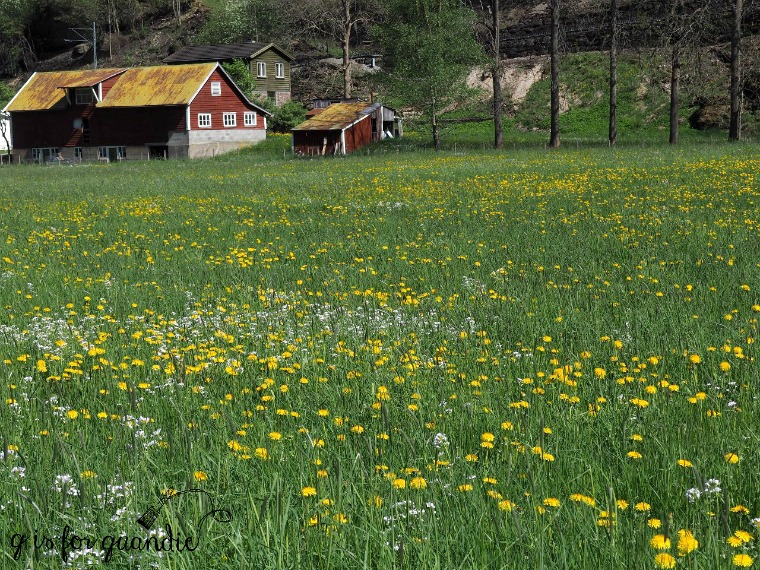
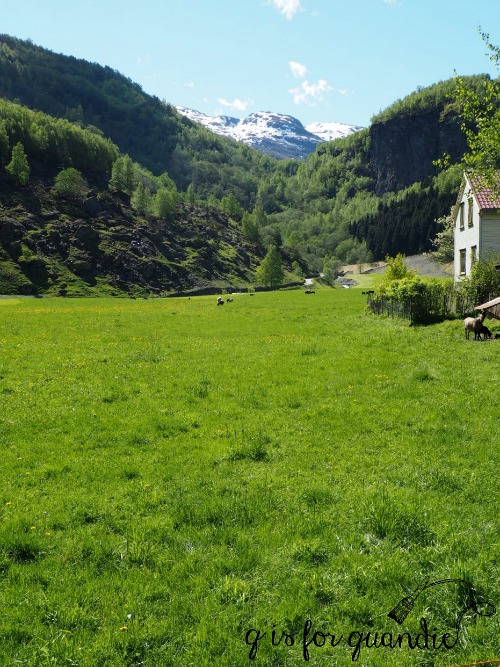
But if you prefer your stunning scenery without having to battle for elbow room with 300 other tourists, well, then I recommend this walk instead.

Is anyone else tempted to break into song looking at that picture?  The hills are alive, with the sound of music … wait, wrong country.

This place simply could not have been any more beautiful.

As we walked further and further up the valley, the sun got brighter and the air got warmer.  It was so peaceful and quiet.  We saw very few other people.

Our final destination was the old church.

This church was built in 1670 (or 1667 depending on the source) and replaced the original stave church that once stood in this spot.  And P.S., there is a handy (and free) public restroom at the church.

We wandered around the tiny cluster of homes that made up the ‘downtown’ hoping to find somewhere to get coffee, but no such luck.

 So we turned around and headed back to our ship, which was getting ready to sail back down the fjord and out to sea.  Shortly before sailing, our captain made an announcement that a pod of Orca’s had been sighted in the Nærøyfjord.  So although our ship was too big to go very far down that fjord, he was going to take a detour down it to see if we could spot them.  Unfortunately we never saw them, but we did enjoy the dramatic scenery of the Nærøyfjord.  I think the most entertaining part was seeing how the ship did a complete 180 degree turn to get back out again!

This truly was one of my favorite days on our trip.  Mr. Q and I both really enjoyed being surrounded by spectacular scenery during our peaceful walk up the valley, as we practically had the place to ourselves.  We also loved sailing through the fjords.
Next Wednesday I’ll share our last port of call in Norway, Bergen (which we definitely did not have to ourselves)!

I hope you’ll stay tuned.


stavanger street art.

Although Mr. Q pretty much indulged me and was very patient about wandering around charming old wooden houses in Gamle Stavanger on our recent trip, he’d pretty much had enough of that after a couple of hours.  That was when we headed into the Tourist Information center that was located right next to our ship and found a postcard about the Stavanger Street Art walking tour.

Before I go any further, let me give you Wikipedia’s definition of street art:  Street art is visual art created in public locations, usually unsanctioned artwork executed outside of the context of traditional art venues. The term gained popularity during the graffiti art boom of the early 1980’s and continues to be applied to subsequent incarnations.

Stavanger hosts a street art festival every year hosted by Nuart and is one of the world’s leading destinations for street art.  I’ve always been a big fan of street art and I love the idea that Stavanger is embracing this art form.  I had done a little reading about the street art in Stavanger before our trip, so I was pretty excited to realize that not only was there was a tour, it was conveniently starting in just a little over an hour!

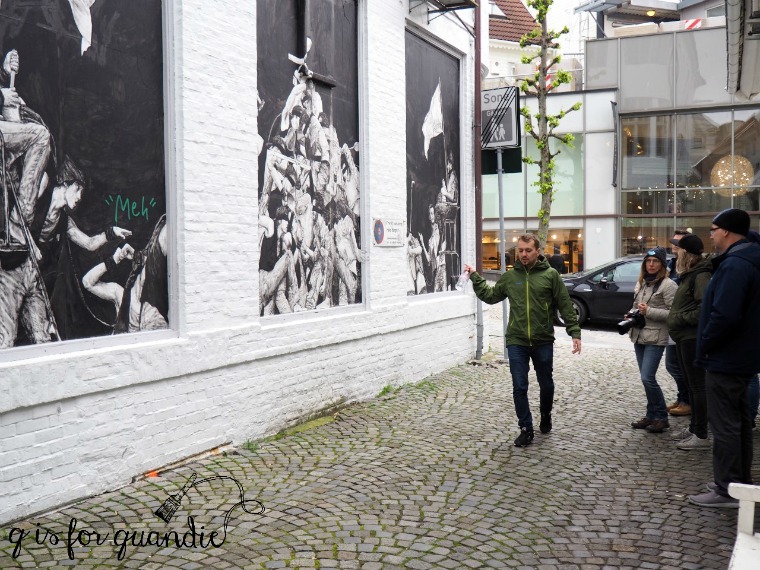
We purchased tickets for the tour right there at the tourist info center (it was about $36 for two) and then headed back to the ship for a quick lunch.  Then Mr. Q and I headed back to the TI to meet our tour guide.  We were starting to wonder if we were in the right place because there were only two other people waiting, but our guide showed up and we realized the four of us were it.  The other two people on the tour were a writer and a photographer from Portugal who were doing an article on the Stavanger street art scene for a magazine.  A little later we were joined by two more ‘tour guide trainees’ who were learning from our guide, Michael (in the green jacket).

 I think you can easily pick out the photographer from the magazine in that photo, right?  She had a very nice camera!

Michael was very energetic and led us quickly from spot to spot while educating us about particular street artists as well as the various techniques they use such as stenciling.

Yep, basically the same kind of stenciling I do on furniture … well, sort of.

An artist named Jaune from Brussels did a series of these “working class heroes” pieces, and I just loved the humor in them …

as well as his use of actual infrastructure like the metal ring above or the 4 pipes coming out of the wall below.

As a former sanitation worker himself, Jaune is symbolically freeing them from their work.  Amen to that Jaune!

I also thought these electrical boxes stenciled to look like buildings by the German artist Evol were pretty cool.

They were so realistic looking, and you know how I love anything miniature!

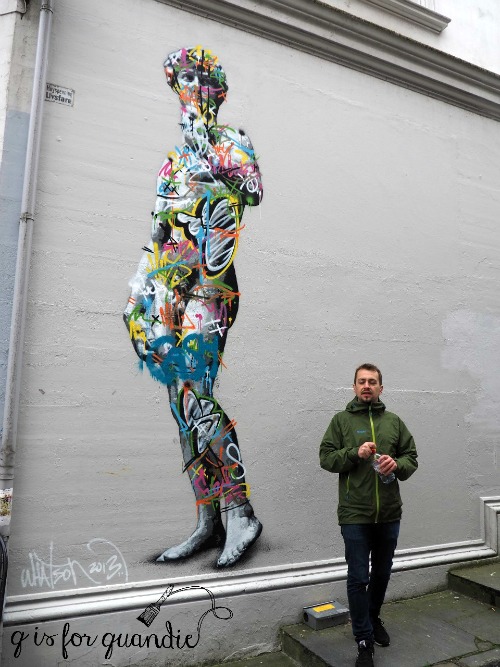
This next piece by Norwegian artist Martin Whatson was another of my favorites.

The black and white character is stenciled first, and then the colorful ‘tags’ are added after.  I love his use of vibrant colors to contrast with the black and white, don’t you?

Speaking of color, Bortusk Leer paints these brightly hued ‘happy monsters’.

Our guide explained that Bortusk’s goal is to cheer people up, as evidenced by his motto “Cheer up you bastards”.  Ha!

This next artist likes to incorporate surrounding foliage.  I don’t think I would have noticed this piece if our guide hadn’t pointed it out.

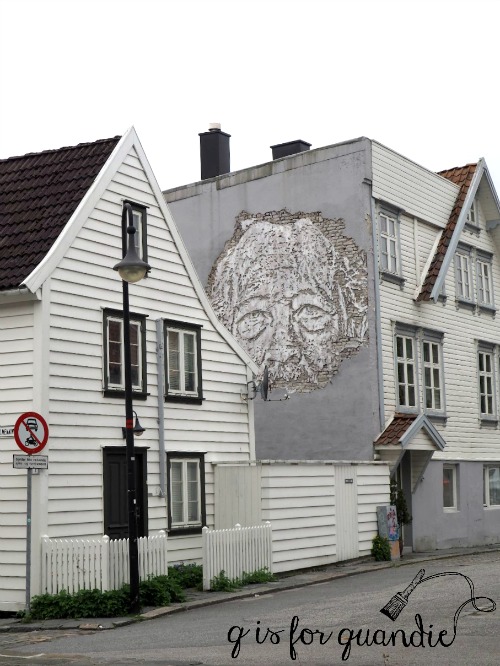
However, this next piece caught my eye from a block away.

I was surprised that our guide wasn’t leading us over to this one.  I could tell that there was something a little bit different about it, so I kind of veered off from the group to take a closer look.

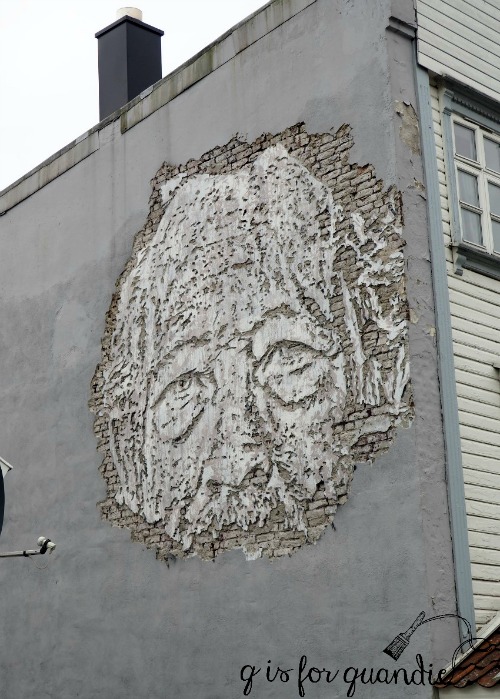
The writer from Portugal followed me over and started to tell me that this piece was done by a Portuguese artist named Vhils.  He uses a ‘hammer drill’ to remove the outer layers of the wall revealing the brick behind.  According to his website, by “applying his original methods of creative destruction, Vhils digs into the surface layers of our material culture like a contemporary urban archaeologist, exposing what lies beyond the superficiality of things, restoring meaning and beauty to the discarded dimensions buried beneath.”  That’s a kinda fabulous concept, right?

Soon Mr. Q and the magazine photographer had left our guide and wandered over to look at this piece too.

Our guide finally realized he’d lost his group and came over to accuse us of ‘eating dessert first’.  As one of the most impressive street art pieces on the tour, he’d been saving this one for last.  Ooops!  I messed up his plan.  I could tell that the pair from the Portuguese magazine were happy to realize that our guide wasn’t totally dissing their favorite artist!

Once our guide had us back under his wing, we checked out a couple more pieces and our tour was brought to an end.  We had just enough time to make our way back to the ship and hop on board before sailing to our next port, Flåm.

Be sure to check back next Wednesday because Flåm was definitely one of the highlights of our trip!


gamle stavanger.

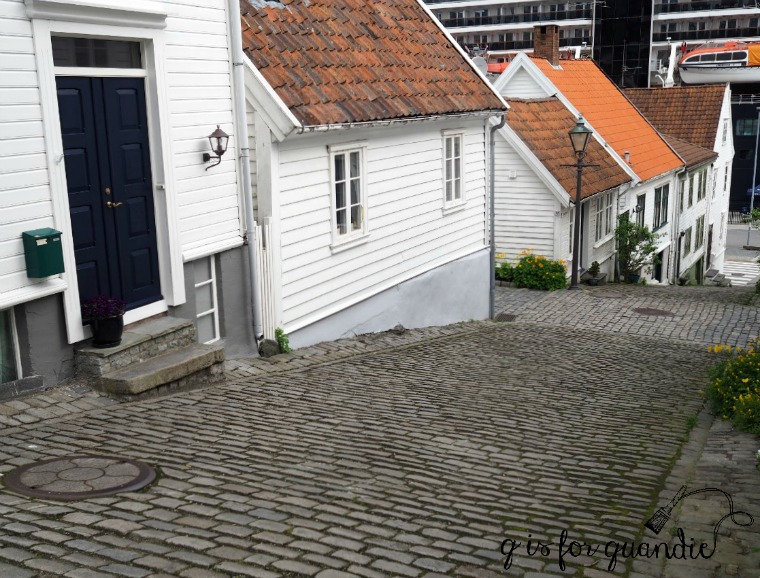
The 4th port of call on our recent cruise was Stavanger, Norway.  This was yet another instance where our ship docked right in the heart of town.  The historic area, Gamle Stavanger, was literally just across the street from our ship.  In fact, it kinda messed with a lot of my photos!  Somehow quaint Norwegian houses with a background of cruise ship balconies and orange life boats doesn’t quite work for me.

Here is what wikipedia has to say about Gamle Stavanger …

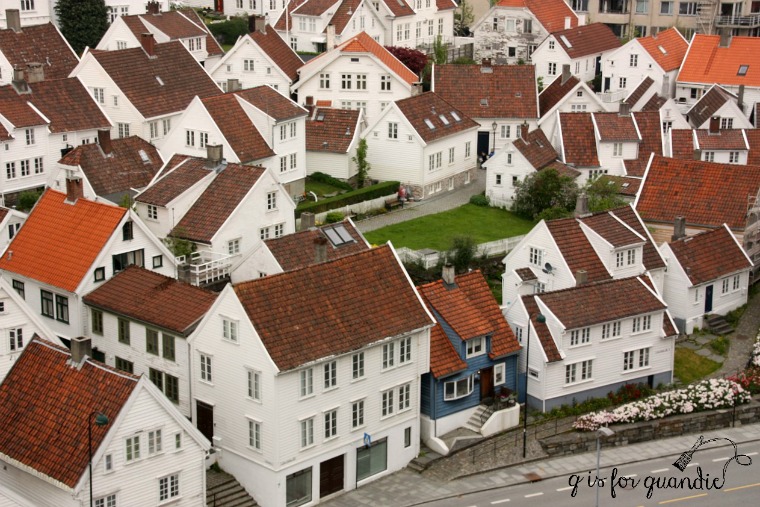
The area consists largely of restored wooden buildings which were built in the 18th century and in the beginning of the 19th century.

In the aftermath of World War II, a new city plan was created for Stavanger. It included razing most of the old wooden buildings in the city centre, and replacing them with new modern structures in concrete. One single voice spoke up against this plan, and today it is recognized that Gamle Stavanger owes its existence to Einar Hedén (1916-2001), then City Architect of Stavanger. In 1956 the city council voted to conserve part of the old city centre.

The area selected for conservation was the one considered the least desirable, consisting of small rundown wooden buildings located on the western side of Vågen, the inner harbor area of Stavanger. This area has a selection of preserved wood houses dating from both the 19th and 20th century. Some of the houses are owned by the municipality, but most are privately owned. Over the years the area has changed from seedy to trendy, and today is considered a choice location for the urban-minded with a sense of history. Gamle Stavanger has grown such that it now covers more than 250 buildings most of which are small, white wooden cottages. The area also includes the Norwegian Canning Museum which displays a typical factory from the 1920s.

The Municipality of Stavanger has received several awards for the preservation of Gamle Stavanger. During the Council of Europe’s 1975 European Architectural Year, Gamle Stavanger, together with the historic fishing village of Nusfjord in Nordland and the former mining town of Røros in Sør-Trøndelag, were identified as examples of how conservation of old buildings may well coincide with use, and how rehabilitation can be done without loss of character.

I’m sure that this story really speaks to you guys as much as it does to me, “rehabilitation … without loss of character” could very well be my own mission statement when it comes to furniture!

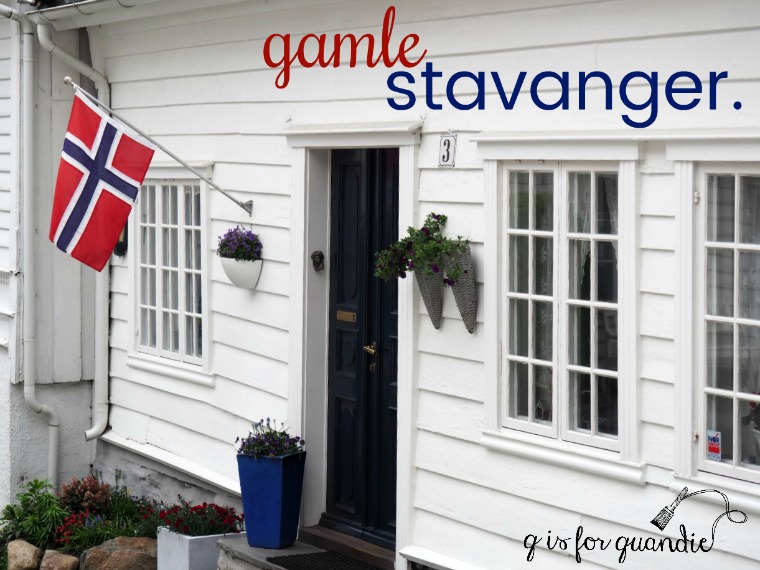
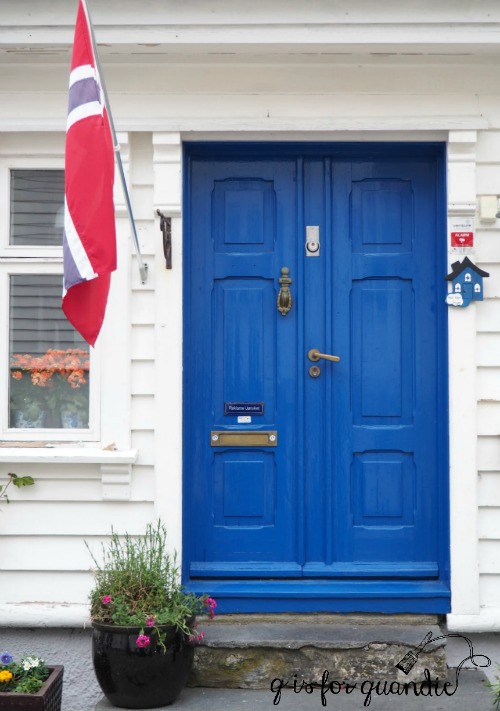
The all white houses (with the exception of the occasional rebel such as the blue one below) reminded me of the Jackson Meadows housing development that I posted about last fall.

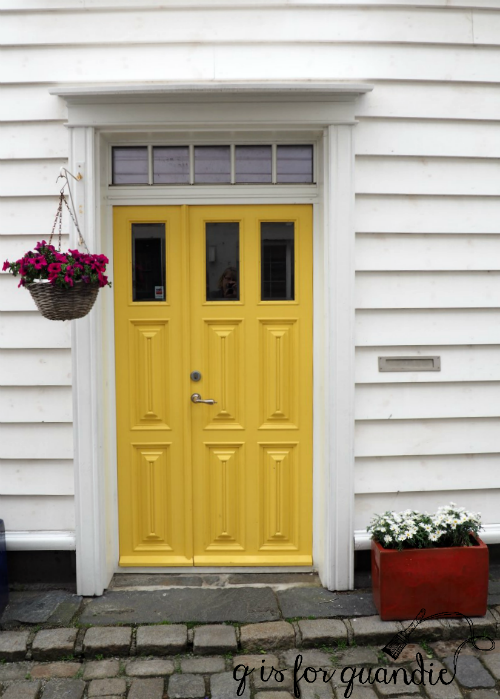
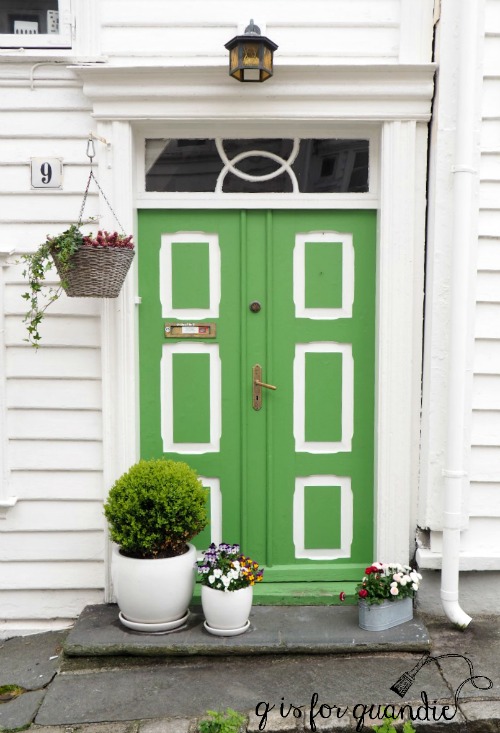
Although in Gamle Stavanger, unlike Jackson Meadows, home owners clearly showed their own personalities in their choice of door color.

I could have walked around forever in this picturesque little area with my camera.

I wish I could have figured out how to get one of these street signs home in my suitcase!

Seriously, I could use a ‘strandgate’ sign in my garden!

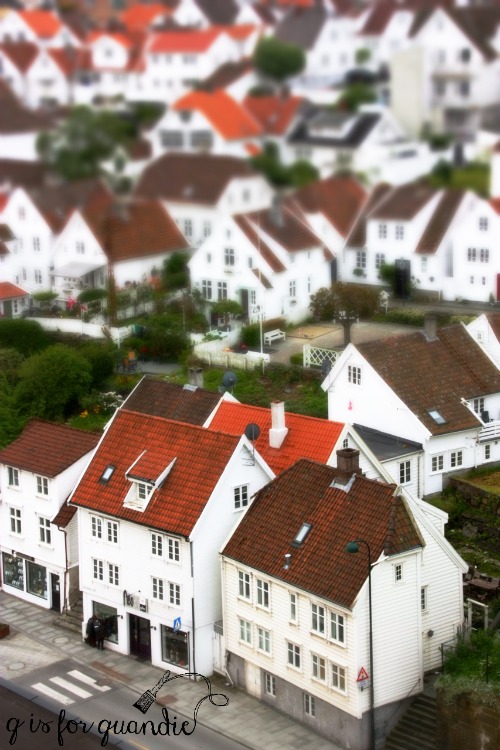
Just for fun, here’s a little ‘miniaturized’ Stavanger.

I get such a kick out of this photo effect.  To read more about how I did it, check out this post.

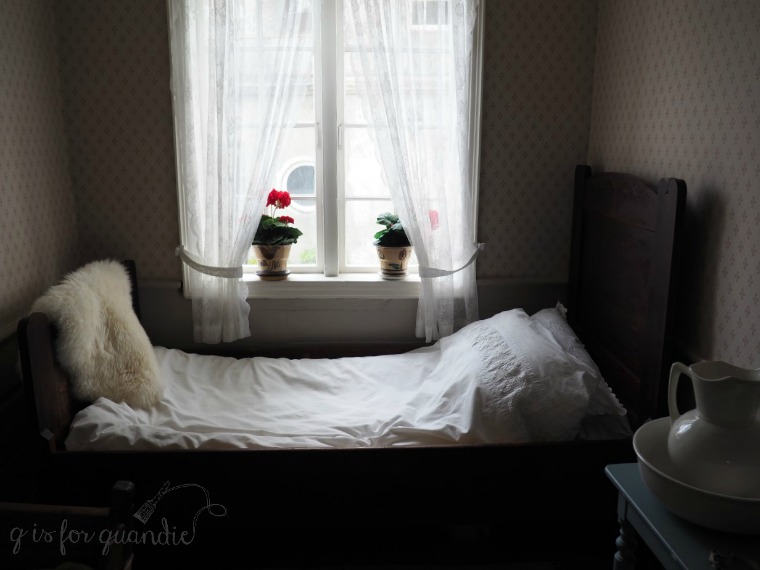
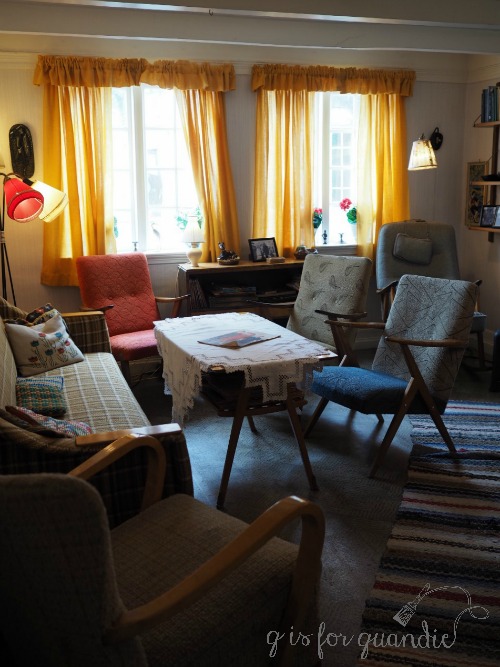
Anyway, while we were wandering around someone tipped us off to the fact that one of the houses was open to the public.  Called The Workers Cottage, this house had been lived in by four generations of the same family.  It was built in 1836.

It has been restored and furnished based on two different time periods and opened to the public as a museum.  The main floor is c. 1920 …

and the upstairs is c. 1960.

I just loved the 60’s kitchen upstairs.

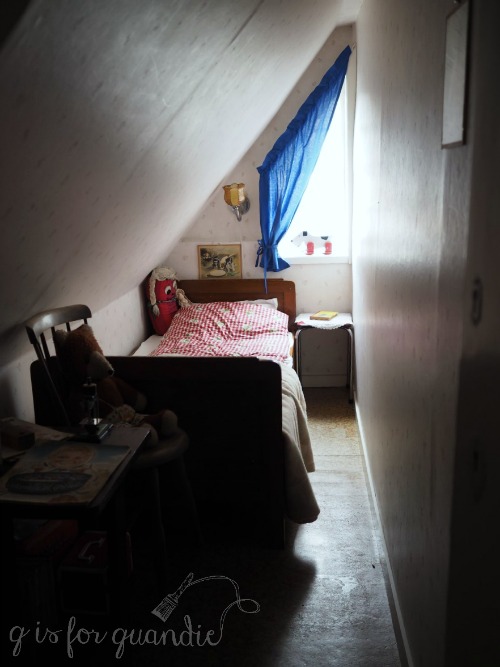
And the adorable kid’s bedrooms that were tucked under the eaves.

Doesn’t that just look like the perfect cozy kid’s hideaway?

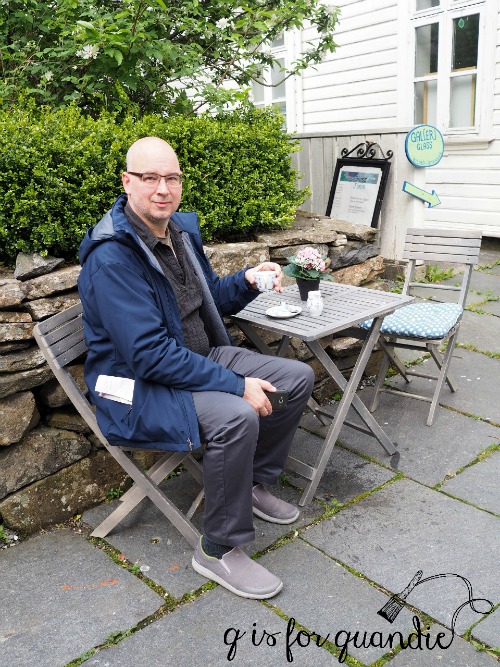
Mr. Q isn’t quite as interested in vintage furnishings as I am, so he took a seat on the patio with some coffee to wait for me.

When I joined him there I somehow managed to knock into the table just right causing the whole thing to collapse sending his coffee, and the pretty china it was served in, crashing to the ground.  How mortifying!  But the ladies serving the coffee took it all in stride and in fact were very apologetic about the table saying that it wasn’t very sturdy and they really should just replace it.  They suggested we move to another table, brought out new coffee in more pretty blue and white china and all was well.

As lovely and enjoyable as gamle Stavanger was, it only took the morning to see all of it.  You’ll have to check back next Wednesday to see how we spent our afternoon in Stavanger!

kristiansand.

Do you ever think about the origins of the word ‘blog’?

It’s a shortened version of ‘weblog’, or web log.  Blogs started out as a sort of online log or diary and can be public or private.

I’m bringing this up today by way of explaining that sometimes I look at my blog as a way of conveniently keeping track of my life.  I refer back to my blog all the time.  If I can’t remember exactly what color I used on a particular piece of furniture, or what topcoat I put over it, I look it up on the blog.  I also go back and look at the various different combinations of plants I’ve used in my window boxes and remember which ones worked well and which ones didn’t.

But I also enjoy looking at posts about trips I took and reminiscing about the experience.  When I went on the Danube River cruise a couple of years ago I sort of dropped the ball on posting about it.  I managed a couple of posts, but I definitely left a lot of stuff out.  So I’m determined this time to feature each of the ports of call on my last trip in a blog post.

I’ll admit, it’s pure selfishness on my part.   But based on the comments I’ve received, I know that at least some of you are enjoying these posts too!  I plan to post these travel posts every Wednesday for the rest of the summer, so if you are bored by them you can avoid Wednesday posts!

But for the rest of you, today’s post is about our third port of call, Kristiansand, Norway.

I have to admit, Kristiansand was not my most favorite stop on this cruise.  But keep in mind we visited 11 ports of call, and they were all pretty amazing.  They can’t all be the most favorite!

Maybe it was the public toilets that required a coin I didn’t have?  Or maybe it was the tiny historic area, or Posebyen, that I had such high expectations for but was rather disappointed by.  I don’t want to imply that Kristiansand was bad, it definitely wasn’t, it just wasn’t as incredible as the other ports we visited.

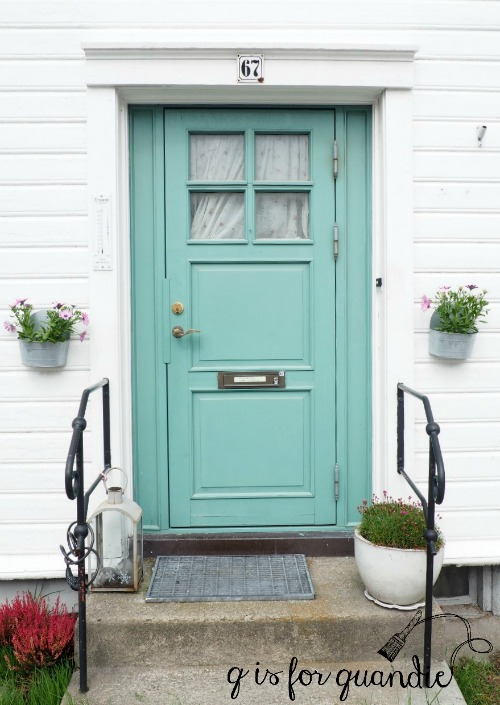
However, there was this door in the most perfect shade of aqua …

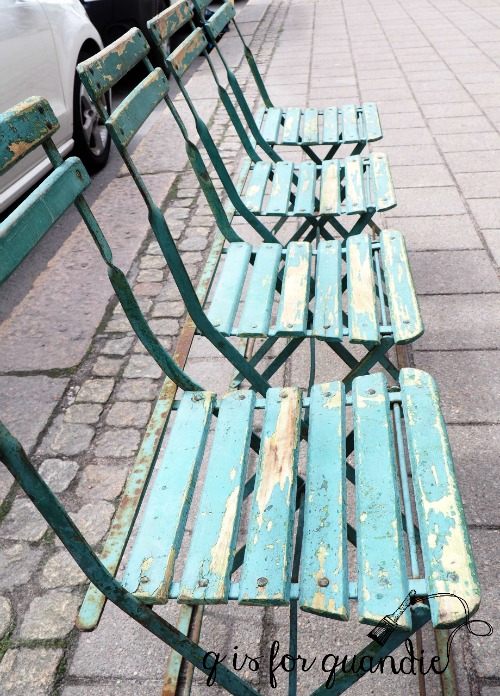
And another thing in Kristiansand’s favor was that it had an awesome antique shop.  Let’s see, vintage garden chairs with chippy paint …

and a stack of old suitcases?  Yeah, this place drew me in like a magnet.

If I could have just purchased this vintage luggage tag I would have!

It only took us about an hour or two to wander around the town, antique shop included, then another 30 minutes to sit and have a cup of coffee and use the free toilet at the coffee shop (two fancy coffees, $11.21 paid with Mr. Q’s phone app; two uses of the toilet, free).

Then we started to wonder what we should do with the rest of our day.  I had grabbed a tourist brochure after getting off the ship though and noticed that there was a park, Ravnedalen, with hiking trails just at the edge of the old town.  So we headed over there to check it out.

This turned out to be a great choice.

Mr. Q takes a break and enjoys the view!

It was beautifully serene in the woods, and the hiking trails were amazing.

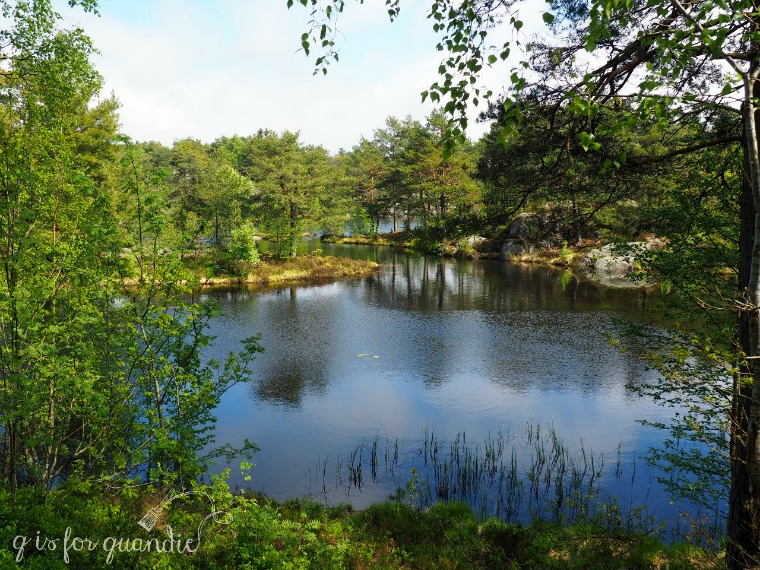
And they led to beautiful views of some small lakes.

For you local Minnesota readers, looking at these photos you can see why so many Norwegian immigrants felt right at home in Minnesota, right?

After hiking around for a bit, we headed back through town towards the port and of course we had to stop for a moment to check out the Neo-Gothic cathedral in the middle of town.  It was entirely surrounded by construction that was taking place (and this actually was the case in many of the places we visited on our trip), but I managed to get a nice photo of it anyway.

All in all, Kristiansand was a lovely little town, but not terribly exciting.  As you continue to follow along with my Wednesday travel posts and see some of the other stunning places we visited, you’ll understand that Kristiansand had some pretty fierce competition for ‘most favorite’ port.  Hope you’ll stay tuned!

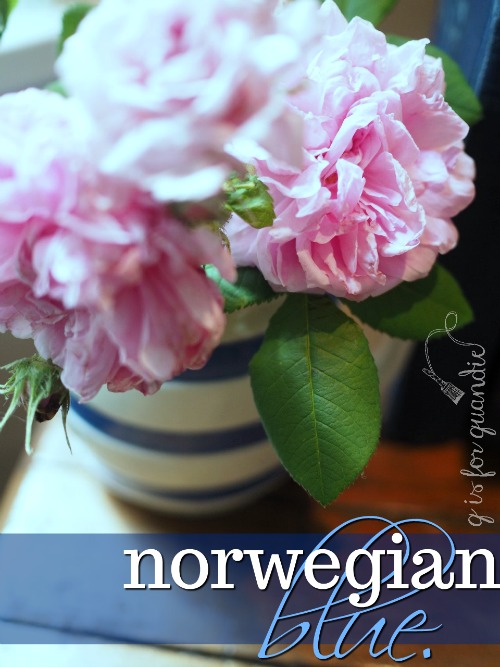
norwegian blue.

Kim left a comment on one of my posts about my trip asking if I’d been inspired by any of the colors I saw in Norway or Scotland, and the answer is a resounding yes!

As I mentioned in my post about Oslo on Wednesday, I loved the vibrant blues that I saw at the folk museum.  The bright blue on this bed is stunning.

While the faded blue on this trunk may not be as bright as it once was, it’s still lovely.

And in fact, beautiful shades of blue were everywhere, like on this door in Stavanger.

I don’t think I even realized just how much blue had caught my eye until I started going through my photos.

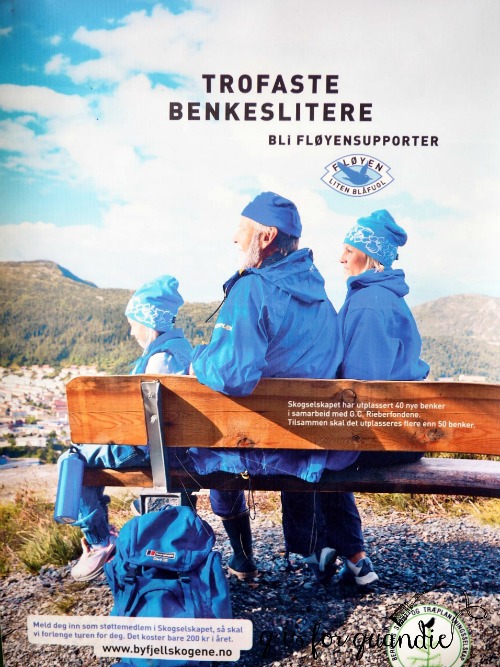
Even the Norwegian posters were blue!

I just love the perfect chippy, worn blue on this chair.  If I could have brought this home as a souvenir, I definitely would have.  Do you think I could have shoved this into the overhead compartment on the plane?

Probably not.  Instead, I had to create my own version of it at home.

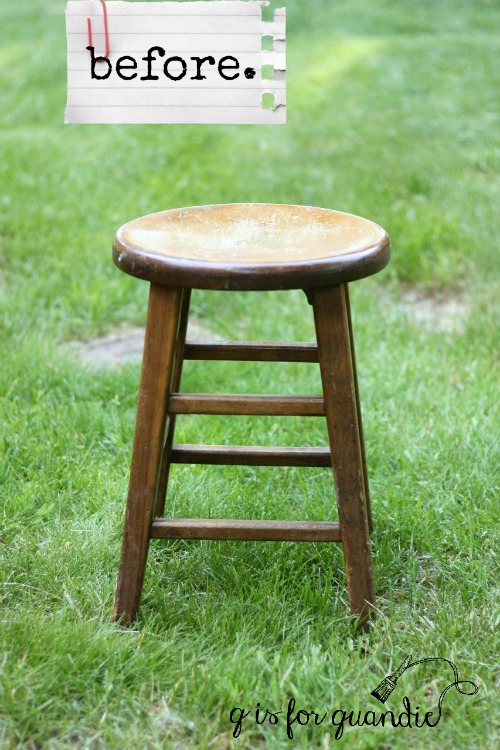
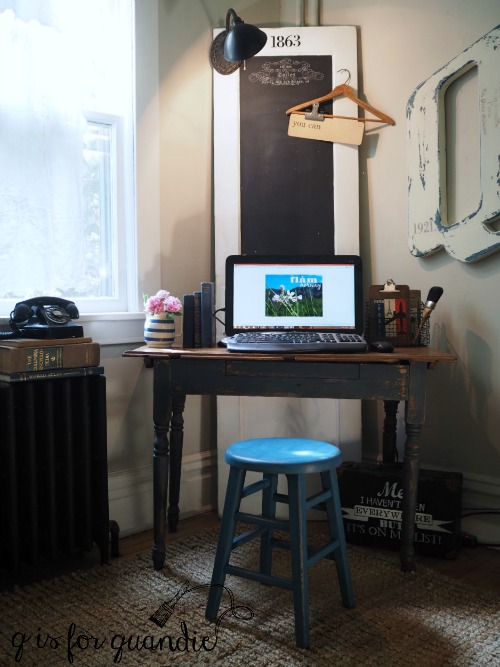
I purchased this little stool at my ‘breakfast meeting‘ the other day and it was the perfect candidate for a Norwegian blue paint job.

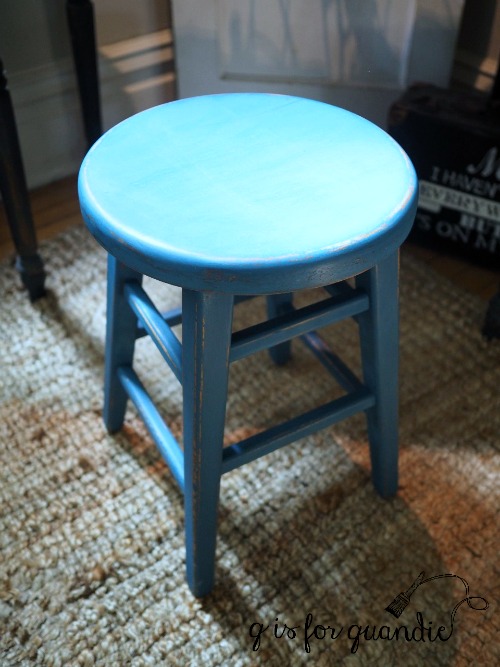
Funny enough, Behr actually makes a color called Norwegian Blue (N470-5), but nope, not the color I wanted at all.  So I chose to use Miss Mustard Seed’s Flow Blue milk paint, it’s the perfect Norwegian blue.

I followed my usual m.o.  A little sanding, followed by a cleaning with TSP substitute, followed by two coats of paint.  And this time I finished with Miss Mustard Seed furniture wax.  I got just the right amount of chipping/distressing on this adorable little stool.

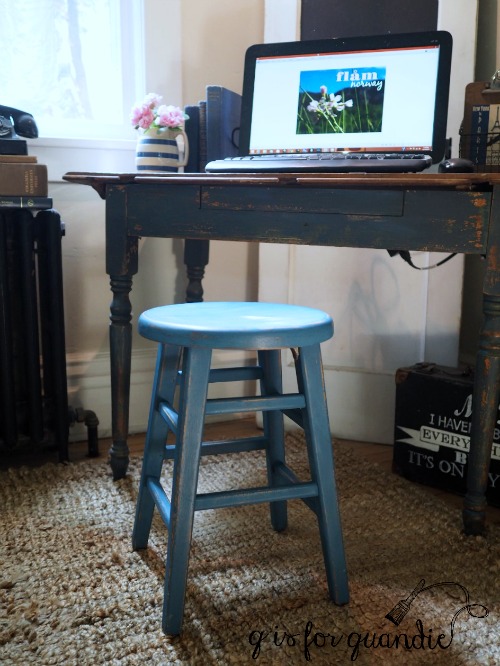
Although it looks pretty great paired with the desk in my Q-branch, it’s definitely not comfortable enough for the amount of time I sit here writing my blog.  So it won’t be staying in this spot.  But I’m going to carry it around my house for a while and see if I can come up with a spot for it.  Just a little something to remind me of the beautiful blues of Norway!

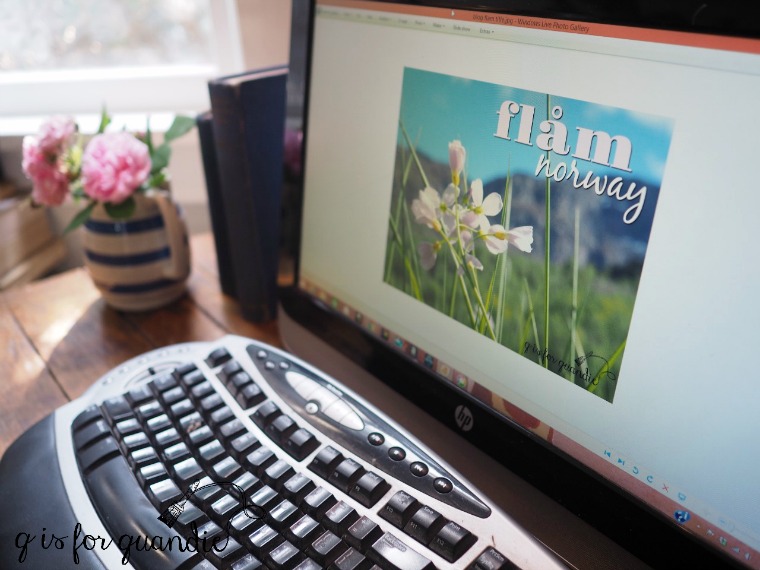
By the way, did you notice?  There is a little sneak peek of one of my upcoming travel posts on my computer screen.

We’re not going to get to Flam until sometime in July though, so you’ll just have to stay tuned for that one!


oslo.

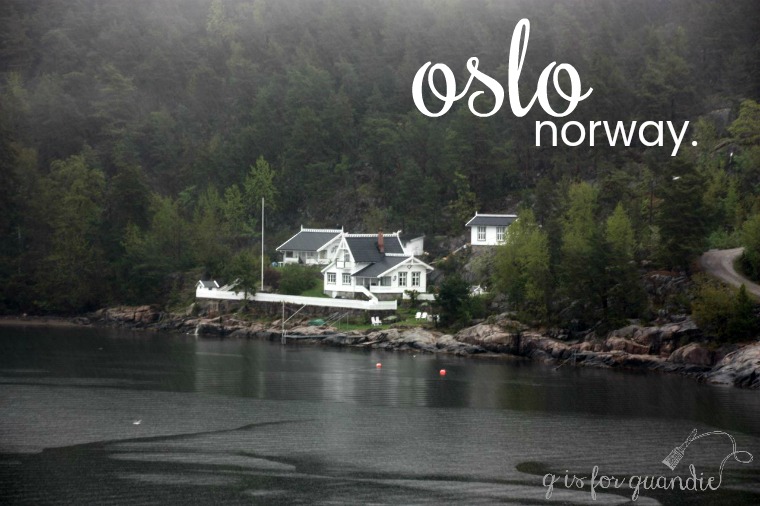
The first port of call on our recent Northern European cruise was Oslo, Norway.  There is nothing quite like waking up in your stateroom, looking out the window and seeing that you are silently sailing through the mist down the Oslofjord.

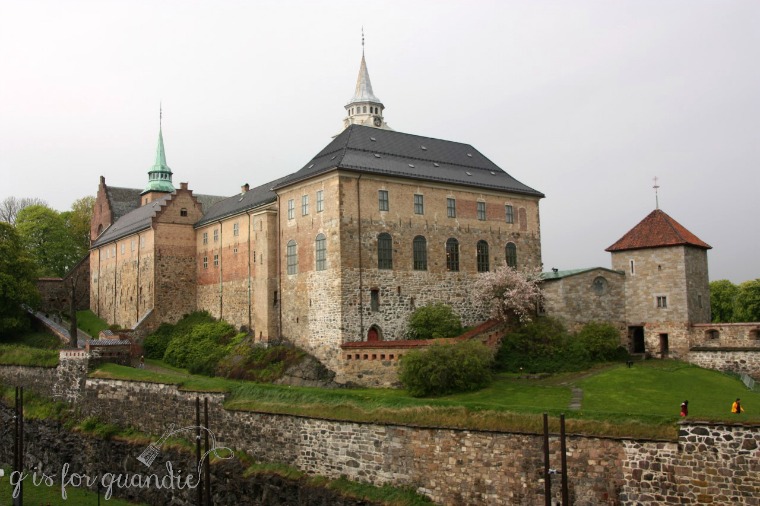
An hour or so later our cruise ship pulled up to dock in the most convenient location directly across the street from the Akershus Fortress, a medieval castle that was built sometime around 1290.

We were on the starboard side of the ship and right from the get go it seemed like this was the best side to be on.  It was so thrilling to just look out the window of our stateroom and see this amazing old stone fortress right there in front of us.

I mentioned in an earlier post that I wanted to visit the Norsk Folkemuseum on the Bygdøy peninsula while in Oslo, and that couldn’t have been any easier.  We simply walked off our ship and over a couple of piers to the Båtservice ferry.  We purchased two tickets (for about $15.50 total) at the kiosk and paid with a credit card.

Quick sidebar:  we paid for everything in Norway using a credit card.  They are accepted nearly everywhere, as long as you have either a card with a chip and a pin number or an app on your phone like Android Pay.  We never got any Norwegian cash and were simply able to use either a card or Mr. Q’s phone.  It was so convenient.  The only time this backfired on us was when we found that the public toilets in Kristiansand were coin operated, but it was easy enough to find a coffee shop, enjoy some delicious brew and use the free toilet located within.

A quick ride on the ferry took us over to Bygdøy and from there it was just a short, well-marked walk to the Folkemuseum.

We purchased our tickets and headed in.

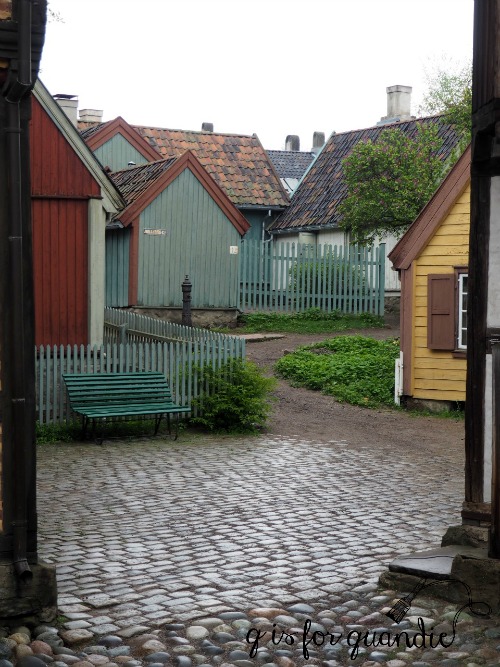
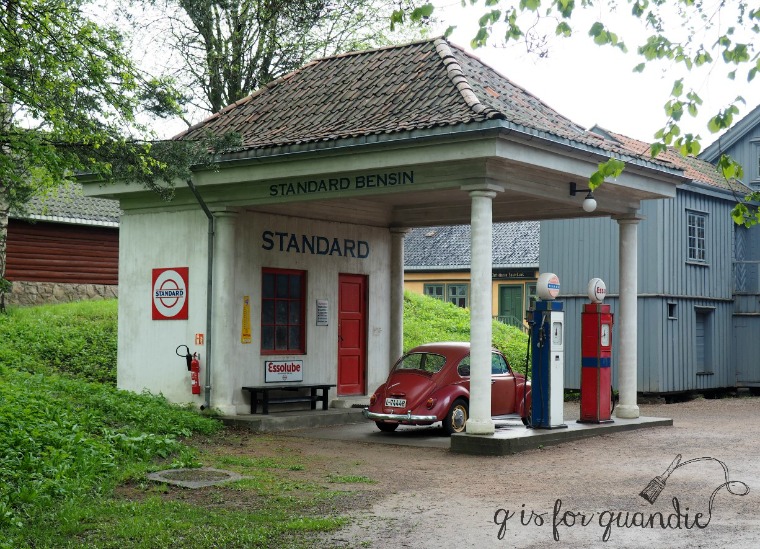
This open air museum has 160 historic buildings relocated from all over Norway.  The area is laid out with sections representing an old town, the countryside and a stave church.

We started in the old town and pretty much had the place to ourselves.

As you can see, it was a little drizzly on our day in Oslo.  The sun would peek out periodically though and it never really poured rain so we were perfectly fine walking around and never really even needed an umbrella.

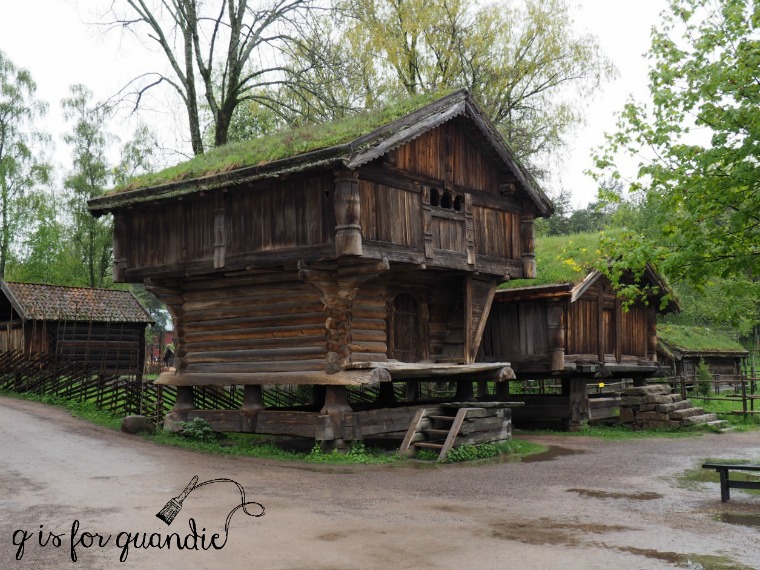
The countryside areas were separated by region such as Telemark, Hallingdal, Ostlandet, Hardanger, Sunn-og Nordfjord, Tondelag, Osterdal, Numedal and Setesdal.  It was interesting to read the information plaques about the different styles of building in the different regions.  To me they all looked the same, but there are subtle differences that help identify which region each style belongs to.

Many of the buildings were open and were furnished with traditional pieces from the time period or region.

I noticed a lot of blue painted furniture.  Hmmm, it inspires me to get out some blue milk paint.

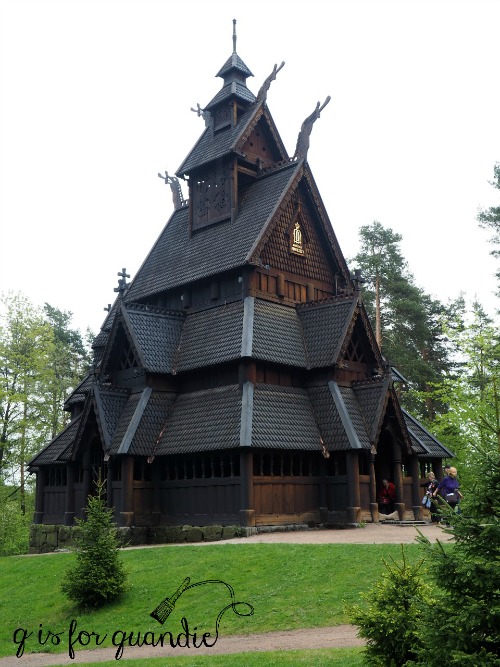
The stave church is probably considered the crowning jewel of the museum.

It’s also where we found all of the other tourists.  Apparently the bus tours of Oslo take people to this museum and then just to the stave church and not the rest of the grounds.  I felt a little bit bad for those people because they were missing so much!

After we’d seen all we wanted to of the museum, we just walked back to the ferry dock and used our round trip tickets to head back to the port where our ship was docked.  There was a ferry schedule posted, but they seemed to run rather frequently and we didn’t have to wait long for the next ferry.

I’m going to take a moment here to tell you my one of my biggest complaints about cruising.  Any cruise line in the industry is going to work hard to convince you that the best, most convenient, safest and sometimes even ‘only’ way to see things in port is via a ship sponsored shore excursion and this is just simply not true.  This is one of the places where they make a good chunk of their profits (well, this and liquor sales).  The ship’s shore excursions are sadly overpriced and frankly not usually that great unless you enjoy riding around in a bus with 60 other people and only getting to see the stave church and not the rest of the museum.  It’s not really in their best interest to tell you about the inexpensive, convenient options that are easily available as an alternative to their overpriced shore excursions.  I’m not saying this to scare you off cruising, I’m saying that if you are aware of this and do your homework in advance you can avoid falling into this trap.  I’d say that nearly every port I’ve ever been in has offered some sort of independent transportation and/or tours.  I’ll be sure to share a lot of that info in my upcoming posts about this cruise.

Cruising is a fantastic way to see Europe and we had an amazing time on our trip.  If you just keep some simple tips in mind you can really make a cruise work to your advantage!

We sailed past this picturesque spot on our way back down the Oslofjord as we left Oslo behind …

It’s the Dyna Lighthouse, built in 1875 (or 1874 depending on where you look).  In addition to being a functioning lighthouse, it’s also available for rent as a banqueting facility.  Check out their website {here}.  Wouldn’t that be a fun place to attend a party?

Two ports down, nine to go!  I hope you’ll stay tuned to hear more about my trip each Wednesday.  Or check back on Friday to hear more about an Oslo inspired milk paint project I finished up this week!

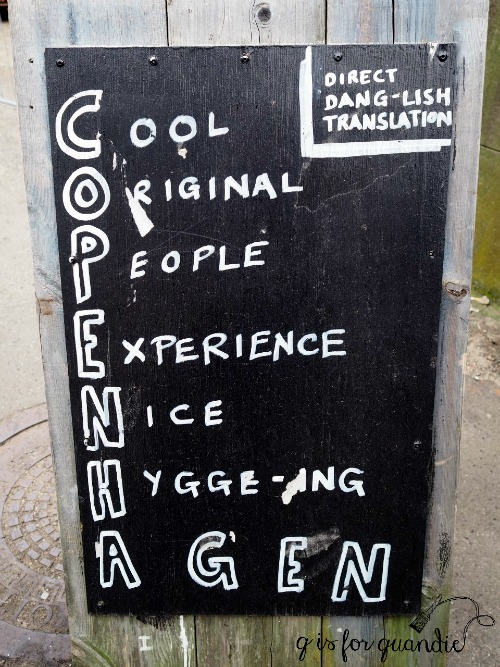
cool original people experience nice hygge-ing a ‘gen.

Our recent Holland America cruise sailed out of Copenhagen, Denmark and the last time Mr. Q and I were there we absolutely loved it, so we decided to fly to Copenhagen a few days before our ship sailed and spend some extra time in this gorgeous city that is known for its hygge.

Hygge?  I thought this was just the popular blogging buzz word of the moment.  But oh no!

hygge

Pronunciation /ˈhʊɡə//ˈh(j)uːɡə/

NOUN

  • A quality of cosiness and comfortable conviviality that engenders a feeling of contentment or well-being (regarded as a defining characteristic of Danish culture)

    Comfortable conviviality indeed!  Copenhagen positively embraces its hygge!

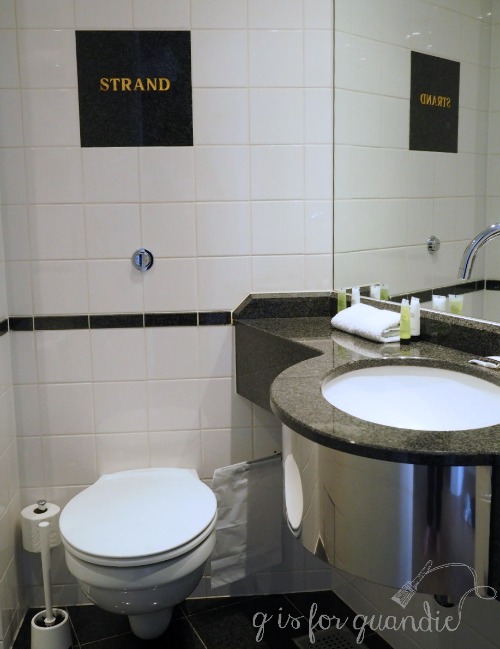
Upon our arrival Mr. Q and I checked into The Strand Hotel.  We chose this hotel on a whim, after all our last name is Strand.  How could we resist?  It also happened to be in a pretty great location.  It was kind of amusing to see our name above the door, on all of the floor mats, in the elevator … and even engraved in marble above the ‘throne’!

What can I say?  We are easily amused.

I was hoping we’d get some sort of perk, like a really great room or some kind of freebies, but nope.  The fact that we shared our name with the name of the hotel didn’t even raise an eyebrow.  The very friendly and helpful clerk who checked us in didn’t even mention it!

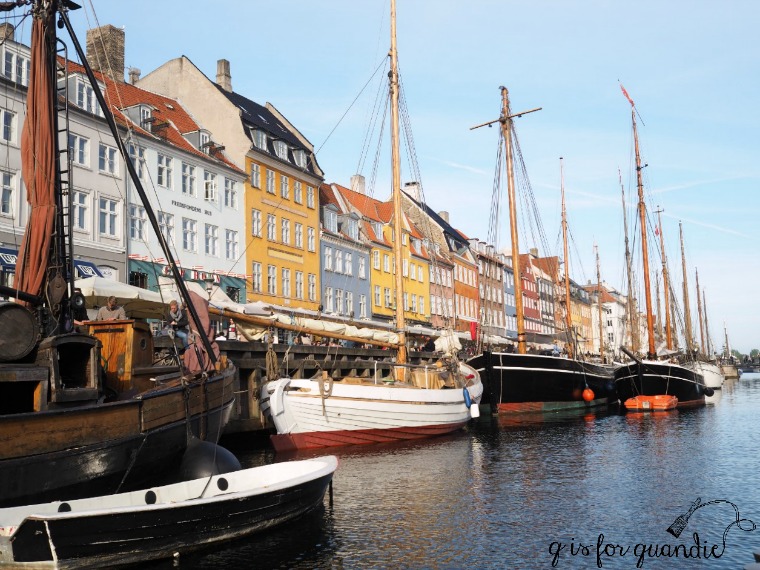
After dropping our bags in our room, despite being overcome with exhaustion after having been up for well over 36 hours (I just can’t manage to sleep on a plane), Mr. Q and I headed out for Nyhavn, the 17th century waterfront district in Copenhagen.

It was only a block away, so it seemed like the best choice considering our condition.  We immediately hopped on one of the tourist boats that regularly depart Nyhavn for a scenic cruise around the canals of Copenhagen.

Despite being super touristy, these boats are still a fun way to get your bearings and see some of the sights without too much effort.  It’s a great way to get acclimated on your first evening without having to worry about whether or not your brain cells are functioning properly.

We had originally been planning to head outside the city to visit some castles the next morning, but when we finally managed to drag ourselves out of bed we realized that plan was maybe a little too ambitious for our current state of mind.  Instead we fortified ourselves with some Danish coffee and pastries …

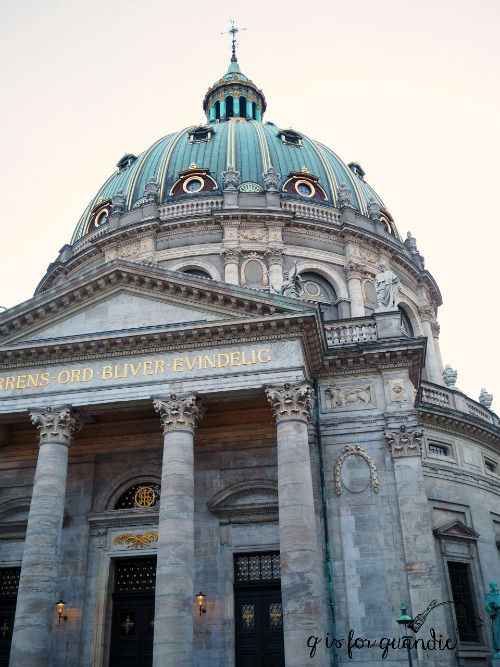
and then did our own little walking tour along the waterfront passing Amalienborg Palace and the beautiful Frederikskirke or Marble Church …

and ending up at the Kastellet (the citadel), a star shaped fortress built in the mid-1600’s.

For lunch Mr. Q insisted that we walk across the ‘kissing bridge’ from Nyhavn to the street food market on Papirøen (Paper Island).  I resisted because my feet were starting to complain, it was starting to drizzle a bit and it looked like it was a long way away.  But distances can be misleading and it turned out that the walk was not far at all.  In the end, I was so glad he insisted.

This place was full of stalls featuring street food from all around the world.

  We wandered around looking at all of our options.  Many of the stalls offered free samples so you could test-taste their food.  I loved the old vintage campers they used for some of the food booths.

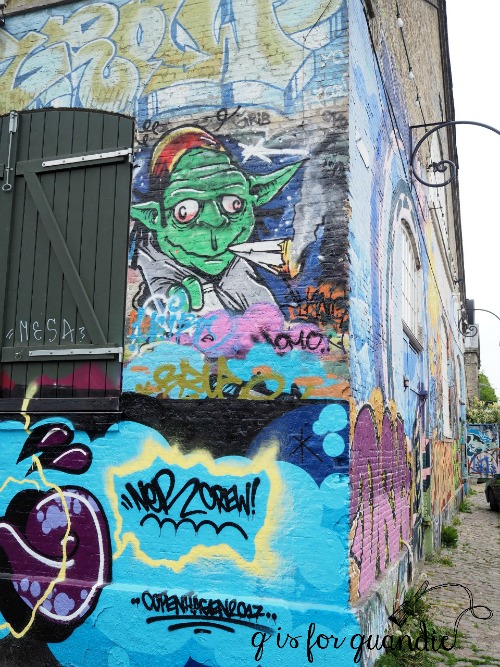
The drizzle had ended by the time we finished lunch, so we decided to head over to Christiania since it was nearby.  If you’ve never heard about Christiana, follow this link to read more about it, but basically it’s a self-proclaimed autonomous neighborhood that was established in the 70’s as a sort of hippie commune of free-spirited people.

I was thinking of it an unconstrained liberal place with no rules, only to discover that I was breaking the number 1 rule, which is ‘no photos’!  Leave it to me, a pretty dedicated rule follower, to manage to break the one rule in a place known for not having rules.  I took quite a few photos before someone finally yelled at me when I tried to take one a little too close to the area where marijuana was being sold quite openly.

It was an interesting little detour outside my normal comfort zone, but we didn’t stay long.  And in case you’re wondering, no, we didn’t buy any ‘souvenirs’ in Christiania!

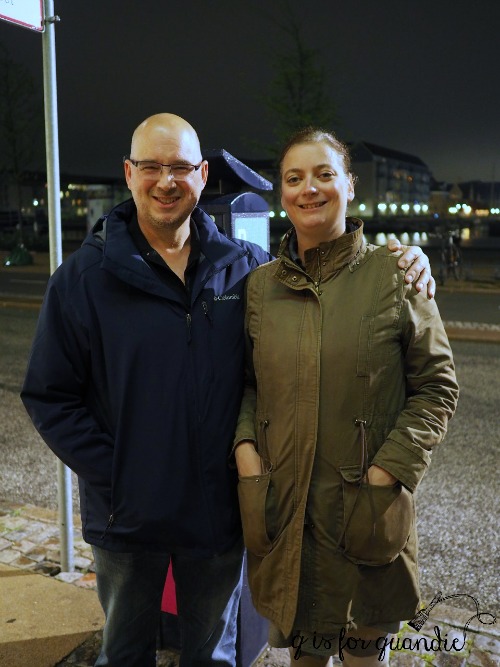
That evening was probably the highlight of our time in Copenhagen.  Several years ago Mr. Q was contacted by a woman from Denmark, Susan, who was working with a Danish writer with a brain injury.  Since Mr. Q has a brain injury and has published several books himself, she was given his name as a potential contact.  They shared some emails and became Facebook friends, but had never actually met.  As it happened she was going to be in the city when we were there and we arranged to meet up with her.

She is a lovely person, so welcoming and so generous with her time.  She took us on the Metro out into the less touristy parts of Copenhagen, and then we had a long dinner in a charming, cozy (or should I say hygge?) restaurant where we quizzed her endlessly about what it’s like to live in Denmark.  It’s always so much more interesting to hear about a place from a real local rather than a tour guide.

Just one of the many topics we discussed was the Danish practice of leaving your sleeping baby outside on the sidewalk in a pram while mom and dad shop or enjoy dinner in a restaurant.  This is a very common practice in Denmark and something parents there have always done.  Even in cold weather.  First of all, you have to realize that the prams are totally kitted out for the weather, and the baby is bundled up appropriately.  But also, as Susan explained to us, people don’t steal babies in Denmark.  So parents just don’t worry about leaving their babies outside unattended. And she’s right about that.  If you google it you’ll find that there has only been one single incident involving the kidnapping of a child in Denmark and it was over 30 years ago.  Susan said people still talk about that today because it was such a rare and shocking occurrence.

After polishing off a bottle of wine, we took a couple of buses followed by a really lovely walk through the rain washed streets of the city to our hotel.  One of the many things I love about Copenhagen is that you feel perfectly safe walking the streets at 11 pm.

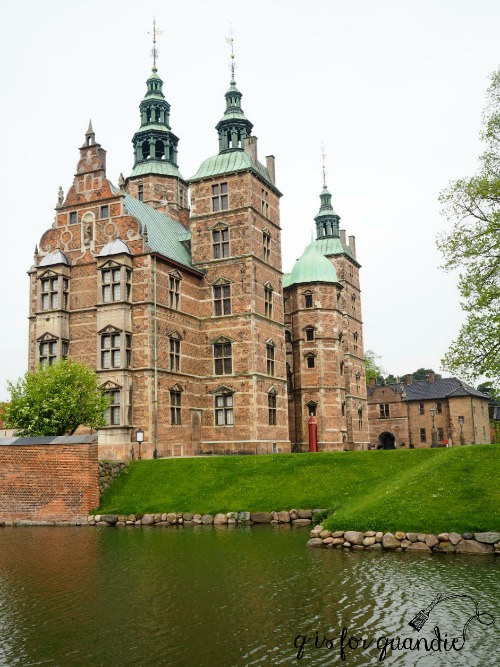
The next day we had a few hours to kill before boarding our ship so we walked over to Rosenborg Castle.  Rosenborg was built in 1606 as a ‘country summerhouse’.  Ha, if only we all had simple little summerhouses like this!

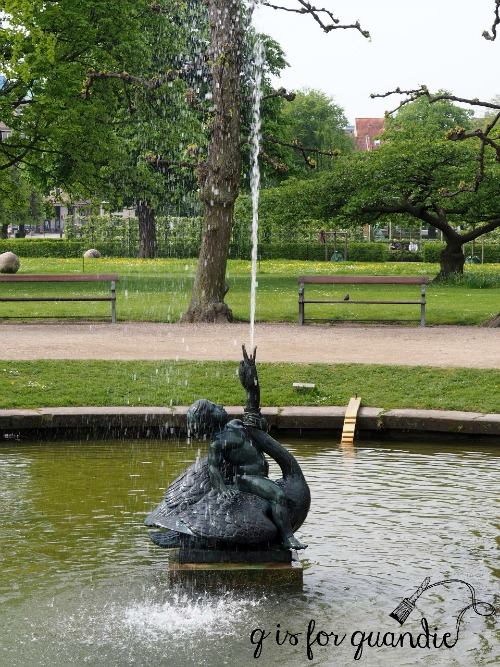
We didn’t take the time to see the inside of the castle, instead we explored the Kongens Have (or the King’s Gardens) surrounding it.  It was such a lovely morning that we wanted to stay outside.

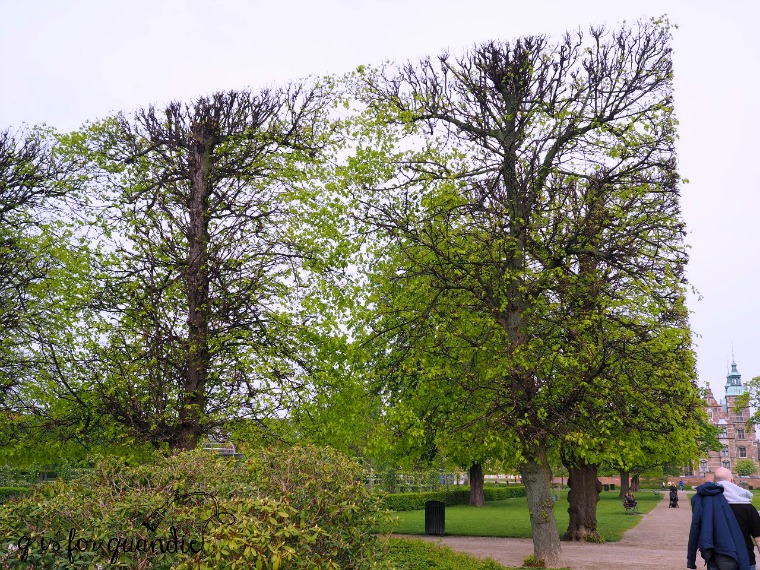
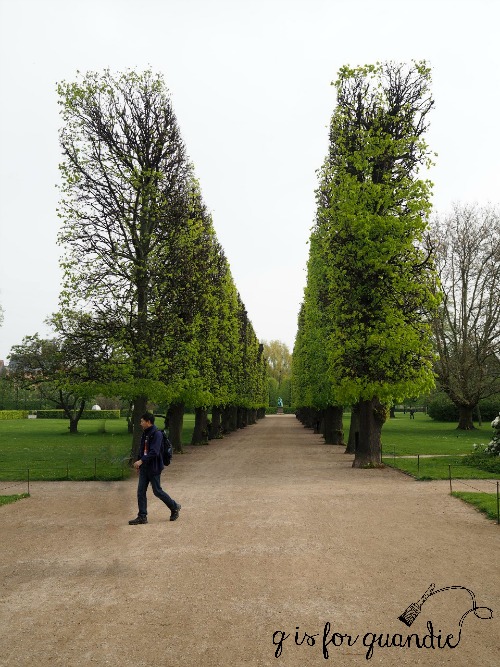
Check out these amazing pruned trees …

I’d never seen anything quite like them before.

You may have noticed that there is one word I’ve used a lot in this post (aside from hygge) and that is ‘walked’.  Copenhagen is a very walk-able city.  If you ever go there, be sure to bring a good pair of walking shoes.   Although they have fantastic public transportation and it’s very easy to use, I always feel like you see so much more when you just walk around.

Sadly it was time to leave Copenhagen behind after our visit to Rosenborg.  We checked out of our hotel and took a taxi to the port to board our cruise ship, the Zuiderdam.  Be sure to stay tuned for more posts about our amazing trip over the course of the summer.  Coming up next week: our first port of call, Oslo!

But not to worry, I still paint furniture too.  It felt great to finally be back out in my carriage house workshop this week and I have a pretty french provincial piece to share with you on Friday, so stay tuned!


there’s no place like home.

Whenever I take a trip, I always feel like I’m back home in the blink of an eye.  How is it that they always go by so quickly?  Next thing you know you are waking up in your own bed at 4:30 a.m. totally unable to go back to sleep.  So here I am with my cup of coffee waiting for the 1,500+ photos that I took to load on my computer.

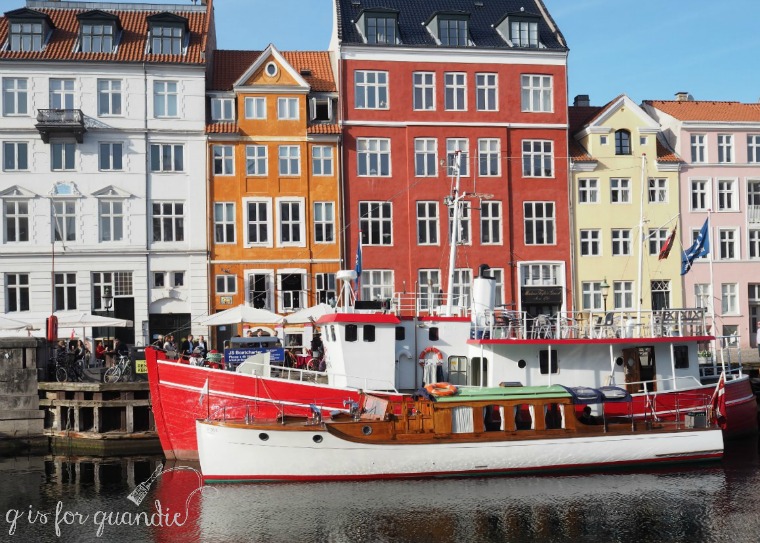
That’s Nyhavn in Copenhagen, taken the first day of our trip.

Unfortunately, unlike Dorothy I didn’t just click my heels together three times and wish myself back home.  Instead Mr. Q and I suffered through a very long, long day full of frantic moments of rushing mixed in with hours of waiting in long lines and enduring uncomfortable airplane seats.  Oh how I envied those lucky souls in first class with their down filled pillows and duvets.  I always love how the airline makes you walk through that area to get to your tiny cramped seat in the back of the plane as if to say ‘just look at what you are missing!’

So I added it up, Mr. Q and I waited in no less than 15 really long lines yesterday.  The worst line was either the 2 hour line to check our bags in Copenhagen, or possibly the 10 minute wait to use the bathroom at JFK in New York (I really had to go).  It’s a toss up.  We left our cruise ship at 8 a.m. Copenhagen time (the equivalent of 1 a.m. Minneapolis time) and we got home around 10 p.m.  So 21 hours.  Ugh!  I might have to burn the clothes I wore.
A funny little tidbit about the 2 hour Copenhagen line.  They seemed to be trying out a new form of security questioning.  In addition to the typical “did anyone ask you to carry an item on board the plane?” and “what is your final destination?” they also asked things like “what was your favorite thing from your trip?” and “do you have any hobbies?”  No lie folks.  They were lovely, friendly people and they made their way down the line chatting with each person in this fashion while they looked over your passport and I assume tried to guess whether or not you were a terrorist.  By eavesdropping I discovered that the people behind us were retired firefighters from Minneapolis whose hobbies were fishing and hunting.  Perhaps they are thinking that potential terrorists will be put on the spot by these unexpected questions!

We had an amazing time on our trip, so in the long run it was worth it to put up with those long hours of travel.  I have so many fun things to share with your guys.  My plan is to write a post a week about each of the places we visited.  I think it will take most of the summer to get through them all.  But don’t worry, they will be mixed in with more posts about furniture makeovers, gardening, garage sale finds, Debbie’s new house and whatever else strikes my fancy.  So I hope you’ll continue to stay tuned.

In the meantime, I’m really happy to be back home again in my own space.  There truly is no place like home.  Hang in there while I recover from jet lag, get caught up on blog comments (by the way, a big thanks for all of the congratulatory comments sent my sister’s way, she loved getting them and she is over the moon about her new house), and then I’ll see if I can remember how to paint furniture!