will it last?

Good morning from the garden!

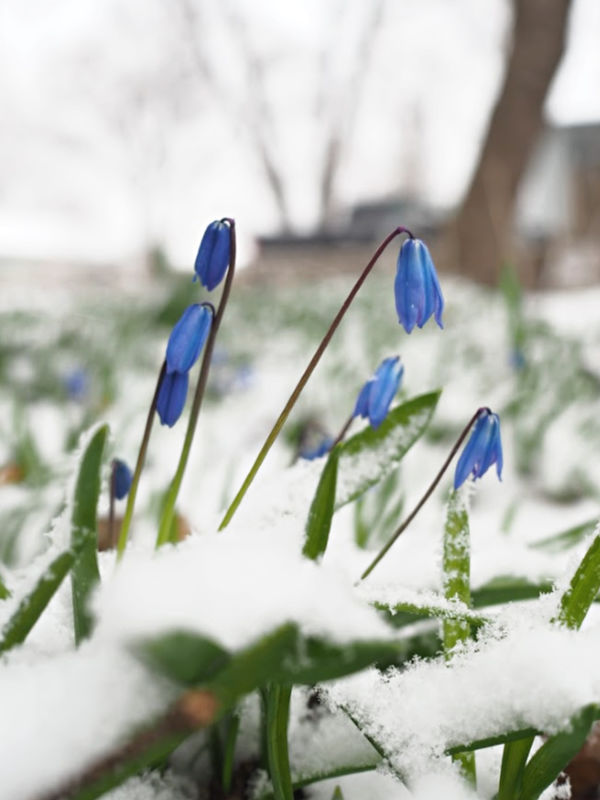
I don’t usually spend much time out in the garden in December, but this year has definitely been an exception.  So far we’ve had a lovely warm fall/early winter, and although we’ve had a dusting of snow here or there, it has melted pretty quickly.  We’ve also had some lovely days with sunshine and temps near 50° this past week.

Will it last?

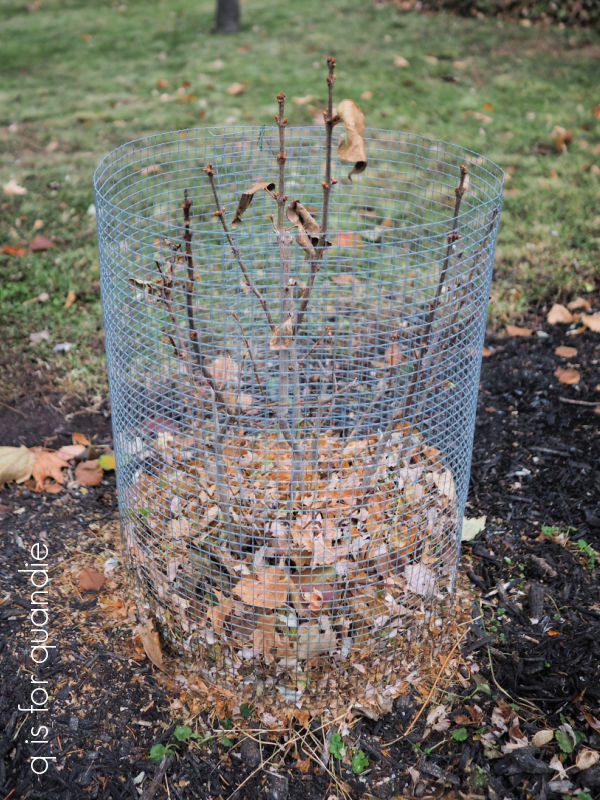
Well, it’s unlikely to last all winter, but for now it has given me plenty of time to get out and rake leaves, clean up wilted hostas and do some extra mulching (we chop up leaves with the lawn mower, and then spread them on the gardens).  I also managed to get some protection set up around my newest lilac bushes in an effort to keep the rabbits away from them this winter.

I purchased a roll of chicken wire at a garage sale for $1 and it was just enough to do my five newest lilacs.  I simply surrounded the lilacs with a length of the chicken wire, and then filled them in with some chopped up leaves.  Fingers crossed that this will be the trick to getting these shrubs established.

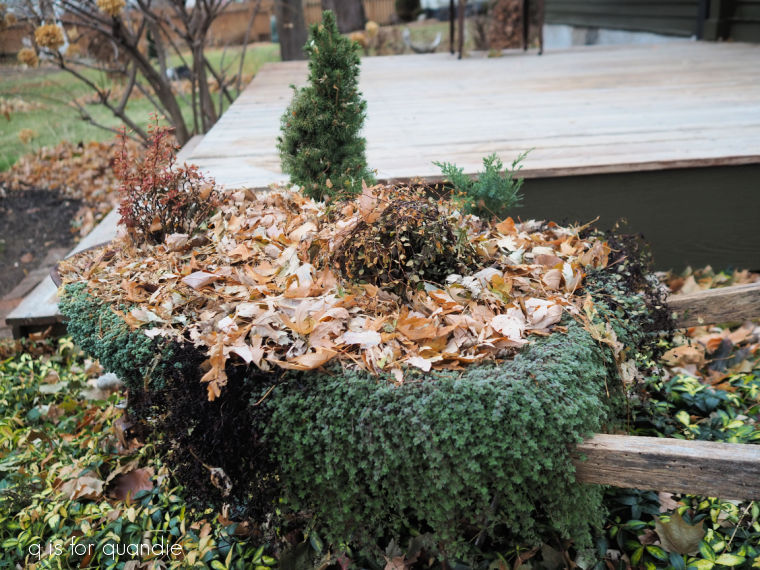
Speaking of winter protection, I decided to risk leaving my fairy garden in place for the winter.  I covered it with some chopped up leaves and am hoping that’s enough.

There’s a chance that everything in it will perish, but I’m willing to risk it.  Worst case scenario, I have to buy all new mini plants next year.  But the Alberta Spruce is a zone 3, as are the mini hostas.  The mini Barberry shrub is a zone 4.  The rule of thumb for overwintering perennials in a container is that they should be hardy to two zones below your growing zone.  Since we were just updated to 5a, maybe these things will be OK.

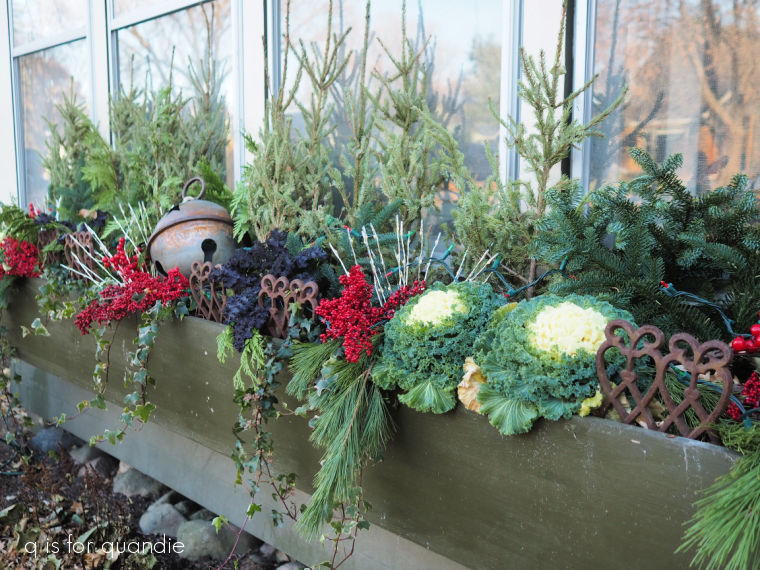
I was also able to fill my window boxes for winter without having to battle rock hard frozen soil this year!  I can’t even remember the last time that’s happened.  I looked back at some of my blog posts from previous years, and even November 9 was too late in 2019!

You may remember that I put some ornamental kale in the front window box for fall, it was still looking so good that I decided to leave it in place for winter.

Will it last?

I really doubt it.  I suspect it will turn into a frozen glob of mush by mid-January at which time it will be frozen in place and impossible to remove, but I thought it was worth a gamble.

In addition to the kale, I filled the front window box with spruce tips and a variety of other evergreens.

Then I added some faux branches of red berries.

I purchased a bunch of these at the after-Christmas sale at Bachman’s last year.  I decided that buying some faux items that I could use year after year in the window box was a good investment.

I think they look fairly realistic mixed in with the real stuff, and they are especially pretty with the dusting of snow that we got yesterday.

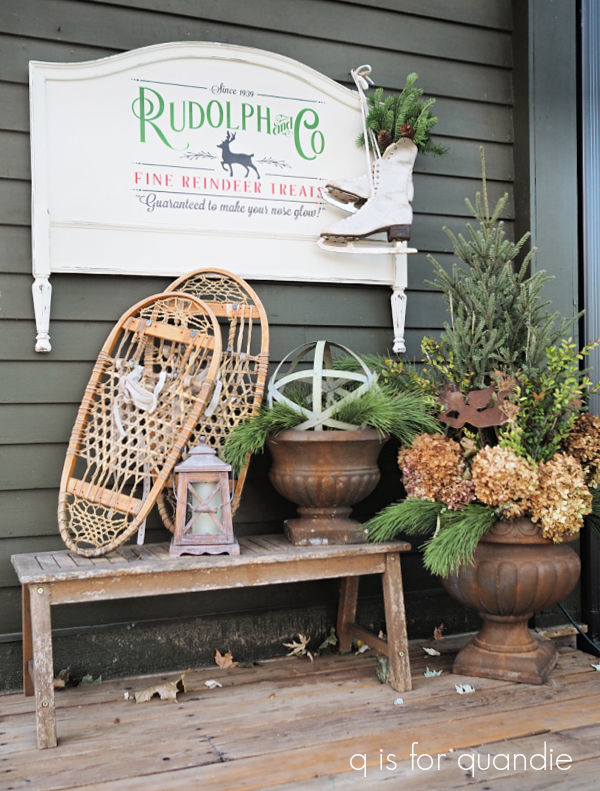
I also invested in some faux garland at the same sale, and I used it along with more of the berries to crown the headboard sign on our carriage house.

When I pulled out my Christmas lights this year I found that quite a few of the strings weren’t working.  I’ve always just used white lights in the past, but this time around I decided to add some strings of red and green lights that I found at Home Depot.  So I have a mix of white, red and green both over the headboard and in the front window box.

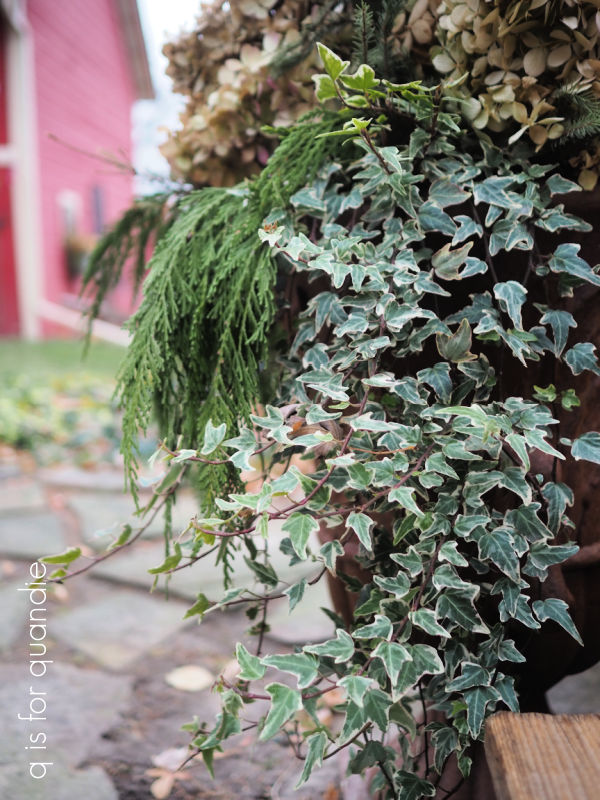
In addition to keeping the kale in place, I also decided to experiment with some ivy.  This past summer I planted ivy in the front window box, and also in the rusty urns next to the deck and like the kale, it was still going strong.

Since ivy is technically evergreen (meaning it doesn’t lose its leaves in the winter), I thought it might be worth keeping in my winter arrangement.

Will it last?

A quick bit of research online tells me that English Ivy is hardy down to around 10°, so no, it likely won’t last all winter.  But here we are in mid-December and it still looks good, so this will be another experiment to see if keeping the ivy is worthwhile or not.

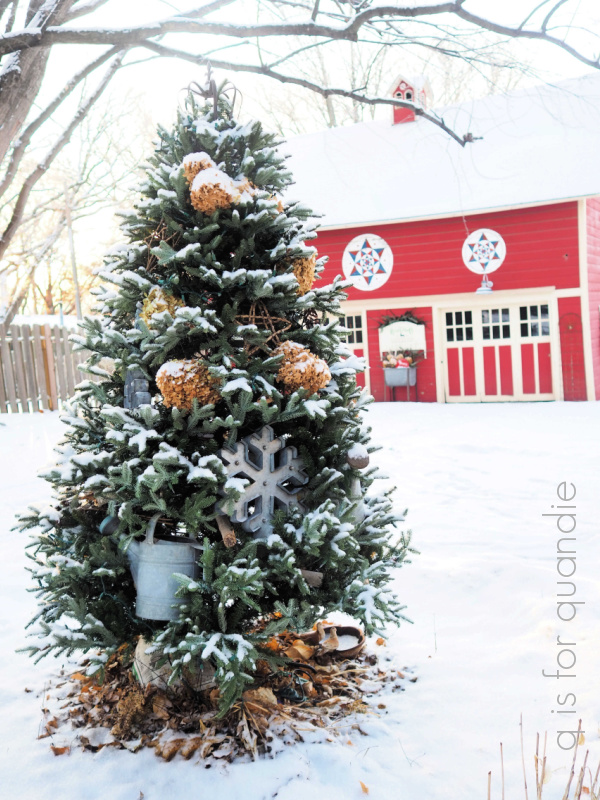
I filled out the rest of those urns with the usual suspects, some spruce tops, a variety of other evergreens, some birch logs and some dried hydrangeas.

Add some lights and a little bit of snow and they look quite magical.

I was beginning to think that there wasn’t much chance of a white Christmas this year, but then we got an inch or so of snow yesterday.

Will it last?

Nope, I don’t think so.  It’s supposed to be in the 40’s here this week so it should all melt.

We’ll just have to wait and see if we get anymore snow before the big day!

overwintering annuals.

Good morning from the garden!

Do you remember last year when I said I was going to attempt to overwinter my caladium?

I went back to read that post and was reminded that we had a ‘feels like’ temp of 12° in October last year!  We are having a much milder fall this year, we had temps near 60° this past week which was delightful.

Anyway, my attempt to save my caladium was a dismal failure.  When I pulled the tubers out of their box in the spring to plant them they were totally dried up.  I totally overdid the ‘keep them dry’ thing.  I should actually have kept them slightly damp, but not too damp, and definitely not completely dry.

Maybe overwintering caladium tubers just isn’t for me.

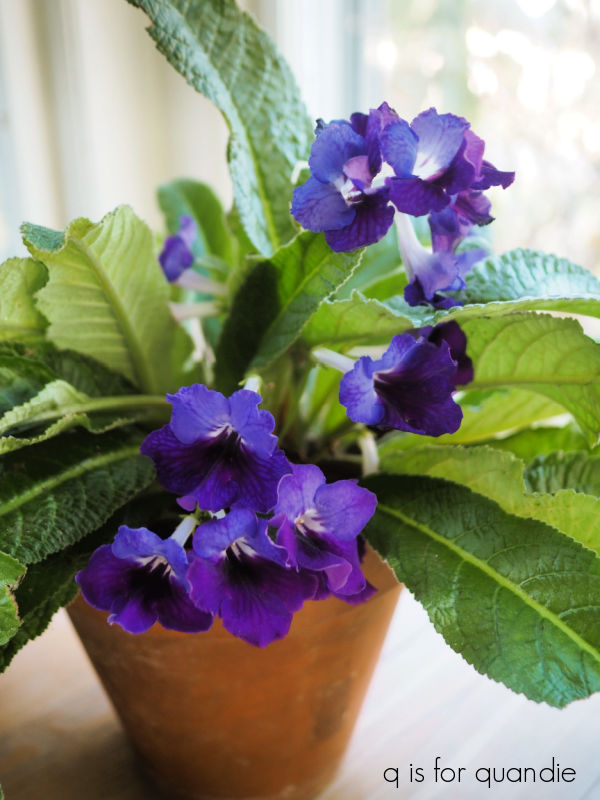
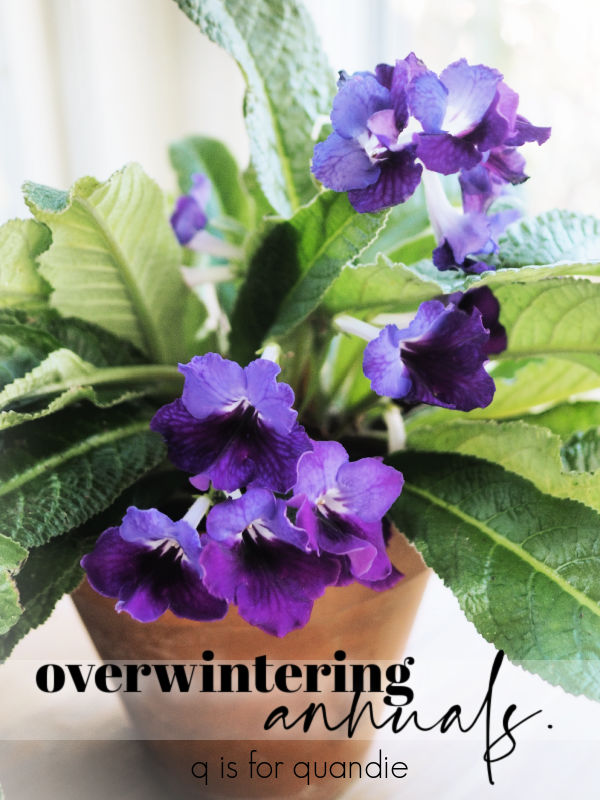
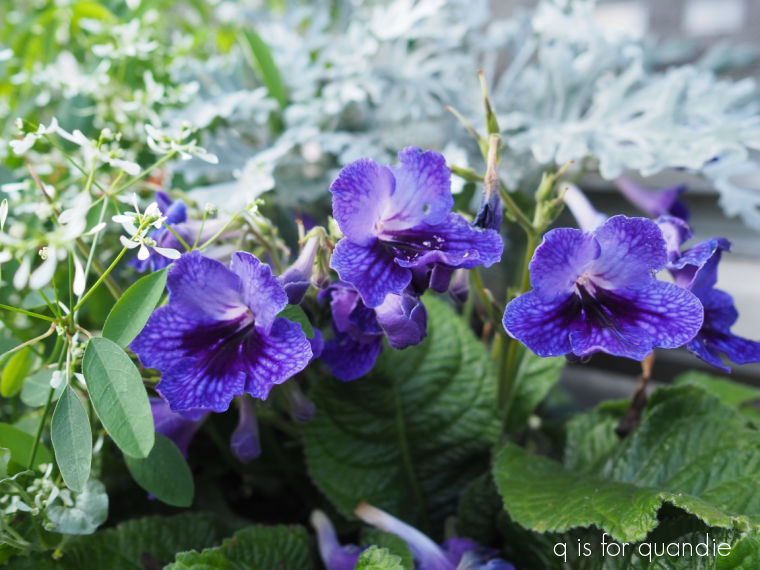
But I am going to attempt to overwinter a couple of other plants this year, the first being the Streptocarpus Ladyslippers™ Deep Blue Vein that I had in my front window box.

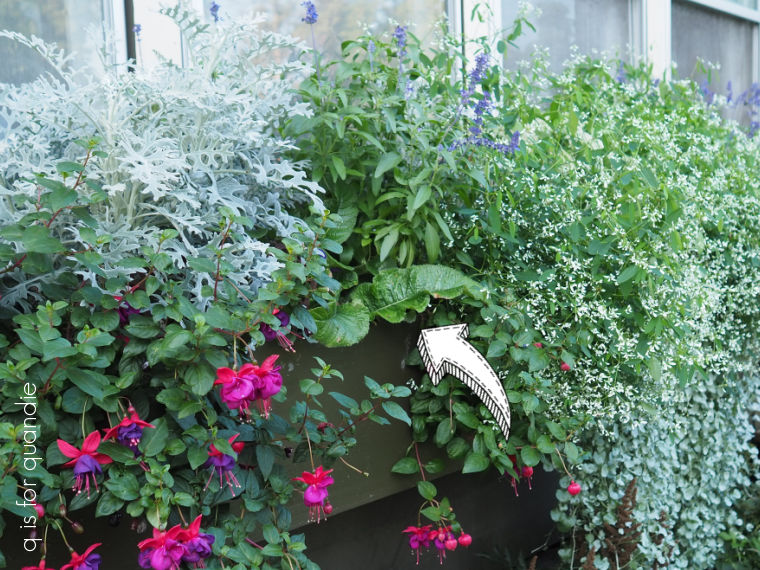
These actually weren’t a great choice for that spot and I considered them to be a bit of a fail.  They were totally swallowed up by the more vigorous annuals planted around them (Dutsy Miller, Diamond Frost Euphorbia, Dark Eyes Fuchsia).

I was quite surprised by how large they had gotten when I dug them out before our first frost though.  They were so buried under those other plants, but they’d still put on a good bit of growth.  I hadn’t planned on keeping them, but they looked pretty good and were still full of blooms.  So I decided to pot them up and see how they perform as houseplants over the winter.

They’ve been blooming like mad since I brought them in.  Some online sources say they will continue to bloom all winter long indoors.  Since they like cooler temps, between 60° and 70° they should be quite happy situated next to our fairly drafty windows in winter.

I also decided to try and save my scented geraniums.

You may remember that I picked up a pair of them at Tangletown Gardens back in July.

I brought these indoors a week or so before I headed off to visit my mom.  They were growing in terracotta pots outside, so I didn’t have to dig them up or anything.

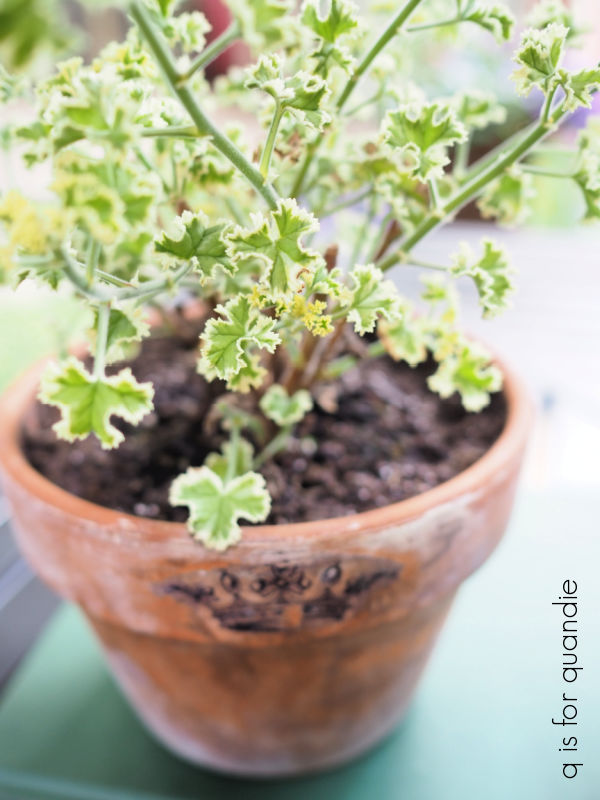
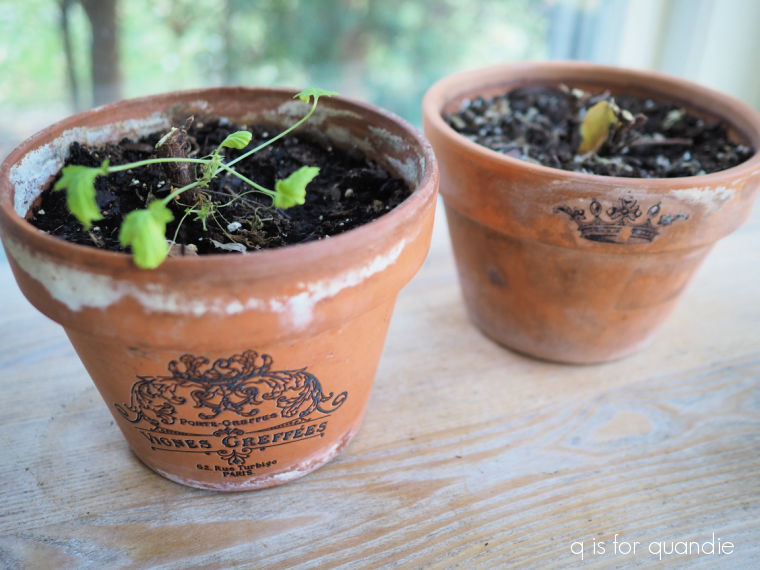
Unfortunately, they didn’t get watered while I was away and I came home to mostly dead looking plants.  After cutting away all of the brown stems, this is what I was left with.

Um, yeah.  Not much.

But they aren’t entirely dead, so I’m still willing to give it a go.

There are multiple ways you can overwinter a geranium.  You can let them go dormant and then hang them upside down, or place them in a brown paper bag, and put them in your basement.  However, if you use this approach you do need to give them some water about once a month.  I’m definitely an ‘out of sight, out of mind’ kind of gal, so I’m pretty sure I would have the same success with this method that I did with the caladium (in other words, none).

You can also take cuttings from your plants and place them in water in a sunny windowsill.  Once they develop some healthy looking roots, you can pot them up in small pots and keep them indoors until spring.  This would have been a great option had the leaves not all fallen off while I was away.

But the option I’m going to try is to just keep them as houseplants over the winter.  I’ve got three more trips planned for this winter though, so we’ll see if they manage to survive.

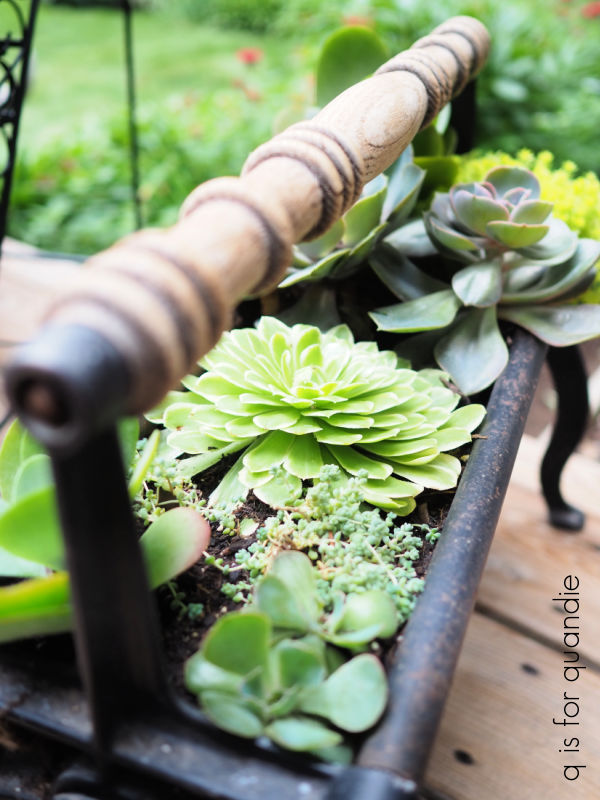
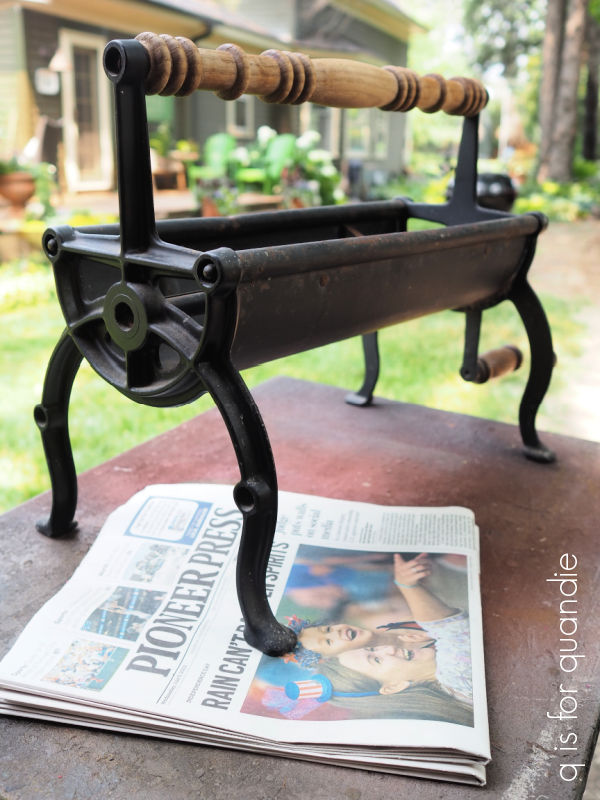
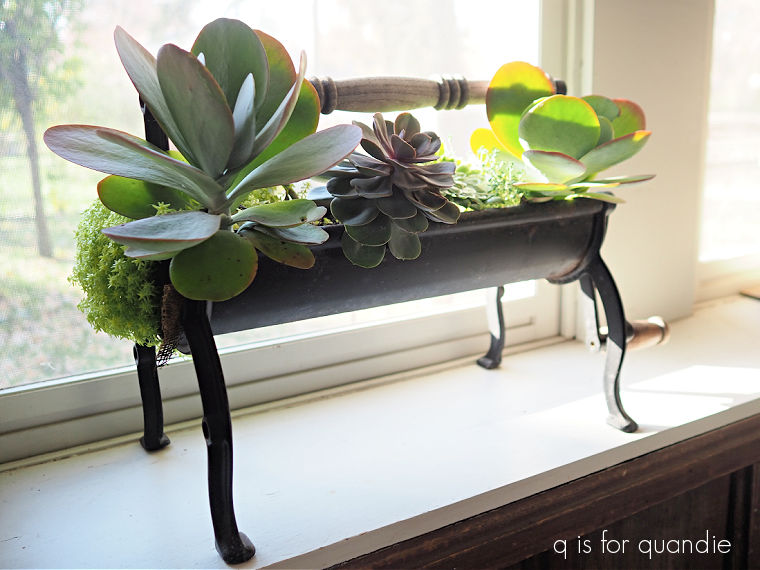
Last up is my newspaper roller full of succulents.

You may remember that I purchased this strange looking item at a garage sale last summer and learned that it was meant for rolling old newspapers into ‘logs’ for a fireplace.

I decided to turn it into a succulent planter, and it worked out beautifully.

I couldn’t bear to just let those succulents freeze, so I brought the entire thing in the house.

I made a spot for it in a sunny windowsill, so we’ll see how it does.

One downside to this arrangement is that the newspaper roller isn’t entirely watertight so I have to use caution when watering and not overdo it.  So far, so good though.

How about you?  Do you have any plants that you attempt to save each winter?  Leave a comment and let me know!

the fall garden.

Good morning from the garden!

This morning I thought I’d take you around for a little fall tour of my garden.

Even though I know my perennials are on the decline and will soon be dying back to the ground, I still think this is one of the most beautiful times of the year in the garden.

Fall can be pretty fleeting here in Minnesota, so you have to be sure to get out and appreciate it while it lasts.  In the blink of an eye the leaves will fall and then everything will be covered in a blanket of snow.

My Vanilla Strawberry hydrangea and Tiger Eye sumac both provide glorious color in the fall.

If you are looking for a shrub to plant for fall color, the Tiger Eye is a fantastic choice.

Of course, paniculata hydrangeas are also a great choice for providing fall color.

The Vanilla Strawberry turn a deep pink, while the Limelights are a little more subtle, but still pretty.

But don’t forget that it isn’t just trees and shrubs that provide good fall color.  I have some perennials that develop fall color too, including the Oenothera biennis, or the common evening-primrose.

The foliage turns a lovely red for fall.  My friend Jodie gave me a chunk of this plant years ago and it has taken off in my garden.  It can be considered invasive, but I find it easy to pull it out when it pops up where I don’t want it.  In the summer it provides a swath of cheerful yellow blooms that are quite pretty.

Another source of good fall color from a perennial that may surprise you is the hosta.

They don’t all turn color for fall, but I recommend searching out one of the varieties that does and putting a couple in your garden for fall.

Unfortunately, that being said, I can’t find a single source online that lists which hostas provide good fall color.  If you can find a list, or you know of a specific hosta with good fall color, please leave a comment and let us all know.

A general rule of thumb for the hostas in my garden is that the ones that aren’t variegated seem to get the most vibrant color in fall.

I had initially not planned on doing a fall display in my front window box.  I’m heading off to visit my mom in another week and by the time I come home from that, it will nearly be time to do a winter arrangement.

But then I stopped off at Home Depot and I couldn’t resist the mums and some huge ornamental kale.

The summer annuals in the front window box were really looking tired, so I was itching to pull them out.

There was one exception, and that’s the fuchsias that I planted on either end.

They were still looking so good I just couldn’t bear pulling them out yet.

So I based my color scheme on keeping them in place, and I’m rather happy with how that turned out even though these aren’t your typical fall colors.

I used some purple mums, and a gorgeous deep purple ornamental kale called Scarletbor.

That color also plays off the color of the Northern Exposure heuchera that I have in the ground just below the window box.

I filled in the background with flowers cut from my various hydrangea bushes, and I pulled some ivy out of my other summer planters to use in the window box.  The ivy will handle a bit of cold, and I recently read that the fuchsias can also tolerate temps in the 30’s.  So I think these will do OK for the next month or so.

I flipped my Flower Market sign back over to the Farmers Market side for fall too.

The green is a little more muted on this side, and somehow Farmers Market always says fall to me.

We’ve put away the patio dining set for winter, but we opted to keep the Adirondack chairs out until the snow flies.

It’s nice to have a spot to sit and enjoy our morning coffee while we still can.

I have one last spot in the fall garden to share with you this morning …

The fairy garden is decked out for Halloween.

OK, I hope you enjoyed this fall tour of my garden.  Now be sure to get out and enjoy those fall colors in your garden this morning!

tulipmania.

Good morning from the garden!

While in the Netherlands last month, Mr. Q and I visited the Amsterdam Tulip Museum.

Since it wasn’t tulip season, I figured this was probably about as close as I was going to get to seeing any tulips while we were in Holland.

They did force some tulips to dress up the sidewalk …

but these are way out of season.  They also looked pretty sad.  It was an unseasonably warm day for Amsterdam, and I don’t think these tulips were enjoying the weather.  But I really appreciate that the museum went to the effort of providing blooming tulips for their guests.

The museum is fairly small and is located in a former canal house.  There are six rooms that explain the history of tulips starting with an exhibit on tulips in the wild.  Did you know that the tulip is not native to Holland?  It actually comes from the Himalaya Mountains in central Asia.

Room two explains that it was the sultans of the Ottoman Empire who first started collecting and displaying tulips in their palaces.

In the third room you’ll find out that tulips came to Holland around 1600.  During this period Dutch trade was flourishing and Holland was one of the richest countries in Europe.  Traders brought tulips back from their travels.

I’m rather fascinated by the story of Tulipmania that you can learn about in room 4.  In the mid-1600’s speculation drove the prices for tulips to ridiculous levels.  Supposedly at one point a rare tulip bulb sold for what would today be over 1 million dollars (check out this article at bbc.com to read more about it).

I was also interested to learn about broken tulips.  A broken tulip is one of the ones with a striped or flame-like coloration, like this …

That condition is actually caused by a virus infecting the bulb.  You can read more about broken tulips on the Tulip Museum website here.

Rooms 5 and 6 of the museum focus on commercial production of tulips and tulips today.  Did you know that tulip farmers cut the flowers off their tulips as soon as they are in full bloom?

They want to direct all of the plant’s energy into creating big, healthy bulbs.

I’m not sure I could do that job!

They had a fantastic selection of tulip bulbs on sale in the gift shop and it was fun to see the different varieties available.

They had the Green Mile tulip, which apparently is a fairly new introduction.

I’m not sure this one would be my cup of tea though.

However, the U.S. limits which bulbs can be brought back into the country.  So I couldn’t have purchased these bulbs and brought them home anyway.  They did have a small selection of bulbs that were approved to bring back to the U.S., but there were only 3 or 4 basic varieties.

But that’s OK, I had already placed an order for my fall bulbs from Longfield Gardens earlier this summer.  And in fact, they were delivered while I was in Amsterdam.

I’m just waiting for the first frost before getting them in the ground.

This year I ordered more of the Darwin Hybrid Pink Impression tulips that I planted last year.  Even though I had to battle the deer to keep them from dining on my tulips, these were so pretty last year that I wanted more.

I also purchased some Double Sherborne Narcissus.

The benefit of daffodils is that deer don’t like to eat them.  They also tend to multiply over time, while not all tulips will do so.

Finally, I also ordered a bulb that is totally new to me, Leucojum Gravetye Giant.

I’ve read that they look like a giant lily of the valley, and also that they are deer resistant.

They are also another bulb that naturalizes (or spreads) easily.  They will grow in sun to part shade, and zones 3 to 9, so they should be hardy enough for my zone 4b garden.  I’m really looking forward to seeing how these perform for me.

How about you?  Are you putting in any new bulbs this fall?  Leave a comment and let me know.

rain, rain, go away.

Good morning from the garden!

Today I thought I’d share some of the prettiest garden pics I took on our recent trip to Norway and the Netherlands.

First off though, I have to say that I didn’t take nearly as many photos on this trip as I usually do.  Why?  Well, I had this notion that rather than trying to get photos of everything I would just focus on being ‘in the moment’.

But you know what?  In hindsight, I think that was a mistake.  It turns out that photos are my way of remembering the experience.  Now that we’re home, I’m finding myself wishing I had taken more time to get good photos.  It’s certainly something I’ll keep in mind for the next trip!

But in the meantime, I still have a few pretty garden pics to share with you guys.

By the way, have I mentioned that it rained nearly every day of our two week trip?  As you saw last Sunday, it rained while we were touring de Hortus in Amsterdam.

And the rain continued to follow us throughout our trip.  That may have been part of the reason I didn’t get so many photos as well.  It’s tricky to wrangle both an umbrella and a camera, especially when your camera really requires two hands to operate properly.

We did get some sunny weather in Amsterdam, and the sun peeked out from the clouds eventually during our visit to Kristiansand.

But the rest of our Norwegian ports of call were full on rainy.

But no matter, things look pretty in the rain too.

And we were prepared with rain jackets, hats and umbrellas.

That being said, we did give up on walking around Oslo earlier than we might have on a sunny day when it really started coming down.

Aren’t those nasturtiums pretty?  I used to plant those in my early gardening days.  Mainly because you can fill in a big chunk of space for the cost of one packet of seeds.  I may have to consider planting them again next year.

Autumn is probably not the best time of year to be touring gardens.

It certainly wasn’t the right time if one wanted to see tulips in Holland.

But it was an awesome time to see the hydrangeas.

Apparently even gardeners in Norway can grow magnificent macrophylla hydrangeas.

I’m so jealous!

Holland had their fair share of hydrangeas too.

For the most part, other than those macrophylla’s, the plants in Northern European gardens were very similar to what we can grow in Minnesota.

Including lots of cosmos, zinnias, dahlias, salvias, and my new favorite, verbena bonariensis.

I saw tons of verbena bonariensis everywhere we went.

It looks like butterflies like it as much as I do.

I even found it deep in the valleys of Norway.

You may remember that I searched high and low for that plant this summer and eventually found it at Abrahamson’s Nursery in St. Croix Falls, Wisconsin.

Another plant that I’ve been hearing about lately, and one that I want to find to add to my garden next year is Persicaria.

At least I’m fairly sure that is Persicaria (if any of you know differently, please leave a comment).

Despite all of the rain, I thoroughly enjoyed seeing pretty plants everywhere we visited during our trip.  One of these days I’d love to take a garden themed tour of Great Britain.  How about you?  Are there any garden destinations on your bucket list?  Leave a comment and let me know.


de hortus.

Good morning from the garden!

I’m finding that my garden needs a bit of work this morning after being neglected for nearly three weeks spent first traveling, and then recovering from covid (we did recover pretty quickly, thanks for all of your well wishes).

Since my own garden is not nearly in ‘blog-worthy’ condition at the moment, I thought I’d share my recent visit to Hortus Botanicus Amsterdam (or as the locals call it, de Hortus) this morning instead.

Like any good gardener, I always try to check out any local botanical gardens when I travel.  While researching for this trip, I was excited to learn that de Hortus was only about a 20 minute walk from our hotel in Amsterdam.

We had set aside some time on our first full day to check it out.  I’m lucky that all of my traveling companions were willing to humor me and visit a botanical garden for a couple of hours.

Rain had been holding off for most of the earlier part of the day, but sure enough, nearly as soon as we got to the entrance the skies opened up.

So it maybe wasn’t the best time to be viewing the gardens.  Then again, sometimes I think gardens are prettiest in the rain.

It also was not exactly the best time of the year if one is hoping to see lots of flowers.  But then, that sort of mirrors my own garden.  I focus much more on plants grown for their foliage, rather than for flowers.

But that being said, there were a few things blooming, like this … hydrangea??

All of the plant signage was in Dutch, so it took some creative translating (sometimes with the help of google) to figure out what the plants were.

I was surprised to read that this plant is in the hydrangea family, since the flowers look nothing like any hydrangea that I grow.  Apparently in the U.S. we typically call this Yellow Wax Bells and it is good for zones 4 to 8, so I could put this in my own garden.  The University of Wisconsin-Madison says that it’s a good addition “to the back of larger shaded beds or borders or in woodland gardens,” and I just so happen to need a plant for those exact conditions in front of my new section of fence in the fern bed.  Hmmmm.  I wonder if I can find it anywhere?

The Hortus isn’t really about flowering plants though.  It was founded in 1638 and is steeped in history.  It was originally developed during the time of the plague to grow plants for medicinal purposes.  These days they have specimen plants from all over the world, many originally brought back by members of the Dutch East India Company.

I had to laugh when I walked into their three-climate greenhouse though.

Surely I didn’t go all the way to Amsterdam to see the plants that grow in my mom’s backyard, lol.

They also have a sub-tropical and a tropical section of that greenhouse, and there is a really cool catwalk that you can go up to and walk around in the tree tops.

Sidebar note; Mr. Q and I watch a BBC show called Van Der Valk, which takes place in Amsterdam.  While recovering from our covid last week, we got caught up on the most recent episodes available from Masterpiece Theatre.  We were having fun trying to spot locations that we recognized, and there were a few!  But I was especially tickled when the victim in one episode was pushed off the catwalk in de Hortus!

Fortunately, no one fell to their death during our visit.

The Hortus Botanicus is a bit on the small side at right around 3 acres, especially when compared to the ginormous Minnesota Landscape Arboretum (1,200 acres) that I’m used to, but it was the perfect size for the limited time we had.  It was a peaceful respite from the otherwise quite crowded city surrounding it.  It’s in the Jewish Quarter of the city centre, only a five minute walk from the Rembrandthuis Museum, and quite near the Holocaust Memorial.

I have to admit, I think my favorite spot in the whole place was the plant area of the gift shop.

It was just so darn charming.

If only I could have brought some plants home with me!

But no, I’ll make do with bringing home some pretty pictures and some wonderful memories instead.

And now I’d better get back out into my own garden and start tackling three weeks worth of weeds!  But before I go, tell me, have you been to de Hortus?  Or any other fabulously foreign botanical gardens?  Leave a comment and let me know.

a fairy garden update.

Good morning from the garden!

Today I thought I’d share how my new fairy garden held up over the summer.

You may remember that earlier in the season I moved my fairy garden from a cracked cement birdbath into an old wheelbarrow.  I needed more space to expand!

Here’s how it looked when it was newly planted in May.

And here is how it looks now!

Um, yeah.  It definitely filled in a bit.

The creeping thyme really went to town, filling in that entire front corner …

and nearly smothering the buddha.

The Golddust Mecardonia from Proven Winners also grew like crazy.

I’ve cut that one back several times as it wanted to take over the entire space.

I knew that the wire vine that I trained on the arbor would need some regular maintenance.

I grew this one in my old fairy garden too.  It has to be woven in and out of the arbor, and then cut back when it starts getting shaggy.

The various sedum that I planted were a little less rambunctious.  They filled in, but they didn’t need cutting back at all.

The dark green plant on the upper right side of that photo above is a dwarf betony, or stachys minima.  Unfortunately, it never bloomed for me.  But it is a perennial and I’m hoping that if I protect it over the winter it will come back next year and bloom.

In addition to the Feather Boa hosta that I saved from my previous fairy garden, I also planted a new miniature hosta after I’d already shared the fairy garden back in May.

That is a Mighty Mouse hosta and I tucked it in just next to the fairy’s mailbox.

So far both of the mini hostas look great!

In the past I have had mixed results overwintering these mini’s in my fairy gardens.  Sometimes they make it, sometimes they don’t.  I used to take the top of my cement bird bath fairy garden and place it on the ground up against the house where I would bury it in leaves for the winter.  This year I plan to move the entire wheelbarrow into the carriage house for the winter.  I’ll likely also cover it with leaves and maybe wrap it somehow.

I’m hoping to keep the Alberta spruce and the Golden Ruby barberry alive over winter as well.

So I’ll just cross my fingers on that.

Overall, I’d say the fairy garden was a huge success this year.

So the next time you see a crumbling old metal wheelbarrow in the free pile at a garage sale (I did see one this summer!), be sure to snatch it up and plant your own fairy garden!

this year’s containers.

Good morning from the garden!

Today I thought I would share how my various summer containers have turned out this year.  There were some hits, but also definitely some misses.  I have a list of things I want to do again next year, and also a list of things I wouldn’t repeat again.

Let’s start with my galvanized boiler pot window boxes.  I have one on the carriage house, and one on the potting shed and I think it’s safe to say that both of them were a bit of a fail this year.

Let’s start with the one on the carriage house …

That crazy pink flower is the Truffela pink gomphrena from Proven Winners.  I was trying to recreate the look I got from a different variety of gomphrena last year …

and the Truffela pink totally missed the mark.  It grew way too big.  Not only that, but the color was all wrong next to the red carriage house.  I definitely won’t be putting that plant in any of my containers next year.  However, I also put some in the ground interspersed with perennials and it was perfect for that.

I also had a Superbena, a bacopa and a Voltage White Osteospurmum in there and none of them performed particularly well, despite lots of regular feeding.

Ditto for the one on the potting shed …

I definitely need a new plan for these next year, but I have all winter to think about it.

In the meantime, after taking those pictures I went ahead and yanked out all of the plants.  I had a small pot elsewhere that was planted with Little Ruby Altermanthera and Sidekick Lime Improved Ipomoea (or sweet potato vine), so I borrowed that and popped it into the planter on the carriage house.

Then I filled in the empty space with some cut Annabelle hydrangea flowers.  It’s certainly a temporary solution, I know the hydrangea flowers aren’t going to look good for long, but this will hold me over until I’m ready to put some fall flowers in.

I also filled the boiler planter window box on the potting shed with hydrangeas, but that one I kept simple with just Vanilla Strawberry flowers.

Next up is the bed planter in front of the carriage house.

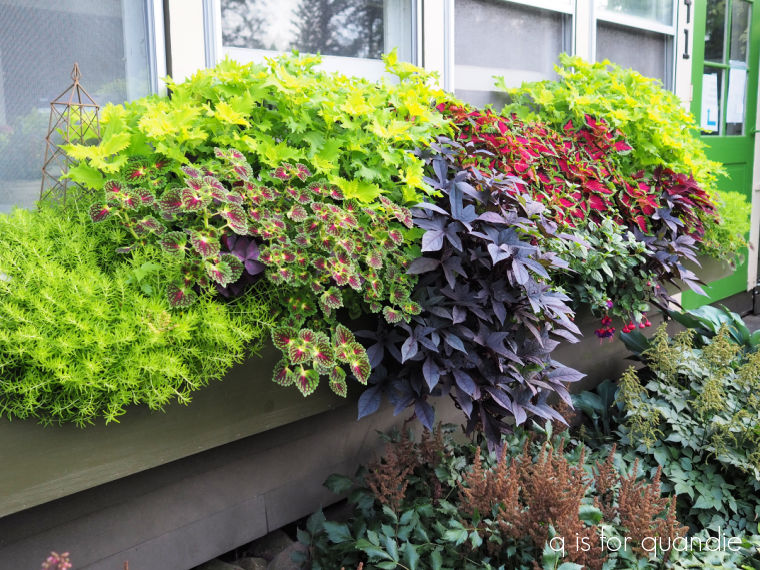
I filled that one with coleus and ferns.  I feel like it gets an ‘OK, but certainly not spectacular’ rating.  It filled in nicely, the plants are all healthy looking, but the colors on the coleus are all a little dull.  This planter sits in full shade and I think those coleus need a little more sun to bring out their color.  I much preferred the caladium that I used in this planter last year, so I may have to go back to that next year.

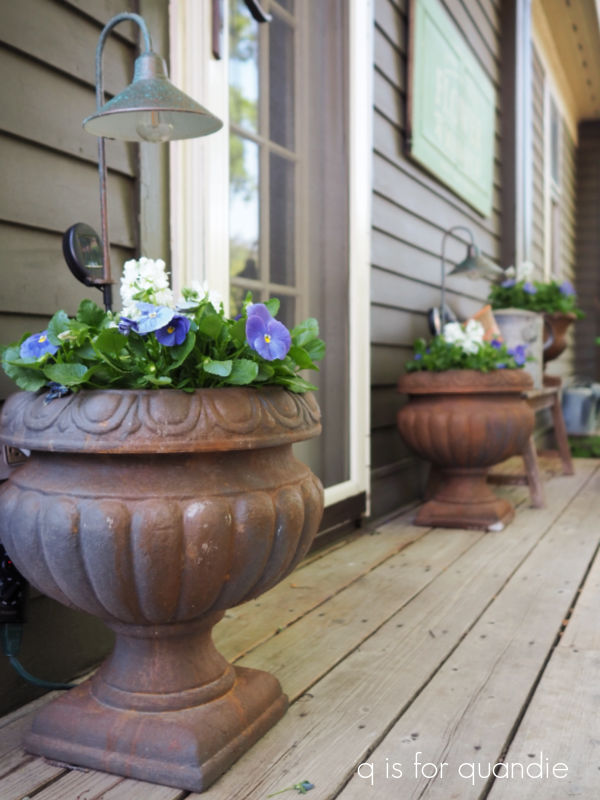
This year I decided to accept the fact that the two rusty urns that sit on either side of my deck stairs are no longer in full sun (the trees on the other side of the driveway are throwing a bit more shade).  So I chose plants that would thrive in part shade for them this time around and I’m very happy with the result.

That’s a Black Taffeta Heuchera in the center, with Summer Wave Torenia and a variegated ivy trailer.  I would definitely use this combo again.  By the way, that heuchera is one of the $5 ones that I found in the clearance aisle at Gertens last spring.

It has performed quite nicely in a pot.  It’s a zone 4 thru 9 plant, so I can’t leave them in the pots over the winter though (you need a plants zoned for 2 zones lower than your normal zone for it to survive winter in a pot, I’m a 4b, so I need a zone 2 plant for that!).  I’m not quite sure yet how I’m going to try and overwinter them.  I can either pull them out and put them in the ground somewhere, or I may try to put the pots in the carriage house and take my chances (the carriage house is not heated at all).

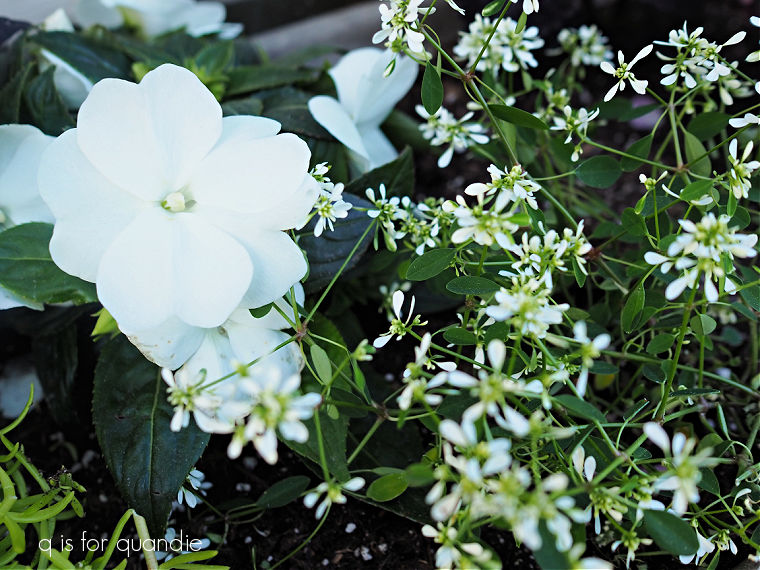
I repeated the combination of caladium with double impatiens in a couple of planters in my shade garden again this year.

I liked it so much last year that I thought it bore repeating.  They looked great again this year, although I preferred the pale pink impatiens from 2022 and could only find white ones this year.

A little later in the summer I added more rusty pots of caladium and ivy to the garden too.

I’d probably have caladium absolutely everywhere if it weren’t so darn expensive, and also so susceptible to the cold.  It will die back at the merest hint of cold weather which means we have to wait for nights above 50° before putting them outside in the spring, and they are usually the first to go in the fall.

You may remember that I tried to overwinter my caladium bulbs last year.  I never reported back on that because it was a bust.  The bulbs were all dried out when I pulled them out of the basement this spring.

By the way, that bright lime green foliage in the foreground right is the Sun King aralia that I put in after seeing it everywhere on the St. Anthony Park garden tour.  So far it seems very happy in that spot.  As it gets bigger it can fill in all of that space and the pots can be moved elsewhere in the garden.

I have a little trio of rusty urns up on the deck that get enough sun for some full sun annuals.

By this time in the season they are looking a bit shaggy for sure.  Especially since I also put that Truffela Pink Gomphrena in the tall one.

It is pretty, and it performed fantastically.  But it’s definitely too large for my urns.  It totally buried my one-winged angel, remember him?

I really enjoyed the Stormburst Superbena and the Indigo Mini Vista Supertunias in those pots this year though.

Both of them have performed quite nicely.

As have the succulents that I planted in my vintage newspaper log roller.

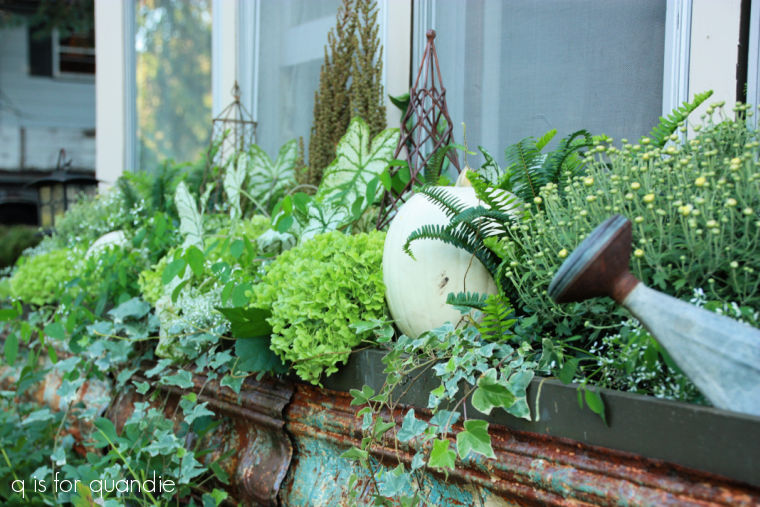
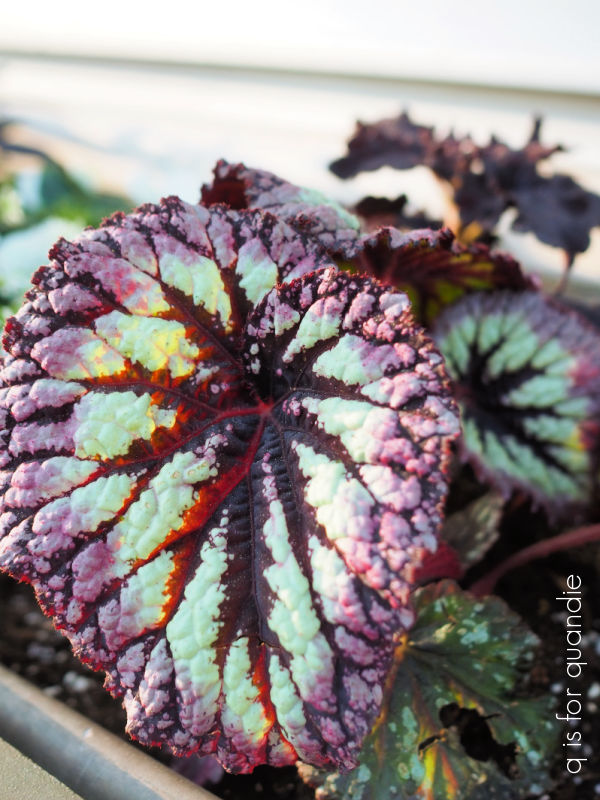
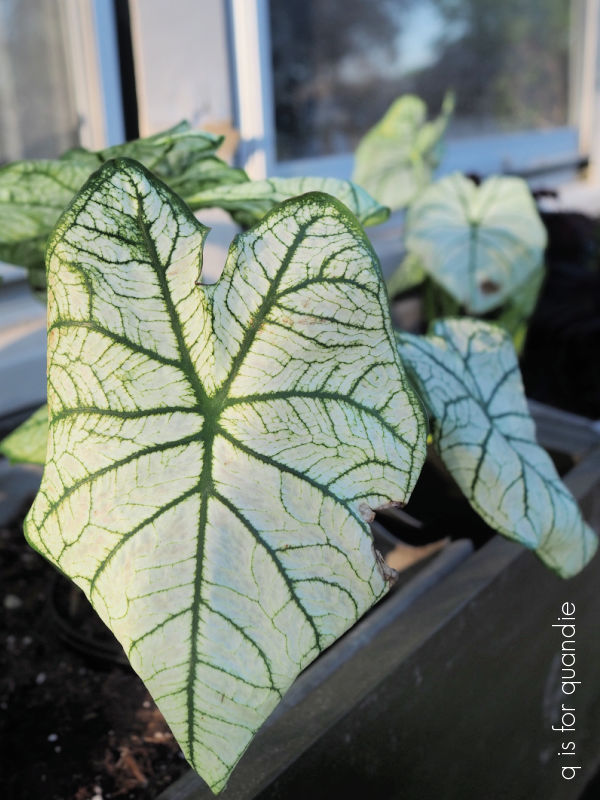
I already shared my disappointment with my front window box back in mid-July.  Shortly after that I ended up pulling out the Amstel Netja Dark begonias and replacing them with a white caladium.  Then I also removed some of the Streptocarpus Ladyslippers™ Deep Blue Vein.

I then added in some Rockin’ Playin’ the Blue salvia from Proven Winners.

I was actually really surprised to find that it did really well.  I thought for sure that there wasn’t enough sun for it in that box, but it looks great.

The Dark Eyes fuchsia also did extremely well in this north facing location.

The Dusty Miller and Dichondra Silver Falls also both did great in this location, but I didn’t love them.  As I’ve mentioned before, I’m just not a big fan of that powdery look.

I would probably not repeat either of those plants, but that’s just a personal preference.

Last, but not least, my herb garden did really well this year.

I grew basil, chives, marjoram, lavender, lemon grass, rosemary and parsley and they all did well.  I had to cut back the basil and lemon grass frequently as they really wanted to take over, but everything else did great.

Now, if only I knew how to cook with some of them.  To be honest, for the most part we use the chives on a baked potatoes, and the basil on caprese, and that’s about it.  I just enjoy watching the rest of them grow.

As for the parsley, well, the other night while I was watering I noticed this guy …

Apparently he is a parsley caterpillar and ultimately he will turn into a Black Swallowtail butterfly.  Now, on the downside, he’s probably going to eat a lot of my parsley in the meantime.  But what do I care?  We aren’t doing anything with it, I’m fine with letting him have it.

So, how about you?  Did you have any stand-out containers this year?  Or any real dogs?  If so, leave a comment and let us know!

an ode to the hydrangea.

Good morning from the garden!

It feels a little like I go on and on about hydrangeas, well, mainly because I do.  But my paniculata hydrangeas are looking so good right now that it seems wrong to not have at least one Sunday morning post about them this year.

I have to say that these hydrangeas are probably the number one plant in my garden that gives the most impact for the least amount of effort.

The only maintenance they really require is a good pruning in the late winter/early spring.  I usually take care of it on the first nice day in April.  It’s also one of the only garden tasks I can do in April because our ground is usually still too cold/wet to do any other clean up yet.  In fact, we often still have snow pack in the shadier spots!

But I’m always itching to get out there and do something in the garden on that first nice spring day!

Panicle hydrangeas, or Hydrangea paniculata, bloom on new wood, and therefore it’s beneficial to whack them back quite a bit in the spring.  The experts say to take off about 1/3 of each stem, but I often go as far as 1/2 (and once I even cut back further, with no ill effect).

Each limb that you cut back will respond by branching out with two or three more.  And each of those will end up with a flower.  So, you get the idea.  Twice as many flowers!

I have a few different varieties of panicle hydrangea.  There is a Little Lime next to the potting shed.

I planted this at least 10 years ago or so, so it has reached its full mature height and it’s about 5′ tall.

Right now the flowers on the Little Lime are quite a bit more green than those on the Limelight, and they are also starting to get that tinge of pink that they take on as the temperatures cool off.

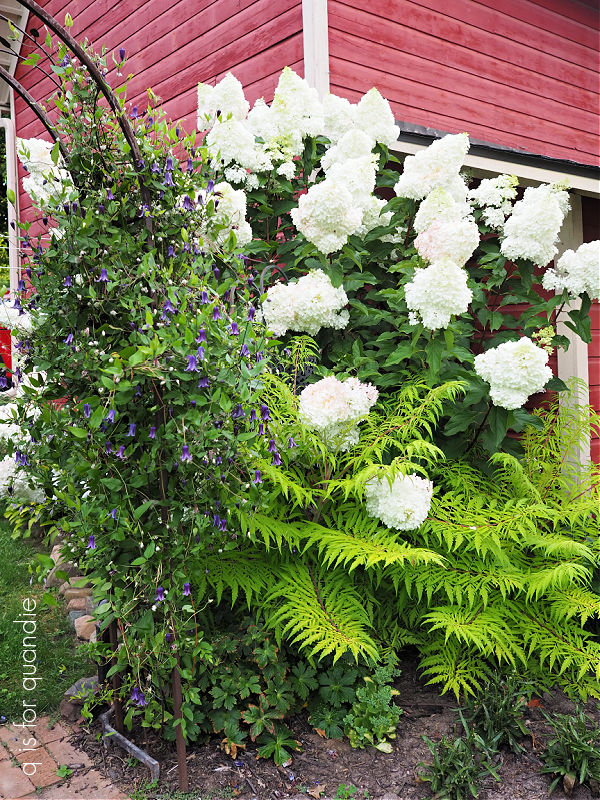
I have a Vanilla Strawberry hydrangea planted next to the carriage house.  And by the way, that is a Roguchi clematis on the arbor next to it and I just planted that in May 2022.  It’s not only vigorous, but also blooms all summer.

The flowers on the Vanilla Strawberry start out white, but gradually turn pink.  Right now they are just starting to get a tinge of pink.

Later in the fall the colors on these two will look like this …

Both of them end up with a bit more color than the Limelights.

I have three Limelights in the garden.  One is next to our front door.

I whack that thing back hard every spring, and it just re-grows nearly up to the porch roof and is covered in giant blooms.

You may remember that earlier this summer I pruned out the lower branches and then planted some shade loving perennials under it, and that is working out quite well.

I also have two Limelights planted next to our deck in the back.  I planted them there to make the deck feel cozier and more private.

Mr. Q and I eat dinner out here quite often, and it’s also our favorite spot for our morning coffee.

I planted a couple of new panicle hydrangeas last year, a Fire Light Tidbit and Little Quick Fire.  Both have been really slow to establish and actually seem smaller now than when I planted them.  I had to baby them along all of last summer, and once again this summer.  Any bit of heat, or lack of water causes them to wilt like mad.  I’m keeping an eye on them and hoping they do better next year.

I also have one other Little Quick Fire that is now out next to the carriage house.

This one has also been very slow to establish, but I have to cut it some slack because I moved it earlier this summer.  I used to have it where the fairy garden wheelbarrow is sitting now.  The thing is, I don’t really like the color this becomes later in the season.  It turns a sort of mauve-ish shade, and have I ever mentioned that mauve is the one color that I really do not like.

Here’s a picture that I borrowed from the Proven Winners website to show you the color.

It’s just not my cup of tea.  And yet, I planted two of them in my garden before I realized that I didn’t like the color.  I actually offered them to my friend Sue at one point, and when she saw the color, she declined the offer.

So, there you go, not all Hydrangea paniculata are winners in my book.

But I sure do love the rest of them!

How about you?  Do you have a favorite hydrangea?  Leave a comment and let me know.


will it hold up outside?

Good morning from the garden!

Whenever I share items that are going to be outside in the garden, I’m frequently asked the same question, ‘will it hold up outside?’
And sometimes the legit answer is that I don’t really know.  Especially if I’ve only recently started using a particular product and haven’t had a chance to test it over time.  But I’ve got a few years of experience under my belt now, so I thought I’d give you some honest feedback on how some of my things have held up.

Let’s start with transfers.

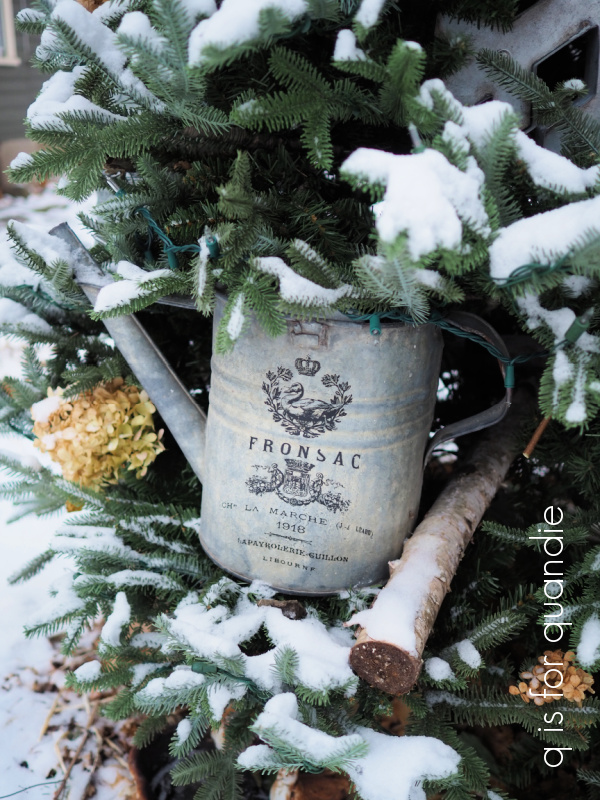
I added a Classic Vintage Label from re.design with prima to a watering can back in early 2020.  I did not use any sort of topcoat over it, although a topcoat is recommended for transfers.

I used it in my front window box that summer, and it held up great for year 1.

I don’t always leave my watering cans outside in the winter, but after leaving it outside for all of summer 2021, I also used it on an outdoor Christmas tree that year.

At that time it was holding up quite nicely.

For summer 2022, I had it hanging from a cupboard door sign on our deck.

The transfer was starting to deteriorate a bit then.

I stored it in the potting shed last winter, and then brought it out again in the spring.

Here’s how it was looking as of a few days ago.

Hmmmm, not so good, right?

So there you go, a transfer without a topcoat on galvanized metal will last about three years.

But here’s the good news.  It was super simple to remove that deteriorating transfer using steel wool and a little water.

It barely even took much elbow grease, it just scrubbed right off without damaging the watering can in any way.

So if you want to add a little something to a galvanized piece, but you want to have the option to remove it down the line, a transfer without a topcoat is a great choice.
And you know what, I really liked that transfer on that particular watering can.

So I did it again.
I added back the very same Classic Vintage Label.  And once again, I opted not to seal it.  I like the idea that it’s somewhat temporary.  In a few years I may decide that I prefer my watering cans without labels.  Or maybe I’ll want to try some other sort of decoration on it. Who knows?

You’re probably now wondering if adding a topcoat over the transfer will improve it’s durability on an outdoor item, and unfortunately I have to say that I don’t know.  I haven’t actually tried that.

Now, how about adhesive vinyl cut with a Cricut machine?

I added our house number to an ironstone platter way back in 2014 after getting the idea from this pin on pinterest.

source: onsuttonplace.com

I simply used my Cricut machine to cut adhesive vinyl to make mine.

I have it hanging outside next to our back door.  It’s up all year round, including winter.

And 9 years later it is still going strong.  Honestly, I’m rather amazed that it has held up over all this time.  I totally expected it to start peeling after one season.

But nope, still looks good.

I still have a few of my pieces of garden china scattered around the garden too.

These were also cut from vinyl on the Cricut.  I put them away in winter, but they stay out the rest of the year … and they get wet every time I water my pots.  But again, they still look great.

The painted ‘signs’ that I create with stencils and chalk style paint hold up just fine outside too.

Even when they are simply top-coated with some of Dixie Belle’s Big Mama’s Butta, as that one is.

I tend to change these out seasonally, so none of them are out all year long.  But I do bring them out year after year and they continue to look great.

Next up is the general category of furniture that was meant to be inside, but I’m using it outside … starting with my repurposed guest bed.

I have to report mixed results with this one.  The headboard with its I.O.D. paint inlay has held up fantastically well.  And I left it up all winter.

Unfortunately, the footboard planter is not doing as well, even though I put it away for the winter.  The headboard gets a bit of protection from rain by the overhang of the carriage house roof, but the footboard really doesn’t.  It also gets a lot of splash up from the driveway.  Then add in the fact that I have placed heavy planters on a shelf that is attached to the back of the footboard, which was probably not meant to hold that much weight, and the end result is this.

The bottom trim is pulling away, and that has created a bit crack in the paint, which is now allowing more water to get in there.

I plan to pull this apart to see if we can shore it up a bit, and then repaint it, sometime before the snow flies.  Or maybe that project will wait until next spring.  Either way, I’m not giving up on it just yet.

You may remember that I have used dining room chairs as ‘peony cages’.

and over time all but one of them have fallen apart including the one shown above.

I do have its matching chair still wrangling a peony out next to the potting shed, but I’m sure it’s on its last legs.

And if you’re noticing, yes, this is the one peony I have that has ended up with a fair amount of powdery mildew this year.

Bottom line, indoor wood furniture is not meant to used outside and chances are good that any glued joints will fail after a few years.

Iron furniture will hold up a bit better, and if you like a little rust (as I do), it can work out great outside.

I have an old iron headboard that supports the Annabelle hydrangea next to our deck.

I also have an old iron bed that I keep trying to grow clematis on, and somehow it never works out.

I once had an absolutely spectacular Nelly Moser clematis in this spot, and one spring it just didn’t come back.  I’ve planted at least three replacements of different varieties since then, and not a single one has taken off.  I can only guess that the amount of shade on that garden has increased over the years.  The Nelly Moser is a variety of clematis that is more shade tolerant as well, so maybe I need to try that particular variety again.

I do have one other indoor iron item in the garden, well, two really, a pair of andirons that I grabbed free at the curb.

I’ve placed them on either side of my metal arbor.

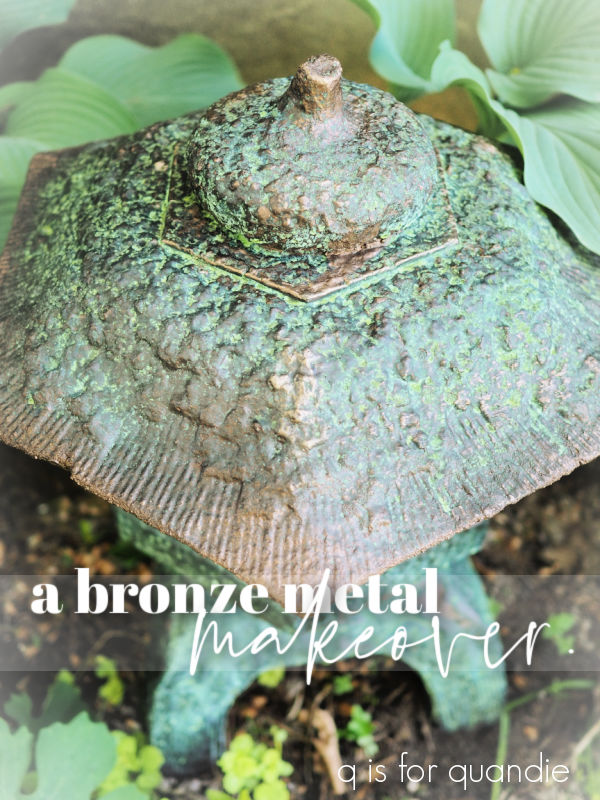
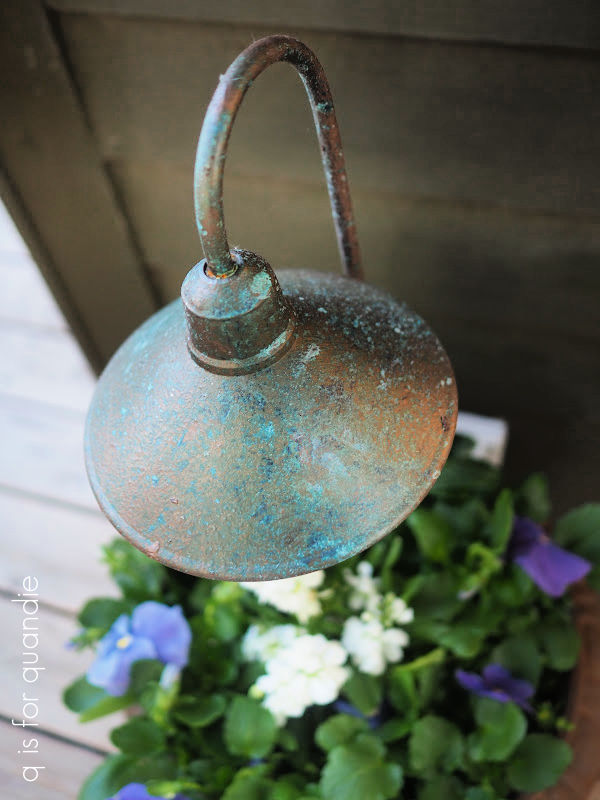
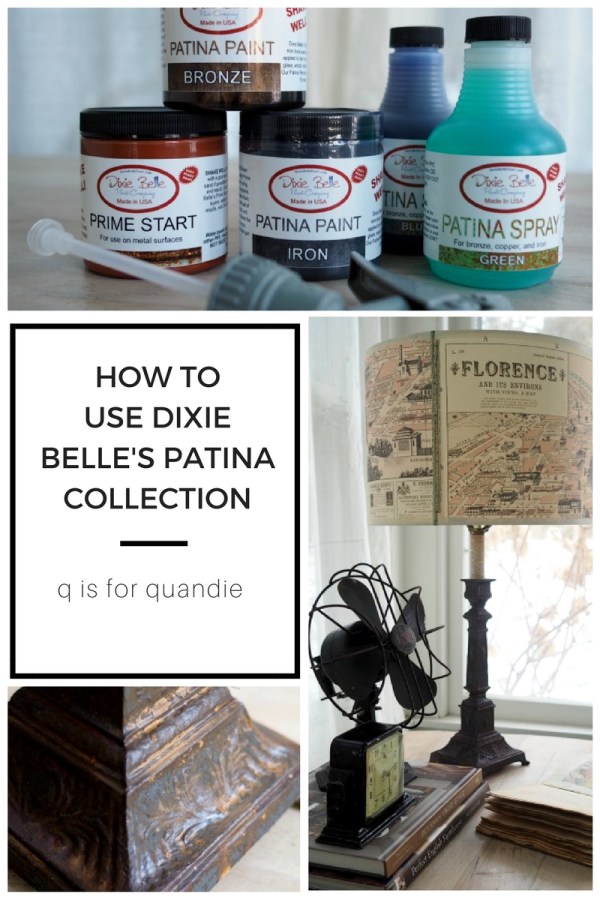
One last product that I’ve used on pieces for the garden that I want to include in this post is the Patina paint line from Dixie Belle.

I used the Bronze paint with the green spray on a concrete Japanese lantern …

and on a terracotta buddha.

And I’ve used the Iron paint with the green spray to make numerous garden ornaments rusty.

Some of these items have held up better than others, and that depends on the material underneath the paint rather than the Patina Paint itself.  Terracotta tends to allow moisture to wick through from the backside, which then causes pieces to deteriorate.  But plastic or metal items are holding up perfectly well, even over several years, and after being outside all winter.

It’s also super easy to spot repair your outdoor pieces with the Patina Paint when necessary, as I did with my buddha.

I hope some of you found this info helpful.  If you have any questions about how well particular items have held up outdoors that I didn’t answer above, be sure to leave a comment and ask!