an onion by any other name.

Since quite a few of you liked the idea of Sunday mornings in the garden, I’m going to give regular Sunday garden posts a go.  So grab a cup of coffee and let’s talk onions.  I bet you didn’t think I’d start out with onions!

True, the Allium genus includes onions, leeks, garlic and chives …
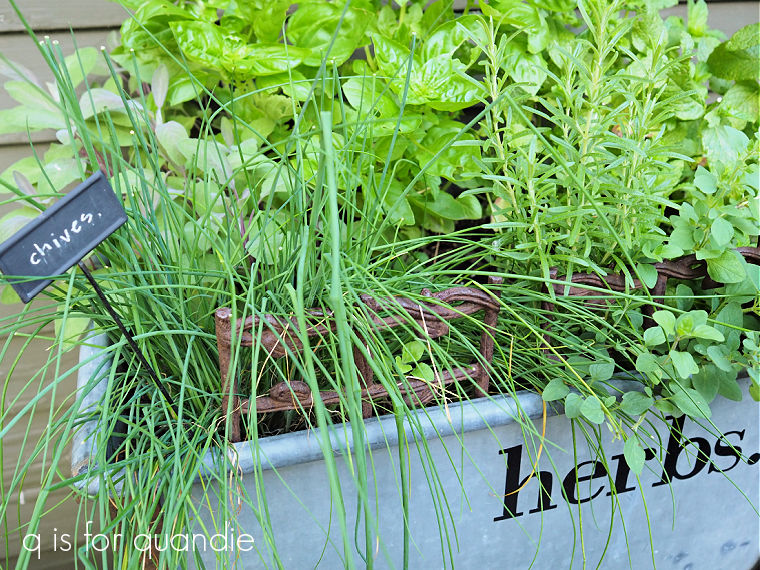
I’m sure most of you are familiar with your basic chives.  I love cutting them fresh to sprinkle on baked potatoes, and recently Mr. Q added them to an omelet he made for our dinner.  But they aren’t a particularly pretty plant, are they?

Instead, I want to share ornamental Alliums with you today, and they are a pretty plant … and more importantly a really cool flower.

I had been gardening for quite some time before I discovered ornamental Alliums.  But now that I have, I absolutely love them.
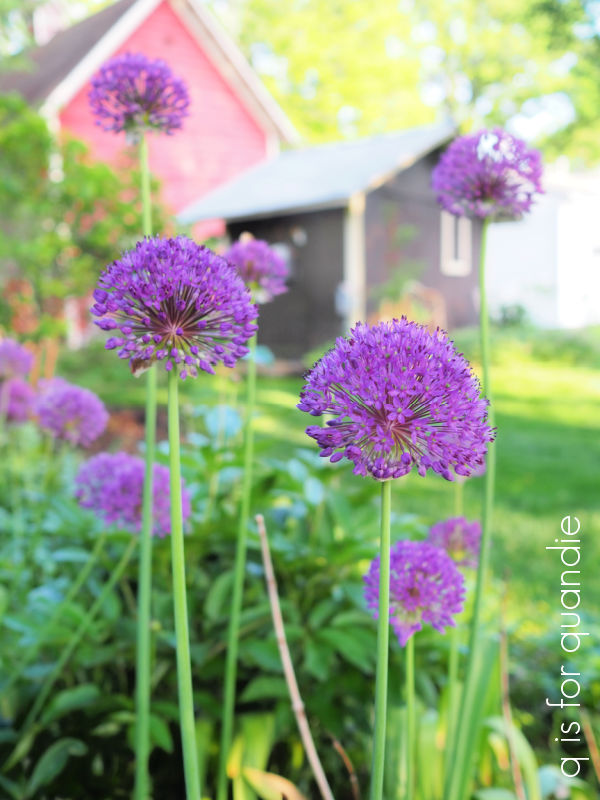
I grow two types of ornamental Alliums, those that are planted as bulbs in the fall and those that are herbaceous and have a large root ball (and you can plant them any time in the growing season).

The bulb Alliums have foliage that comes up in early spring, produces the flowers, and then dies back to the ground after flowering.  Sort of like a tulip or daffodil.  In my zone 4b garden, these Alliums bloom in late May to early June and by now there is no trace of the plant left in the garden … unless I have left the flower stalks in place to dry.
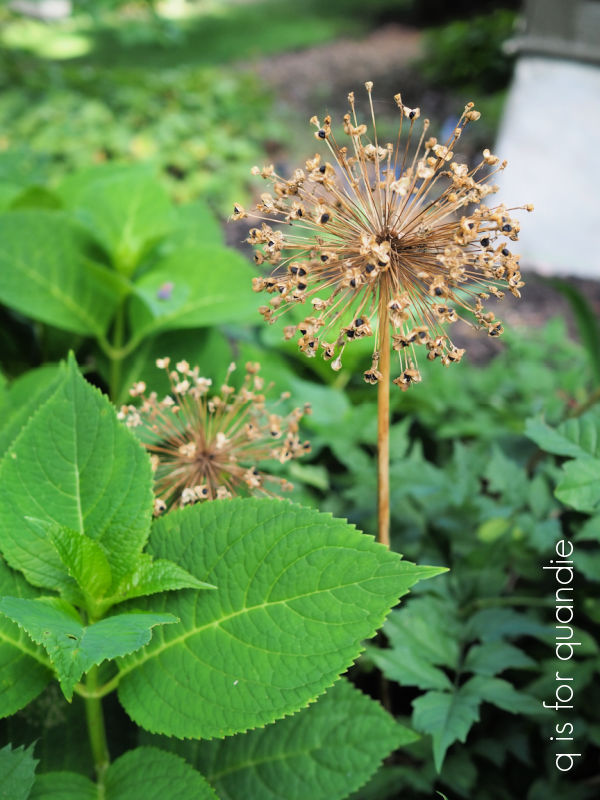
Just in case that photo is confusing to some, none of the green plants around those dried flower stalks are the Allium, those are other plants.

Once dried, which usually just takes a few weeks, I pull the Allium flowers out and store them until late fall when I use them in my winter floral arrangements (much like the Astilbe that I mentioned last week).

The bulb Alliums are fantastic for intermixing with other perennials that will bush out after the Alliums are done and fill in the space around them.  I have mine planted with peonies, hostas and iris.

I have had great success with my bulb Alliums, the only maintenance they really require is removing the foliage once it dies back which is pretty effortless.  Most of mine are planted in partial sun, which seems to be working fine, but they can handle full sun.  And actually, I have some success with the bulb form in spots under deciduous trees where they get more sun until the trees leaf out.  Mine have been multiplying over the years, but I wouldn’t consider them invasive in any way.  In addition, much like my sister, deer don’t particularly care for onions, so that’s a plus for me as well.

I didn’t keep track of what variety of Allium bulbs I planted years ago, but I suspect they are Purple Sensation, which is fairly common.
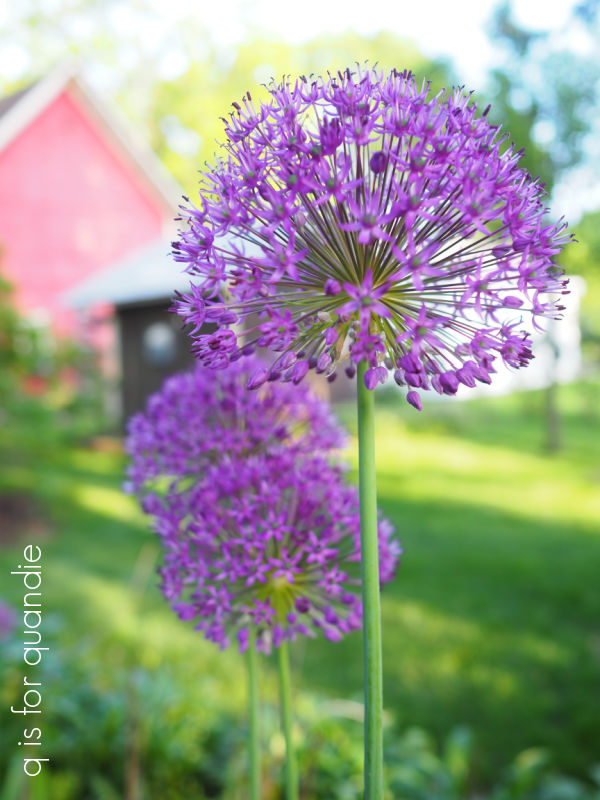
In addition to that fabulous purple, bulb Alliums can also be found in white, yellow, pink, burgundy, and blue.  They also come in a variety of heights from 8″ tall all the way up to a whopping 50″ tall, and with bloom times from late spring to early summer.

So if you plan right, you can have bulb Alliums blooming for a month or more.

You can find Allium bulbs for sale in late summer to early autumn along with the tulips and daffodils, but in my experience there isn’t a great variety to choose from at most DIY stores (like Home Depot or Menards).  There are usually a few more options at nurseries, but even they don’t seem to have a great selection.

For that reason, I went online and ordered some more unique varieties to plant this fall.  I’ll try to keep you posted on that process, whether or not I like the place I ordered from (Longfield Gardens, and FYI I borrowed that graphic above from them as well), how well they grow over the next year, etc.

That brings me to the herbaceous Alliums, and these are blooming this week in my garden.
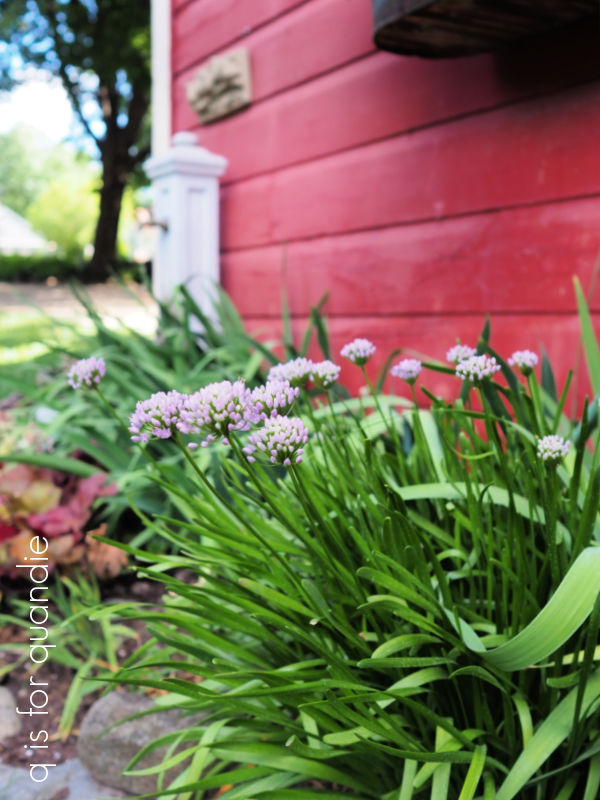
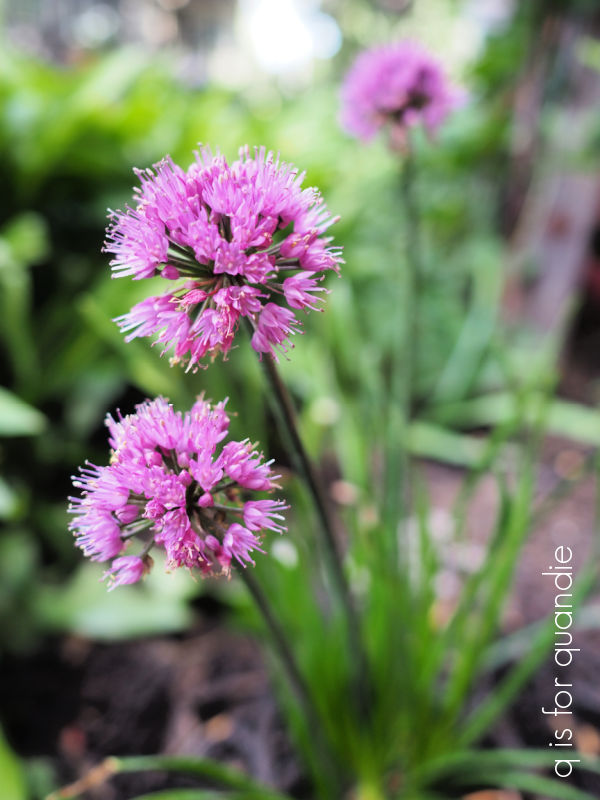
I have three varieties of the herbaceous form.  The one above is one that I purchased at a garage sale, and therefore I have no idea what it is.  I suspect it may be Millennium.  It has a lovely pale purple flower, and a nice compact form.
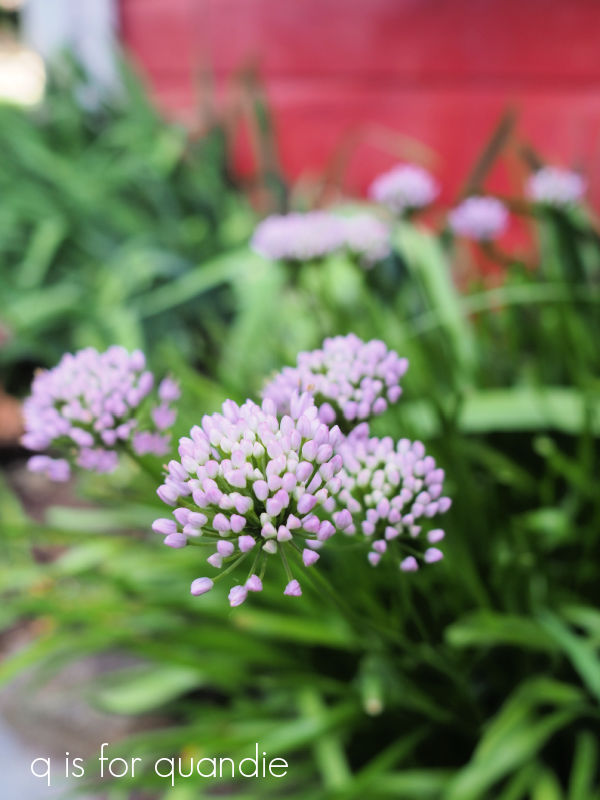
I recently planted two more varieties, Windy City …
and Serendipity from Proven Winners …
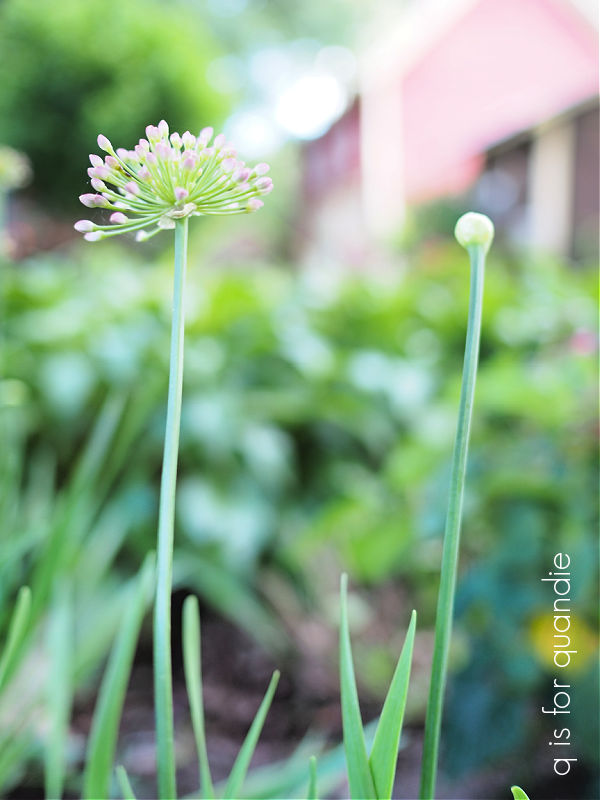
This type of Allium plant grows more like chives, in a clump with foliage that stays green all season.  They tend to be shorter and with much smaller flowers than the more showy bulb Alliums.  Serendipity will get 15 – 20″ tall, Windy City will get 15 – 17″ tall.

I just planted the Serendipity Allium this week (I found it at Home Depot), and it doesn’t look too spectacular just yet.
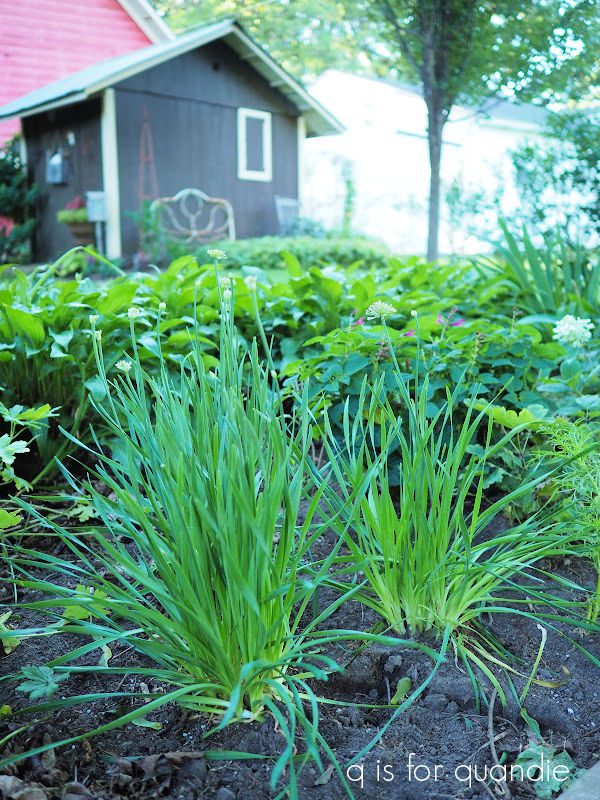
Eventually it should look like this …

Of course, time will tell if these two newer Alliums will do well in my garden, but I’m optimistic about them.

How about you?  Do you grow Alliums?  And if so, do you have any specific recommendations for the rest of us?  Or maybe a favorite variety?  And if you don’t grow Alliums, have I convinced you to throw a few bulbs in the ground this fall and give them a try?  Leave a comment and let us know.
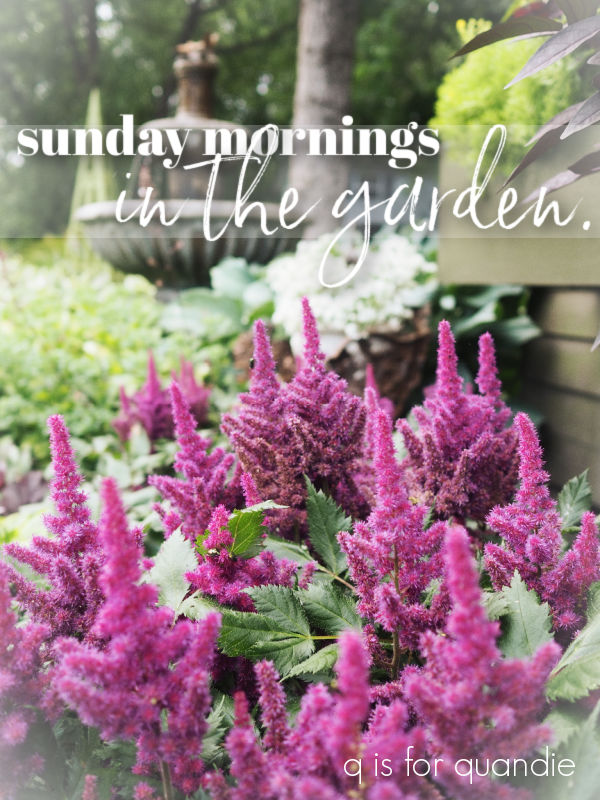
sunday mornings in the garden.

Welcome to my new series to be posted here on Sunday mornings; a short (or maybe not so short) post about what’s happening in my garden each week.  This likely won’t continue year round, for obvious reasons.  I live in Minnesota and although snow can be pretty too, there isn’t a lot going on in the garden in January.  So we’ll just see how that goes.  Many of you seemed to enjoy my garden tour post last week, so why not make it a regular thing?

And on the plus side, for those of you with absolutely no interest in gardening, you’ll know to just skip the Sunday posts 😉

I do wish I’d thought of this in the spring instead of halfway through the growing season … but, here we are.  Better late than never.

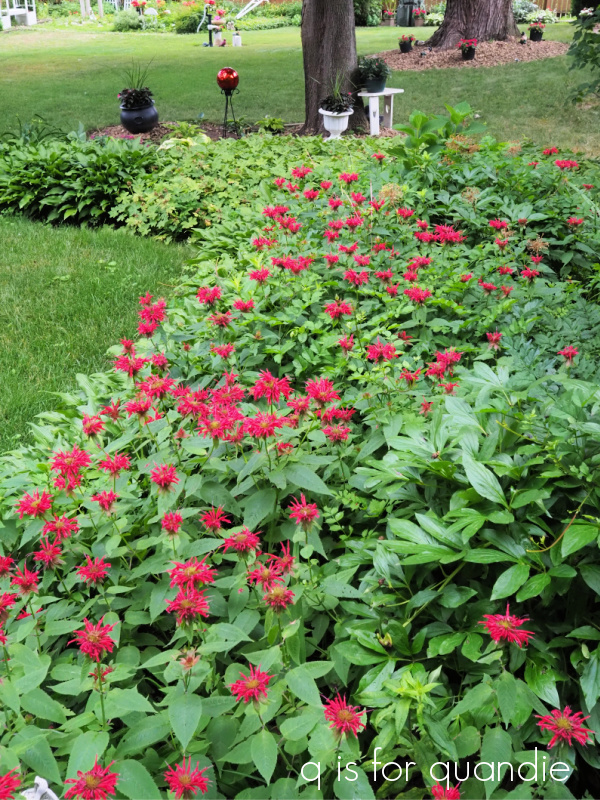
The bee balm was blooming profusely in my garden last week.

This plant goes by a lot of names, the most popular being bee balm or bergamot, but its official name is Monarda.

I always think the flower looks like exploding fireworks.

Bee balm is in the mint family (the flowers and leaves are edible), and if you’ve ever grown it, you’d know that by the scent of its leaves.  And also by the way it spreads in the garden, much like mint, it can take over.

I have pretty much let mine run rampant in my back garden.  I have to confess that this is the garden in my yard that gets the least amount of love.  I think because it’s also the one that gets the most sun.  In my garden tour post last week I mentioned that I really don’t like gardening in the sun and it shows in this particular bed.  But at this point in summer, the bee balm is practically the only thing blooming in this spot so I’m OK with having lots of it.

I also have a rogue trumpet vine in this garden that so far I have been unable to eradicate.  It came with the house, so I’ve been battling it for over 30 years.  Oh, and P.S., this garden is on the border of our property, the white and black pots and the red gazing ball you see in the background are in my neighbor’s garden.  Obviously if those were my pots, I’d have turned them all rusty by now using Dixie Belle’s patina paint.

Bee balm comes in a variety of shades of red, pink, and purple-ish.  It also comes in a variety of heights.  My neighbor has one that is only about a foot tall, but the variety I have is 3′ tall.

Monarda is definitely a pollinator.  It attracts bees (hence the common name of bee balm), butterflies and other beneficial insects, and it also attracts hummingbirds.  I can attest to that because we often get hummingbirds visiting ours.  I’d love to be able to add a fabulous photo of a hummingbird in my garden here, but I’m never quick enough to get one.

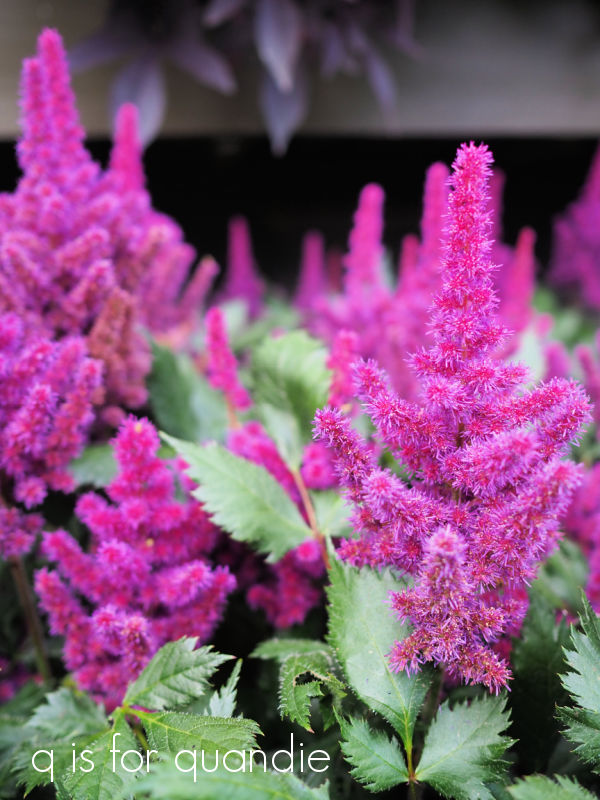
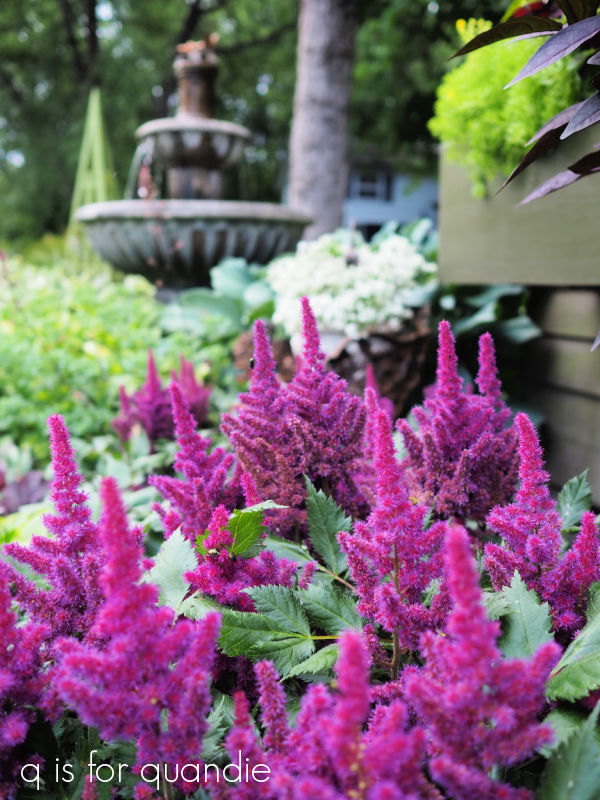
Another pollinator plant that looked fantastic this week was my Astilbe.

I have three different colors of Astilbe in my garden; white, purple and one that started out as a peach color when I purchased it but has since reverted to a sort of sickly lavender.  The white has already gone over, and the lavender is just getting started, but the purple was at the peak of perfection this week.

I originally planted this Astilbe in a much shadier spot in my garden and it performed very poorly there.  The plant tag said it was a good choice for shade gardens, but I can tell you from experience that it does need some sun if you want it to get full and bloom profusely.

I moved it to our front northwest facing garden quite a few years ago and it does so much better now that it gets a lot of evening sunshine.  I’ve since divided it a couple of times, and I think I need to divide it again.  I was watching Gardener’s World recently and they said that Astilbe needs to be divided regularly to keep blooming.

Hmmmm.  Mine seems to still be blooming pretty good.

I have some ideas brewing in my head for expanding my gardens next year, so I may hold off and start dividing things next year to supply a new garden.

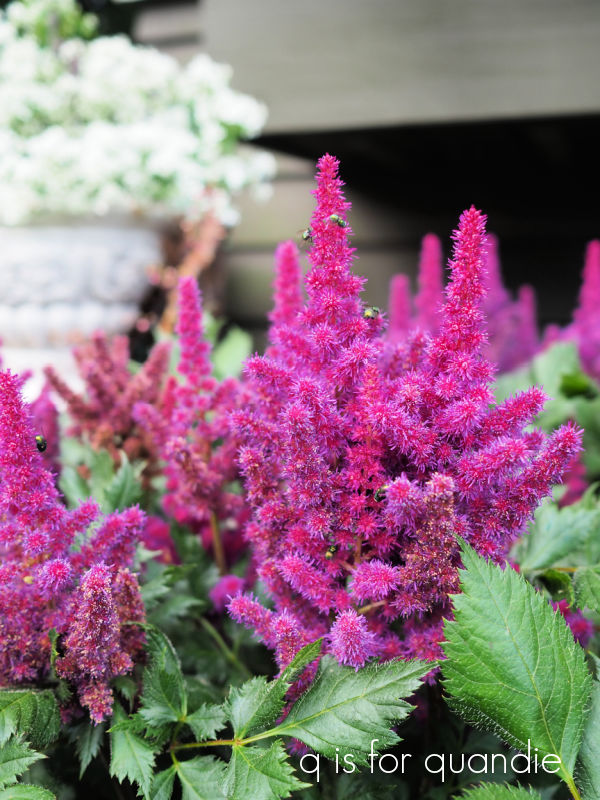
I mentioned that Astilbe is a good pollinator plant, and although I do see butterflies and bees on mine, the blooms are always loaded with tons of these little flies.

See them there?  I can see five of them in that photo.  I’m not super fond of those flies, whenever I water that spot they all fly up and swarm around which is kind of gross.  But they aren’t hurting anything so I try to leave them alone.

The Astilbe is planted right under my front window box, and I’ve discovered that the blooms combine beautifully with the purple and pink fuchsia and the dark purple sweet potato vine in the box.

One last note about the Astilbe, I often leave the flower heads on the plants to dry out.  Then I use them in my planters for winter.

So this plant does double duty for me.

Do you grow bee balm or Astilbe in your garden?  Or do you have another favorite flower that blooms in mid-July?  Leave a comment and let me know.  Also, be sure to let me know how you like the idea of my new gardening series!