

Good morning from the garden.
Well … I have to say, this gardening season is coming to a close on a less than stellar note.
It started out great. Although the deer once again ate most of my tulips, I had some lovely daffodils and grape hyacinths in the spring.

My peonies were gorgeous, although short-lived as usual.

The alliums were lovely this year too.

I had great success with my clematis after fertilizing it in the spring for the first time.

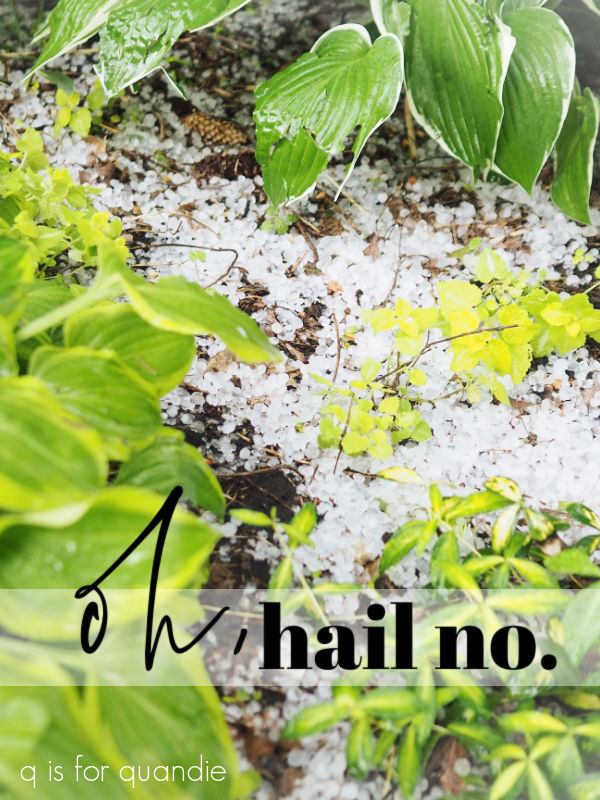
We did end up getting a hail storm at the end of May which damaged a few of my hostas.
Then, things kind of started going downhill from there. As I’ve mentioned way too many times, we had a really wet summer. Lots of rain, and lots of wind. We lost a good sized branch from our pear tree in one storm giving it a lopsided look.
So much scary wind led to my neighbor/handyman Ken having the beautiful maple tree in his backyard removed … leaving a rather sun scorched landscape where once there was a shady oasis.
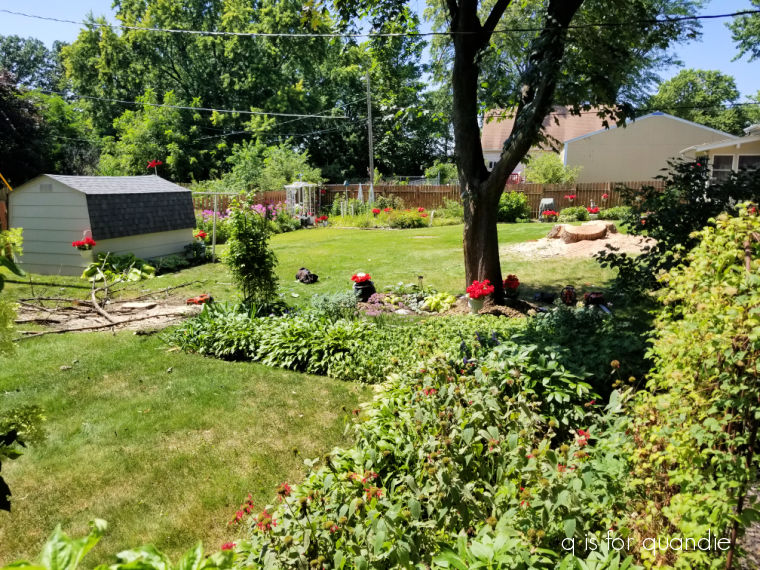
Everything I have growing in that back perennial bed is looking really stressed now after going from partial shade to full sun. I’m trying to look at the bright side though, no pun intended. I was able to put in a row of Quick Fire Fab hydrangeas …

And I plan to re-work that entire “L” shaped perennial bed in the spring, pulling out the shade plants and replacing them with some sun loving things.
Because we’ve had so much wet weather this year, my lilacs have a bad case of leaf spot fungus which causes their leaves to turn brown and fall off. This is happening all over our area, and many lilacs look far worse than mine.
The wet weather has also given us a massive crop of earwigs and slugs, and they’ve made mincemeat of my hostas.

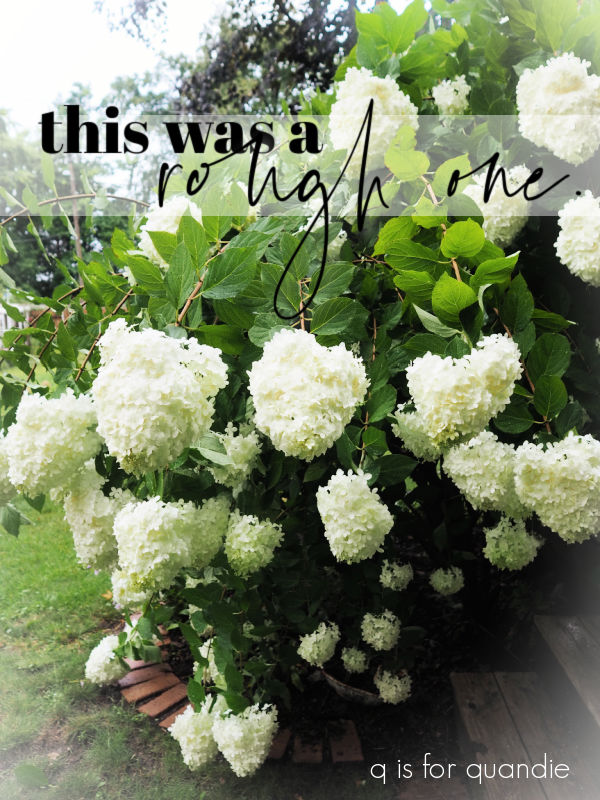
A week or two ago I mentioned that at this point the panicle hydrangeas were the only thing still looking good in my garden.

I think it was the very next day that we had a torrential rainfall that practically flattened them.
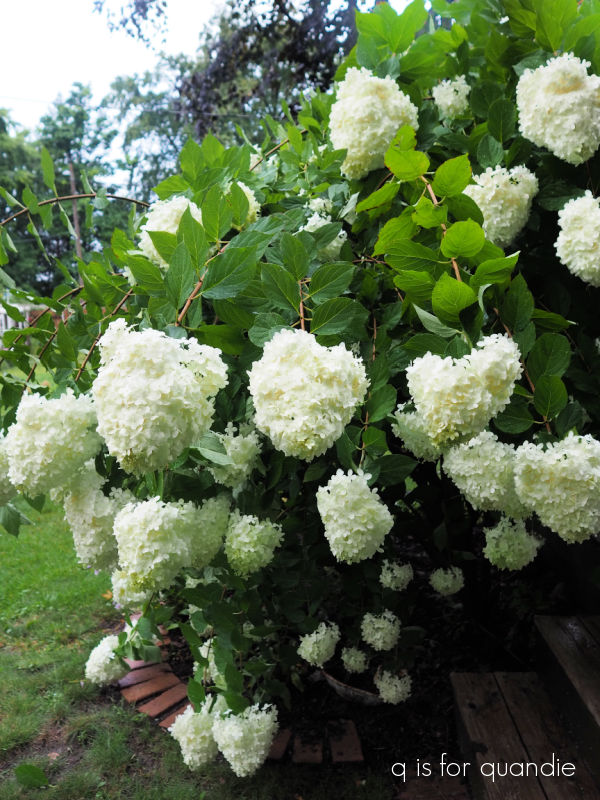
The giant flowers were so heavy after being saturated with rain. There was one large section that broke off completely, but I was hoping the rest would bounce back as they dried out. Unfortunately, they weren’t able to stand back up again.
That being said, they are still gorgeous. Just a little droopy.
And that brings me to my most recent discovery. It appears that I have jumping worms.
If you remember, I posted about jumping worms back in May. They are a non-native earthworm that strips the nutrients from top soil. And according to Ramsey County they are an emerging problem in our area. They can be introduced to your garden in mulch, compost and potted plants.
Little did I realize at the time that I would end up having a problem with them myself.
It was the beginning of August when I started to notice that I seemed to have far more worms in my garden than usual. I thought it was just due to the wet weather. But then I noticed that my soil was looking funny. Sort of crumbly.

Then I realized that a patch of creeping sedum that I had was dying off. I could pull it right out of the ground, it didn’t seem to have any roots left at all. As I was pulling it, I noticed that the worms were in abundance in that area, and the soil that held the sedum just crumbled away.
Now, creeping sedum is shallow rooted by nature, and this particular patch was growing over flagstone. So, it was extremely shallow rooted.
That being said, I’d had that patch of sedum for a couple of decades or more. Here it is in happier days.
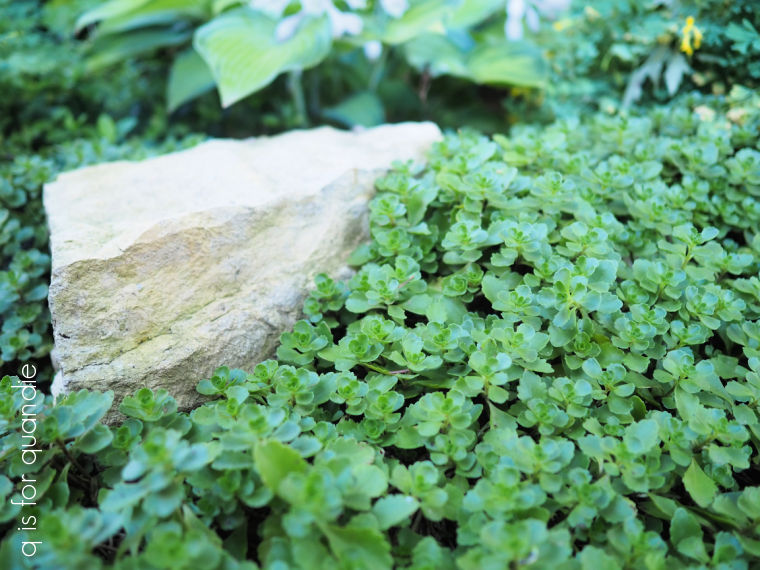
It grew right over that flagstone. And now it’s completely dead.
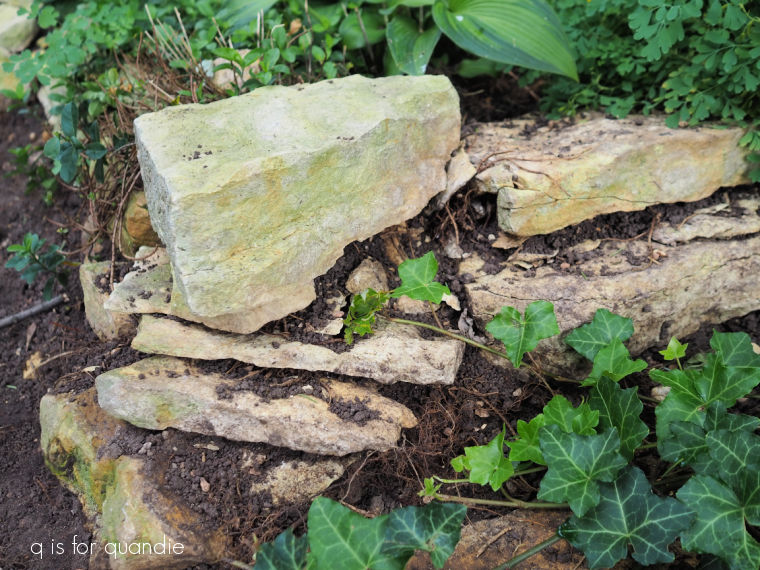
I’ll also point out, as you can see, that the English ivy is still doing just fine. It can literally grow without any soil at all, so apparently it’s a good choice if you have jumping worms.
So far the creeping sedum is the only obvious victim of the worms in my garden, but I don’t know what the future will hold for the rest of the plants. Fortunately many of my hostas have been there for a long time and are really well rooted in. Hopefully that will save them.
Also, I’ve read that the jumping worm population grows exponentially in a wet year v. a dry one. So it’s possible that this isn’t the first year I’ve had them, but just the first year that they have been this bad. This summer’s wet weather strikes again.
The problem is, so far there are no definitive solutions for eradicating jumping worms. I’m not going to go into all of the details here, but if you are looking for more info on jumping worms and possible ways to deal with them you can check out this link.
I’m going to have to do some experimenting to try and mitigate their damage. Also, I will no longer be sharing plants from my garden with others which is a bit of a bummer. But better safe than sorry, right?
As as sidebar, if you grabbed one of my sedum cuttings at the Carriage House sale, don’t worry.
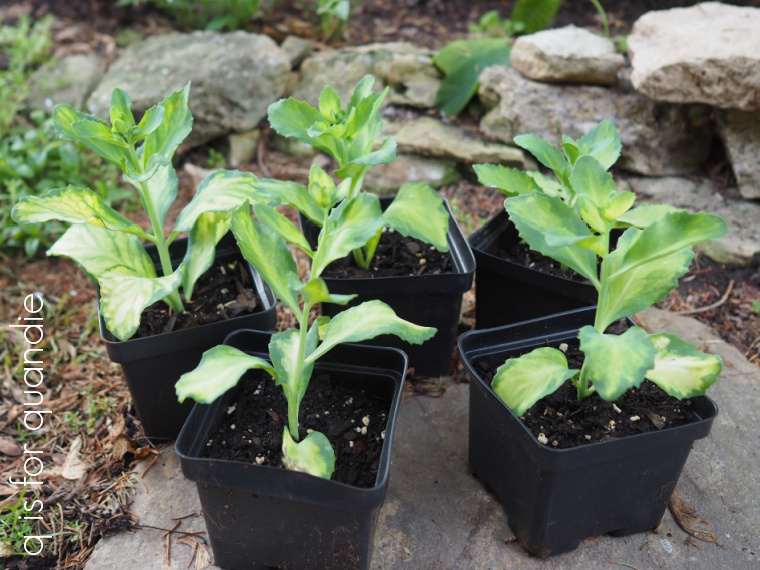
The cuttings were taken from the tops of a taller sedum (not a creeping variety), and potted up in new potting soil. They would not have contained jumping worms or their eggs.
So at this point, I’m ready to throw in the towel on gardening. I’ve always struggled with garden burnout around now, but this has been a rough one for sure. I think I’ll be happy to button things up for a long winter’s nap. I’m sure next spring I’ll be ready to face it all again.
How about you? Are you ready to call it good for gardening season this year? Leave a comment and let me know.
 q is for quandie
I enjoy reading your email blogs and the variety of topics!
I wanted to let you know that you are not alone in the fall gardening doldrums! Here in South Carolina we had such a wet July into 1st half of August with scorching heat my cut flower garden just steamed and melted. Then starting the second week of August we have had zero rain and with that came an infestation of Army Worms! They destroyed what little was left of the cutting garden and are decimating pastures and turf lawns all over the south😠.
Add to that we lost a 90ft Oak tree which had shaded much of the southwest side of our house and my shade garden which is now full Sun! The Hostas are very indignant and will, like you, need to be rehomed next spring☹️.
Just wanted to let you know I feel your pain! Enjoy fall!
KC in South Carolina
“People inspire you or they drain you….pick them wisely”
LikeLike
I watch Gardening with Creekside on YouTube (are you familiar? they are in North Carolina) and your experience mirrors what they have been showing on their channel this summer including those Army Worms. I am reminded that we are not alone and no one’s garden is perfect … especially this year! Thanks for sharing KC!
LikeLike
the bunnies have chomped our hostas to bits, even our coral bells! Some varieties are finally coming back but then the slugs got em! I just started chopping things down for winter. Next year is a fresh start I hope!
LikeLike
That’s what I keep telling myself, next year is a fresh start! Maybe let some clover grown in your lawn to feed those bunnies. I think that’s the only thing keeping the bunnies out of my garden.
LikeLike
Hi…I am not much of a gardner, but “Diatameous Earth” is a good source to look into! Safe for plants and gets rid of slugs, spiders, etc. I even take it for high blood pressure, of course it it the “human grade”. You can get it at Wal Mart, or I did, last year. Google it, it’s pretty amazing stuff!! Good Luck!!
LikeLike
I tried using diatomaceous earth in my garden last year (or maybe the year before?) to control slugs. I had a couple of issues with it. First, it’s a white powder and it looks pretty unsightly in the garden, sort of like someone sprinkled everything with powdered sugar. So I think it’s suited more for use in vegetable gardens rather than more ornamental gardens like mine. And second, it has to stay dry to work. So you have to re-apply any time your garden gets wet (rain or watering with a hose). We rarely went more than one or two days without rain this summer so it didn’t seem practical to use it. Thanks for your tip though, I may go ahead and give it a shot this week. We aren’t supposed to get any rain.
LikeLike
Yes, there are good and bad things with DE. Just a thought, some people have never heard of it. GOOD LUCK!!!
LikeLike
Down here in NW IN – we had something weird happen to our lilacs too. All the leaves turned brown and fell off, like a dry Fall. Then lo and behold, they started leafing out again and now they are freaking blooming a bit! So strange. Never had that happen before. So, a weird year for sure.
LikeLike
Whoa! That is weird! And speaking of that kind of weird, I have grape hyacinths sending up shoots. Mother Nature is definitely confused this year!
LikeLike
Oh {deer}! So many changes in just a couple seasons 😦
I’m curious to know more about the lilac leaf spot fungus. I saw another comment about it leafing out again & semi-blooming. This happened to my two bushes last year but this year is way worse and so far not rebounding with new growth. Does anyone happen to know if there is an anti-fungal treatment for lilacs or any other options to get them to not go through this?
Thanx!
LikeLike
What we have in our area is pseudocercospora leaf spot fungus, which is a result of our very wet summer. You can see more about it in this video from KARE11 (a local news channel). Our lilacs have leaves that are turning black and falling off, but as far as I know they do not leaf out again (so I don’t know if you have the same problem). You can use a fungicide, but typically those are applied in the spring to prevent it. At this point I’m not sure it would do much good. On the bright side, the lilacs should come back fine next spring. It’s important to clear away all of the fallen leaves from under your lilacs this fall though because this fungus can live on in the leaf debris and re-infect your plant next year. Good luck!
LikeLike
Thanks for the update!! I did some google searching & did see when any leaves or branches need burned in a effort to get rid of the fungus & to use fungicide in the Spring. Let’s hope we all have beautiful blooms next year!
LikeLike