
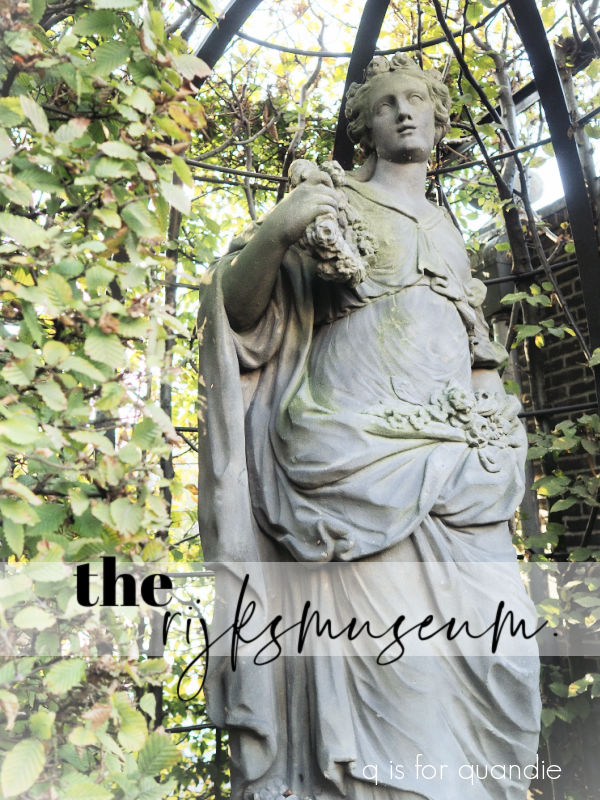
I was doing a little computer maintenance the other day, backing up photos and whatnot, and I realized that I never shared my visit to the Rijksmuseum in Amsterdam here on the blog.
So, I decided better late than never, right? I also have additional motivation to share it with you because this visit inspired the project that I’m going to share later this week.
If you’re new here you may not know that I visited the Netherlands and Norway last September. On one of our days in Amsterdam we headed to the Rijksmuseum.
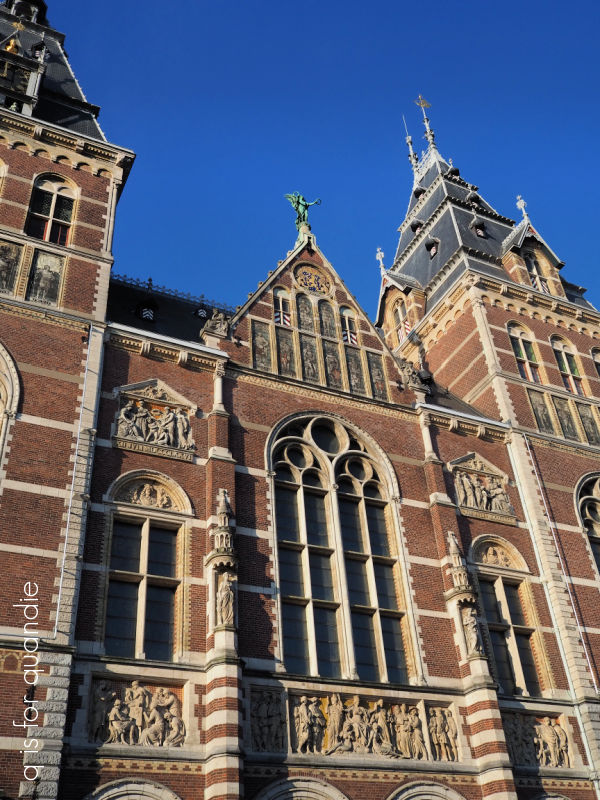
The Rijksmuseum is the national museum of the Netherlands and is visited by over 1 million people each year. It was founded in 1798, but the current building that houses it opened in 1885. A ten year renovation was completed in 2013 to the tune of € 375 million (holy cow!).
Much like the Mona Lisa at the Louvre, the Rijksmuseum has a very famous painting behind glass called The Night Watch by Rembrandt. However, at over 14′ wide, this one isn’t quite as small as the Mona Lisa.
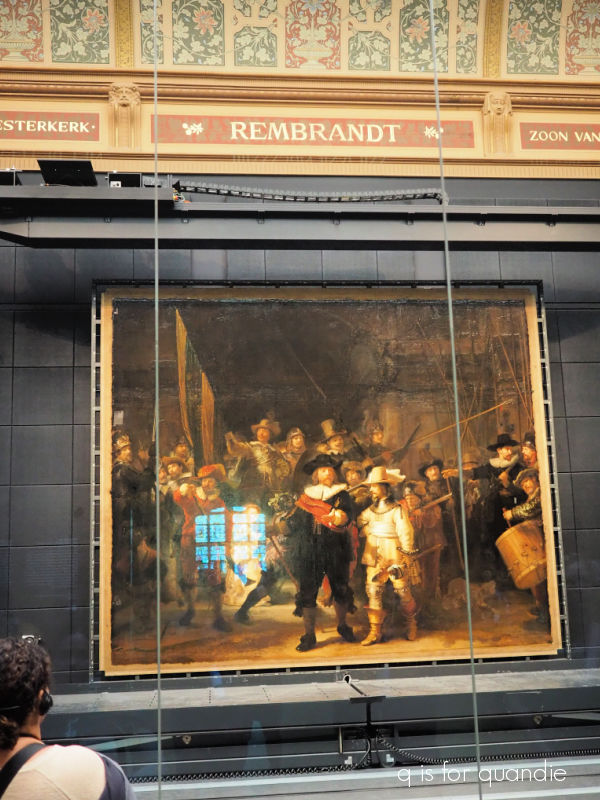
It seems to be the main draw and the area around it can get very crowded, so we visited it right at opening time.
Personally I was more interested in seeing the Vermeer’s (which are pretty small) including The Milkmaid which was painted in 1658.
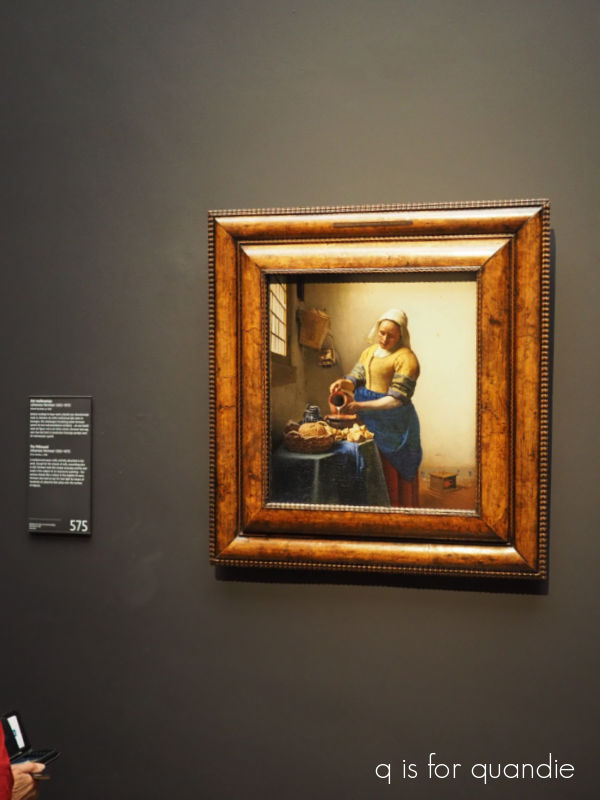
My favorite of the Vermeer paintings at the Rijksmuseum ended up being The Little Street.
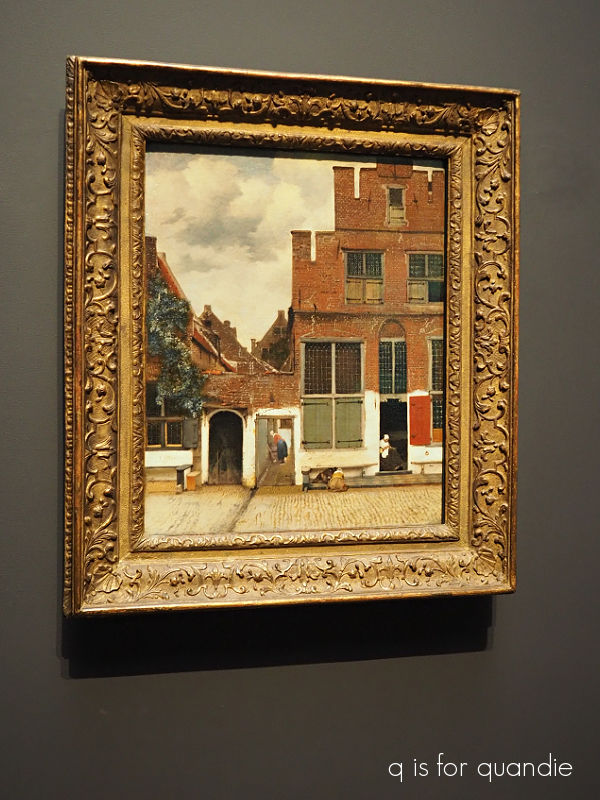
My photo doesn’t really do it justice. But it appealed to me because looking at it I felt like I could step right into 1650’s Delft (the town depicted).
As much as I enjoyed the various paintings and other artworks in the Rijksmuseum, my main goal was to see the poppenhuizen, or dollhouses.
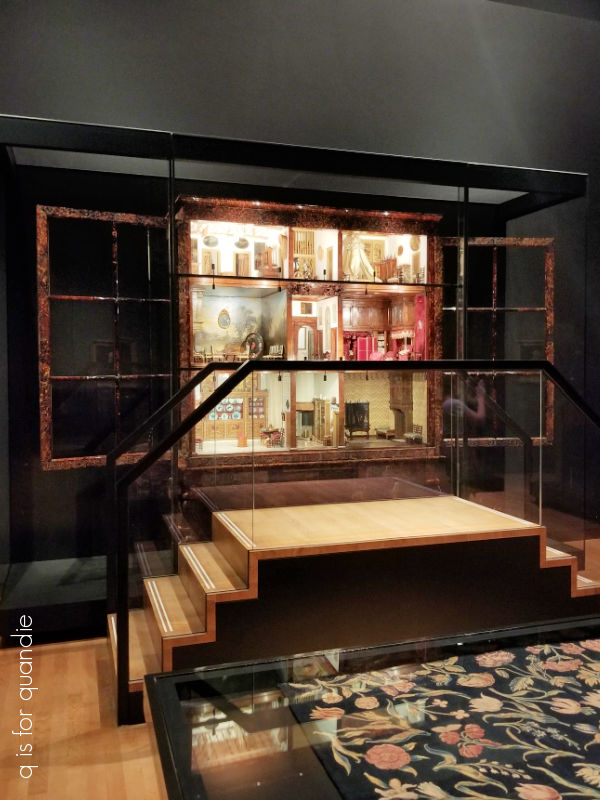
Dollhouses in this period were typically cabinets that opened to reveal the miniature rooms. The didn’t necessarily have the miniature exterior features of a house. They also weren’t toys, but were a hobby of the very wealthy.
In the case of the dollhouse shown above, the cost of creating it was equivalent to the cost of buildng a full-sized canal house at the time. The owner, Petronella Oortman, custom ordered each piece to be made out of authentic materials and precisely to scale. She hired basket weavers to make the baskets, and had linen woven to hang from the drying rack in the attic room shown below.
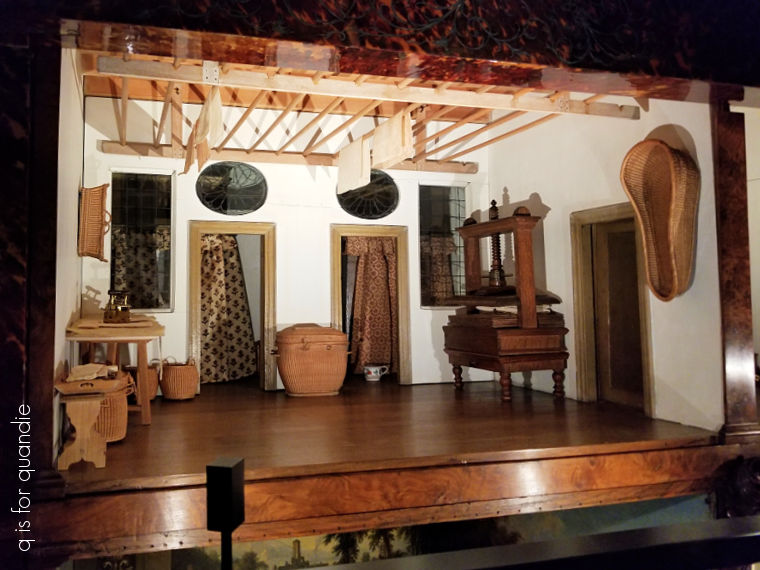
The china displayed in the kitchen was custom made for Petronella by the East Indies Company.
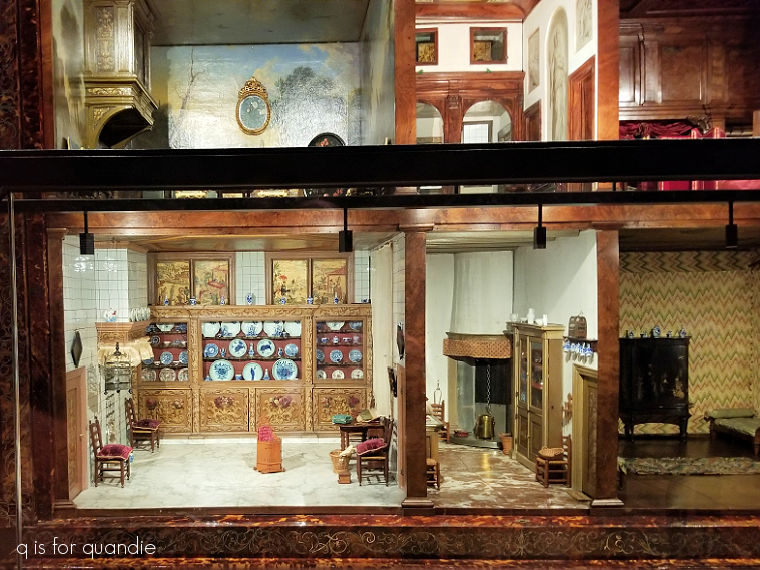
And isn’t the mural in this room gorgeous?
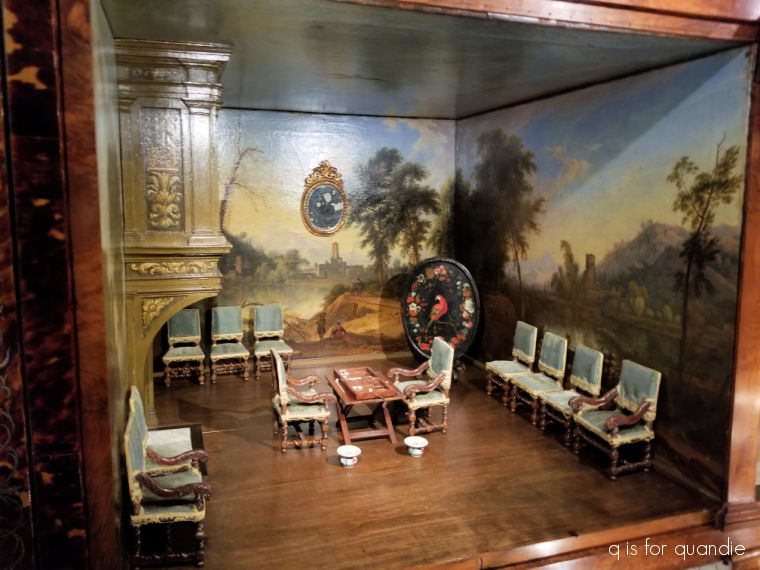
If you are as fascinated by miniatures as I am, you may also like to see this piece …
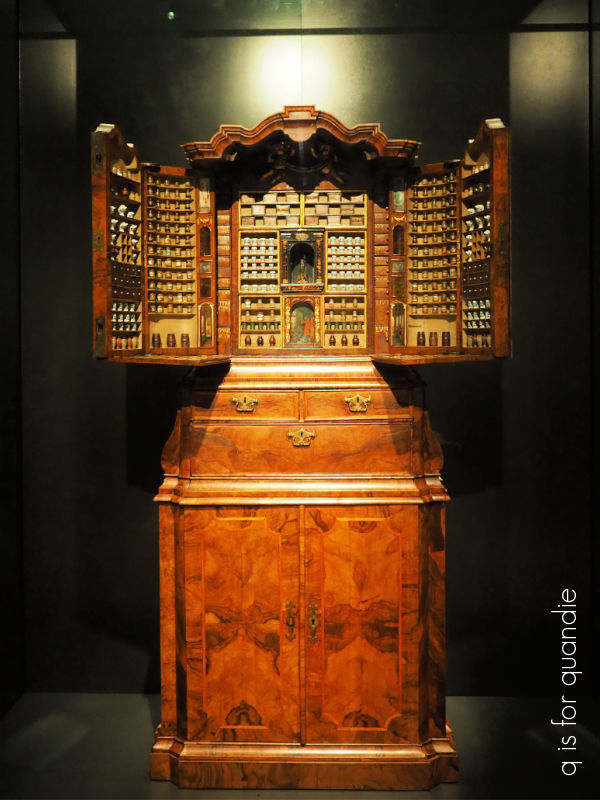
It’s an apothecary cabinet filled with miniature bottles and delft pots.
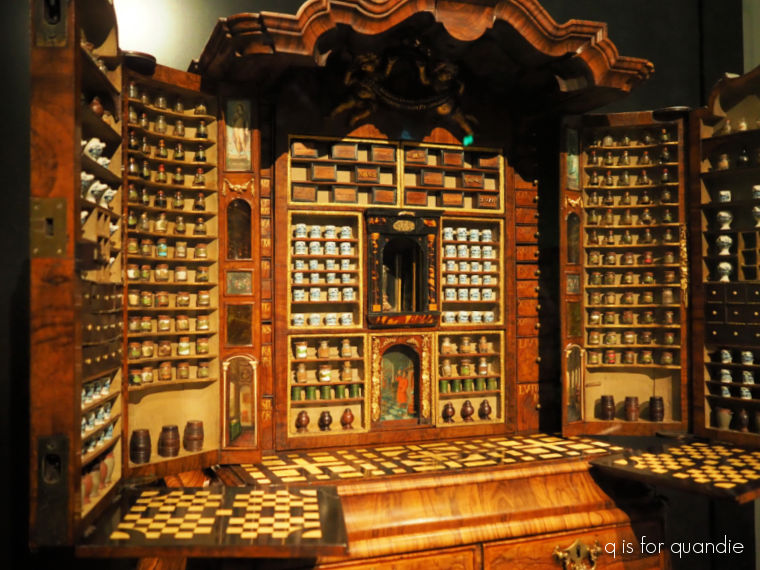
And they are all filled with samples of various medical ingredients, etc.
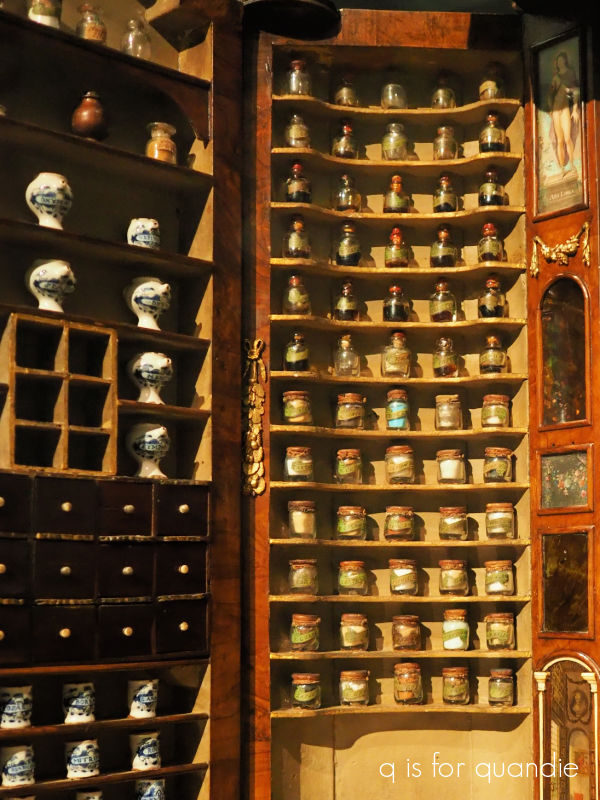
Isn’t that fantastic? Check out this link to see a better photo and to listen to a fragment from the Rijksmuseum audio tour about this piece.
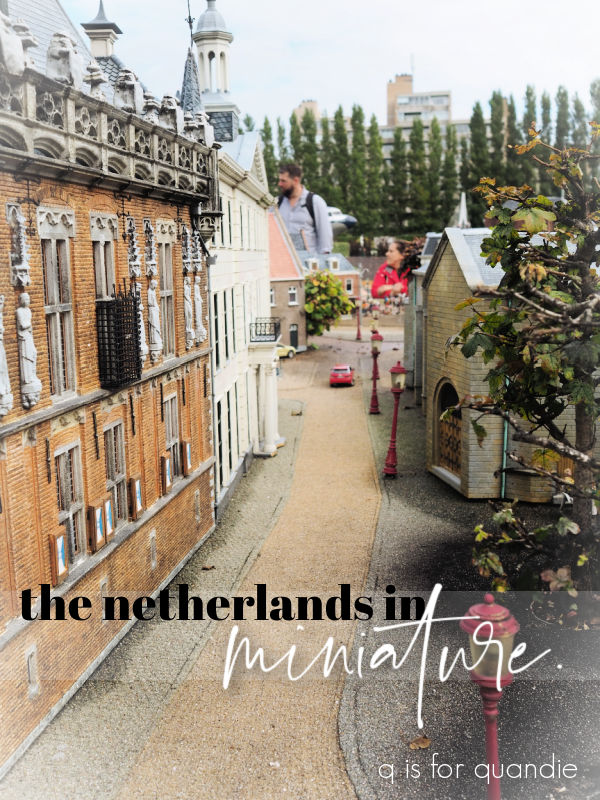
Also, if you are a miniatures enthusiast, you’ll definitely enjoy my post about our visit to Madurodam.
One could spend years trying to see everything in the Rijksmuseum and I’d love to go back someday to see more of it. Before we headed out I did make a quick pit stop in the gift shop where I picked up some miniature souvenirs to take with me. They partially inspired the project I’m going to share with you on Friday, so be sure to stay tuned!
 q is for quandie
The miniatures are amazing, I can’t believe the detail and artistry!
LikeLike
I agree, so amazing!
LikeLike
Madurodam was so cool!
LikeLike
Yes it was!
LikeLike
Amsterdam is SOOO AWESOME!!!!
LikeLike
We loved it! I’d definitely go back again, and there is so much to see.
LikeLike