
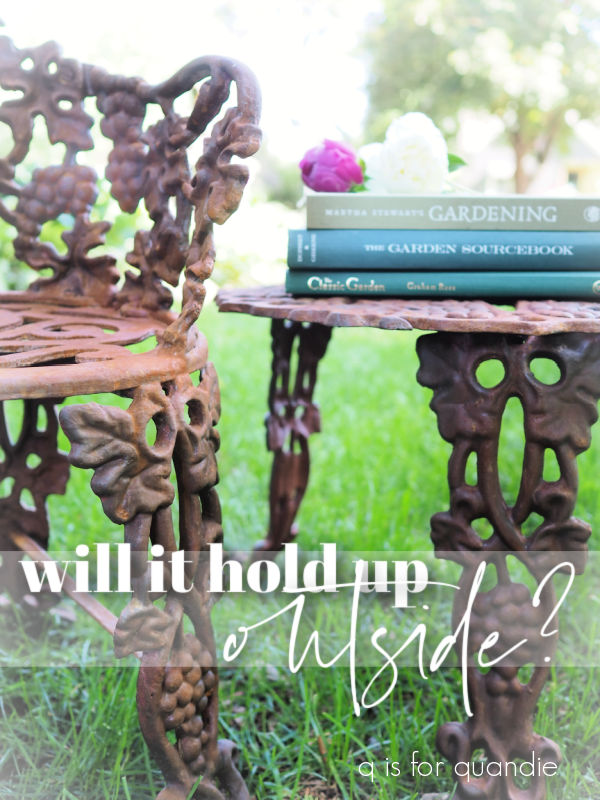
Good morning from the garden!
Whenever I share items that are going to be outside in the garden, I’m frequently asked the same question, ‘will it hold up outside?’
And sometimes the legit answer is that I don’t really know. Especially if I’ve only recently started using a particular product and haven’t had a chance to test it over time. But I’ve got a few years of experience under my belt now, so I thought I’d give you some honest feedback on how some of my things have held up.
Let’s start with transfers.
I added a Classic Vintage Label from re.design with prima to a watering can back in early 2020. I did not use any sort of topcoat over it, although a topcoat is recommended for transfers.
I used it in my front window box that summer, and it held up great for year 1.
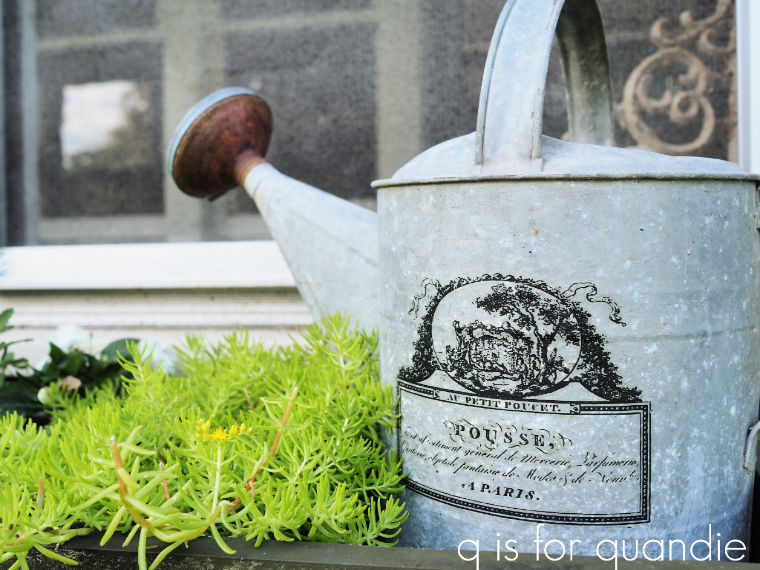
I don’t always leave my watering cans outside in the winter, but after leaving it outside for all of summer 2021, I also used it on an outdoor Christmas tree that year.

At that time it was holding up quite nicely.
For summer 2022, I had it hanging from a cupboard door sign on our deck.

The transfer was starting to deteriorate a bit then.

I stored it in the potting shed last winter, and then brought it out again in the spring.
Here’s how it was looking as of a few days ago.
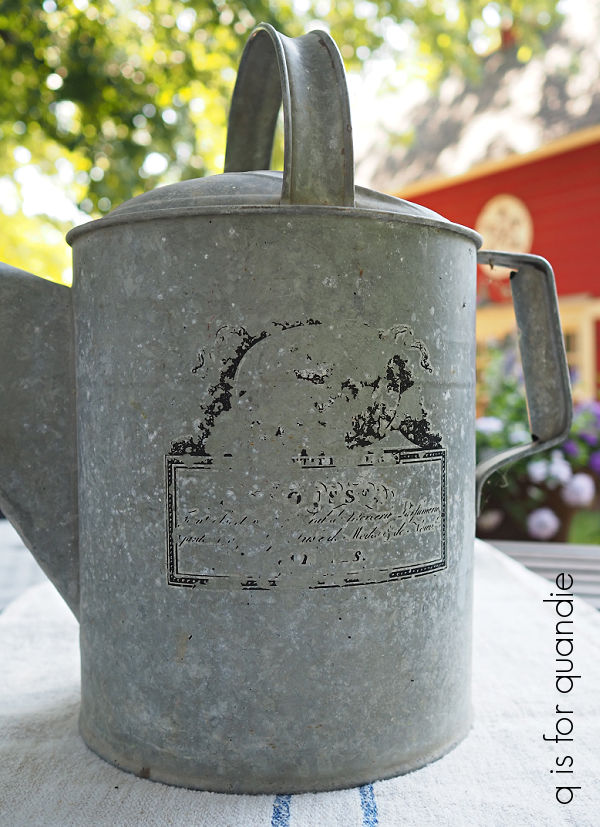
Hmmmm, not so good, right?
So there you go, a transfer without a topcoat on galvanized metal will last about three years.
But here’s the good news. It was super simple to remove that deteriorating transfer using steel wool and a little water.

It barely even took much elbow grease, it just scrubbed right off without damaging the watering can in any way.
So if you want to add a little something to a galvanized piece, but you want to have the option to remove it down the line, a transfer without a topcoat is a great choice.
And you know what, I really liked that transfer on that particular watering can.
So I did it again.

I added back the very same Classic Vintage Label. And once again, I opted not to seal it. I like the idea that it’s somewhat temporary. In a few years I may decide that I prefer my watering cans without labels. Or maybe I’ll want to try some other sort of decoration on it. Who knows?
You’re probably now wondering if adding a topcoat over the transfer will improve it’s durability on an outdoor item, and unfortunately I have to say that I don’t know. I haven’t actually tried that.
Now, how about adhesive vinyl cut with a Cricut machine?
I added our house number to an ironstone platter way back in 2014 after getting the idea from this pin on pinterest.
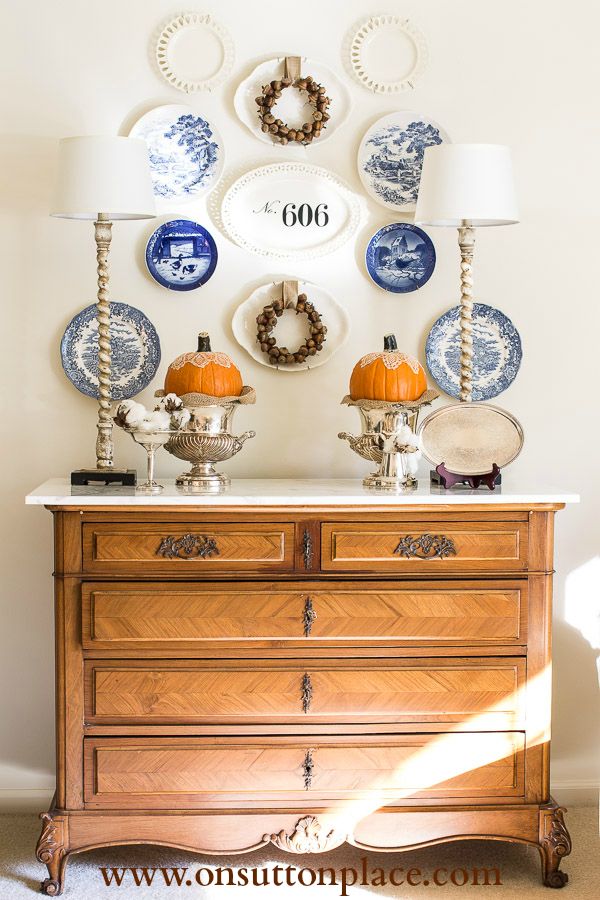
I simply used my Cricut machine to cut adhesive vinyl to make mine.
I have it hanging outside next to our back door. It’s up all year round, including winter.
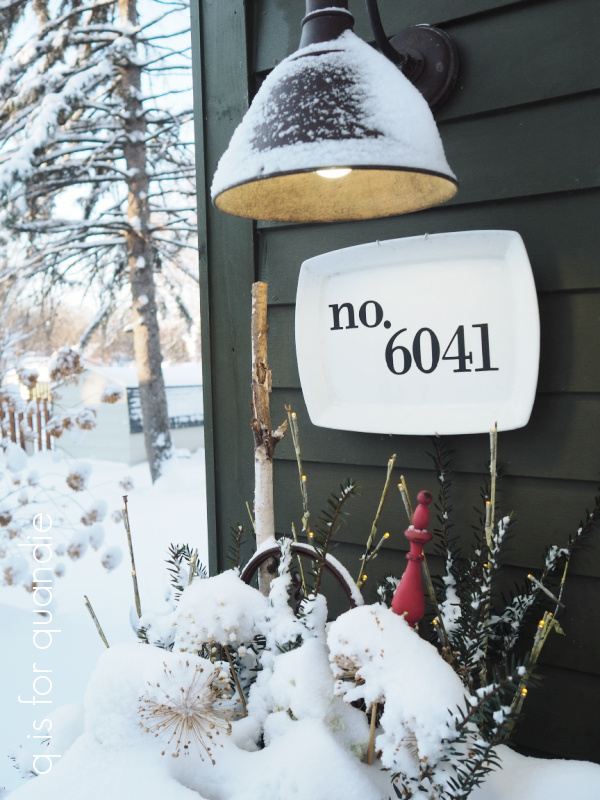
And 9 years later it is still going strong. Honestly, I’m rather amazed that it has held up over all this time. I totally expected it to start peeling after one season.

But nope, still looks good.
I still have a few of my pieces of garden china scattered around the garden too.
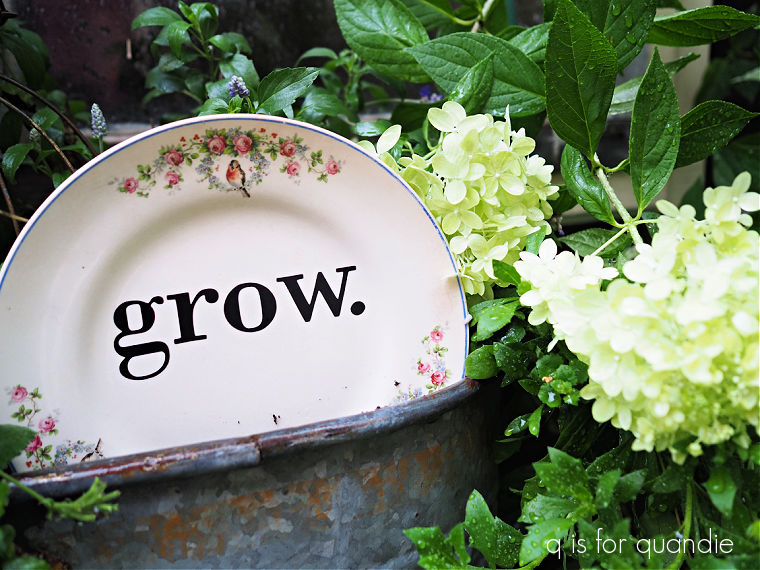
These were also cut from vinyl on the Cricut. I put them away in winter, but they stay out the rest of the year … and they get wet every time I water my pots. But again, they still look great.
The painted ‘signs’ that I create with stencils and chalk style paint hold up just fine outside too.

Even when they are simply top-coated with some of Dixie Belle’s Big Mama’s Butta, as that one is.
I tend to change these out seasonally, so none of them are out all year long. But I do bring them out year after year and they continue to look great.
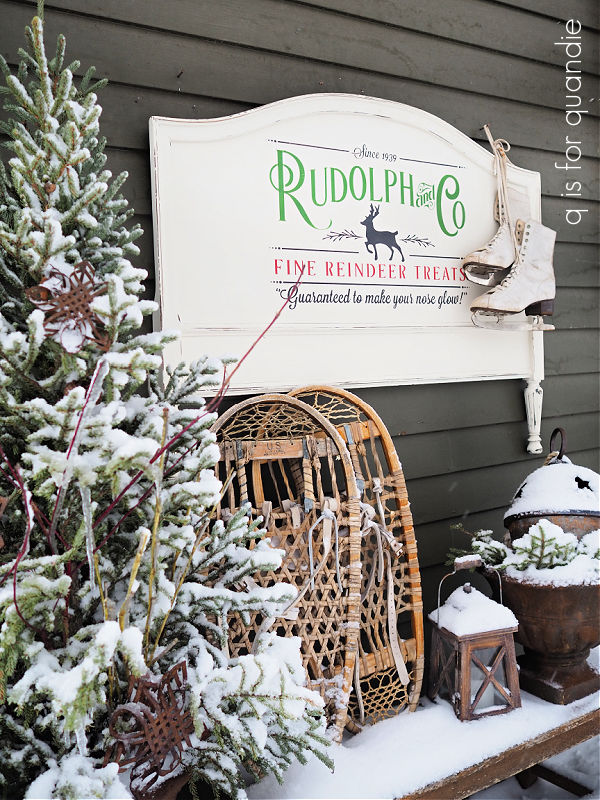
Next up is the general category of furniture that was meant to be inside, but I’m using it outside … starting with my repurposed guest bed.
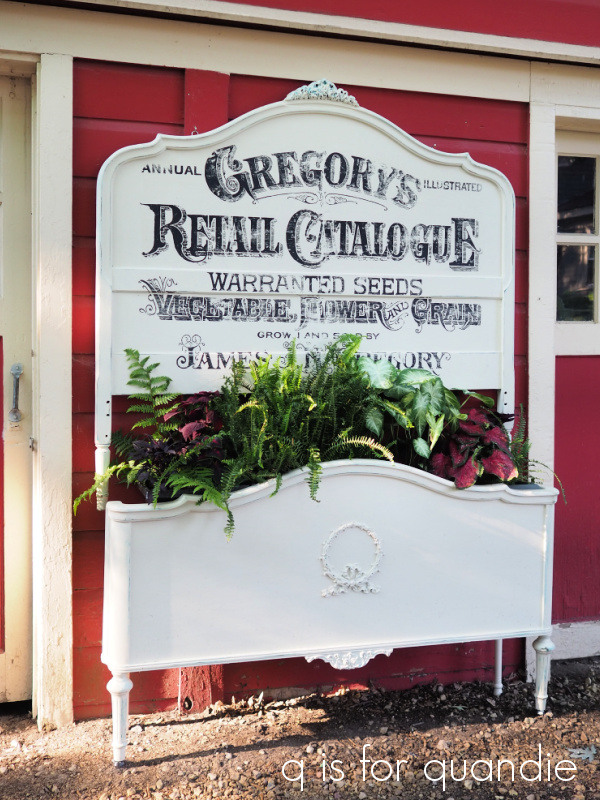
I have to report mixed results with this one. The headboard with its I.O.D. paint inlay has held up fantastically well. And I left it up all winter.
Unfortunately, the footboard planter is not doing as well, even though I put it away for the winter. The headboard gets a bit of protection from rain by the overhang of the carriage house roof, but the footboard really doesn’t. It also gets a lot of splash up from the driveway. Then add in the fact that I have placed heavy planters on a shelf that is attached to the back of the footboard, which was probably not meant to hold that much weight, and the end result is this.
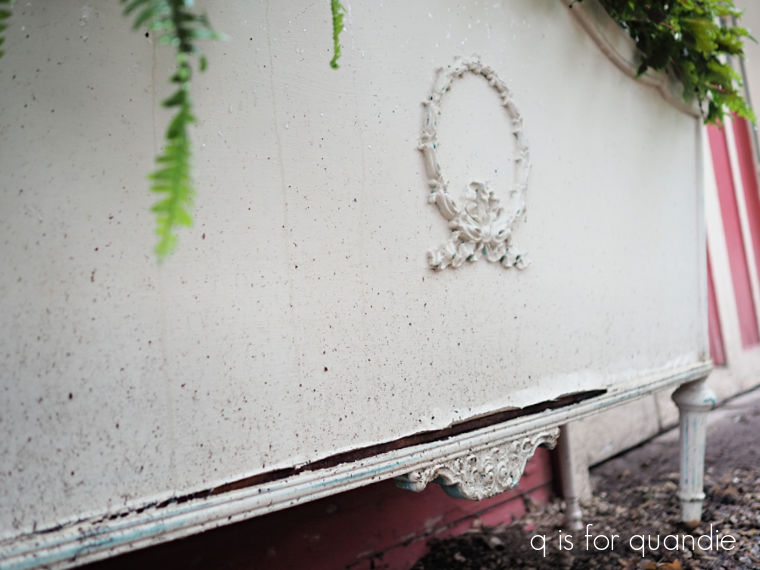
The bottom trim is pulling away, and that has created a bit crack in the paint, which is now allowing more water to get in there.
I plan to pull this apart to see if we can shore it up a bit, and then repaint it, sometime before the snow flies. Or maybe that project will wait until next spring. Either way, I’m not giving up on it just yet.
You may remember that I have used dining room chairs as ‘peony cages’.
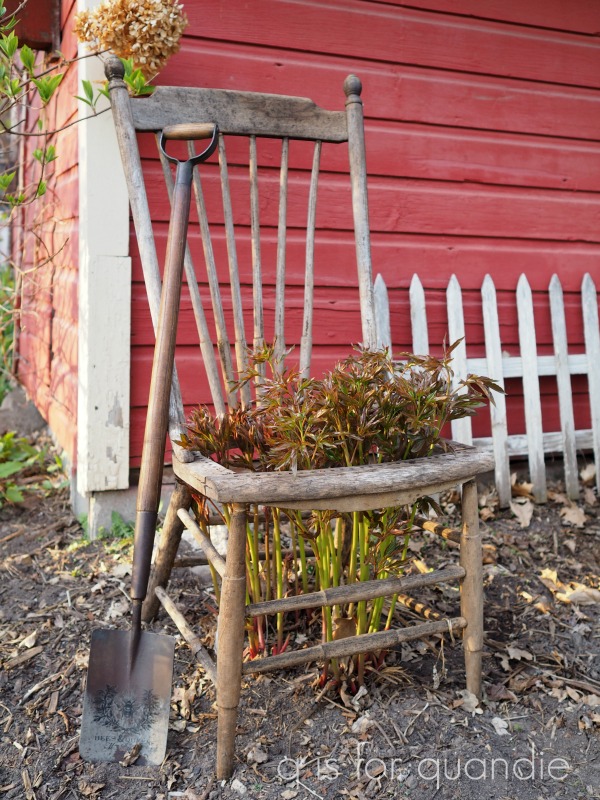
and over time all but one of them have fallen apart including the one shown above.
I do have its matching chair still wrangling a peony out next to the potting shed, but I’m sure it’s on its last legs.

And if you’re noticing, yes, this is the one peony I have that has ended up with a fair amount of powdery mildew this year.
Bottom line, indoor wood furniture is not meant to used outside and chances are good that any glued joints will fail after a few years.
Iron furniture will hold up a bit better, and if you like a little rust (as I do), it can work out great outside.
I have an old iron headboard that supports the Annabelle hydrangea next to our deck.
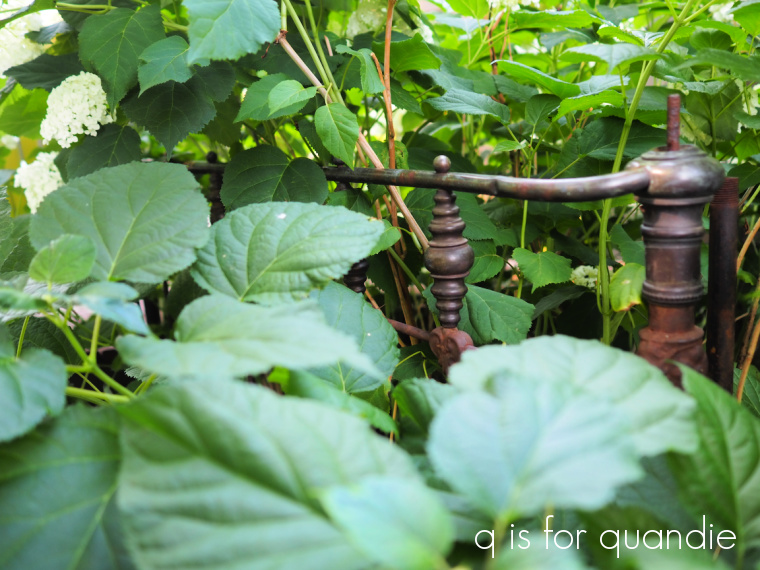
I also have an old iron bed that I keep trying to grow clematis on, and somehow it never works out.
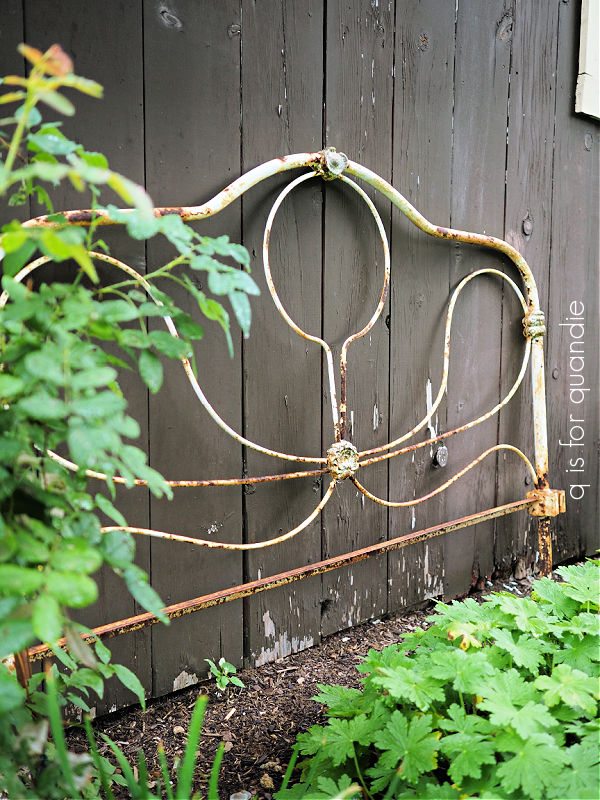
I once had an absolutely spectacular Nelly Moser clematis in this spot, and one spring it just didn’t come back. I’ve planted at least three replacements of different varieties since then, and not a single one has taken off. I can only guess that the amount of shade on that garden has increased over the years. The Nelly Moser is a variety of clematis that is more shade tolerant as well, so maybe I need to try that particular variety again.
I do have one other indoor iron item in the garden, well, two really, a pair of andirons that I grabbed free at the curb.

I’ve placed them on either side of my metal arbor.
One last product that I’ve used on pieces for the garden that I want to include in this post is the Patina paint line from Dixie Belle.

I used the Bronze paint with the green spray on a concrete Japanese lantern …

and on a terracotta buddha.
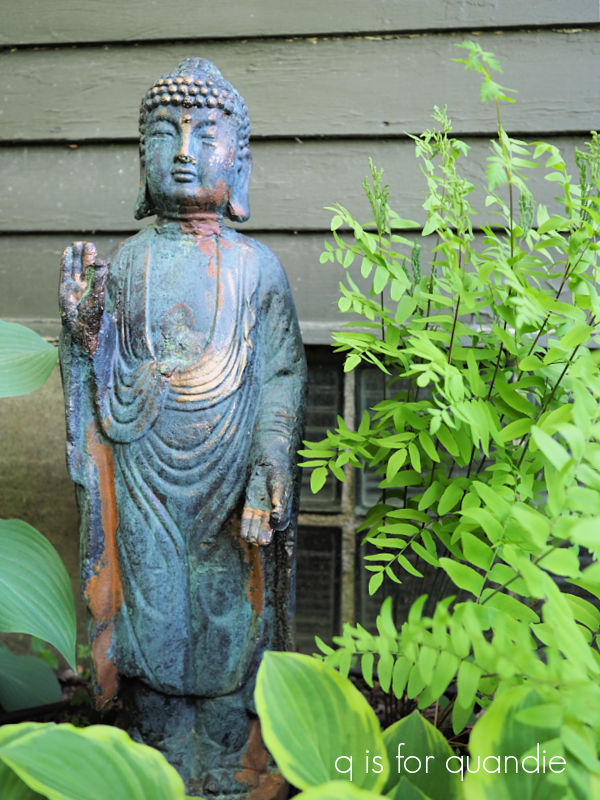
And I’ve used the Iron paint with the green spray to make numerous garden ornaments rusty.
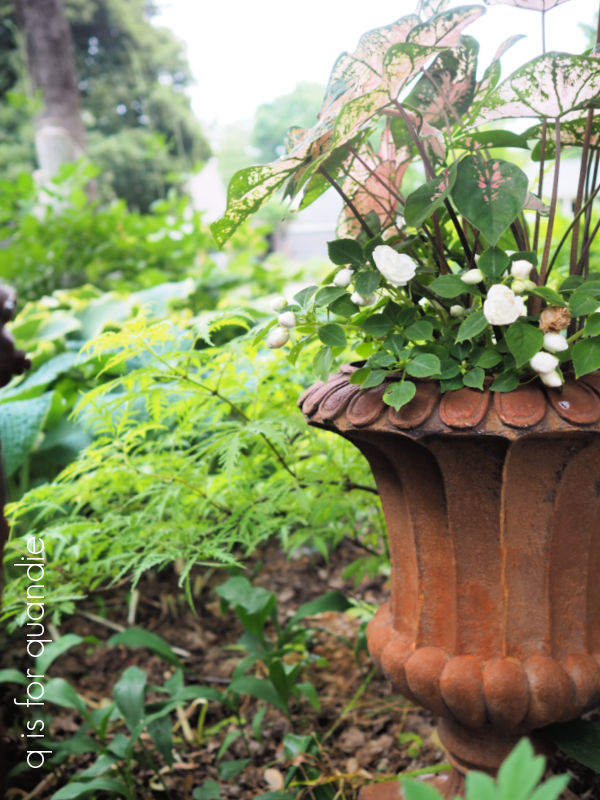
Some of these items have held up better than others, and that depends on the material underneath the paint rather than the Patina Paint itself. Terracotta tends to allow moisture to wick through from the backside, which then causes pieces to deteriorate. But plastic or metal items are holding up perfectly well, even over several years, and after being outside all winter.
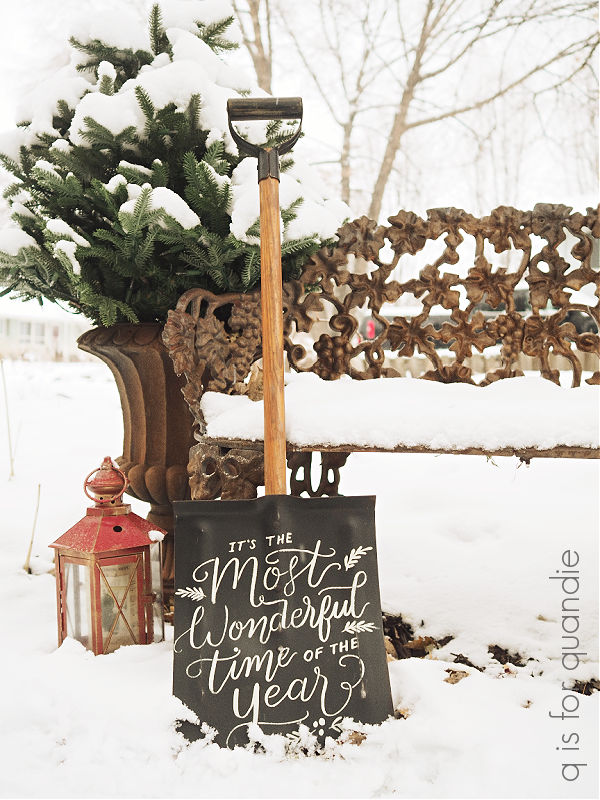
It’s also super easy to spot repair your outdoor pieces with the Patina Paint when necessary, as I did with my buddha.
I hope some of you found this info helpful. If you have any questions about how well particular items have held up outdoors that I didn’t answer above, be sure to leave a comment and ask!
 q is for quandie
I love your gardens and decor ♡ Sharing your artistry and advice is “the best”!! ♡
LikeLike
I second everything Diane said! 🥰
LikeLike
Thanks for the interesting post. Love the variety of garden items!
LikeLike
Good information. Thank you for sharing 😊
LikeLike
I’ve had my grandparents’ andirons for years, but they’re too large for our fireplace. Thanks for the idea—they’re now in our garden!
LikeLike
That’s awesome, I’m glad I gave you an idea for using your grandparents’ andirons 🙂
LikeLike