

Good morning from the garden!
Can I ask you a personal question? Does your tall sedum tend to get floppy? Does your phlox fall over?
Well, if so, I have the solution for you, and it’s free! It’s called the Chelsea chop and the reason it’s called that is because the timing of this process in England usually coincides with their RHS Chelsea Flower Show, which is held in late May. However, here in my northern, zone 4b garden, mid-June is a good time to Chelsea chop (you want to do it before you see any flower buds on your plant).
The Chelsea chop encourages branching, so the plants will be shorter and more compact thus reducing, or hopefully even eliminating, the flop.
So what is the Chelsea chop? Basically you simply cut down the stems by 1/3 to 1/2.
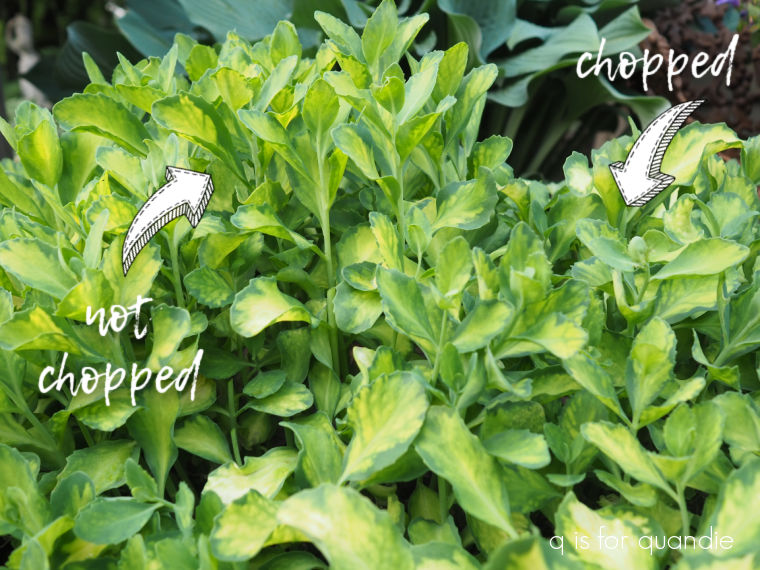
You don’t need to be precise, I’ve seen some gardeners just take a hedge trimmer and go to town. Or, you can let the deer get in on the action. They seem to be Chelsea chopping my neighbor’s asters!
But personally I like to be a little more discriminating, so I use my handheld pruners to do the job.

There are a few things you should know about the chop. First of all, it’s only suitable for perennials that bloom in late summer or early fall such as phlox, bee balm, cone flower, asters, veronica and of course, sedum.

Second, the Chelsea chop will delay the bloom time of your plant by as much as a month or so. If that thought bothers you, another option is to only prune every other stem on your plant leaving the other half of them long. There are a couple of benefits to that option. For one, you’ll still have flowers at the normal time, plus you’ll have more flowers several weeks later. So basically, you’ve extended the bloom time of your plant. In addition, the shorter, sturdier stems that have been chopped will help support the stems that you left long.
Another potential benefit of the Chelsea chop, at least with sedum in particular, is that you can easily root some of your trimmings to grow more plants.
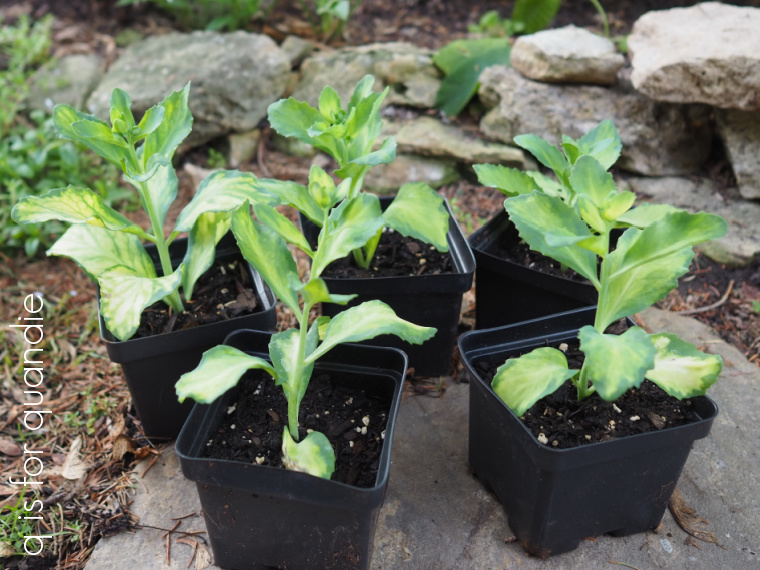
I did this a couple of years ago, and they all took off like gangbusters.
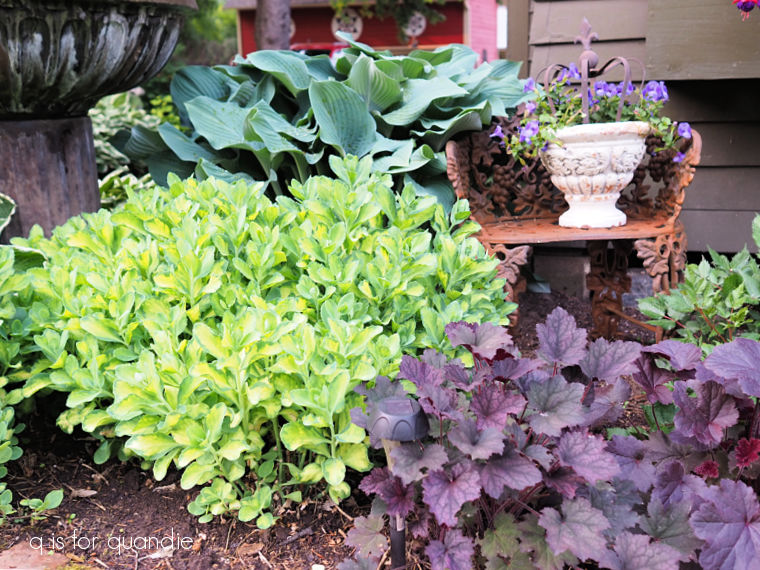
I have to say, before I discovered the Chelsea chop this variegated sedum was definitely not one of my favorite plants. It always tended to flop over and look pretty sloppy in the garden. Now that it stays a bit more compact, I really love the way it looks in combination with the ‘blue’ upright hosta behind it, and the purple heuchera beside it.
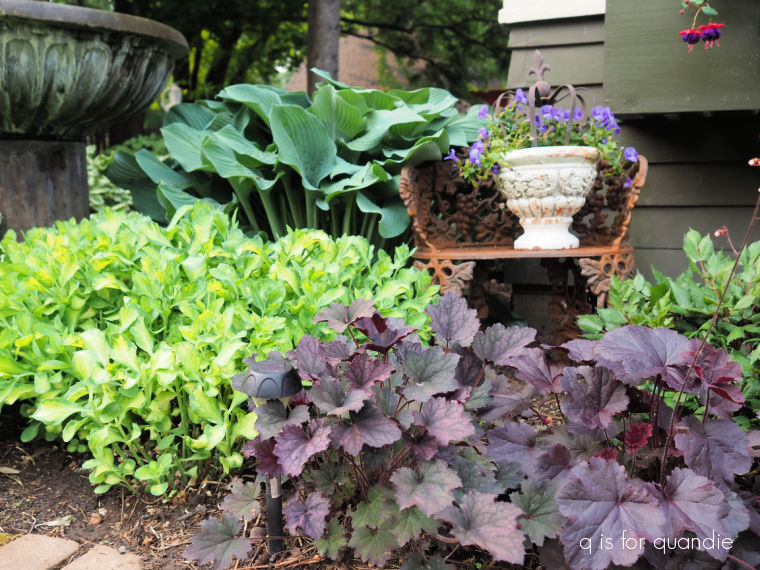
By the way, I believe that is Palace Purple heuchera, in other words one of the older, more reliable varieties. If you read my post about heuchera from a couple of weeks ago, you know that I have trouble getting any of the newer, more colorful, varieties of heuchera to perform well. But I’ve had these two plants for years now and they continue to do well.
How about you? Have you ever tried the Chelsea chop? If any of your late summer or fall blooming perennials don’t have flower buds yet, it’s not too late to consider it!
 q is for quandie
thanks! like the half trim ideal to prolong the blooms. loved the peep of your garden – always want more of your garden pix -lol!
LikeLike
Thanks CC!
LikeLike
Tried the Chelsea chop on my delphiums a week ago and they are spreading and growing like crazy, also reduced need for staking. Sage is just about through its first bloom, it gets the chop next. Can you do this with astillbe I wonder as mine tend to grow way too tall?
LikeLike
I’ve never tried it with astilbe, but I think they bloom too early for a traditional Chelsea chop. However, you may be able to prune the plant back after they bloom to make the plant more compact, I’m not sure about that though. And of course, you can cut the flower stems off completely when they are past their prime.
LikeLike
How interesting….flopping plants in my flower bed always bugs me. Will have to think about the possibility of a trim. I enjoy seeing your garden!
LikeLike